













































You are using an out of date browser. It may not display this or other websites correctly.
You should upgrade or use an alternative browser.
You should upgrade or use an alternative browser.
Does refurbishing a collecter grade gun de value it
- Thread starter struff55
- Start date

gunsaholic
CGN Ultra frequent flyer
- Location
- Winnipeg, Manitoba
North American made guns tend to be devalued by restoration more so than English made guns. However, if a gun is quite rough then I can't see how restoring it PROPERLY would hurt it. There are those that would rather have a properly restored gun than one that looks like hell and is barely functional. In my opinion, a restored gun will be worth more than a gun would have been at 50% condition unless maybe it is an extremely rare gun. Of course the cost of restoration isn't cheap.
Last edited:

I'm kinda with gunsaholic here but the real question is what is the definition of "collector grade". Because if it's really a collector grade gun, in 99% of the cases, what makes it collector is the combination of rarity and condition. And by condition I mean high original. It's high original plus the configuration that get Sterlingworths selling in the US for $5-7K.
Most of what get called "collector grade" are not, really. They are just nice guns. So if you have found a nice gun that has been let slide and you want to get it fixed up, by all means do it. I do. But the quality of the work is how the knowledgable market will judge it and you will rarely profit monetarily.
The guns I have that I will get all my money out if I sell them are few and far between. But I don't buy them and restore them to sell them. And the only three guns I have ever sold were unrestored originals. Gunsaholic bought one of them. And I bought one of them back!
Most of what get called "collector grade" are not, really. They are just nice guns. So if you have found a nice gun that has been let slide and you want to get it fixed up, by all means do it. I do. But the quality of the work is how the knowledgable market will judge it and you will rarely profit monetarily.
The guns I have that I will get all my money out if I sell them are few and far between. But I don't buy them and restore them to sell them. And the only three guns I have ever sold were unrestored originals. Gunsaholic bought one of them. And I bought one of them back!

- Location
- Ft. Mac. Alberta
I have several " collector grade" guns according to some, but I don't think so.
to my way of thinking I have some really cool vintage hunting guns!
ibdo have a fully restored Westley Richards but it is my main hunting gun and it will never be sold by me unless someone offers a stupid amount of money for itLOL!
the other is an unrestored 10 bore, bar in wood Westley Richards that is actually collectible, but I still shoot it.
i sold an unrestored 1899 Thomas Bland and Sons last year with a letter of Providence is is certainly collectible, but the buyer also shoots it.
I could not bear to have a gun sitting that I would be afraid of devaluating by shooting it, because I like to shoot my stuff!
However, I do know many that do have true collector guns and all are unrestored.
i tend to think that most guns can benefit from proper restoration , unless they are in super nice shape to begin.
Cat
to my way of thinking I have some really cool vintage hunting guns!
ibdo have a fully restored Westley Richards but it is my main hunting gun and it will never be sold by me unless someone offers a stupid amount of money for itLOL!
the other is an unrestored 10 bore, bar in wood Westley Richards that is actually collectible, but I still shoot it.
i sold an unrestored 1899 Thomas Bland and Sons last year with a letter of Providence is is certainly collectible, but the buyer also shoots it.
I could not bear to have a gun sitting that I would be afraid of devaluating by shooting it, because I like to shoot my stuff!
However, I do know many that do have true collector guns and all are unrestored.
i tend to think that most guns can benefit from proper restoration , unless they are in super nice shape to begin.
Cat

I agree with gunsaholic & canvasback, if it got to the point of needing a restoration it wasn't worth top dollar regardless. A restoration would only increase its value, but not to the point of a very clean unrestored original.
- Location
- Ft. Mac. Alberta
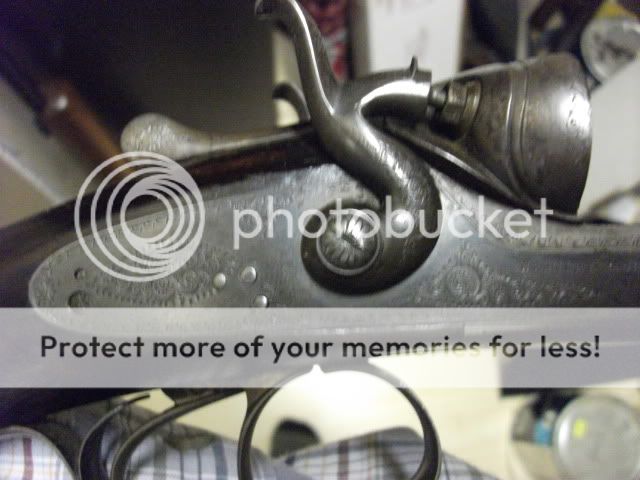
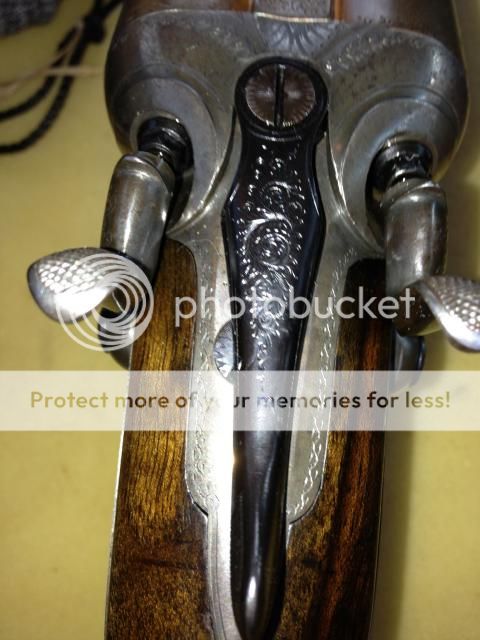
This is my cherished 12 bore hammer double that I had done by a friend for my 60th birthday
I have killed a crap load of birds with it, and even though the barrels have been cut to 26" from 30", it shoots superbly - no better than before it was restored however!
Cat
Before

After!


I have killed a crap load of birds with it, and even though the barrels have been cut to 26" from 30", it shoots superbly - no better than before it was restored however!
Cat
Before


After!


I'm in agreement with what's already been said. Almost all shabby lookers are already outside of the definition of "collector" grade, though that may not be entirely true of particularly rare pieces showing evidence of "honest use". I too have a small "collection" of cool vintage firearms, some of which have been prettied up with a reblue, and/or a wood refinish ... none of them were, or are now, "collector grade" though.

Always went pretty much by this write up. Sorry I have no link
Cheers
Deciding when (or why) to restore a firearm is not as complicated a matter as would be indicated by the millions of words written on the subject. “RESTORING AN ANTIQUE WILL DESTROY ITS VALUE” is the phrase most often heard; but, what if its value has already been destroyed by a previous refinishing done badly by one of the great many hacks out there (especially true in the 50′s and 60′s), or what if it’s a pitted, rusty, brown or grey gun with numerous other problems?
Basically, if a gun is not a “collector-grade” specimen, meaning that it has less original finish than what the collector is looking for (say less than 80% as a general guide), then its collector value cannot be considered in the decision to restore or not. The exceptions are: (a) a gun with some documented historical provenance or (b) a gun of great rarity, both of which are factors that outweigh amount of finish or condition as collector-criteria.
So, if a gun is in the less-than-80%/no-provenance category, it has a value to the “accumulator” (most of us), but no real “collector” value.
Probably 95% of the guns coming into my shop are non-collector guns with little or no original finish, are often abused, pitted, gouged, dinged, prevously-overbuffed, hot-blued, cold-blued semi-wrecks in the less-than-10% category. Restoring these “bad-guns” and making them into “good guns” is what it’s all about. It’s either that, or let the effects of abuse and negligence eat them away until they’re gone forever.
I frequently advise my customers not to “mess” with a particular gun if it happens to fall within the collector-grade range. On the other hand, if a collector-grade gun has something wrong with it, which is correctable, but which hurts the value if left uncorrected, I’ll often do a partial restoration to fix that one problem.
As an example, I recently had a would-be collector-grade Colt single-action where the front sight had been filed down to nothing, and the barrel had been hit a few times in the filing process. I made a new front sight of proper shape and height, polished out the file marks and re-blued the barrel using the original nitre-blue, then “aged” it back just a little to match the rest of the gun. Could you tell? No. Did it hurt the value of the gun? No. Did it increase the value? Yes.
Flayderman has written: “Refinishing is akin to taking an 80-year-old man and dressing him in the clothes of a teenager”. I couldn’t disagree more if we’re talking about non-collector-grade guns. It’s more like taking a naked 80-year-old man and dressing him in a nice suit (even though it may not be a new-looking suit). Which would you rather look at?
What needs to be remembered is that there is a world of difference between “refinishing” and “restoration”. The term “refinishing” could mean hot-bluing a single-action (where hot-blue wasn’t invented till about 1937). But “restoration” means doing things right. It means doing it precisely like it was done 80 or 150 years ago by the factory. It means polishing in the exact way the factory did it, and finishing the exact way the factory did it.
There are only a handful of restoration-gunsmiths in the world who can do that… or who will do that. To that handful you can entrust your antique arms.
Cheers
Deciding when (or why) to restore a firearm is not as complicated a matter as would be indicated by the millions of words written on the subject. “RESTORING AN ANTIQUE WILL DESTROY ITS VALUE” is the phrase most often heard; but, what if its value has already been destroyed by a previous refinishing done badly by one of the great many hacks out there (especially true in the 50′s and 60′s), or what if it’s a pitted, rusty, brown or grey gun with numerous other problems?
Basically, if a gun is not a “collector-grade” specimen, meaning that it has less original finish than what the collector is looking for (say less than 80% as a general guide), then its collector value cannot be considered in the decision to restore or not. The exceptions are: (a) a gun with some documented historical provenance or (b) a gun of great rarity, both of which are factors that outweigh amount of finish or condition as collector-criteria.
So, if a gun is in the less-than-80%/no-provenance category, it has a value to the “accumulator” (most of us), but no real “collector” value.
Probably 95% of the guns coming into my shop are non-collector guns with little or no original finish, are often abused, pitted, gouged, dinged, prevously-overbuffed, hot-blued, cold-blued semi-wrecks in the less-than-10% category. Restoring these “bad-guns” and making them into “good guns” is what it’s all about. It’s either that, or let the effects of abuse and negligence eat them away until they’re gone forever.
I frequently advise my customers not to “mess” with a particular gun if it happens to fall within the collector-grade range. On the other hand, if a collector-grade gun has something wrong with it, which is correctable, but which hurts the value if left uncorrected, I’ll often do a partial restoration to fix that one problem.
As an example, I recently had a would-be collector-grade Colt single-action where the front sight had been filed down to nothing, and the barrel had been hit a few times in the filing process. I made a new front sight of proper shape and height, polished out the file marks and re-blued the barrel using the original nitre-blue, then “aged” it back just a little to match the rest of the gun. Could you tell? No. Did it hurt the value of the gun? No. Did it increase the value? Yes.
Flayderman has written: “Refinishing is akin to taking an 80-year-old man and dressing him in the clothes of a teenager”. I couldn’t disagree more if we’re talking about non-collector-grade guns. It’s more like taking a naked 80-year-old man and dressing him in a nice suit (even though it may not be a new-looking suit). Which would you rather look at?
What needs to be remembered is that there is a world of difference between “refinishing” and “restoration”. The term “refinishing” could mean hot-bluing a single-action (where hot-blue wasn’t invented till about 1937). But “restoration” means doing things right. It means doing it precisely like it was done 80 or 150 years ago by the factory. It means polishing in the exact way the factory did it, and finishing the exact way the factory did it.
There are only a handful of restoration-gunsmiths in the world who can do that… or who will do that. To that handful you can entrust your antique arms.
- Location
- Ft. Mac. Alberta
3macs1 has it nailed!
When my friend restored my Westley Richards for example, he chased the checkering, but you cannot really tell if it has been in fact, because all he did was clean it up of grease, and and redefined the edges of it.
He did not actually cut it deeper than original.
He took a few small dings out of the barrelss, but one cannot even see where this was done, the same for the finish on the stock and barrels, he used traditional finishes instead of modern ones, and did not sand the stock out to where it altered it from original.
That is re-storing , not refinishing in my book.
Cat
When my friend restored my Westley Richards for example, he chased the checkering, but you cannot really tell if it has been in fact, because all he did was clean it up of grease, and and redefined the edges of it.
He did not actually cut it deeper than original.
He took a few small dings out of the barrelss, but one cannot even see where this was done, the same for the finish on the stock and barrels, he used traditional finishes instead of modern ones, and did not sand the stock out to where it altered it from original.
That is re-storing , not refinishing in my book.
Cat

Anyone recall the guy down South who is a Master and I mean Master at re-storing Browning O/U Salt Wood guns?
The guy has his sons following in his foot steps in keeping these guns out in the field instead of locked in a corner of the safe hidden from view.
Shoot'em if you got'em cause hidden in the safe is no place for a Pretty Gun.
Rob
The guy has his sons following in his foot steps in keeping these guns out in the field instead of locked in a corner of the safe hidden from view.
Shoot'em if you got'em cause hidden in the safe is no place for a Pretty Gun.
Rob
Speaking for myself, refurbishing does hurt the value of a collector gun.Not only that ,but there are many who try to pass off a refurbished firearm as in perfect original condition ,never fooled with.Some of these folks are very good at what they do and it sometimes takes an expert to tell the difference.Again just my opinion.

gunrunner100
CGN Ultra frequent flyer
- Location
- NW Ontario
If a refinished firearm is done well, it is difficult to tell. As has been said, N American firearm owners seem to take the stance of a refinished gun drops it's value by half. Your Winchesters etc, this is often the case as that's what the market has come to "know".
A well done European redo is just that, as was explained by Cat. It gets the owner shooting it again, almost new, nothing taken away.
A well done European redo is just that, as was explained by Cat. It gets the owner shooting it again, almost new, nothing taken away.
I'm the kind of guy that likes a working firearm. So if you have a beat up Winchester 1886 or a Model 42 I'm not going to pay you "collector" premiums for your old gun. If it's refinished/refurbished and it looks and function like new, then in that case, I'll most likely pay a premium for it!
The big problem here in Canada is that we try compare our gun culture to that of the USA...and the two couldn't be more different!
The big problem here in Canada is that we try compare our gun culture to that of the USA...and the two couldn't be more different!
gunsaholic
CGN Ultra frequent flyer
- Location
- Winnipeg, Manitoba
Even looking at North American guns, I know if I was looking at an old Winchester or Parker etc. that had zero bluing left, and a well worn stock with no checkering,dings, bruises and maybe cracks, I would not pay much for it. Some people might like to pay for this "history" but to me it is just a gun that previous owners didn't really look after, couldn't afford to have refinished or just didn't want to bother. I would however pay more for a gun that has been restored if done properly. I would much rather have a gun that was a pleasure to look at and fit to use. Now of course we are not talking about refinishing/restoring guns that are in original condition and have the majority of finish left. There would be no point. But there are many, many old guns out there where the only thing they show is neglect over time and the problem is, many think they are worth the same as a gun that needs nothing done to it.
Guns that should be left alone are military weapons and perhaps an antique/vintage gun that has a connection to a special event or person in the past and the provenance to prove it. But to me, farmer Joe's or Elmer Fudd's neglected guns aren't those types.
Guns that should be left alone are military weapons and perhaps an antique/vintage gun that has a connection to a special event or person in the past and the provenance to prove it. But to me, farmer Joe's or Elmer Fudd's neglected guns aren't those types.

the spank
CGN Ultra frequent flyer
- Location
- Planet Earth Wearing My Tinfoil Hat
I say shoot them until they need refinishing, refinish them and start shooting them again. That's what they were made for. The only one I own I would not refinish is my grandfathers model 71 and thats because every bruise, scratch and metal spot worn to silver lets me relive his hunting stories when I hold that rifle and admire it.
Re : a prior post
The restoration expert for salt wood Brownings that I know about is Art's Gun Shop in Hillsboro, MO. Their website has video links to YouTube videos of their work.
The father/son business of restoration, that you were probably thinking of, are in the business of restoring Parker shotguns, the DelGrego family, Larry and son.
The restoration expert for salt wood Brownings that I know about is Art's Gun Shop in Hillsboro, MO. Their website has video links to YouTube videos of their work.
The father/son business of restoration, that you were probably thinking of, are in the business of restoring Parker shotguns, the DelGrego family, Larry and son.
gunsaholic
CGN Ultra frequent flyer
- Location
- Winnipeg, Manitoba
Re : a prior post
The restoration expert for salt wood Brownings that I know about is Art's Gun Shop in Hillsboro, MO. Their website has video links to YouTube videos of their work.
The father/son business of restoration, that you were probably thinking of, are in the business of restoring Parker shotguns, the DelGrego family, Larry and son.
???
Forget my question marks--I figured it out--duh!
Last edited:
- Location
- Ft. Mac. Alberta
Art's Gunshop?? OOPS! I see saskbooknut beat posted while I was fumbling around! :>)Anyone recall the guy down South who is a Master and I mean Master at re-storing Browning O/U Salt Wood guns?
The guy has his sons following in his foot steps in keeping these guns out in the field instead of locked in a corner of the safe hidden from view.
Shoot'em if you got'em cause hidden in the safe is no place for a Pretty Gun.
Rob
Cat
Re : a prior post
The restoration expert for salt wood Brownings that I know about is Art's Gun Shop in Hillsboro, MO. Their website has video links to YouTube videos of their work.
The father/son business of restoration, that you were probably thinking of, are in the business of restoring Parker shotguns, the DelGrego family, Larry and son.
Art's Gunshop?? OOPS! I see saskbooknut beat posted while I was fumbling around! :>)
Cat
Thank You saskbooknut and catnthehatt the guys in MO are the ones I was referring to.
They do amazing work and if someone has a salt gun and the $$ to send it those guys the refurbished gun would be a pleasure to call it refurbished and a collector if one where to ask me.
The video clips show the attention to detail.
Just my .02 worth on the topic.
Rob
I agree with the guys who say unless it is super rare a well worn"grey" gun is worthy of a refinish as it hasn't much collector value anyway. I disagree with those who say(at least in the vintage Winchester area) you can't tell a refinish if well done. I guarantee that anybody who is really into Winchesters can tell a refinish immediately, outside of expert buffing of steel no one I have seen has duplicated the original Winchester factory blue colour.






















