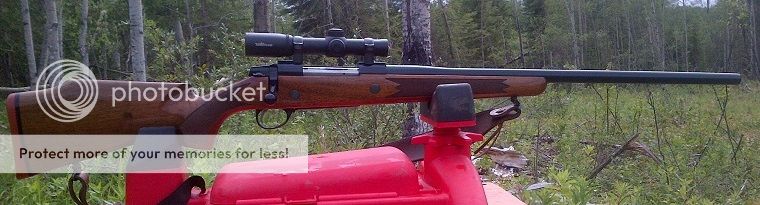
Scope slipping in the rings

lupothebutcher

CGN frequent flyer
Rating - 100%
54   0   0
Hi Guys,
I have a question for the experts; I have a single shot .50 BMG rifle with a lower-end to mid-range Millett LRS-1 scope, the scope has a 35mm tube and really tall rings and mounts; each set of rings has 6 allen key bolts to secure the tube (12 bolts total). The problem is that the tube slides within the rings with each shot. Each shot displaces the tube about 3/16th of an inch to the rear. I’ve already tightened the allen key bolts as much as I can without stripping them, so the question is how to stop this movement? A few of my limited ideas are:
• Put a bit of lock-tight (paint) between the rings and the tube and let it dry;
• Put a layer of tape or rubber (maybe even super thin condom rubber) between the rings and tube;
• Add some kind of spacer between the rings and the turret (seems like this could exert pressure on the turrets);
• Use sandpaper to “rough-up” the tube and the insides of the rings in the hopes that they’ll grab each other;
• I could also try to move the mounts on the rail so that the rear mount is right behind the turret but that will basically end up with a ring directly on each side of the turret (the rail is really short) and I don’t know if it’s better to have the mounts as spread out as possible;
• Throw the whole lot away and buy a new scope and rings;
• Some combination of the above….
I don’t have a torque wrench for this and I don’t have a huge amount of experience mounting scopes (I could point out that the scope as it sits will land shots on paper and could be easily dialed in if the eye relief didn’t get shorter with each shot). I don’t know if this is a common problem (especially with the big calibers) or if the set up is just buggered.
I’ve tried to explain this as coherently as possible
Any advice?
 
On a heavy kicker I position the scope so that the objective assembly contacts the rear ring then the scope can't move forward under recoil. But not possible with some scopes if the rear ring contacts the magnification adjustment -

34741148606_eb4157fe0c_b.jpg


Sako458Lott_e_zpsj5eqniky.jpg

458 Lott custom Sako AV with Burris Timberline 4x scope
 
Last edited:
I would try some electric tape on the bottom half of rings and then the top if nessesary . Putting it up against the turret or objective would be like banging it every shot - I wouldn't do that - better rings if it's in the budget would of course be the best solution
 
I went with ATRS rings on my 50BMG, they use TWO allen screws for each ring. One on each side...

When I asked about this, I was told there was no need for more than 1 screw for each side of the ring AND "how can you evenly torque 6 screws per ring", answer is you can't.

I'd go with another set of rings if you've properly torqued these down & they are not holding.

Cheers
Jay
 
I went with ATRS rings on my 50BMG, they use TWO allen screws for each ring. One on each side...

When I asked about this, I was told there was no need for more than 1 screw for each side of the ring AND "how can you evenly torque 6 screws per ring", answer is you can't.

I'd go with another set of rings if you've properly torqued these down & they are not holding.

Cheers
Jay

I wondered about that myself, I tried to tighten them in a zig-zag pattern similar to how you tighten lug nuts on a truck wheel but I was unconvinced that it really worked.
 
...Putting it up against the turret or objective would be like banging it every shot...

No banging because the scope won't move under recoil once the rings are tightened with the objective assembly against the rear ring. In my set up the resistance provided by the objective assembly as a stop is way less than needed to deform it or shear it off. Works fine on my heavy kicker with the components used as shown.
 
We use friction tape.
Eliminates slipping and need to lap rings.
We find 'game reaper' rings/mount one piece assemblies to be very well machined.
Rock solid and alignment assured without need to use the wheeler alignment tools.
Make sure all screw holes are properly degreased so locktite will hold.
We use 30 inch pounds torque for base screws and 20 inch pounds for ring screws.
Torx screws are the best.
 
Last edited:
With my heavy scopes with hard hitting rifles:
Perfect fittings rings; and
Powdered rosin (get a little bar from a violin type store and pound a little into powder and dust the inside of the rings); or
Permatex gasket spray. It is used to hold gaskets in place but the stickiness lasts and doesn't harden like Locktite.
As an example, I have used the rosin on 416 Rigby with US Optic scopes with normal rings with perfect results.
 
I think clear transparent scotch tape would do just as well.
With the 'game reaper' 1-piece ring/base assemblies the machining is so accurate you don't need lapping.
 
I went with ATRS rings on my 50BMG, they use TWO allen screws for each ring. One on each side...

When I asked about this, I was told there was no need for more than 1 screw for each side of the ring AND "how can you evenly torque 6 screws per ring", answer is you can't.

I'd go with another set of rings if you've properly torqued these down & they are not holding.

Cheers
Jay

You step up the torque a little at a time in a pattern. ...how do you torque multiple head bolts on an engine? Yes it can and is done all the time.
 
Hi Guys,
I have a question for the experts; I have a single shot .50 BMG rifle with a lower-end to mid-range Millett LRS-1 scope, the scope has a 35mm tube and really tall rings and mounts; each set of rings has 6 allen key bolts to secure the tube (12 bolts total). The problem is that the tube slides within the rings with each shot. Each shot displaces the tube about 3/16th of an inch to the rear. I’ve already tightened the allen key bolts as much as I can without stripping them, so the question is how to stop this movement? A few of my limited ideas are:
• Put a bit of lock-tight (paint) between the rings and the tube and let it dry;
• Put a layer of tape or rubber (maybe even super thin condom rubber) between the rings and tube;
• Add some kind of spacer between the rings and the turret (seems like this could exert pressure on the turrets);
• Use sandpaper to “rough-up” the tube and the insides of the rings in the hopes that they’ll grab each other;
• I could also try to move the mounts on the rail so that the rear mount is right behind the turret but that will basically end up with a ring directly on each side of the turret (the rail is really short) and I don’t know if it’s better to have the mounts as spread out as possible;
• Throw the whole lot away and buy a new scope and rings;
• Some combination of the above….
I don’t have a torque wrench for this and I don’t have a huge amount of experience mounting scopes (I could point out that the scope as it sits will land shots on paper and could be easily dialed in if the eye relief didn’t get shorter with each shot). I don’t know if this is a common problem (especially with the big calibers) or if the set up is just buggered.
I’ve tried to explain this as coherently as possible
Any advice?

Do you mean that each shot displaces the tube 3/16th of an inch to the front? or that the rings are displaced 3/16ths farther to the rear on the scope tube? I dont think its advisable to place the mounts so close that they both abut the saddle
 
Back
Top Bottom