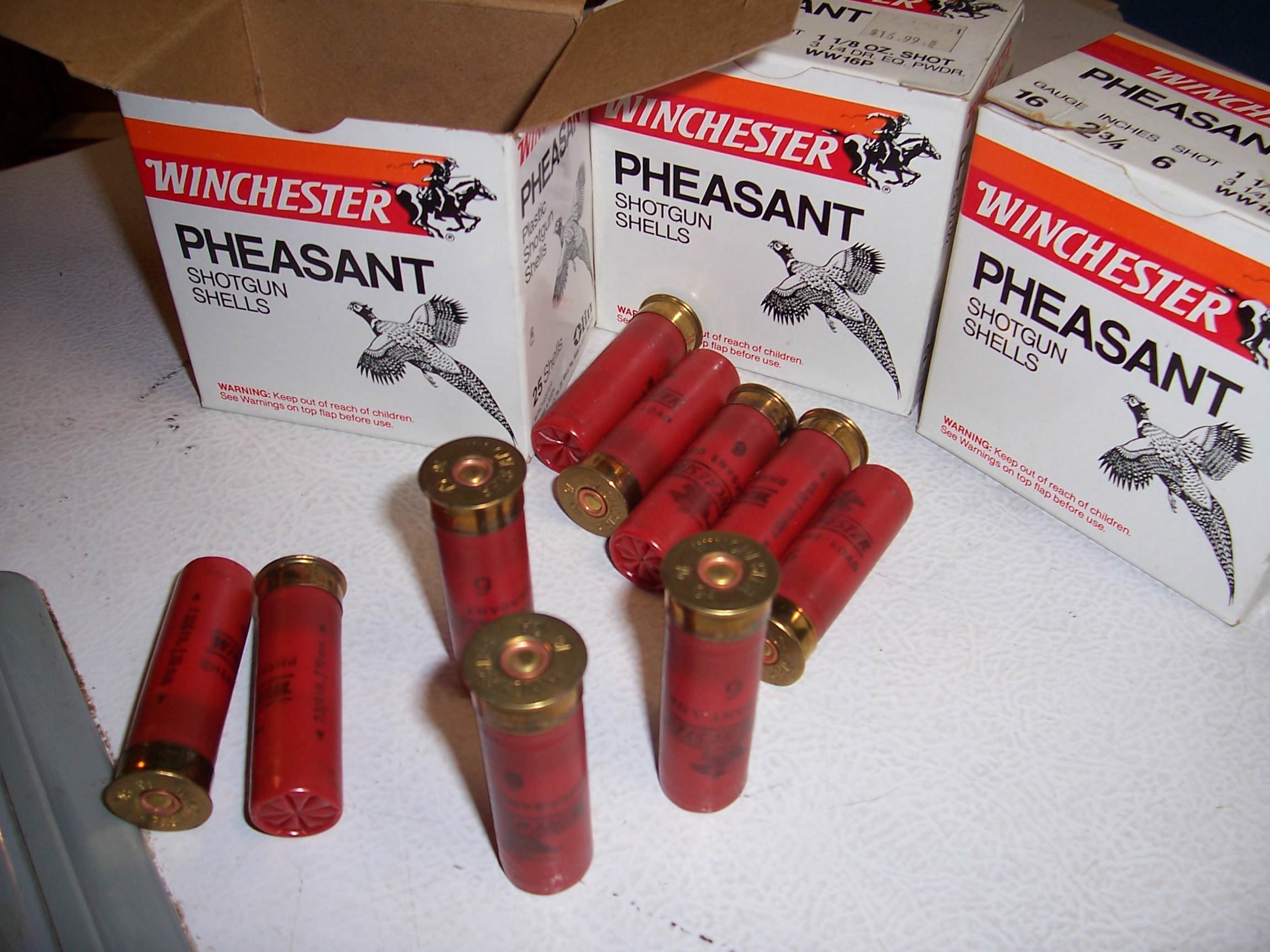
Many consider the 16 to be the perfect gauge. A one oz load is as long as it is wide so it's what they call a 'square ' load and should produce the best pattern possible. Compare that to a long thin 1 oz load in a 20 gauge and there is much less stringing of the shot. A 1 oz load which usually is shorter than it is wide in a 12 gauge can produce patterns with holes in them, I say 'can' but there are many good 1 oz 12 gauge loads out there. For the most part we're splitting hairs here.
The demise of the 16 gauge is generally blamed on the US skeet shooters who, when drawing up the rules for the game, named the 12, 20, 28 and 410 as the gauges to be used and left out the 16. Even the ammo companies poured money into R & D for the skeet gauges but left the 16 to languish with old technology hulls, wads, etc. And trap has always been a 12 gauge game for whatever reason. The advent of steel shot further sealed the fate of the 16 gauge as it doesn't have the capacity to hold bulkier steel shot so it's mostly used only for upland bird hunting these days. The nice thing is that a lot of the Italian and Spanish gun makers are still making new guns chambered for 16 gauge and a lot of them are built on scaled actions that are very nice and the 16 is alive and well in the UK and EU but not so much in North America.














































and don't even remember having a chance to buy either over the years here