Over Pressure Signs (Ring on primer) from Starting Load?

awesomealvin

CGN Regular
Rating - 100%
69   0   0
Location
BC
Hi Everyone,

This is my first reload, and I'm totally scratching my head trying to figure out what I did wrong.

I found my OAL to where my bullet just touches the rifling (2.301") and backed it down 0.020". As per all the information I can gather, 24 gr is a safe starting load for my cartridge. I did not trim the cases down, but they are all well below the max COAL of 1.760".

Brass prep and loaded up the cartridge, triple checked the charge with my Lee Beam Scale at 24 gr...spot on. Headed to the range and the results were amazing! All sub MOA. The primer pockets however all show signs of over pressure. 3 of the 15 also looks like it extruded out a little. How is this possible? If anything, this cartridge should be under loaded with room to spare for further load development. The only thing I can think of is that I loaded the primers via the RCBS Primer Seater that came with the press, and it was a pain. Perhaps the primers were loosely installed in the brass? Would that cause the ring around the firing pin indent? One of the few over pressure signs.

Anyone else have experience in this? I am totally scared of shooting this load at the moment. Thanks in advance!

Here is my load data

Rifle: T/C Compass (Bolt Action) .223/5.56
Bullet: Speer 55 gr TMJ (Flat Base non boat tail)
Powder: Benchmark
Powder Weight: 24 gr
Brass: Once fired Federal Bulk 55 gr FMJBT
Primer: CCI 400 Small Rifle
OAL: 2.280"
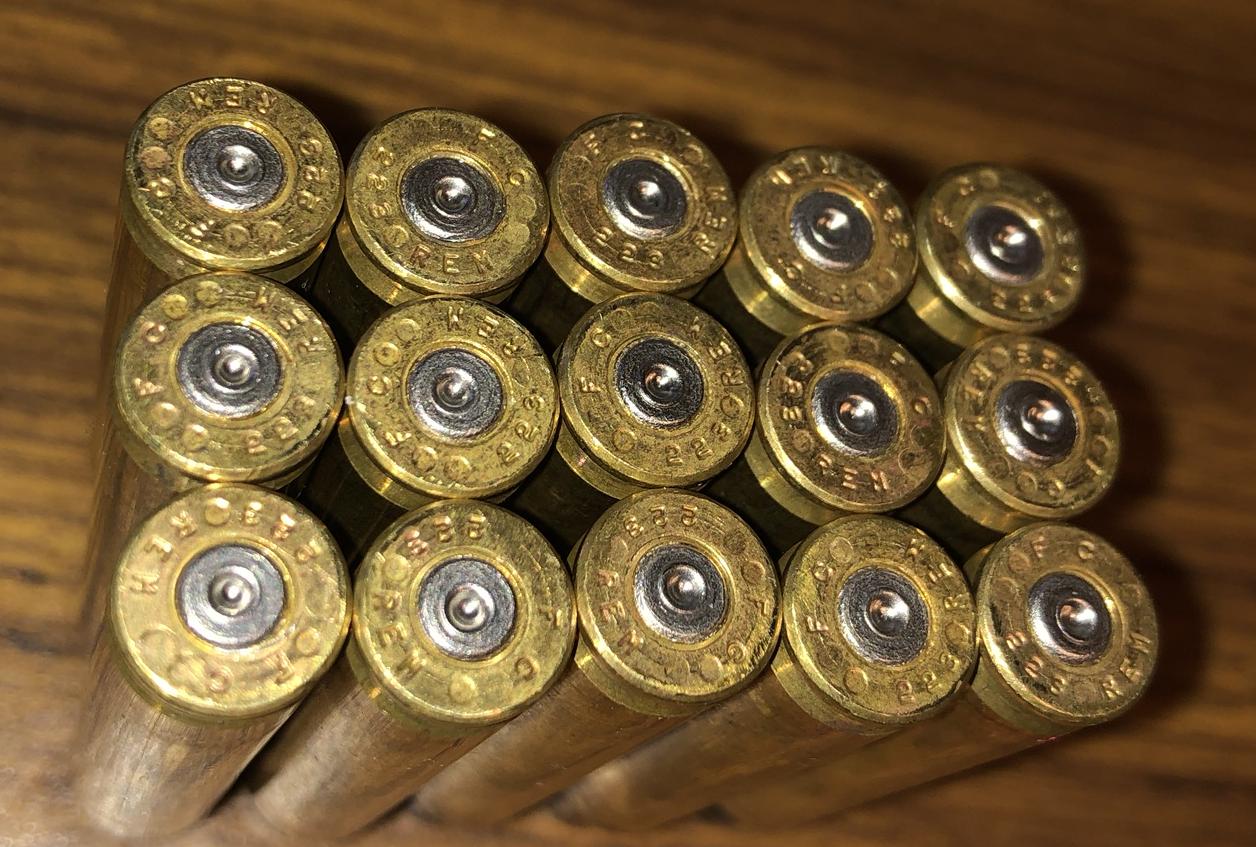
9f8hcV1.jpg

qDctKrj.jpg

IQq5SPq.jpg
 
Ring around firing pin strike is certainly not a problem with over-pressure. When the pin hits the primer it puts strain on the metal, and it is stretched, the area of stretch is ever so slightly thinned, and the internal pressure causes that bit of metal to yield back around the firing pin. If it was over pressure, you would see the rear outside edge pushed back , and instead of retaining a radius, it would be square. You may even see a bolt imprint on the primer, and if the pressure is high enough, the back of the case would be imprinted with the bolt, and the embossed printing distorted.

You are good to go; gradually work you loads up, and watch your accuracy; my guess is that you will find that sweet spot a bit higher than minimum. My two previous .223s and my present AR in .223 20" 1:12, like hotter loads; and I am actually loading a compressed charge with my present powder, about 2 - 10 % over max (depending on who's manual you read) with no signs of over pressure. Always be careful; and work your loads up slowly, and about 10 shells at a time.
 
Anyone else have experience in this? I am totally scared of shooting this load at the moment. Thanks in advance!

Here is my load data

Rifle: T/C Compass (Bolt Action) .223/5.56
Bullet: Speer 55 gr TMJ (Flat Base non boat tail)
Powder: Benchmark
Powder Weight: 24 gr
Brass: Once fired Federal Bulk 55 gr FMJBT
Primer: CCI 400 Small Rifle
OAL: 2.280"

My experience is the cci 400 primers are ok but will show pressure before the 450 will

Try the CCI 450 and I think your results will be different .... Just make a few to try
 
My remmy 700LTR craters primers on any powder charge, not an indicator of overpressure in any way. But if you rifle never does it and starts with a hot load, different story. Ejector marks are a little bit more to be watched when you get up with your loads.
 
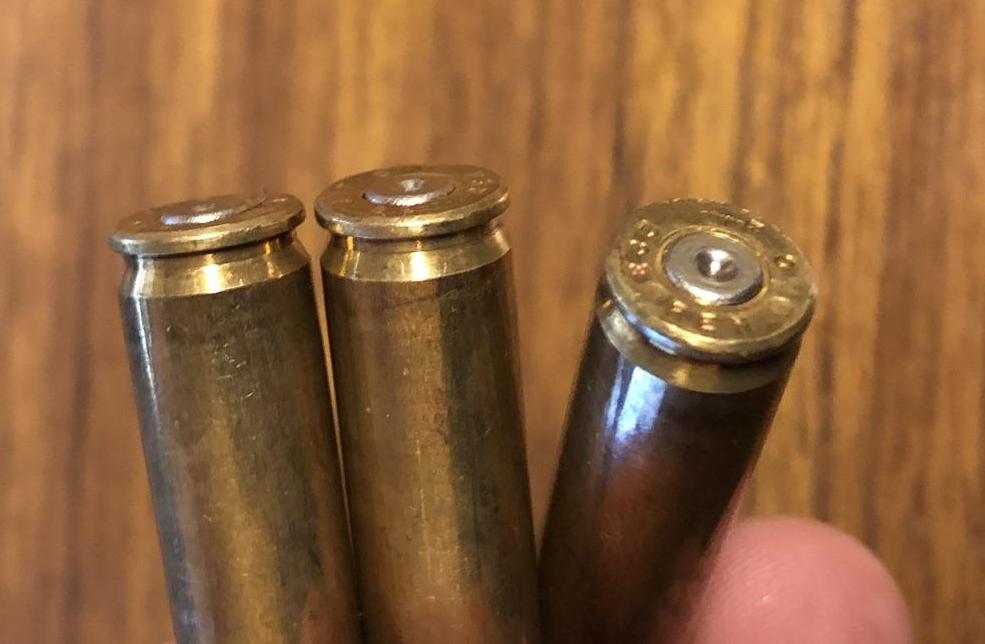
Are you sure your primers are seated deep enough in the unfired rounds? It looks like you need to flip the rod in your hand priming tool. You are getting the small mark on your primers from where the pin was cut off.
 
Are you sure your primers are seated deep enough in the unfired rounds? It looks like you need to flip the rod in your hand priming tool. You are getting the small mark on your primers from where the pin was cut off.

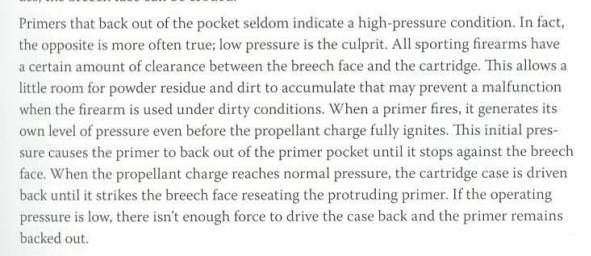
Underpressure...after firing pin hits primer, primer backs out of case. As pressure builds case is pushed back agains primer. Primer is pushed against firing pin and then the boltface.

What you are seeing is the result of primer smooshing into boltface.

Thats right, i used the word smooshing!!!
 
Underpressure...after firing pin hits primer, primer backs out of case. As pressure builds case is pushed back agains primer. Primer is pushed against firing pin and then the boltface.

What you are seeing is the result of primer smooshing into boltface.

Thats right, i used the word smooshing!!!

I was only looking at the unfired ammo. It almost looks as if they are not deep enough. Can't tell exactly from the picture.
 
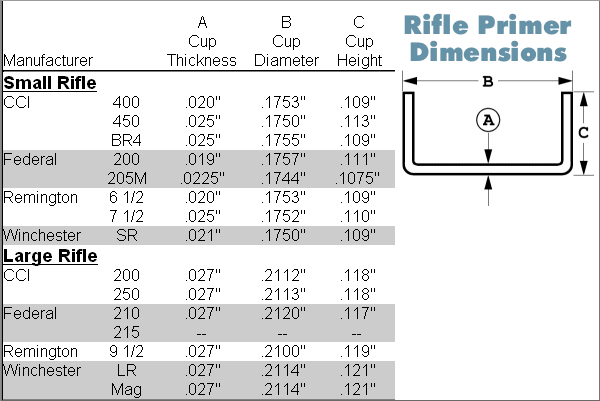
Light loads and sloppy firing pin fit. If you want to stay with CCI primers the 450 has a .025” thick cup instead of .020” and won’t show the cratering as much. The Remington 7 1/2 is another tough prmer. Magnum SR primers are more about the cup thickness than heat.

A bit of cratering must be OK, or at least most of the Remingtons and all of the Savages seem to think so. When the pressure goes up, the thin primers may pierce or blank before the normal pressure signs show up.

Just another reason to roll your eyes when someone tells you that a primer is a primer.
 
A few things here.
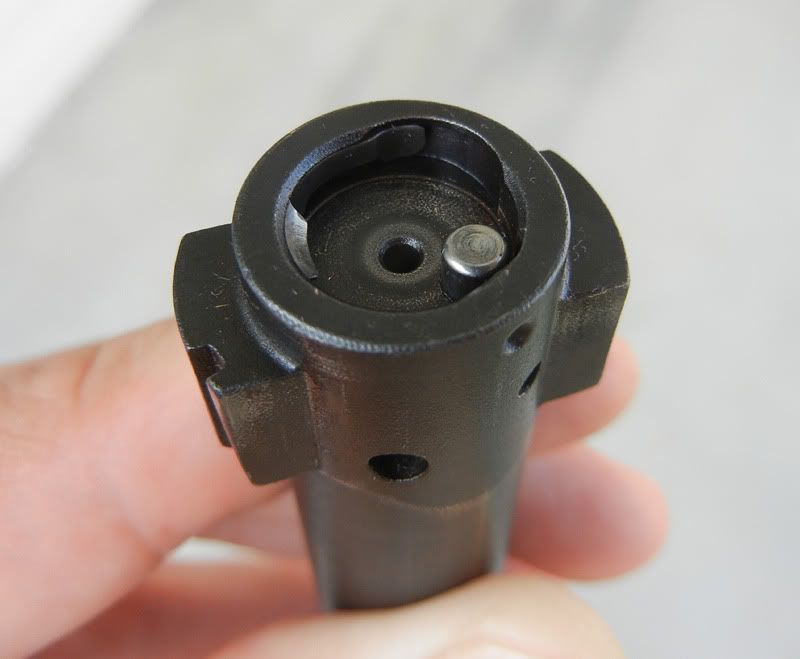
1. How’s the clearance between the firing pin and the hole in the bolt head? If it’s a bit too sloppy expect cratering.
2. I suspect you’ve full length sized your brass and your rifles headspace may be a smidge generous. This causes your cases to have to grab the chamber walls then grow back to the bolt face, and the primers may be beating the case to the bolt face.
3. What is the case head expansion like when compared to factory ammo?
4. Does this happen with factory ammo?.
 
A few things here.
1. How’s the clearance between the firing pin and the hole in the bolt head? If it’s a bit too sloppy expect cratering.
2. I suspect you’ve full length sized your brass and your rifles headspace may be a smidge generous. This causes your cases to have to grab the chamber walls then grow back to the bolt face, and the primers may be beating the case to the bolt face.
3. What is the case head expansion like when compared to factory ammo?
4. Does this happen with factory ammo?.

I'm with you. #2 in particular. More than a smidge of extra headspace from the way those primers are protruding from the fired rounds. Should have 0.0005 to a maximum of 0.002" of headspace for a bolt gun, and 0.003 to a max of 0.005 for a gas gun.

 
As stated above by Dogleg the CCI 400 primers have a cup thickness of .020 and any primer with a cup thickness of .025 would be a better choice.

Another problem may be excessive clearance in the firing pin hole in the bolt face that allows the primer to flow into. Or it could be yomomma's "primer smooshing" from the primer backing out and excessive shoulder bump.

NOTE, I bought a Remington 700 seven years ago and the firing pin hole in the bolt face was beveled and all my primers would flow (smoosh) into the bolt face.

DSCN0407.jpg


Read the link below on primers, it is very informative. Pistol primer cups are .017 to .020 in thickness and the thinner rifle cups are for low pressure cartridges like the .22 Hornet.


CHOOSING THE RIGHT PRIMER - A PRIMER ON PRIMERS
http://www.sksboards.com/smf/index.php?topic=56422.0

NOTE 1: According to Speer/CCI Technical Services - Both the CCI 550 Small Pistol Magnum and CCI 400 Small Rifle primers are identical in size. Both primers use the same cup metal and share the same cup thickness. Both primers use the same primer compound formula and same amount of primer compound. They can be used interchangeably.http://www.sksboards.com/smf/index.php?topic=56422.0

QJM65zp.png


yomomma, your post made me laugh, when my wife and I smooch we smoosh our lips together.:bigHug:
 
Last edited:
quote_icon.png
Originally Posted by Lefty ####

A few things here.
1. How’s the clearance between the firing pin and the hole in the bolt head? If it’s a bit too sloppy expect cratering.
2. I suspect you’ve full length sized your brass and your rifles headspace may be a smidge generous. This causes your cases to have to grab the chamber walls then grow back to the bolt face, and the primers may be beating the case to the bolt face.
3. What is the case head expansion like when compared to factory ammo?
4. Does this happen with factory ammo?.


I'm with you. #2 in particular. More than a smidge of extra headspace from the way those primers are protruding from the fired rounds. Should have 0.0005 to a maximum of 0.002" of headspace for a bolt gun, and 0.003 to a max of 0.005 for a gas gun.

I'm with you guys here.
 
The only thing I can think of is that I loaded the primers via the RCBS Primer Seater that came with the press, and it was a pain.

9f8hcV1.jpg

qDctKrj.jpg

IQq5SPq.jpg


Bolt lift wasn't heavier than usual?
What are you getting for velocity, compared to what the recipe says you can expect? That's not a totally reliable indication either, but it forms part of the big picture.
You mentioned using the on-press priming arrangement. Rock Chucker press? If so, the priming arm on that press is the only thing RCBS makes that I'll freely refer to as as a Piece of Sh**...
I thought I'd save a few bucks too and use it to prime with. Royal pain in the asz, seating primers was like pulling teeth out of a bear. I soon bought the RCBS hand priming tool for $68 from Amazon.
100% better results, right off the bat. Better feel (you can easily tell when the primer bottoms in the pocket), easier primer handling, less effort, there's really no downside to it.
 
Not seeing any over pressure signs in the pics. Cratering of primers isnt usually a real good indicator. Watch for flattening primers, stiff bolt lift and if you have a plunge ejector, watch for signs of the plunger head being stamped on the brass. A shiny smear mark on the brass head is also a sign of pressures getting up there.

Good luck and happy shooting.
 
I have a Lee .223 full length die that will push the shoulder back .009 shorter than my GO gauge if the die contacts the shell holder.

Meaning new rifles are set between the GO and NO-GO gauge and will be within normal headspace limits. With most rifles there is .003 between the GO and NO-GO gauge for setting up new rifles or changing barrels. And a Field gauge is Max Headspace and .010 longer than the GO gauge.

Your resizing die is adjustable up and down to control the amount of shoulder bump or shoulder setback. And a Hornady cartridge case gauge is a very good gauge to have.

Below a "fired" .223 case from my AR15 rifle in my Hornady gauge, and then I adjust the die for .003 shoulder bump.

OJqNmQH.jpg


Bottom line, I would blame the die and its adjustment and not the rifles headspace.

Pacific Tool and Gauge offers three lengths of headspace gauges per rifle caliber.
In order from the shortest to longest, they are: GO, NO-GO, and FIELD:

1. GO: Corresponds to the minimum chamber dimensions. If a rifle closes on a GO gauge, the chamber will accept ammunition that is made to SAAMI’s maximum specifications. The GO gauge is essential for checking a newly-reamed chamber in order to ensure a tight, accurate and safe chamber that will accept SAAMI maximum ammo. Although the GO gauge is necessary for a gunsmith or armorer, it usually has fewer applications for the collector or surplus firearms purchaser.

2. NO-GO: Corresponds to the maximum headspace Forster recommends for gunsmiths chambering new, bolt action rifles. This is NOT a SAAMI-maximum measurement. If a rifle closes on a NO-GO gauge, it may still be within SAAMI specifications or it may have excessive headspace. To determine if there is excessive headspace, the chamber should then be checked with a FIELD gauge. The NO-GO gauge is a valuable tool for checking a newly-reamed chamber in order to ensure a tight and accurate chamber.

3. FIELD: Corresponds to the longest safe headspace. If a rifle closes on a FIELD gauge, its chamber is dangerously close to, or longer than, SAAMI’s specified maximum chamber size. If chamber headspace is excessive, the gun should be taken out of service until it has been inspected and repaired by a competent gunsmith. FIELD gauges are slightly shorter than the SAAMI maximum in order to give a small safety margin.


Example, the Military British Enfield rifle headspace was listed as Min .064 and Max .074 with .010 between the two gauges.

Below from the Sierra reloading manual.

NxOyXr6.png


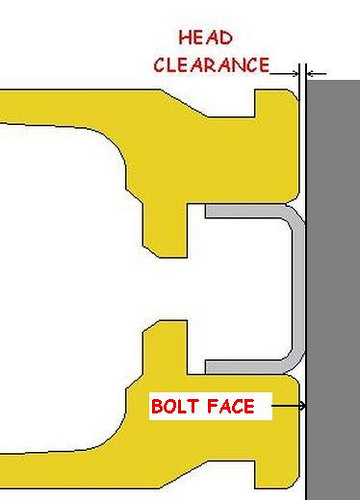
The amount of shoulder bump is normally the amount of "head clearance" you have when the cartridge is chambered. And how far the primer can back out at lower pressures, like the starting loads in the manuals. And at 38,000 cup or 43,000 psi the primers on my 30-30 always back out and this is the max rated chamber pressure.

HK76WCp.jpg
 
Last edited:
Back
Top Bottom