Thieme and Schlegelmilch Nimrod project

Pretty damn good though Dilly. I am totally sold on the value of ultrasonic cleaning.

Yes, simply amazing. I wish I had access to an ultrasonic cleaner. It clearly dislodged the deep set dirt and gunk. I see it most prominently in the engraving, which displays much greater depth and detail.

You found yourself an excellent restoration candidate, Dilly. With the metal cleaned up as it is, and with a nice hand-rubbed oil finish on the stocks, she'll once again be a fine example of functional artistry.

I'm going to be spending the next few months trying to wick years of excess gun oil from an old beechwood military stock - a whole new experience for me.
 
Yes it is!
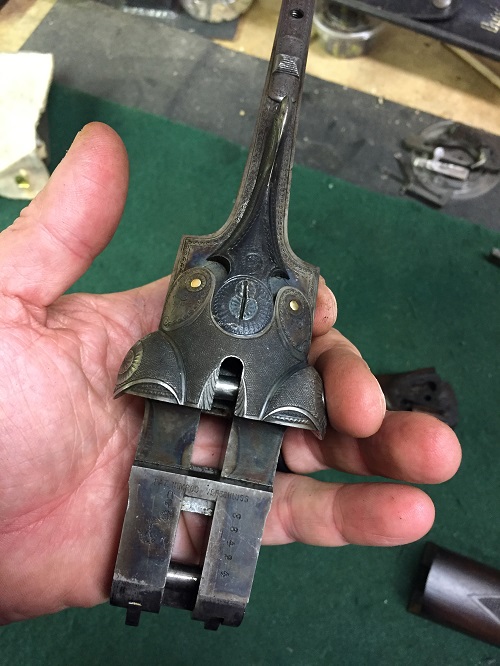
The rose and scroll is maybe unusual for a Germanic gun? They sure loved the crossbolt third bite, though.
Right number of barrels, too. (wink)
Yeah, you’re right. Other examples I’ve found on the net of this model had game scenes which seem more traditional. My gunsmith looked this gun over and commented on how strong it was. Not only does it have two under bites, it has a cross bolt, plus the “nimrod patent” cutout where the barrels mate to the receiver, plus side clips. Apparently this design takes all the recoil stress off the hinge pin.

And....I wouldn’t have minded a bit if it had another barrel.... :) the ones on it now are my favourite size...16ga
 
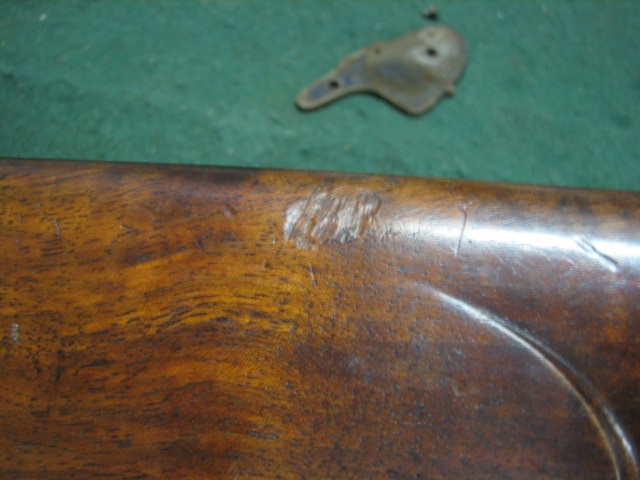
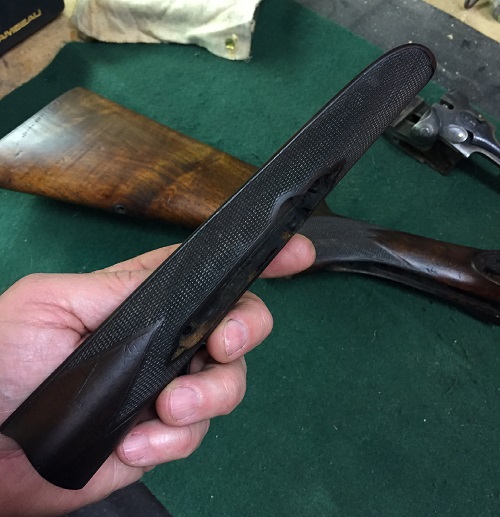
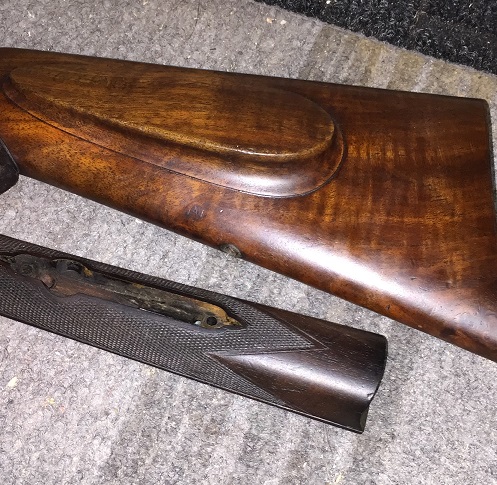
So, I took a couple pictures to show some of the dings and finish issues on the stocks. Not the end of the world, but worth trying to fix up in my opinion.

Ding on the comb
32LvoAW.jpg

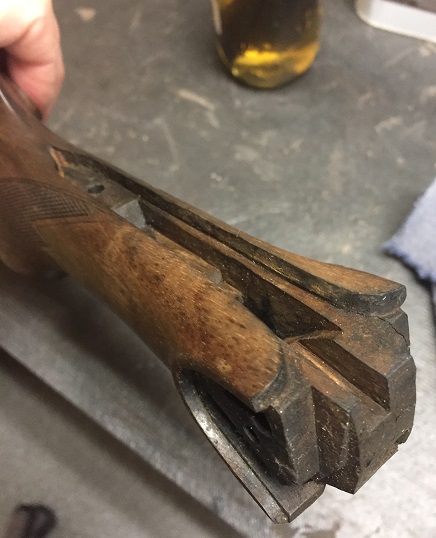
Not sure what to make of this...
aqYwj6y.jpg

Darkened forearm

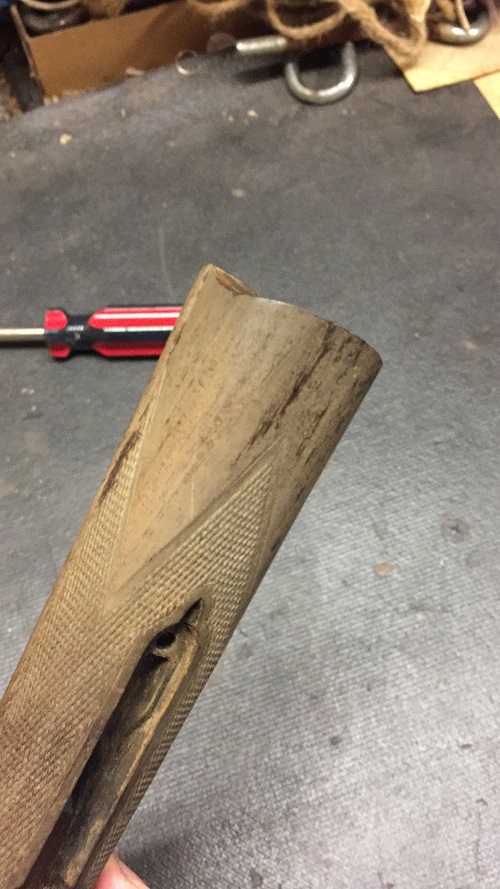
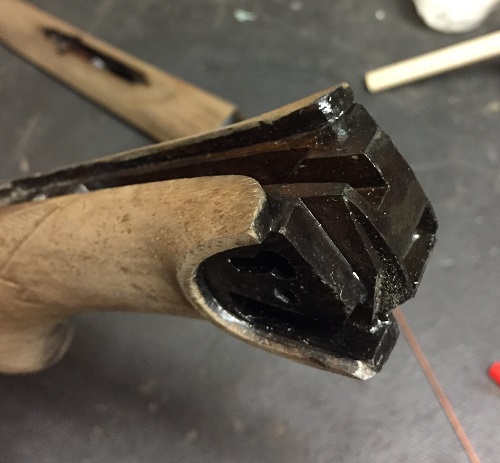
I carefully stripped the finish with basic furniture stripper. Not much came off really probably due to the finish being mostly oil. Once the bare wood was evident, I soaked the head and entire forestock in acetone trying to draw out as much gun oil as possible. Trust me, once you have gone through this, you will store your guns "muzzle down" from then on.
19IACNH.jpg

This also revealed a wee crack that I will have to deal with. Looks worse than it feels. Seems pretty stable.
BRJsCJQ.jpg

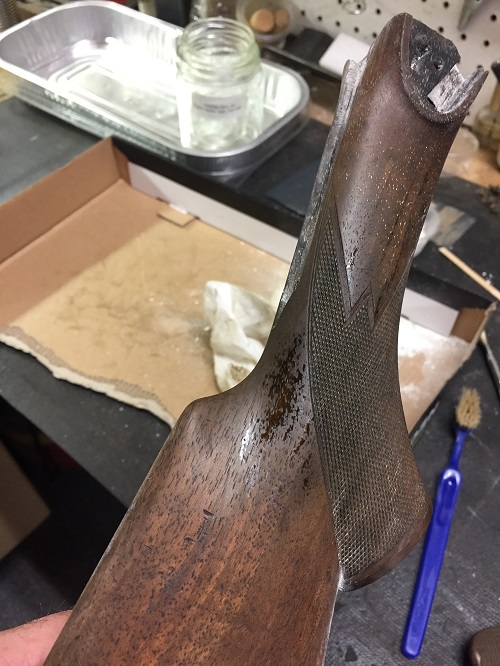
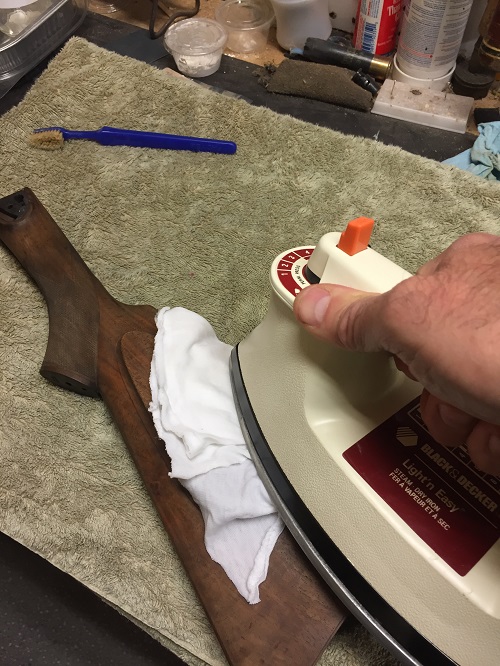
The rear stock had some unusual places where the oil would keep weeping from. For whatever reason, this spot on the wrist was a recurring problem. I applied heat until it got wet looking, then wiped it with an acetone soaked rag.
enb6p8J.jpg

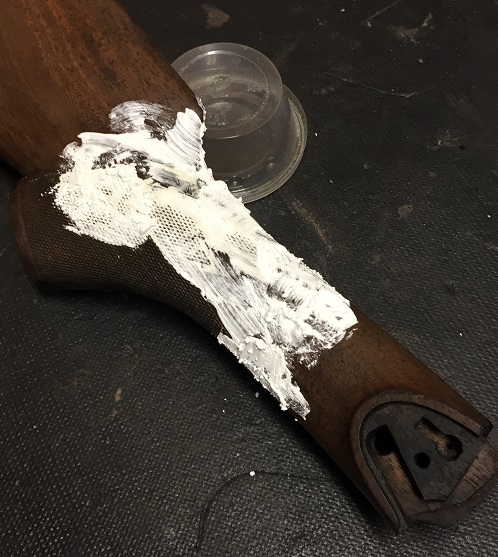
I even applied "whiting" to the area with mixed success. It is pretty messy for what you get in return. I found the heating and wiping method just as effective.
GhqJqkK.jpg

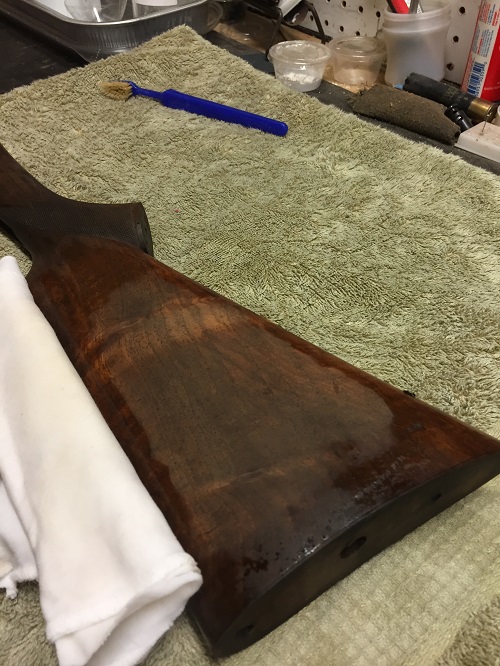
Dents and dings were steamed out fairly aggressively. I did the entire stock and really concentrated on the bad spots.
veMc5rR.jpg

That ding on the comb lifted completely, but the little series of dings near the butt didn't quite come out.
5udIiDG.jpg

Now I am on to using two-part wood bleach in an attempt to even out the colour between the stocks. That damned oil is still leaching out if you let it.
pDHa9Jj.jpg

Here it is after several applications of wood bleach and MINIMAL sanding. I am doing everything I can to stay away from removing wood, but in the next step while applying the oil finish and filing the pores, I will use fine wet/dry sand paper backed with an old rubber eraser to work up the "slurry".

This was my first time using wood bleach. I saw that Claudio used it on Canvasback's Lindner and thought I would have a go. I was nervous at first and worried it would make walnut look like birch, but it really didn't as far as I can tell. It does remove staining from the wood, but only a little at a time. I'm not sure if I should go a little more with it or leave it alone...

Anyone have any suggestions for the best way to seal the wood at the head of the stock that mates with the metal? I was thinking of just painting clear polyurethane on it with a tiny paintbrush.
 
Dilly, I have heard of people sealing the wood with Cyanoacrylate (superglue) and also of course epoxy. I haven’t personally used either.

Edit to add: I do know that Chris Dawe has on some of my guns used epoxy to both strengthen and seal the wood as well as build it up in places where the wood contact surface has shrunk to get a very good wood to metal fit again after 100 years.
 
Last edited:
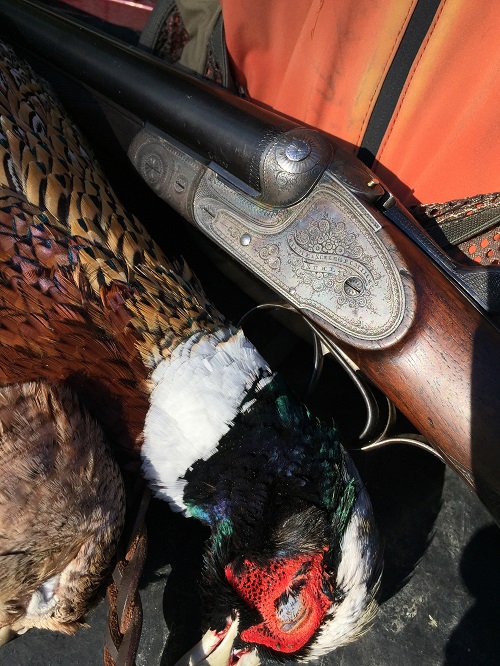
It makes me a little sad that this lovely gun has a name that is either a mouthful or a suggestion it is named after a dimwit. People sometimes comment, "nice gun! what make is it?" and I usually just reply "its German"...

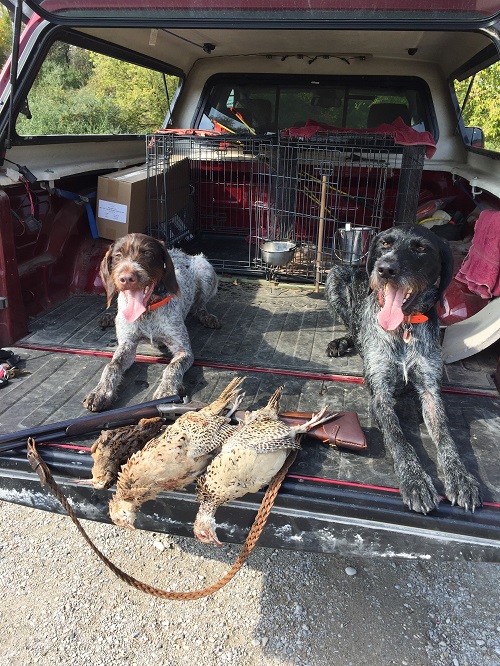
That said, it is my winter project. I bought this gun earlier this year from a fellow CGN'r and waited till the fall upland season to really see if it was going to be a keeper. After getting used to the slightly different geometry to the triggers, and putting on a leather slip-on pad to bring out the LOP, I fell in love with it.
7UKNYdB.jpg


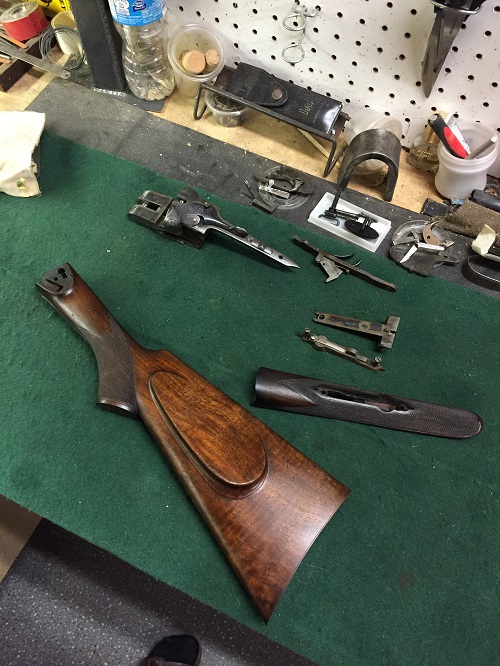
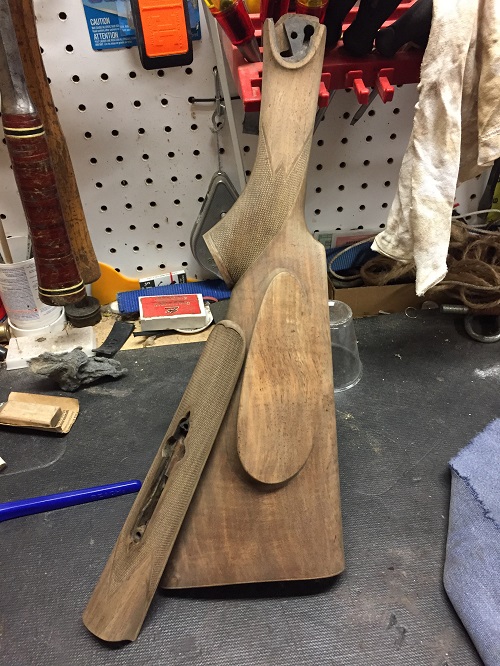
But, being around 100 years old, I decided to try to breathe some new life into her. Apart she came...
yb9LfXY.jpg


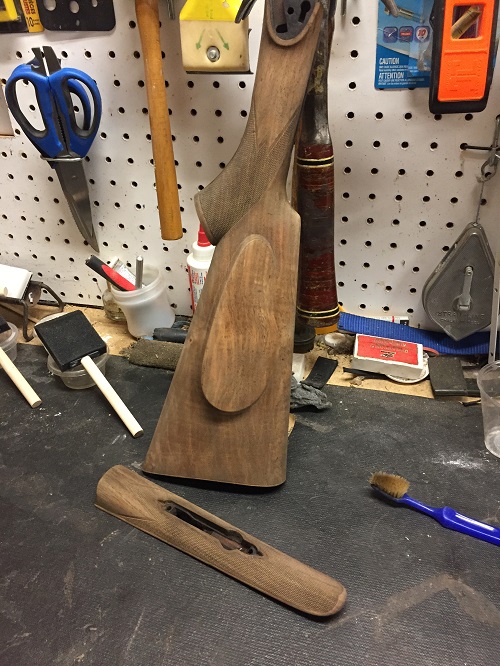
The pictures don't show it, but the stock was full of dings and dents from being used in the field. The forestock was noticeably darker (and dirtier) than the rear, and although the rear stock appeared to have some decent figure, I thought it had the potential to be a bit more brilliant.
zLbsLas.jpg


Same with the metal bits. I figured they could do with a good ultrasonic bath, hoping some of the case colour I could see under the grime, might pop back out.
KgxOaXL.jpg


Whatever happens down the road, this gun will remain a working gun and regardless how pretty it may or may not turn out, I intend to use it A LOT.
hqvfPCK.jpg


Stay tuned


I'm curious as to what Gauge she is ? 1216 20 28 ? nice looking shotgun.
 
Should have said earlier, this gun is a 16ga with 2 9/16" chambers 28" barrels.

So, I ended up doing one more acetone soak and one more application of wood bleach. I don't think I got all the oil out, but pretty close.

30otRFi.jpg

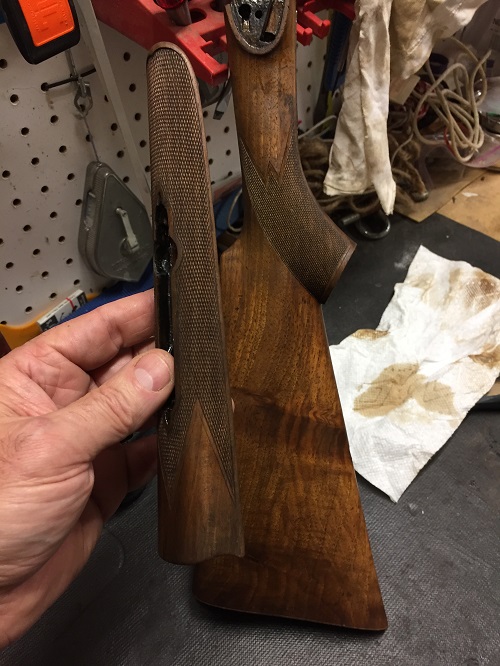
This is the set before the application of any oil. I am happy with the way the forestock lightened up, but I figured it was going to be darker no matter what I did.

FCca1G3.jpg

I used "super glue" to seal the stock. This stuff dries like glass.
LacPMuz.jpg

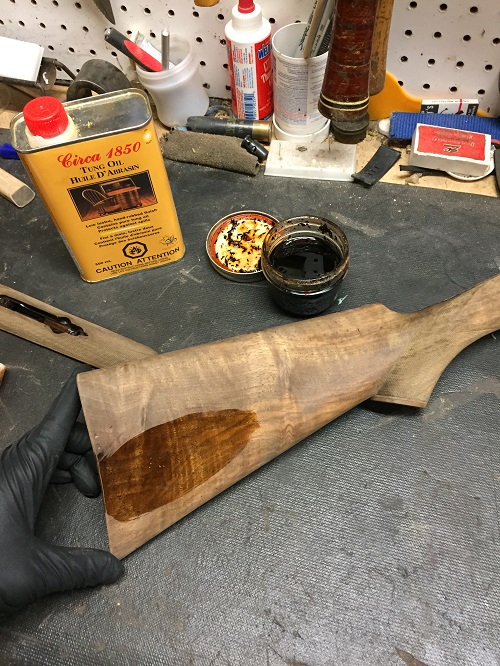
The "first wipe" of oil is always my favourite moment in a stock resto. I am using tung oil that has been infused with alkanet root bits and a bit of turpentine to thin it. This stuff has been sitting around for several months. I got the red root back in the summer and mixed some up back then.
ZnZ7gIZ.jpg

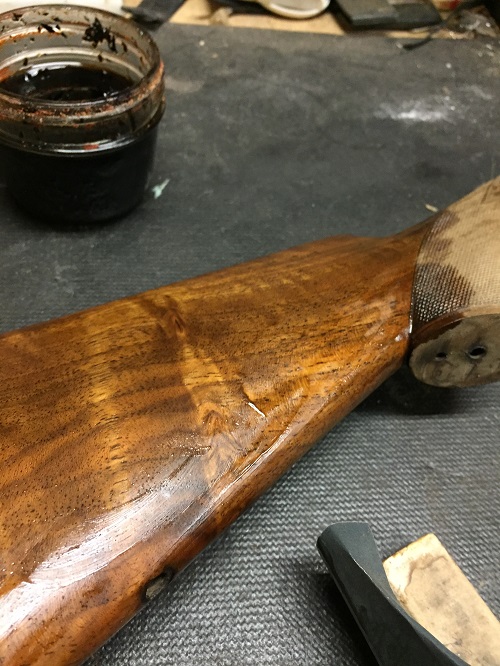
I know there are many ways to do this, but what I did is I applied the oil and then sanded it with 400 grit wet/dry paper backed with an old rubber eraser. You can see a light slurry is worked up by the fine sanding dust. I let this work into the pores of the wood hoping they get somewhat filled.
2oCz0Sj.jpg

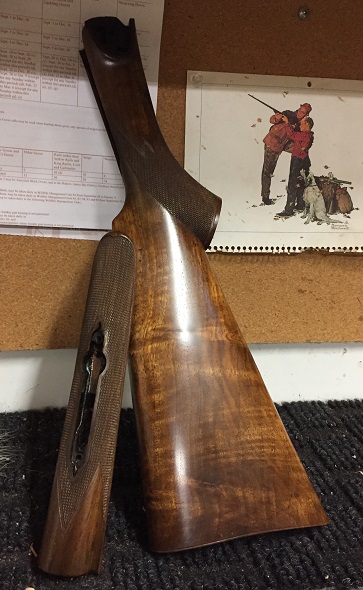
The "after" picture is a bit boring. At least the match isn't too bad front to rear. Now I get the privilege of applying this over and over and rubbing the finish over and over and over and over.....until it shines and (hopefully) takes on a nice reddish-golden brown colour.
 
I really like what you've done with that beautiful old gun! The original hand craftsmanship is exquisite, and your restoration effort matches the care and attention that went into it while it was built. And a 16 gauge on top of it all. Wow. Well done!
 
Great photos and truly an inspiration of what can be done by slow careful painstaking work. Just imagine what it should cost to have all this done by a qualified professional. And many of those professionals started out this way, by restoring their own projects.
 
Dilly, I have always heard keep the finish out of the chequering until the very end, and then just a light coat or two to give it colour and seal it. What's your thinking on that?
 
Dilly, I have always heard keep the finish out of the chequering until the very end, and then just a light coat or two to give it colour and seal it. What's your thinking on that?
I see nothing wrong with that. I do the reverse I suppose. I put a thin coat on first so I can gauge how dark it looks then avoid it from then on.
 
Yes, Carl Adolph Thieme and Heinrich Nicolaus Schlegelmilch is a mouthful when describing the maker of your gun. The background history including patent descriptions can be found on <germanhuntingguns.com>. Just look for the Thieme and Schlegelmilch name under "about the makers.
 
Back
Top Bottom