Double Charged a 357 Mag Round

Ganderite

CGN Ultra frequent flyer
Rating - 99.7%
355   1   0
I double charged ammo this week. I was testing some 148 wadcutters in a 357mag. I was expecting to see around 800 fps. First shot was 1420 fps. I thought that was an error of the chrony, so fired again. 1375 fps. Primers were very flat and cases hard to extract.

Went back to the Dillon and checked the powder thrower. 10 gr of Win 231. Was supposed to be 5 gr.

I set my powder thrower by throwing double charges onto the scale. So if I am trying to set a 5 gr load, I throw 2 charges and expect to see 10 gr on the scales.

On this occasion, when I threw the double charge, the powder over flowed the case. So I had to set the thrower throwing just one charge (as I would if I was using a big dose of a slow powder). But my brain did not switch gears, and I threw a single charge and still adjusted for 10 gr (instead of 5).

Lucky for me the charge I was looking for was not near max, so the double charge did not blow up the gun. I just used Wipe-Out to remove the extra copper fouling and the gun is fine. (S&W M13).
 
I put 29gr of H335 behind three different 55gr bullets in my .223. The first shot seemed ok, the second was a puff of smoke from the action, had to wrestle the bolt open. The case head was fully expanded, primer popped n had to pry it out of the bolt. So I moved onto the next load, all three loads did the same thing. I got home, pulled the bullets and I was one increment off on my 5-0-2 scale.

The rifle I was testing loads in was almost brand new, I feel lucky I didnt damage any thing or blow my bolt back into my mouth.

Now I use a cheap digital reload scale to set my thrower, once I'm close I dial in with the beam scale. Having the number shown digitally adds a safety check to my process.
 
I put 29gr of H335 behind three different 55gr bullets in my .223. The first shot seemed ok, the second was a puff of smoke from the action, had to wrestle the bolt open. The case head was fully expanded, primer popped n had to pry it out of the bolt. So I moved onto the next load, all three loads did the same thing. I got home, pulled the bullets and I was one increment off on my 5-0-2 scale.

The rifle I was testing loads in was almost brand new, I feel lucky I didnt damage any thing or blow my bolt back into my mouth.

Now I use a cheap digital reload scale to set my thrower, once I'm close I dial in with the beam scale. Having the number shown digitally adds a safety check to my process.

I did that once loading for a 22 Hornet. I could neve get it to shoot, until one day it grouped very well.

When I pulled a bullet to double check the load, I found I was one notch of the 5 gr tab out. The load was 5 gr light. But for that error, I would never got that rifle to shoot.
 
Thank you Ganderite for that, I’m fairly new to reloading and don’t do it on a regular basis so it is a good reminder to double and triple check everything!!
 
Thank you Ganderite for that, I’m fairly new to reloading and don’t do it on a regular basis so it is a good reminder to double and triple check everything!!

The most common cause of an over-charged case is almost undetectable. I have a collection of blown up guns (only 1 is mine) and most were caused by dumping the powder thrower powder back into the wrong can.

If you dump the powder at the end of the session, you know what powder it is and what can it goes into,

But if you sit down at the bench 3 weeks later, to load a different flavour of ammo, the first thing you do is dump the powder. You think it is H335, so you dump the 296 (ball pistol powder) into the H335 can. A month later you load some 308 ammo with what you think is good H335 and the gun blows up.

This is the most common source of blown up rifles.

Pistols blow up because a round got double charged. I prefer to use a powder charge that fills the case at least 55%, so a double charge is noticeable.
 
Lucky on this one. I use TiteGroup for my .357 and you know a hot load when it goes through. I have more issues with squibs, from the powder not dropping the small amount of powder (using a LEE turret).
 
I load with a measured Dipper.
I will PUPOSLY double charge one to see how far up the case it goes,...I get a mental picture of what an over charge with that particular powder looks like doubled.
It has Served me well over the years. I can spot it at a glance.
 
I have managed to avoid double charging any of my ammunition over the past 50+ years,
but I am a bit anal about powder usage these days [one tin on the bench at a time]

I once accidentally mixed a small amount of Norma 202 into a big tin of Norma 200, but that
did not result in a noticeable issue, since the amount was small & 202 is slower than 200.

I had a discussion with a gent several years ago. He completely destroyed a pristine, pre-
64 Winchester M70 in 300 H&H Magnum with a double charge of fast powder. He had developed
a "plinking load" using IMR 4227, and apparently doubled up on one. Only salvageable items
were the sling and recoil pad. Fortunately, he was not seriously injured. Dave.
 
I have managed to avoid double charging any of my ammunition over the past 50+ years,
but I am a bit anal about powder usage these days [one tin on the bench at a time]

I once accidentally mixed a small amount of Norma 202 into a big tin of Norma 200, but that
did not result in a noticeable issue, since the amount was small & 202 is slower than 200.

I had a discussion with a gent several years ago. He completely destroyed a pristine, pre-
64 Winchester M70 in 300 H&H Magnum with a double charge of fast powder. He had developed
a "plinking load" using IMR 4227, and apparently doubled up on one. Only salvageable items
were the sling and recoil pad.
Fortunately, he was not seriously injured. Dave.

Wow!! Blowed up real good...
 
yikes, 4227 would be easy to double charge a 300 H&H case


over the 17 or so years I've been reloading I have only once had a problem, 25-06 over pressure, 2 rounds on the range were way over, needed to tap open the bolt handle, so flow of brass in to the ejector, case heads showed extractor imprints and the primers fell out as the primer pockets were over-stretched.

I pulled the rest of that batch and dumped the powder, then reloaded them all. Some were a little over the max OAL so they got trimmed. I suspect that the powder was contaminated with a little powder left over in my powder throw.

I've been a little more vigilant on case trimming and emptying the powder throw after every batch of bullets, and checking that it is empty before I start.
 
Many years A friend loaded up some 223ai rem at my shop. So we and another mutual friend went to my camp. We set targets at 100yd, 200yd and 500yd across the ice on the frozen lake.
1 would shoot, 2 would stay camp by the stove.
My friend walks in with the savage bolt in his hand, the 223 brass stuck to it.
We took the remainder of the ammo back to shop and pulled it.
The 223rem reloads had just over 25.5 gr of IMR 4198, the max listed load in the data is 21gr.
Good thing it was a well built outfit.
 
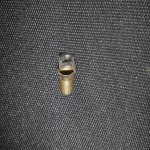
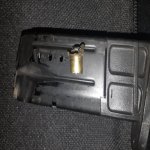
I recently double charged a 9mm luger round with 6.4 gr of titegroup. Split the grip on my S&W M&P 9mm. The rest of the case was stuck in the chamber. We were only able to knock half of the brass out with a squib rod when we were clearing the line.

My usual load is 3.2 gr of Titegroup with a 147gr Campro bullet seated on top.

Luckily the people I was shooting with were not injured, and I wasn't seriously harmed.

20211109_210307.jpg

20211109_210413.jpg
 

Attachments

  • 20211109_210307.jpg
    20211109_210307.jpg
    135.7 KB · Views: 180
  • 20211109_210413.jpg
    20211109_210413.jpg
    76.7 KB · Views: 181
Thank you Ganderite for that, I’m fairly new to reloading and don’t do it on a regular basis so it is a good reminder to double and triple check everything!!

always good to check for sure but reloading handguns and rifles do not meet the same issues at least i hope lol ...
 
I have managed to avoid double charging any of my ammunition over the past 50+ years,
but I am a bit anal about powder usage these days [one tin on the bench at a time]

I once accidentally mixed a small amount of Norma 202 into a big tin of Norma 200, but that
did not result in a noticeable issue, since the amount was small & 202 is slower than 200.

I had a discussion with a gent several years ago. He completely destroyed a pristine, pre-
64 Winchester M70 in 300 H&H Magnum with a double charge of fast powder. He had developed
a "plinking load" using IMR 4227, and apparently doubled up on one. Only salvageable items
were the sling and recoil pad. Fortunately, he was not seriously injured. Dave.

Glad to see the gent was salvaged as well!!

Just ran Quickload with a 100% case full of 4227 and a 125gr bullet....not knowing what his original 'plinking load' was made up as. 123K PSI!
 
Your energy was 662 ft/lbs and 621 ft/lbs - which is about triple what you expected at 800 ft/sec.

I had a 454 cylinder crack from overpressure. The chambers had been leaded up with 45LC so when I used full-length 454s, it cracked inward towards little pinned holes in the centre of the cylinder - they must be there to crack in, rather than blow out. The cases began to show the crack-lines on them and they were hard to extract. Ruger replaced the cylinder for me. I say this just so you might pay attention to yours.

Many years ago, a double-charged 45 acp gave me exactly double energy.
 
I test my power loads on the scale every other round then move up to around every 10 or so to make sure its dialed in. A guy could get a digital scale and weigh charged rounds.
 
I’ve been reloading since 1967, some years 10,000 rounds ( competitive pistol shooting as well as hunting) and never had an unintentional overload. The old reloading manuals which very few use today were very thorough and explicit in their safety rules and I’ve followed them all these years. Among the most important…
- NO DISTRACTIONS. No kids, no phone, no tv, no animals, no alcohol, this is serious business and requires your full concentration.
- One container of powder on the bench at a time, the one currently being used. When this powder is no longer being actively loaded it is put back in it’s own container and put away before any other powder touches the bench top.
- Double and triple check that you are using the correct load from the tables before actually loading even one cartridge.
- When loading a batch of the same load, physically check ( with a flashlight or a dowel ) that all powder charges are at the same height before seating bullets. If there is any noticeable difference, weigh some samples of the ones that seem to be overfilled and some that aren’t. If there is any discrepancy, dump the whole batch and recharge more carefully. If it happens again, find out why, something is wrong. This is especially important when using a powder measure.
An overload or even worse, a double charge is serious stuff, a clear warning that something was done wrong. Find the cause and fix the problem before something disastrous happens. And maybe consider that this isn’t a suitable hobby for you.
 
I recently double charged a 9mm luger round with 6.4 gr of titegroup. Split the grip on my S&W M&P 9mm. The rest of the case was stuck in the chamber. We were only able to knock half of the brass out with a squib rod when we were clearing the line.

My usual load is 3.2 gr of Titegroup with a 147gr Campro bullet seated on top.

Luckily the people I was shooting with were not injured, and I wasn't seriously harmed.

View attachment 541369

View attachment 541370

As I said....Pistols blow up because a round got double charged. I prefer to use a powder charge that fills the case at least 55%, so a double charge is noticeable.
 
I’ve been reloading since 1967, some years 10,000 rounds ( competitive pistol shooting as well as hunting) and never had an unintentional overload. The old reloading manuals which very few use today were very thorough and explicit in their safety rules and I’ve followed them all these years. Among the most important…
- NO DISTRACTIONS. No kids, no phone, no tv, no animals, no alcohol, this is serious business and requires your full concentration.
- One container of powder on the bench at a time, the one currently being used. When this powder is no longer being actively loaded it is put back in it’s own container and put away before any other powder touches the bench top.
- Double and triple check that you are using the correct load from the tables before actually loading even one cartridge.
- When loading a batch of the same load, physically check ( with a flashlight or a dowel ) that all powder charges are at the same height before seating bullets. If there is any noticeable difference, weigh some samples of the ones that seem to be overfilled and some that aren’t. If there is any discrepancy, dump the whole batch and recharge more carefully. If it happens again, find out why, something is wrong. This is especially important when using a powder measure.
An overload or even worse, a double charge is serious stuff, a clear warning that something was done wrong. Find the cause and fix the problem before something disastrous happens. And maybe consider that this isn’t a suitable hobby for you.

I love these threads because no matter how long you have been doing this you can still learn something from others mishaps and thanks to everyone that shares their experiences and best practices to keep us safe.

I do all the above and keep a detailed reloading diary of what I did each time I sit at the bench. You think you will remember something and 2 months later nada, I have to refer back to the diary and refresh my memory.

I was loading 38 Special on a Lee 1000 35 years ago and somehow a live primer got into the powder measure. I have no idea how it was in there but when I went to the range I started to find squib loads as I shot the rounds in my revolver. First one jammed the bullet into the barrel and it was easily removed and I thought that is bizarre. 4 rounds later the same thing so I removed the bullet and switched over to rifle for the rest of the shooting session that day. When I got home I pulled the rest of the bullets and found 1 in about 5 was a squib. Scared the hell out of me. I examined the Lee 1000 and found a live primer had somehow jammed in the powder measure and holding the powder back to make squib loads.

Friend of mine broke two of the above rules, two powders on the bench at the same time and kids distracting him when the wife was away. Standing next to him at the range he was shooting his Ruger Redhawk 44 and it went boom. It was very noticeable that it was about 2 times what you normally hear from the revolver. I turned to see what had happened and he was in shock and muttering something and bleeding profusely from his head and holding his hand in pain. The revolver had left his hand during the recoil, clipped the side of his head and flew behind him about 10 feet of so into a ditch. We found the revolver and put a bandage on his head and returned home. Didn't need any stiches thankfully and had a sore wrist for a few days. Took the Ruger to a local gunsmith and had him send it back to Ruger for examination with a note on what happened. Ruger sent it back and said it was fine , no damage had occurred. When he pulled the rest of his reloads he found the wrong powder was in them and some had a double charge.
 
Back
Top Bottom