











































You are using an out of date browser. It may not display this or other websites correctly.
You should upgrade or use an alternative browser.
You should upgrade or use an alternative browser.
cheap annealing option?
- Thread starter Irons78
- Start date

Yep, I have been for a few years now.
There are a few vids on u tube about wiring up the timer control to it so you can run on timed heat, cycle so no brass gets melted and things are more consistent. Purchased some bulk electrical wiring, 2 ft or so, and made my own coils. Made them shorter to the annealer, about 2 inches from end, and they seem to work great. Have a few different size coils for the different brass I run.
I have added 2 small computer fans to my set up. One on the desk fanning my block, and one on the end of the annealer, which is constantly running to pull heat out the back. I have run 300 - 400 brass in one sitting, no problems. Few seconds heat, then cycle an 8 second off.
Recorded all the brass I use for the time settings in my reloading book. Easy to change settings to the brass I'm annealing. Probably 4-5K of brass done now since I've had it.
I saw that video too. I was thinking just for small batches, 20-30 brass at a time, dim the lights and hold the coil over the neck and hold the button until the case colour change is just visible, and then raise the coil/turn off the unit...let cool 10 seconds or so and on to the next case.Yep, I have been for a few years now.
There are a few vids on u tube about wiring up the timer control to it so you can run on timed heat, cycle so no brass gets melted and things are more consistent. Purchased some bulk electrical wiring, 2 ft or so, and made my own coils. Made them shorter to the annealer, about 2 inches from end, and they seem to work great. Have a few different size coils for the different brass I run.
I have added 2 small computer fans to my set up. One on the desk fanning my block, and one on the end of the annealer, which is constantly running to pull heat out the back. I have run 300 - 400 brass in one sitting, no problems. Few seconds heat, then cycle an 8 second off.
Recorded all the brass I use for the time settings in my reloading book. Easy to change settings to the brass I'm annealing. Probably 4-5K of brass done now since I've had it.
Things happen sooooo fast with it, there is no way to just hold it and heat with any consistency. No way to hold for say 2.5 seconds. That is the whole key of annealing, to be constant.
The timer and set up is peanuts to the main annealer. 20 min maybe to wire it up, set it up, and run with it.
The timer and set up is peanuts to the main annealer. 20 min maybe to wire it up, set it up, and run with it.

Ditto here. Quick, cheap, and easy. Not as precise as some, but then, I'm not reloading for benchrest or serious competition. I am only trying to make expensive hard-to-find brass last longer.Cordless drill, deep socket with adaptor and propane torch, very fast and cheap.

I do the same but holding the brass in my fingers, works perfect and it’s fast enough for my small operation!Ditto here. Quick, cheap, and easy. Not as precise as some, but then, I'm not reloading for benchrest or serious competition. I am only trying to make expensive hard-to-find brass last longer.
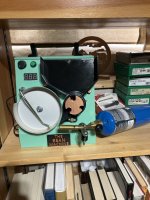
2- or 4 previous posts here on Gunnutz says they havehas anyone tried annealing brass with one of these?

And the temperature control is ? And the timing control is ?has anyone tried annealing brass with one of these? For $189 it seems feasible, and way less expensive than the commercial annealers....and less hassle than the torch method.
 how you gonna run this tool
Last edited:

Big bore dinosaur
CGN frequent flyer
- Location
- NORT OF COW.TOWN.EH
I payed less for my burst fire annealer..
They have refurbished model for sale .
Mine was a rebuild gen 1
Cost me 139 usd several years back.
Not sute where there price point is now, but the simple machine works well..
Given a call. Good customer service
Beats using a blow torch in a bread pan
They have refurbished model for sale .
Mine was a rebuild gen 1
Cost me 139 usd several years back.
Not sute where there price point is now, but the simple machine works well..
Given a call. Good customer service
Beats using a blow torch in a bread pan
Last edited:

I am fortunate enough to have a friend with an annealer. I use his annealer and he uses my chronograph.
If I had to buy my own I would get a Burstfire Comp Edge Pro for $300 CAD. By the time you build your own induction annealer with timer the price will be pretty close. At least with this annealer once it's set up you load it up and walk away. I would even suggest buying it with a group to split the cost.
If I had to buy my own I would get a Burstfire Comp Edge Pro for $300 CAD. By the time you build your own induction annealer with timer the price will be pretty close. At least with this annealer once it's set up you load it up and walk away. I would even suggest buying it with a group to split the cost.


And the temperature control is ? And the timing control is ?
Ah so as long as you make the brass turn RED its annealed " Properly " - I See ! 
A few years back I used the torch method and put some 750f tempilaq inside a few case mouths and hit the flame. The paint turned black as the brass just barely started to change colour....not glowing red or orange, but just a hint of colour change. The paint verified the temperature, but the question is how long precisely does the case neck and shoulder have to be at that temp to effect annealing the metal structure?Ah so as long as you make the brass turn RED its annealed " Properly " - I See !
Big bore dinosaur
CGN frequent flyer
- Location
- NORT OF COW.TOWN.EH
Eric cortina has a u tubes video about this topic. Very infromative.A few years back I used the torch method and put some 750f tempilaq inside a few case mouths and hit the flame. The paint turned black as the brass just barely started to change colour....not glowing red or orange, but just a hint of colour change. The paint verified the temperature, but the question is how long precisely does the case neck and shoulder have to be at that temp to effect annealing the metal structure?
Anneal in the dark room to see the change of brass
Thanks I'll check those out!Eric cortina has a u tubes video about this topic. Very infromative.
Anneal in the dark room to see the change of brass

I hope to go this route in the fall. Seems simple enough. The concept makes sense to me even in terms of consistency.Yep, I have been for a few years now.
There are a few vids on u tube about wiring up the timer control to it so you can run on timed heat, cycle so no brass gets melted and things are more consistent. Purchased some bulk electrical wiring, 2 ft or so, and made my own coils. Made them shorter to the annealer, about 2 inches from end, and they seem to work great. Have a few different size coils for the different brass I run.
I have added 2 small computer fans to my set up. One on the desk fanning my block, and one on the end of the annealer, which is constantly running to pull heat out the back. I have run 300 - 400 brass in one sitting, no problems. Few seconds heat, then cycle an 8 second off.
Recorded all the brass I use for the time settings in my reloading book. Easy to change settings to the brass I'm annealing. Probably 4-5K of brass done now since I've had it.

Cheapest anealling option is a plumbers candle. All you need is the candle, a timer (cell phone) and a damp rag.
Light candle and heat neck and shoulder while holding case in your bare fingers. Start timer when neck hits the flame. When its too hot to hold drop on damp rag and stop timer at the same time. Wipe soot off with the damp cloth. On the next one take a second or so off the time and run it as an alarm. No need to burn your fingers every time.
It’s often called the John Barsness method; but he got it from a metalurist friend who worked it all out, then realized that he could dumb it right down.