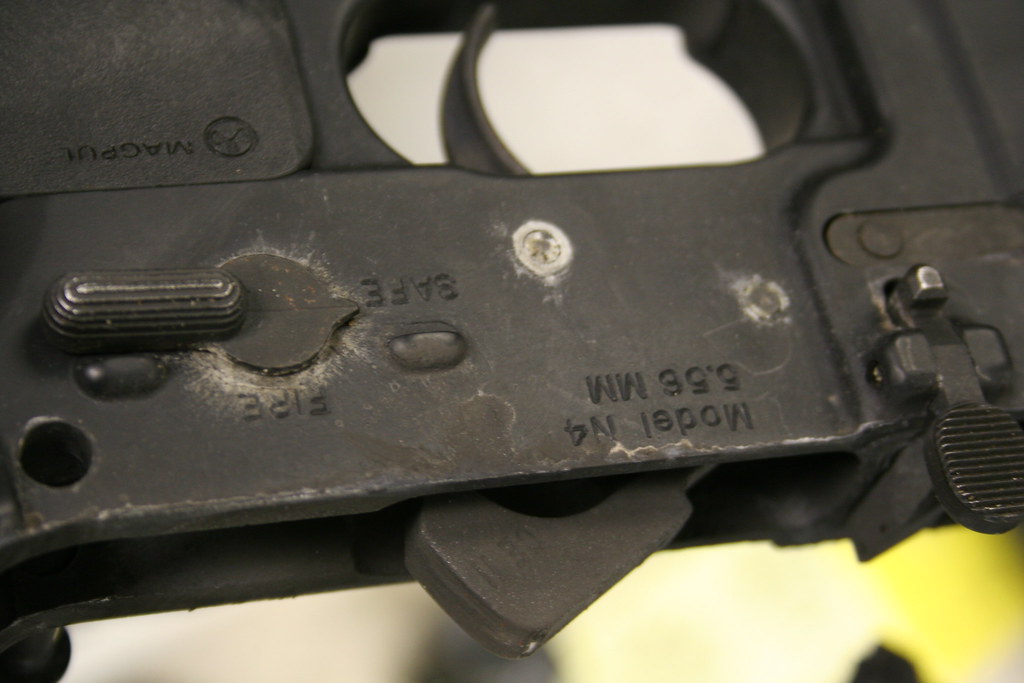
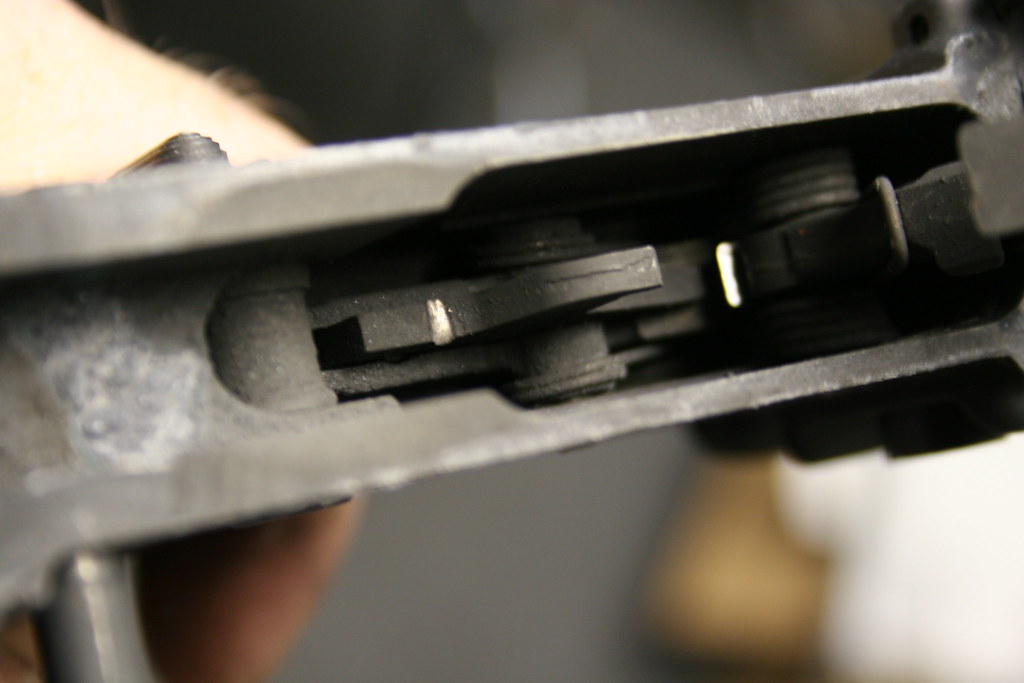
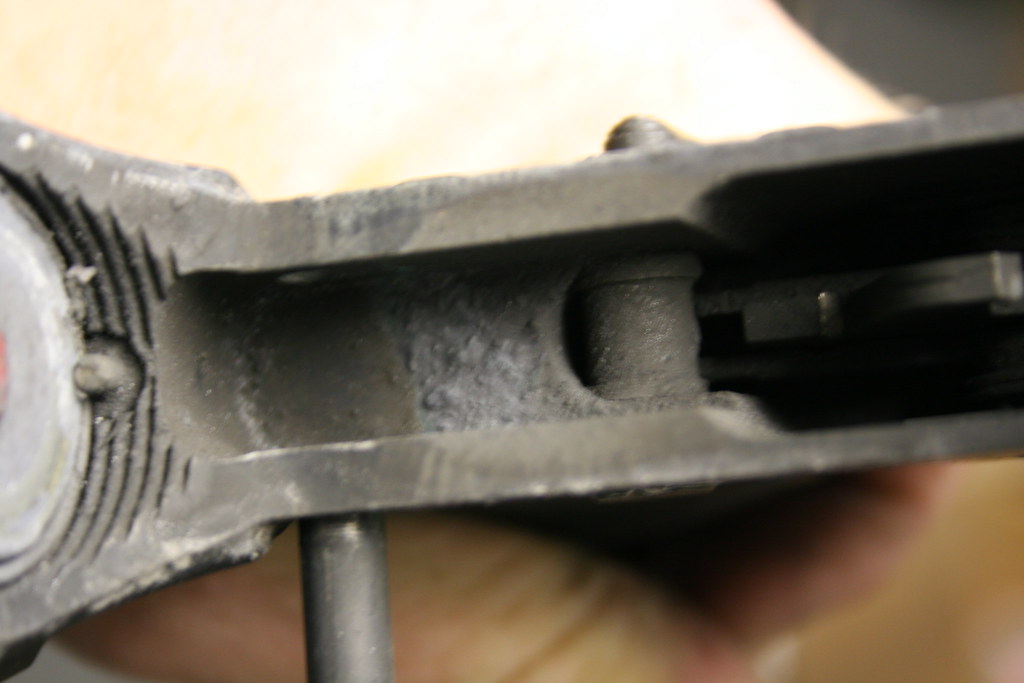
H&K MR308 coming soon!

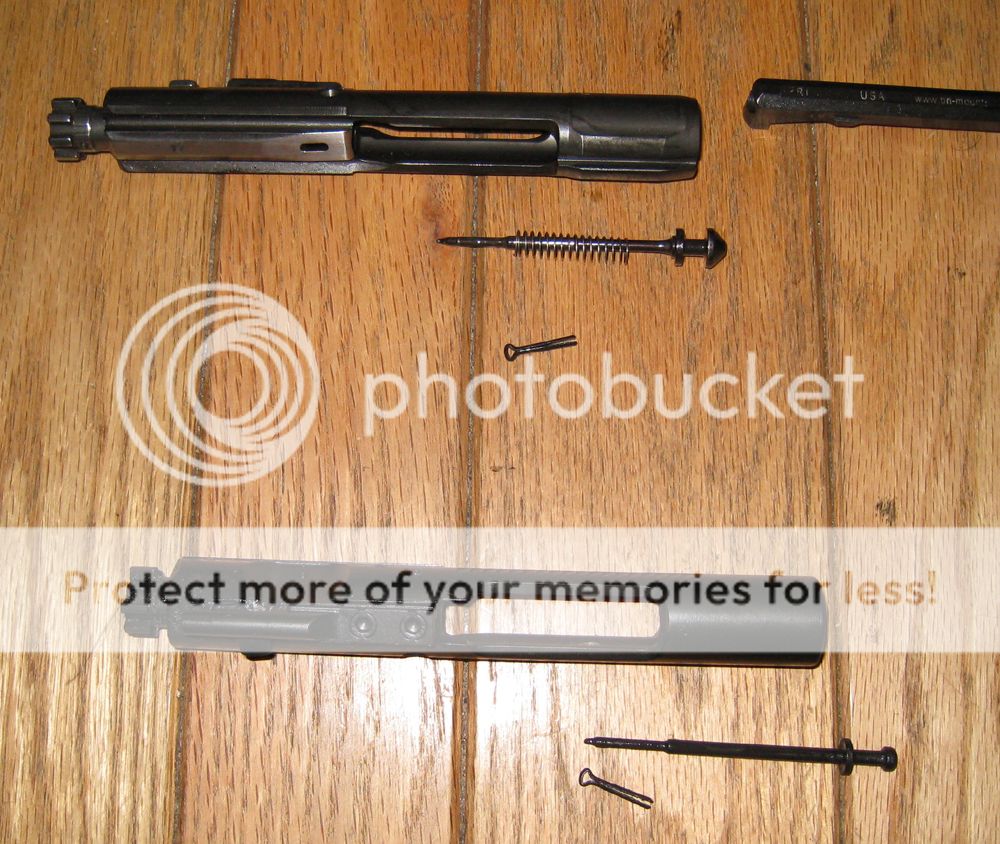
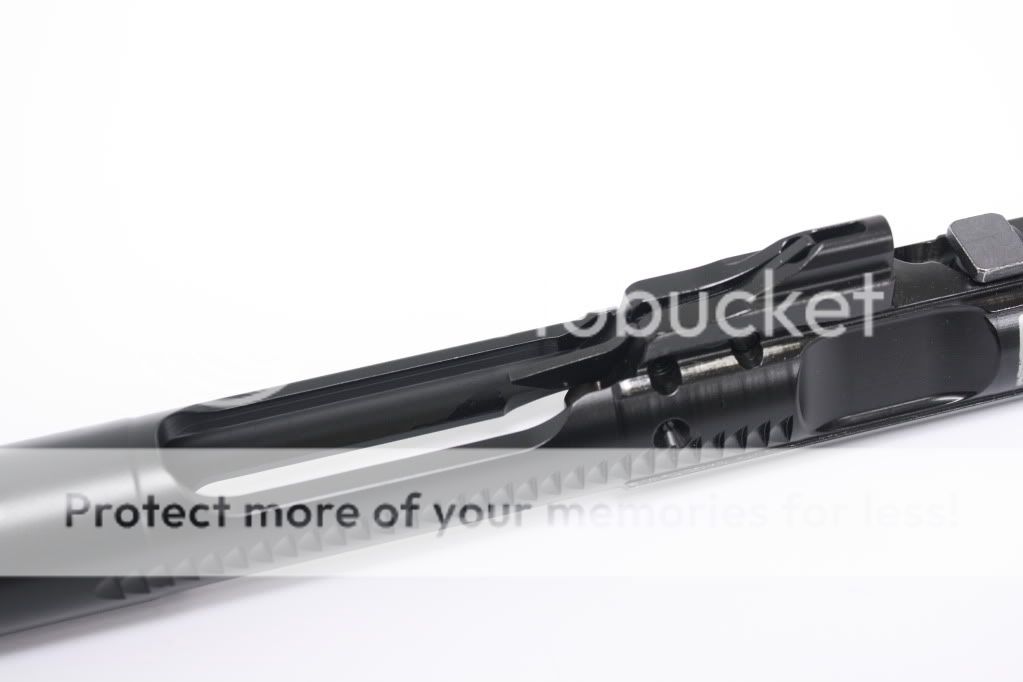
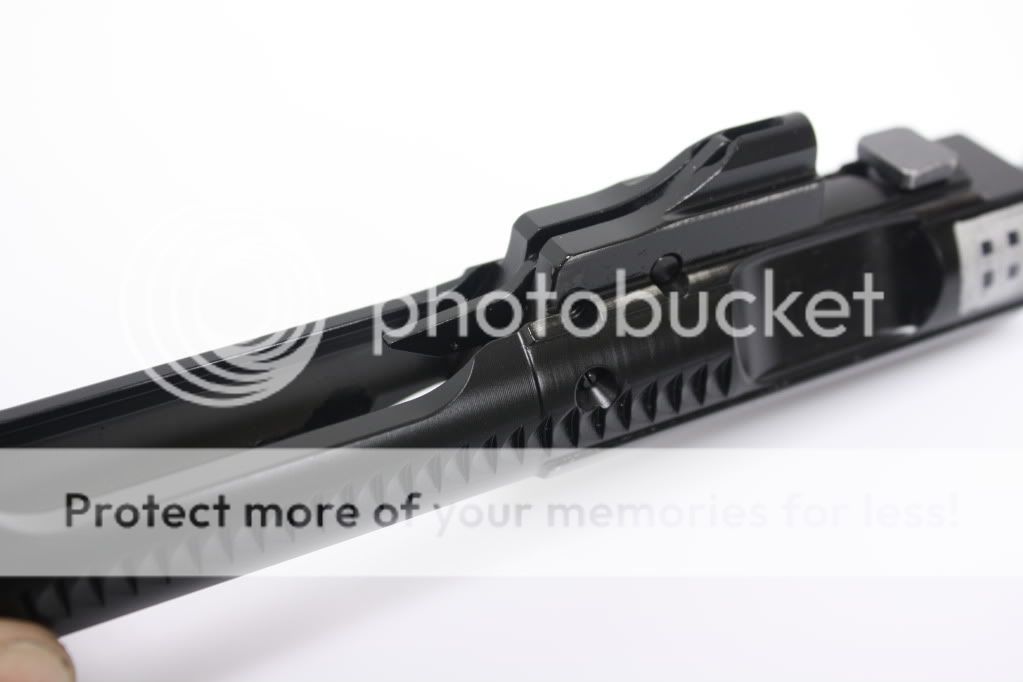
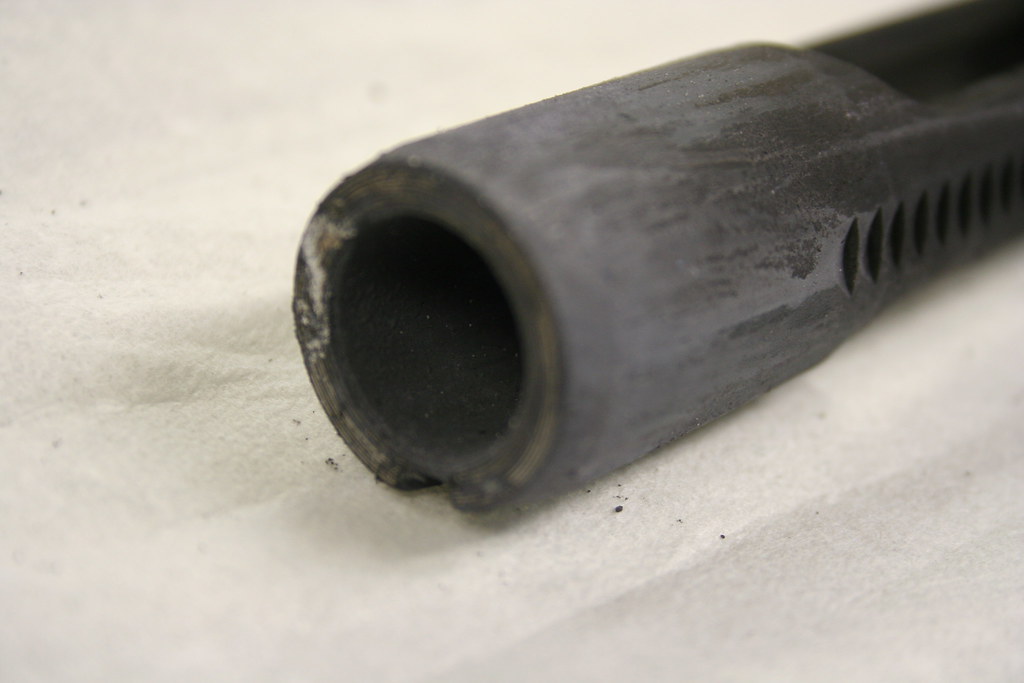
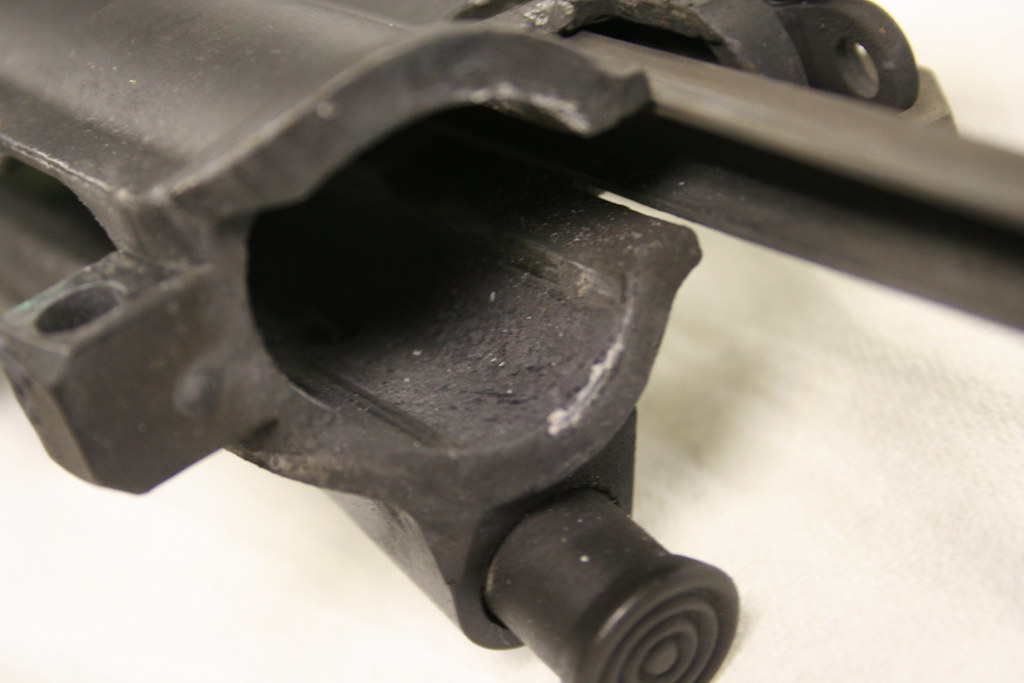
You can see by the bolt pics
2009-10-21012.jpg


011.jpg


That Hk did that intially, LWRCI and other have no down the same, and one individual is actually marketing a buffer that has a button that engages into the bolt carrier to eliminate the ability of the carrier to dive.
 
I saw the video of Smith & Wesson's answer to the bolt tilt with piston problem. They enlarged the rear of the bolt carrier. Basically just makes it a tighter tolerance and therefore, I guess, less tilt/slop...

Anyone have anything to add/include/experience with the S&W system?

What say ye...


The S&W system is actually made by Adams Arms. They also have stuck a spring behind the standard bolt. PWS now has a bolt made with a proper shoulder for a spring aswell, it can be used in any of the piston kits.
 
You can see by the bolt pics

That Hk did that intially, LWRCI and other have no down the same, and one individual is actually marketing a buffer that has a button that engages into the bolt carrier to eliminate the ability of the carrier to dive.

The S&W bolt I saw had the back end quite pronounced in diameter. It was quite a bit larger than the one in your pic.

Again, this was just a video I saw. Didn't see it live.

I'm not an engineer (although I like trains), but with the gas system applying direct pressure in exactly the same spot as the piston, why does the piston have this problem???
 
If KevinB was working for HK I bet he would be singing a different tune.
Industry insiders aren't usualy impartial.

I would tend to agree that many industry insiders are biased, however, in total fairness to KevnB he has been saying the same things since long before he went to work for KAC...

While he seems to have more inside info now about Knights product (which only makes sense)... I don't see where he is saying things much different than he did before. In the very early days he did show a lot of interest and faith in the H&K but time went on and first hand reports started to come in and issues started to creep up, he was pretty honest about his opinion change and concerns... that was before he got the job at Knights.

You'd be hard pressed to find anyone who is truly "impartial" these days. Everyone seems to get something from someone or has some ax to grind or reason for promoting or bad mouthing a product. You can't 100% trust the magazine writers, the trade publications, the full time instructors, etc... everyone has something to gain.

Even in the forums... the people posting stuff often have no real first hand knowledge and simply repeat what they've heard or make s**t up as they go along... sometimes just to make themselves look good.

I've read a lot of posts that KevinB has made the last few years... long before his job at KAC... many of the things he commented on I had some knowledge about... I can say that the vast majority of his info was pretty good in my opinion... of course I'm biased too so take that comment with a grain of salt too ;)

Keep one other thing in mind. KevinB posts his real name as his Handle here on this forum... he also makes it pretty clear that he works with and is associated with Knights so anyone reading his POSTS can clearly see this information and decide if he is being biased or not. That is more than I can say for a lot of other users on various FORUMS including Gunnutz. Many people hide their identity and their affiliations behind annonymous UserNames and make no mention of who they are or what company they are associated with. This makes it impossible for readers to know if there might be a bias or ulterior motive to their posts... something to think about :)

Mark
 
I'm not an engineer (although I like trains), but with the gas system applying direct pressure in exactly the same spot as the piston, why does the piston have this problem???


The pressure exerted on the gas key in a DI gun is a softer energy.
The piston setups that hit right were the gas key would be make the whole carrier vibrate more, makes the metal resonate like a hammer hitting it.
 
The pressure exerted on the gas key in a DI gun is a softer energy.
Nope. There is no pressure on the gas key. The gas key directs the gas into the bolt carrier, where it acts on the bolt and carrier, pushing them apart like the piston in an internal combustion engine. Hence the gas rings on the bolt. So the force is directly aligned with the centre of mass of the carrier, and no tilt (also partially unloads the locking lugs while they rotate). Part of the genius of the DI design.

http://en.wikipedia.org/wiki/AR-15#Operating_mechanism
 
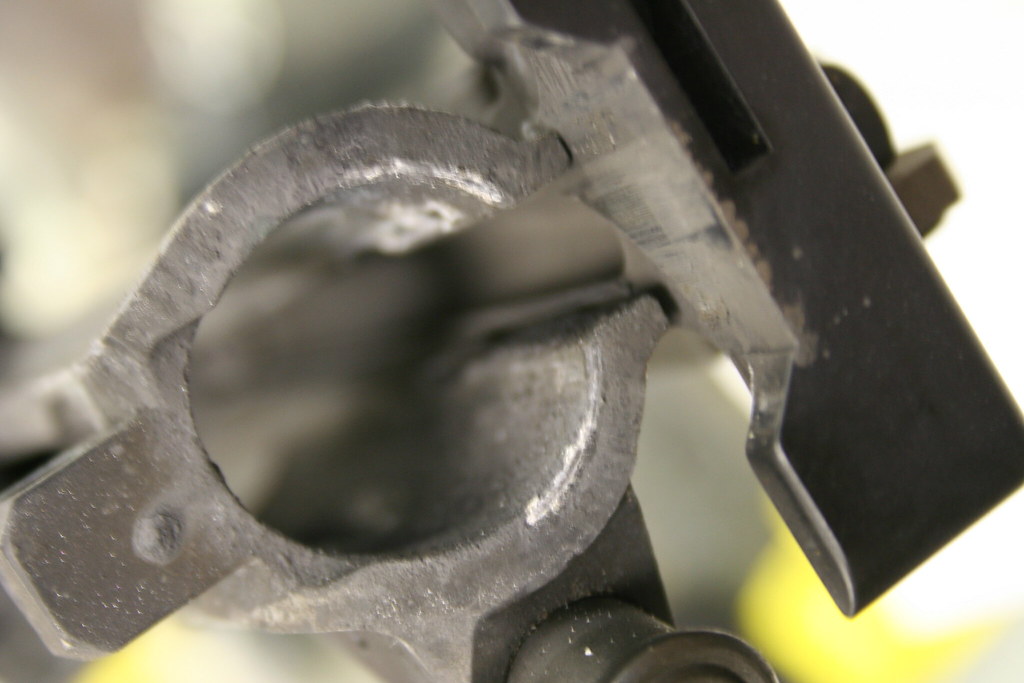
The one thing one the Hk417, is that unlike us (KAC) and all the other similar 7.62mm gun providers, is they build their own buffer tube dimension so they did not have to reduce the diameter of the bolt carrier.

If you see and SR-25, Armalite AR10 (the current ones, not the original Armalite) they reduce down to fit the standard 5.56mm buffer tubes.
This was an economic move by Reed Knight and Gene Stoner when KAC got into the SR-25, Hk saw that they could improve upon that aspect. This was why the easly SR-25's used M16 bolt catches (and why we dont now, as the M16 Bolt Catch was NEVER designed to stop a 7.62mm bolt carrier and spring).


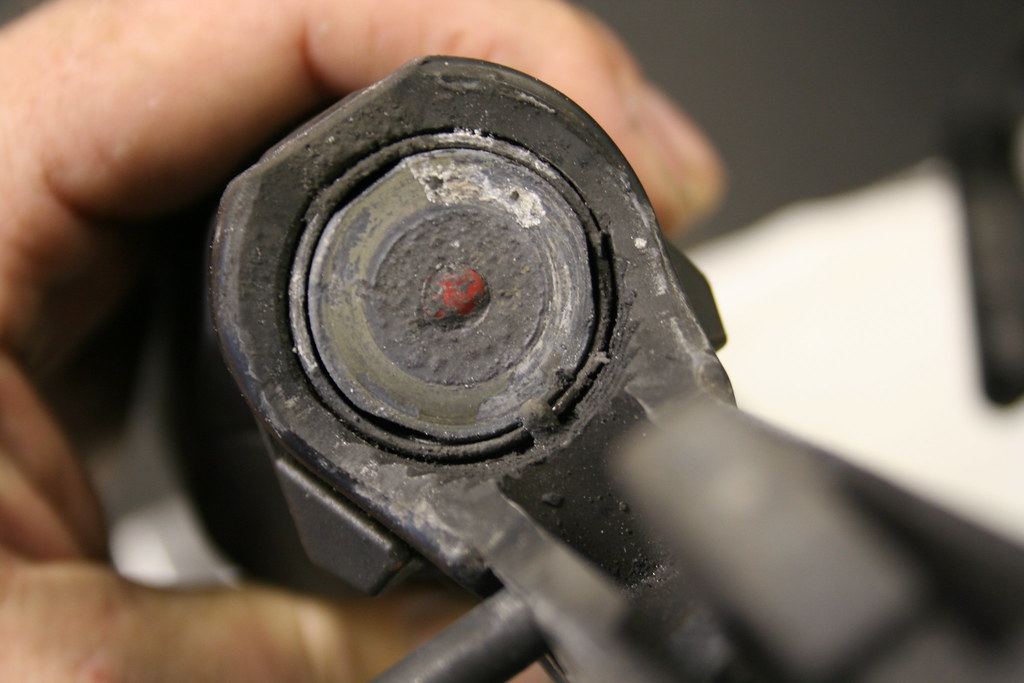
On the Hk416, you really can't get a bigger ring on the rear of the bolt carrier. If I get some time next week, I will take some pics of one of the ones we have here, that shows the carrier and the design diameter as opposed to the buffer tube/receiver extension inside diameter.


2009-10-21010.jpg

2009-10-21011.jpg


Interstingly enough the recent Hk416 pictures I have seem to show a much smaller carrier tail "swell" which confuses me.

The ones I had posted before are from a 08 vintage OTB model, while the newer ones are US Mil 09 guns.

hmm....
 
Nope. There is no pressure on the gas key. The gas key directs the gas into the bolt carrier, where it acts on the bolt and carrier, pushing them apart like the piston in an internal combustion engine. Hence the gas rings on the bolt. So the force is directly aligned with the centre of mass of the carrier, and no tilt (also partially unloads the locking lugs while they rotate). Part of the genius of the DI design.

http://en.wikipedia.org/wiki/AR-15#Operating_mechanism

Well ya , but the piston setups actually hit where the gas key would be on a DI gun not only off center but metal to metal contact unlike the DI gun the gas tube does not hit the gas key.

I still think the gas piston setups will be better in the long run, they just need good parts that fit tighter. The carrier and bolt fit can be tighter as you dont have to worry about expansion from the hot gasses like a DI gun.

Di guns have to have sloppy parts to run or they will jam pretty fast, you get so much crap just from the gun itself in the chamber and then add heat, outside garbage and different metals that expand at different rates and your asking for trouble if you dont keep it clean and well lubed.
 
The Direct Gas Inpingment model gives a smoother push, as opposed to the sharp rap of the piston impacting with the carrier.

Gene Stoner freely admitted he would never have made a piston gun, if the patent on the system was not owned by Colt once Armalite sold it off.
His Stoner 63 is an interesting gun, as are his AR-16 and AR-18.
However they are nothing when you look as his 'garage shop gun' and the other AR10 prototypes.

People mistake that a lot of the fouling comes from the gas system, most fouling on guns actually comes from the chamber as the casing is extracted prior to full powder combustion. The issue is that the systems in order to ensure reliable function want to impart extraction force earlier than later when it may be too late to ensure reliable function.

You can play with cam path angles - Ak style guns are easier to do in this respect, and why our PDW was an Ak style bolt system.

This is exceptionally visible in suppressed weapons as the backpressure blows so much crap back into the gun.

A well balanced and built 5.56mm DI gun should be able to do in excess of 3500rds with no additional lube and at least 1500rds for a 7.62mm gun.
 
I'd love to see the IDIQ from Crane...


If anything the Sig552 started the push for SCAR. We made M4 style lowers that used USGI mags for the Sig552' when the unit used 552's.

Now if the RA gun was the push for SCAR, why did LTC ret. Gus Taylor at Crane disqualify you guys from the get go?

You've got to be kidding. Robinson's SPR-V so far outperformed the SR-47 that not a single operator wanted the SR-47. In fact, the SR-47 failed in testing so badly that and the were so many unfired rounds on the ground, the soldiers started called them "Knight Turds".

Whoever this Kevin B guy is. He's terribly misinformed. I wouldn't believe a word he says.
 
Nope. There is no pressure on the gas key. The gas key directs the gas into the bolt carrier, where it acts on the bolt and carrier, pushing them apart like the piston in an internal combustion engine. Hence the gas rings on the bolt. So the force is directly aligned with the centre of mass of the carrier, and no tilt (also partially unloads the locking lugs while they rotate). Part of the genius of the DI design.

Not entirely true. While the DI system on the AR imparts the energy in a more linear fashon as you make mention, there is pressure and force exterted on the key. This does translate to slight force that is not totally aligned with the center of mass of the carrier.
 
A well balanced and built 5.56mm DI gun should be able to do in excess of 3500rds with no additional lube and at least 1500rds for a 7.62mm gun.

Kevin, then why dont they?

Heat I think is the worst part of the DI. What I`ve notice on my PWS piston kit is everything stays cooler (except the gas block) and the lube is still there wet and shiney where my DI gets dry cooked looking.

Know what I mean?
 
Last edited:
People mistake that a lot of the fouling comes from the gas system, most fouling on guns actually comes from the chamber as the casing is extracted prior to full powder combustion.

doesn't make much sense if you are referring to locked breech guns unless you are talking about blowback.

once projectile has left the barrel, bore pressure is zero. unlocking in locked breech gun only occurs when the bullet has cleared the barrel entirely.
 
Does anyone have the pictures of that 10"/10.5" HK416 that ran suppressed through a carbine course. I don't think the guy cleaned his gun at all over 2 or 3 days. The upper was absolutely filthy. It still ran, but the sight of it would be a shock to anyone who thinks that a piston gun can't get dirty.

Found it. Credit to poster new-arguy on AR15.com

OK, I admit, they dont get as dirty. But run a silencer on anything and you'll get filth everywhere.

This is my HK 416 upper, I ran it with an AAC 416 silencer at the last Magpul Dynamics class here in St Augustine. 2 days, 2000 rounds. I only took the silencer off the start of day 2 for a few drills, I would guess about 150 rounds. All the rest were with the can. I dropped some lube in the gun at the start of the class, aside from that, no cleaning, no oil, nothing at all. No problems either, well, not really. I will admit, I have run regular DI guns like this without problems, but I needed to keep dumping oil on the bolt group. In fact, one of the guys who works with me ran his Noveske N4 with a AAC M4 2000 right next to me the whole class. His gun ran fine as well, but he did keep dumping lube into the bolt carrier.

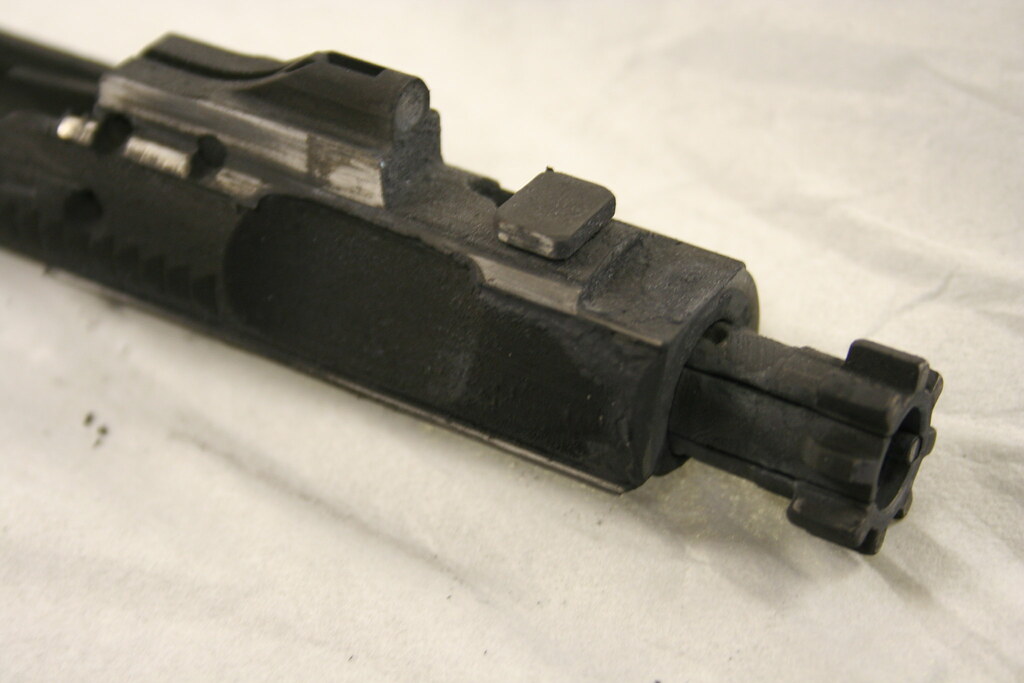
Anyway, the gun was fiilthy. I have never cleaned a gun that was so dirty. Grime and crud was seeping out between the upper and lower trying to escape. It is worth mention that a large piece of carbon built up and fell under my trigger group toward the end of the second night. I thought it was a primer, but when I opened the gun up and shoot the lower, it was plainly a piece of carbon. So technically, the gun did comletely fail. I have seen this same thing happen one other time, in another Magpul class (actually the one from the last DVD). My friend Derek was running a gun with a can on it for about as many rounds. Same thing, crud kept building up until some of it found its way under the trigger group.

Anyway, here's some pics of the filth.

3548680695_2d8feb0d23_b.jpg

3548682779_51c1312f34_b.jpg

3549493138_7b4aa78aec_b.jpg

3548687313_2dafd8ef07_b.jpg

3548689487_8449978d0e_b.jpg

3548691655_4ae7aa2caf_b.jpg

3548693999_efaf0fe1d3_b.jpg

3548696111_789f828630_b.jpg
 
You've got to be kidding. Robinson's SPR-V so far outperformed the SR-47 that not a single operator wanted the SR-47. In fact, the SR-47 failed in testing so badly that and the were so many unfired rounds on the ground, the soldiers started called them "Knight Turds".

Whoever this Kevin B guy is. He's terribly misinformed. I wouldn't believe a word he says.

:jerkit: At least I don't hide behind the keyboard


I never said the SR-47 is the ideal gun, the fact remains the requirement was to feed EVERY type of AK mag, well here is a hint, Ak's won't do that. Nothing passed the testing.


FYI - thats Neil's 14.5" Hk416 - I sold him it...


Mkb42 -- nope I am talking about locked breach guns. As the casing is extracted it pulls a lot of debris and partial combusted particals with it - plus the casing usually still has some small amounts of still burning propellant.


OZZ - We fire over 50k of rounds at KAC a week, we have DI guns that have gone to 5k with no additional lube.
 
I'd be interested in knowing if the shooter was running handloads or factory ammo, and if factory, what type - military ball or run-of-the-mill commercial ammo.
 
Back
Top Bottom