












































You are using an out of date browser. It may not display this or other websites correctly.
You should upgrade or use an alternative browser.
You should upgrade or use an alternative browser.
Black Yote
- Thread starter tracker
- Start date


Dominion Link
CGN frequent flyer
Very nice! It's great fun running coyotes with hounds! Are you running Walkers?
Will you be tanning the hide?
Will you be tanning the hide?


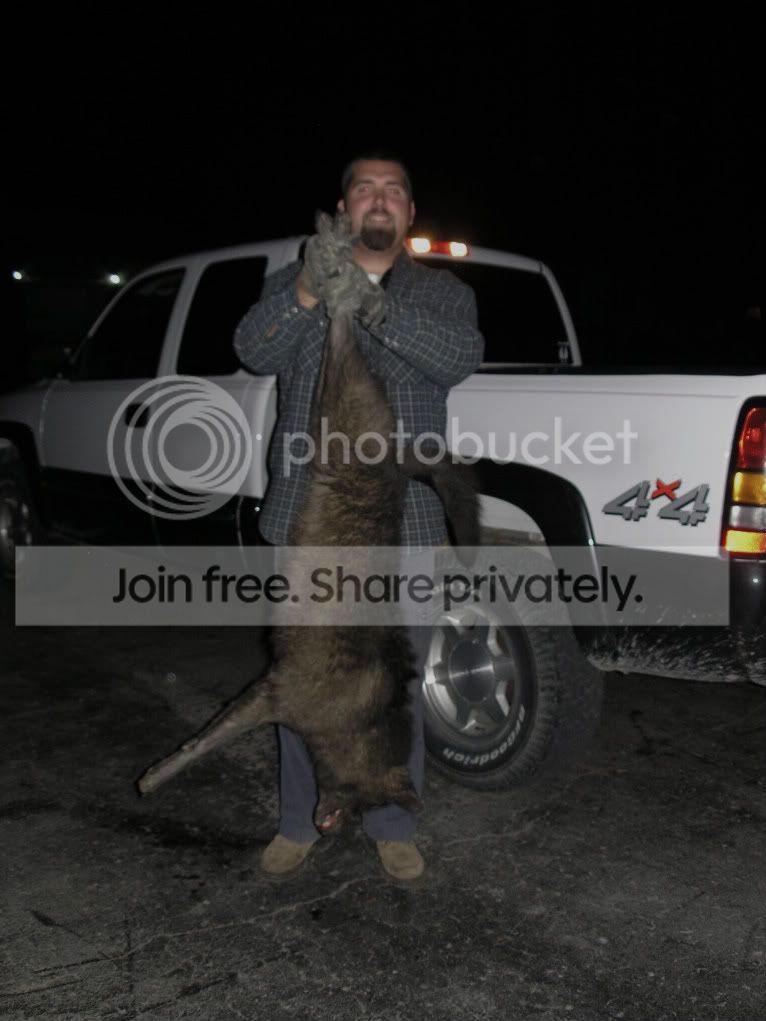
That's an eastern hybrid or tweed wolf
In other words its a wolf/yote mix commonly found in many parts of Ontario. I love the back phase we have one in our area possibly a few thats a pelt I would send to taxidermy.
In other words its a wolf/yote mix commonly found in many parts of Ontario. I love the back phase we have one in our area possibly a few thats a pelt I would send to taxidermy.
Wow, not sure if its the angle of the pic but the head seems bigger than most coyote I've seen. Like to see some more pics of this black strain if anybody has any. Will make a lovely mount, I'm impressed-----Cowboy


This sheds some light---still like to see some more pics----Cowboy
Over the past 9 years, Kays has photographed coyotes with remote motion sensor cameras, collected roadkill and scat, and obtained tissue and bones from fur trappers, hunters, and others. This material provided Kays and his colleagues with data to nail down the influence of wolves on eastern coyotes. The researchers sequenced a piece of mitochondrial DNA from more than 680 coyotes and measured the skulls of 196 animals. They grouped the DNA sequences by similarity and thus were able to trace the lineages of the various animals and determine their migration patterns.
The data showed that indeed coyotes arrived along southern and northern routes, with the descendents of the southern travelers having DNA much like that of their western counterparts, the researchers report today in Biology Letters. But the offspring of animals that had come along the northern route are much less genetically diverse--suggesting that a few individuals took this route--and have wolf DNA, most likely because their ancestors interbred with Great Lakes wolves. "The wolves are gone, but part of their genomes are still here," says collaborator Jeremy Kirchman, also with the New York State Museum. "This has allowed these coyotes to be so successful." The researchers did not find evidence of much hybridization with domestic dogs, as some have expected, says Kirchman.
Northeastern coyotes are not just larger but they also have wolflike features, the researchers found. These coyotes have wider mouths, with more surface area on the skull where chewing muscles attach, giving them a stronger bite for killing bigger prey. They eat more deer and they are comfortable in forests, much like wolves. More genetic studies are needed to pin down that wolf genes are responsible for all of these changes. But it's clear that "in many ways they are acting like a small wolf, but they look like coyotes," says Matthew Gompper, a wildlife biologist at the University of Missouri, Columbia, who was not involved in the study.
Over the past 9 years, Kays has photographed coyotes with remote motion sensor cameras, collected roadkill and scat, and obtained tissue and bones from fur trappers, hunters, and others. This material provided Kays and his colleagues with data to nail down the influence of wolves on eastern coyotes. The researchers sequenced a piece of mitochondrial DNA from more than 680 coyotes and measured the skulls of 196 animals. They grouped the DNA sequences by similarity and thus were able to trace the lineages of the various animals and determine their migration patterns.
The data showed that indeed coyotes arrived along southern and northern routes, with the descendents of the southern travelers having DNA much like that of their western counterparts, the researchers report today in Biology Letters. But the offspring of animals that had come along the northern route are much less genetically diverse--suggesting that a few individuals took this route--and have wolf DNA, most likely because their ancestors interbred with Great Lakes wolves. "The wolves are gone, but part of their genomes are still here," says collaborator Jeremy Kirchman, also with the New York State Museum. "This has allowed these coyotes to be so successful." The researchers did not find evidence of much hybridization with domestic dogs, as some have expected, says Kirchman.
Northeastern coyotes are not just larger but they also have wolflike features, the researchers found. These coyotes have wider mouths, with more surface area on the skull where chewing muscles attach, giving them a stronger bite for killing bigger prey. They eat more deer and they are comfortable in forests, much like wolves. More genetic studies are needed to pin down that wolf genes are responsible for all of these changes. But it's clear that "in many ways they are acting like a small wolf, but they look like coyotes," says Matthew Gompper, a wildlife biologist at the University of Missouri, Columbia, who was not involved in the study.


The group I have hunted with has shot a couple in the past that were black we have also gotten some that were more of a reddish colour and they tended to be bigger in size. Thought that they may have some dog in them but a cross with a wolf makes sence to.
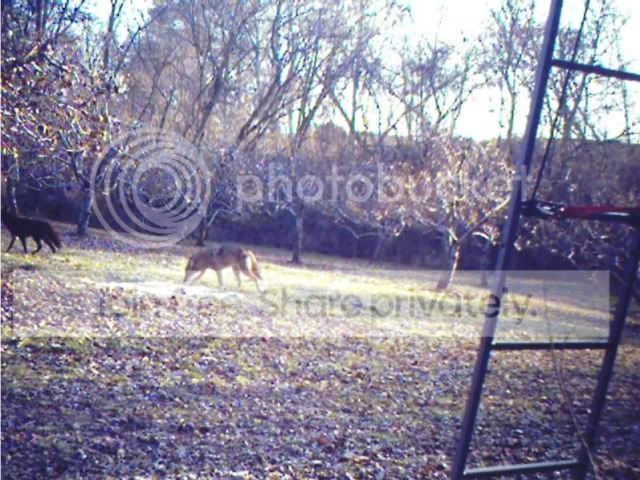

Eastern yotes have been proven to have Wolf Dna in them. They interbred with the few remaining wolves as they spread east. East of Western Ontario we'd get them in white, red, and black forms and at a cinsiderably larger size than the western dogs. Nice coyote but definitely a coyote. I spent two years of my life doing nothing but working with Eastern Yotes. I could almost be described as an "expert" (whatever that means).

They are all coyote. I read that any black wolf has dog genes in them. There are no black 100% grey wolves, if they are black they have dog genes in them- could be from hundreds of years ago though.
We got a reddish coloured coyote yesturday, looks to be 100% coyote but who knows?
We got a reddish coloured coyote yesturday, looks to be 100% coyote but who knows?
Last edited:

patricksbb391
CGN Regular
- Location
- Ottawa & WMU 62
Nice colour phase....even better that it's dead. Another big Eastern coyote. They are pretty amazing evolutionary critter.






















