0F 308 Lapua brass and neck tension

MartyK2500

CGN Ultra frequent flyer
Rating - 100%
278   0   0
Location
Quebec
Still new to reloading and have had this one issue pop up when I thought I had figured it all out.

I purchased 300x 0F lapua brass, expecting good results, and actually got worst results since, have a hard time going better than 3/4-7/8 moa (when I was 1/2 moa'ing it regularly with 4F FC brass, with downgraded reload equipment/components)
I have noticed that my neck collet wouldn't work well (too tight) and that bullets would seat real tight.
So neck tension is overboard for sure.
Met a south African Fclass shooter (great man, my 20 minutes chatting was a pleasure) today at the range, and confirmed to me it would definitely be a problem to have so much tension.
He spoke of expansion mandrels which we're a must on 0F brass.

For my 150x remaining 0F brass, would seating a bullet and pulling it act as an expansion mandrel? I am currently on holiday and plan to shoot a bit, ordering a mandrel would get me shooting outside of holidays.
Do I have a future use for an expansion mandrel other than on 0F casings?
And lastly, any way I can measure neck tension with some sort of tool?
 
Did you run all the new brass in a sizer? out of the box the necks are usually on the tight side.

Neck thickness varies between brands, so you might have to adjust your dies, bushing, expander ball, to get the right neck tension, ID size before seating the bullets.

I check my ID's using gage pins in .001" increments. Decent calipers work ok as well. I like .001"-.002" depending on the type of load, if its compressed I'll use a bit more neck tension so bullets don't slip back out... Pretty much I use as little as I can get away with.
 
Whidden custom dies sells expander kits containing five expander from bullet diameter to .004 under bullet diameter. This allows you to control the amount of neck tenshion with their full length dies. At the Whidden site they also tell you they get the most concentric cases using non-bushing full length dies.

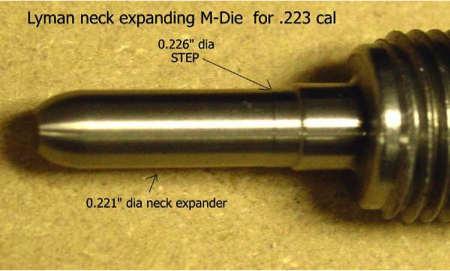
I have read that some competitive shooters are using "more" neck tension and sizing the necks .002 to .003 smaller than bullet diameter. In the photo below is a Lyman type "M" die for a .223/5.56. I read that competitive AR15 shooters were using this expander and .003 neck tension with the added benefit of this expander reducing neck runout. I use this Lyman type "M" die on my AR15 ammo and only apply a very light taper crimp.

ohIUcpd.png


The more the case is fired and sized the harder the brass in the neck becomes. The harder the brass gets the more it will spring back making the neck diameter smaller. This is where annealing the case necks helps keep case neck tension more uniform.

I full length my cases using Forster full length benchrest dies with their high mounted floating expander. These dies greatly reduce neck runout and make very concentric cases.

Bottom line, you have more control of neck tension with a bushing die "BUT" the bushing die may increase neck runout. With the Forster non-bushing full length dies you can send the die back to Forster and they will hone the dies neck to your desired diameter.

You might want to check your cases with a runout gauge after sizing, expanding and bullet seating and see where the problem starts.
 
Last edited:
Bushing dies seem to be at their best with neck turned and frequently annealed brass. Too much work for me...
 
Did you run all the new brass in a sizer? out of the box the necks are usually on the tight side.

Neck thickness varies between brands, so you might have to adjust your dies, bushing, expander ball, to get the right neck tension, ID size before seating the bullets.

I check my ID's using gage pins in .001" increments. Decent calipers work ok as well. I like .001"-.002" depending on the type of load, if its compressed I'll use a bit more neck tension so bullets don't slip back out... Pretty much I use as little as I can get away with.

Yep, at first.
I lost a brass piece as it was stuck in neck sizer collet.
There is no need to adjust dies, as soon as they are 1F i am back on track.


Whidden custom dies sells expander kits containing five expander from bullet diameter to .004 under bullet diameter. This allows you to control the amount of neck tenshion with their full length dies. At the Whidden site they also tell you they get the most concentric cases using non-bushing full length dies.

I have read that some competitive shooters are using "more" neck tension and sizing the necks .002 to .003 smaller than bullet diameter. In the photo below is a Lyman type "M" die for a .223/5.56. I read that competitive AR15 shooters were using this expander and .003 neck tension with the added benefit of this expander reducing neck runout. I use this Lyman type "M" die on my AR15 ammo and only apply a very light taper crimp.

ohIUcpd.png


The more the case is fired and sized the harder the brass in the neck becomes. The harder the brass gets the more it will spring back making the neck diameter smaller. This is where annealing the case necks helps keep case neck tension more uniform.

I full length my cases using Forster full length benchrest dies with their high mounted floating expander. These dies greatly reduce neck runout and make very concentric cases.

Bottom line, you have more control of neck tension with a bushing die "BUT" the bushing die may increase neck runout. With the Forster non-bushing full length dies you can send the die back to Forster and they will hone the dies neck to your desired diameter.

You might want to check your cases with a runout gauge after sizing, expanding and bullet seating and see where the problem starts.


Case runout is not the current problem.
Altough very good information given i have noted it.
It's only with my 0F Lapua cases, i need some type of mandrel to resize them bigger, as neck is too small in inner diameter.
So far seating a bullet, pull out bullet, resize neck, seems like the way out of this short term.


Bushing dies seem to be at their best with neck turned and frequently annealed brass. Too much work for me...

I do neck turn, anneal, collet neck size every firing.
That is not the issue here.
On 0F, there is way too much tension, to the point where a full lenght resize or bushing resize will get stuck in the neck.
 
I have a little over 3000 Lapua cases and have never run into the problems you are having. I do not neck turn as I do not believe that it is needed unless you have a tight necked chamber. My match chambers (Obermeyer)do not have a tight neck. I use a Redding Type "S" die with bushings and bump the shoulder back .002" when resizing. Never annealed a case until this year.

Lapua brass is heavier than FC, Winchester, etc. You might need to tweek your load a couple tenths of a grain lower. Just curious if you check your velocity between the FC and the Lapua brass.
 
I've expanded necks with just the expander ball in my forster die, though I also made a few sizes of them to tweak stuff.
Sounds like he's got a lee collet die or some such.

The problem isn't the Lapua brass, its your equipment or what you're doing with it.
 
I have a little over 3000 Lapua cases and have never run into the problems you are having. I do not neck turn as I do not believe that it is needed unless you have a tight necked chamber. My match chambers (Obermeyer)do not have a tight neck. I use a Redding Type "S" die with bushings and bump the shoulder back .002" when resizing. Never annealed a case until this year.

Lapua brass is heavier than FC, Winchester, etc. You might need to tweek your load a couple tenths of a grain lower. Just curious if you check your velocity between the FC and the Lapua brass.

Once i have once fired, my lapua brass will give me 1/2moa or better for my second shooting through that brass.
So recipe feels good.
Do not have velocity numbers, ordered a magneto speed in may and dealer has failed to deliver or give comms, will look into it soon again.
As lee collet die can work the way it's suposed to work and bullets are much easier to seat.


MartyK2500

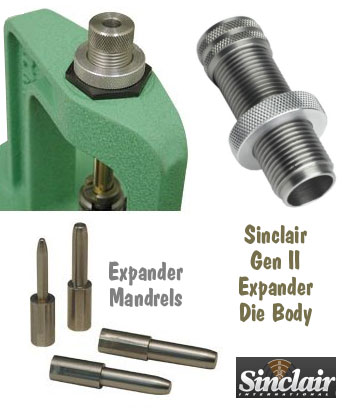
I also have and use the Sinclair expander die below, and the link talks about using this expander with new Lapua brass and dealing with your problem. You can get two diameter mandrels, .001 and .002 smaller than bullet diameter. Normally one expander is used for neck turning and the other for normal neck expanding.

Expander Mandrels and Neck Tension
http://www.accurateshooter.com/technical-articles/reloading/expander-mandrels-and-neck-tension/

sinclairexpander350.jpg


Thank you very much Big Ed, read on that die through google and your link, seems like it's the missing part, for 0F lapua brass in my case.
Once it's fired back to normal for my process.
Since i want to shoot my new brass while on vacation and could go through it all, what is your opinion on using a bullet, seat it, remove it , then resize neck, times 150?
I only did it on one casing, and it brings back the collet die to it's original function, and the next seating feels like it always did.


I've expanded necks with just the expander ball in my forster die, though I also made a few sizes of them to tweak stuff.
Sounds like he's got a lee collet die or some such.

The problem isn't the Lapua brass, its your equipment or what you're doing with it.


I may be wrong, but i am not doubting my equipment.
Just missing one die for 0F lapua brass.
As on my second firing, i get 1/2 moa without working too hard @ 100M, and my collet die works the way it is suposed to.
Using redding body die 2 thou bump, Lee collet neck sizing die.
 
You must love cycling your press and handling your brass. Why use a body die, then a collet die, when you can deprime, resize bumping the shoulder .002" using a bushing die that gives you the desired neck tension all in one operation?
 
Brand new Lapua brass has very tight necks even after expanding with a sinclair mandrel you can have too much neck tension. Seating and pulling the bullet will be the best way for you to open them up at this moment. You will have trouble getting consistent seating force with new brass even after mandreled. I have found the force needed can range from 40-90 psi with an arbor press with the hydrostatic gauge. Try running a nylon brush through them with a power drill that will reduce the seating force needed. The best thing is to fireform them and your accuracy should come back.
 
Yep, at first.
I lost a brass piece as it was stuck in nenck sizer collet.
There is no need to adjust dies, as soon as they are 1F i am back on track.


Case runout is not the current problem.
Altough very good information given i have noted it.
It's only with my 0F Lapua cases, i need some type of mandrel to resize them bigger, as neck is too small in inner diameter.
So far seating a bullet, pull out bullet, resize neck, seems like the way out of this short term.


I do neck turn, anneal, collet neck size every firing.
That is not the issue here.
On 0F, there is way too much tension, to the point where a full lenght resize or bushing resize will get stuck in the neck.

When are you turning the necks, and what size are you turning them down to? I don't see how a Lee collet die will do you any favors on new brass... it's not designed for that.
Do you not have a FL sizing die?
 
Last edited:
The sponsor who sold me the brass suggested me to fireform it before use.
Using pistol powder and some type of oatmeal? Food to block the neck opening.
Next time i buy 300 brass for a new rifle or barrel i will look more seriously into it.
Right now, feels like i waster'd time shooting/loading 150 rounds, and trying to find a shortcut to get the other 150 to a decent plinking 0.6-0.7 moa round.
Loading and pulling a bullet does get me to the point of once fired, i may just do that and use cheaper hornady match bullets

Edit : Hitzy, yes i do
Brass is already set to correct headspace.
If i back FLS die so it doesn't bump the shoulders, i guess the mandrel in the die could open up the neck?
 
Edit : Hitzy, yes i do
Brass is already set to correct headspace.
If i back FLS die so it doesn't bump the shoulders, i guess the mandrel in the die could open up the neck?

I always run new brass through the FL die, 99.9% of the time it doesn't touch the shoulder or body as new brass is quite undersized already. What it does is align/round the neck for consistency.
Your new brass loads should shoot almost as good as your neck sized loads.
 
I always run new brass through the FL die, 99.9% of the time it doesn't touch the shoulder or body as new brass is quite undersized already. What it does is align/round the neck for consistency.
Your new brass loads should shoot almost as good as your neck sized loads.

You got the right answer for me thanks!
Just tried a casing in my full length die (which was still unused), I set it back be be 100% sure to not touch shoulders, it definitely did not touch body, resized the neck easily.
I can now seat bullets with what seems like a normal tension.
Got a feeling this setup will likely not yield better results than 1F with neck collet die, but at least now I can shoot my 150 rounds with a purpose, instead of just burning them downrange.
Next week on holiday while wife is working, Stittsville range may see me 3 days in a row!
 
I always run new brass through the FL die, 99.9% of the time it doesn't touch the shoulder or body as new brass is quite undersized already. What it does is align/round the neck for consistency.
Your new brass loads should shoot almost as good as your neck sized loads.

I also do the same with all new brass to make sure it is concentric as possible with necks the proper inside diameter.

Too many reloaders think using full length dies and the dies expanders will make the world come to an end. And these people need to rethink their methods, bushing dies come with expanders for reloaders who do not turn their case necks.

The text in blue below is from Whidden Gun Works, and the reason they write this is because when using a bushing die and if the neck is reduced .004 or more it will induce neck runout.

http://www.whiddengunworks.com/standard-reloading-dies/

"The non-bushing sizer die typically yields more concentric ammo in our experience. It also fully sizes the case neck fully to the shoulder for smoother functioning. Neck tension can only be determined by changing expander balls with the non-bushing die."

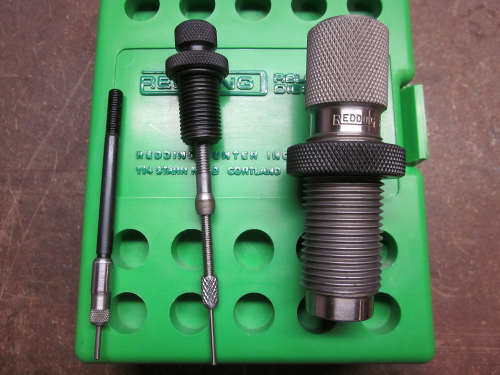
Forster full length benchrest dies make the most concentric cases out of all the dies I have ever used. And I have added Forster high mounted floating expanders to all my older RCBS and Redding dies.

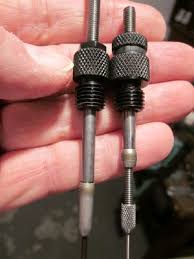
5kfnKwd.jpg


kWbieba.jpg


Bottom line, full length resizing new cases straightens and smooths out the case neck and makes a more concentric case. ;)
 
Last edited:
Back
Top Bottom