1 of 7 test dummy rounds really stuck in the chamber but measures same as others?

lavino

CGN frequent flyer
EE Expired
Rating - 100%
2   0   0
I am still a very beginner so please have some patience with me.

I created 7 dummy rounds as a practice and when I tried to chamber them in same rifle one round is kinda stuck in chamber and required me to fist slamp on action bar (it is a Troy PAR btw) to get the round out. Not impossible to do but really really stuck while all other 6 chambers and cycles smoothly.

1) They all ran through the same full resizing die in the same run.

2) I checked with the Lyman 223 gauge. This problem round is not really sticking out on both ends compare to the others.

3) They all using the same projectile same seating die, same factory crimp die. Every die ran the same settings.

4) all 7 rounds brass (6 are American Eagel factory and 1 is PMC factory) I first thought may be it was the PMC but checked the stamp it was an Eagle round. They should be all from the same gun for I don't randomly pickup other ppl's brass for I use a brass catcher with my Troy PAR. These 7 brass were randomly picked from brass collected from the brass catcher. But since I ran them through a full resizing die it shouldn't matter should it?

I am at office now but if anyone is interested I will post some measurements and pictures. I checked with my micrometer last night I didn't notice measurement is off compare to others in OAL, shell length, neck diameter etc. Nothing is really off the scale.

I will try to pull the bullet and re-do this one to see if problem happens again but I would like to know what could cause this so I can avoid it in the future.

How hard is it to pull the bullet now? Will those hammer bullet puller work after I ran a factory crimp on it?

Thanks in advance.
 
Take a black sharpie and coat the entire dummy well the bullet end half at least. Chamber and remove it. The shinny spot will show where the problem is. I bet Yomamma is correct thou.... (that sounds funny)
 
What does the bullet look like on the problem round? Did it engage the rifling and maybe get stuck? Maybe the bullet was not seated deep enough.

I'd just remake the dummy -- pull the bullet, resize the brass, trim if needed, re-seat the bullet, and crimp. Maybe use a new bullet if the original bullet did engage the rifling and is marked up. Don't throw away the marked up bullet -- you can still load and fire it.
 
The Sharpie test should show you the problem.

How long is the case? If it is too long it will engage the chamber throat, and compress the case mouth onto the bullet. This is a very dangerous condition. The technical name is "pipe bomb".
 
-If the bullet isn't seated deep enough, measure the OAL and compare it to other 6. If OAL is longer, then maybe the bullet hits the rifling. You can seat it back even if it's crimped. It might ruin the plating, but it doesn't matter on a dummy.
-If the case wasn't sized correctly, then the sharpie test will show it. If too many cases end up not sized correctly, you might need a small base die.
-If the case is too long and engage the chamber throat, the only way to know for sure would be to pull the bullet and measure the case length. You can apply sharpie up to the end of the mouth and maybe it'll show if that'S the problem. Did you trim all your brass to trim-to length?

I wouldn't buy a 25$ bullet puller to save 1 casing+1bullet worth a total of 50¢. Wait until you have enough bullet to pull and buy a die-type puller, if it ever comes to that.
 
Having a vernier caliper when reloading is a must have and reads in much finer increments than a felt tip marker. ;)

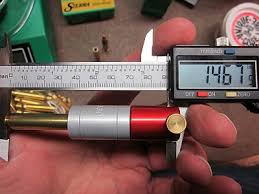
Also a Hornady cartridge case headspace gauge is a good gauge to have also, to measure cases before and after sizing.

Below measuring a "FIRED" .223 case in the Hornady gauge before sizing to know the proper shoulder bump.

H0SXHH8.jpg


Many case gauges only check case headspace length meaning shoulder to base measurements and not case diameter.

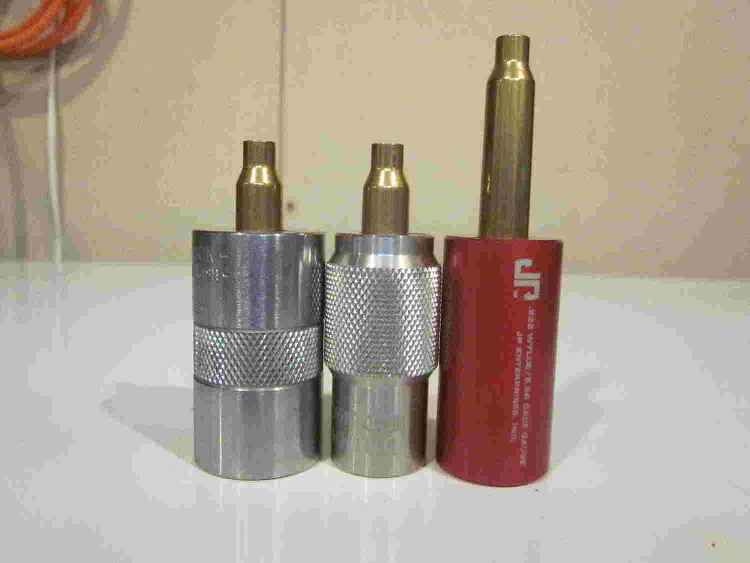
Below a Wilson, Dillon and JP Enterprise .223 case gauges with a case inserted base first. The red JP Enterprise case gauge is made with a finish chamber reamer and has a smaller case body diameter. I check all my loaded rounds with the JP Enterprise gauge as a final "plop test" to ensure they fit in the three AR15 rifles I'm loading for.

KSB3ZvP.jpg


My WAG to your problem, cases not trimmed to the same length and when crimping the case neck is bulging. Meaning your cases have a fat neck larger than the chambers neck diameter. And most new reloaders tend to over crimp their ammunition, I apply a very slight taper crimp to my AR15 blasting ammo to just streamline the case mouth for feeding. If you reduce the expander diameter to .002 to .003 smaller than bullet diameter a crimp is not necessary.

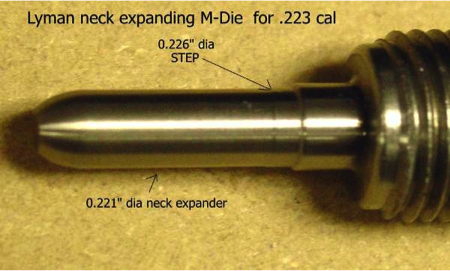
Below many reloaders with progressive presses use a Lyman type "M" expander. As you can see below the main part of the expander is .003 smaller than bullet diameter. And the case mouth is bumped slightly on to the .226 diameter section to help start the bullet straight and reduce neck runout.

ohIUcpd.png


NOTE, for semi autos and pump actions the resized case should be .003 to .005 "smaller" in diameter than its fired diameter for reliable extraction. This allows the case to spring back from the chamber walls and not rub or bind in the chamber during extraction.
 
My best guess would be an over long case that's jamming into the front end of the chamber. Did you measure and trim all the cases (if necessary) before loading the dummy rounds?
 
Is there a donut at the bottom of the case neck near the shoulder?

Can you measure the base near the case head? I had a round jam (hard) in my Eliseo tubegun recently because a batch of 1F Lapua brass (fired in a semi auto) got mixed up with neck-sized only brass and had to be tapped out (hard) with a rod down the barrel (gulp).

The adventures of handloading - always worth it though!
 
........................2) I checked with the Lyman 223 gauge. This problem round is not really sticking out on both ends compare to the others........

If that problem dummy round comes up short in the Lyman gauge at the Head(stamp) end, I think that this is your problem. The round chambered too deep and the unsized part of the case just above the head is too large and got wedged into the chamber. As to how you managed to bump the shoulder back too far is a mystery to me - it's usually the other way around thus producing a difficulty in going into battery.

When I make dummy rounds, I dismantle unfired factory cartridges, remove the primer and powder and then re-assemble to original COL and then double Factory Crimp them. Optionally, you can squirt a blob of silicone caulking or hot-melt glue into the primer pocket and trim flush with a razor blade after it has set/cooled. This is similar to Snap Cap Dummy Cartridges.

I only neck size my cases for this rifle using a Lee Collet Die. I have zero issues with chambering or extraction. Accuracy is excellent with any projectile of 55 gr or heavier. "Green Tip" 5.56 NATO cartridges are excellent in this rifle as it is chambered "5.56 NATO 1:7"

Finally, on a side note, NEVER fire steel-cased ammo in the Troy Sporting Rifle aka Pump Action Rifle as it has a fluted chamber and the first fired steel case will get stuck badly. I know this! (I didn't try a second time). Troy Defense warns of this on their website and in the Owner's Handbook but some dummies have to try anyway. Ya live and learn - sometimes the hard way...
 
Back
Top Bottom