A guide for identifying Soviet SxS shotguns available in North America - Part 1 (Izhevsk)

Horilka

CGN Ultra frequent flyer
Rating - 99.7%
396   1   0
Location
Toronto, ON
A guide for identifying Soviet SxS shotguns available in North America.
Intro and PART 1. Izhevsk SxSs.

(for part 2 see here)

Disclaimers:
  • This is just my interpretation of scattered publicly available information and my personal observations. I like to structure information and hate when there is no simple guide, so here it is.
  • I am not aware of any serious attempts to research, document, and publish the history of these shotguns. Articles in popular magazines and websites are all we have.
  • Very often, information is conflicting, so you will be the judge and I'm sure this guide has some inaccurate information.
  • The goal of this guide is to help you identify and understand what you have.
  • The guide is limited to SxS shotguns because I have no interest in O/U or single barrel models.
  • I plan to keep extending the guide as long as I have time and interest.
(Please note that "Izh" and "Ij" are interchangeable transliterations of "иж". Traditionally Izhevsk is spelled with "zh", but the factory preferred the "IJ" abbreviation on shotguns.)

Intro and a bit of history.

Why Soviet shotguns are interesting subject for research, collecting and use? The represent products of the country that doesn't exist anymore, they were made mostly on military firearm factories and similar processes of quality control resulted in quite reliable and sturdy models made from quality materials. They did not have the most technological advancements and features, no. They never were "the best shotguns". But they were honest workhorses of the bygone era and they deserved to be remembered in this way. Variety of the models, calibres, grades and variants of the same model creates a lot of opportunity for collectors.

As a side note: the number in the model designation refers to the year of adoption up until IJ-58 (e.g., IJ-58 = model 1958). After that, the number started referencing an internal model ID and had nothing to do with the year (e.g., IJ-26).

PART 1. Izhevsk SxSs.

We are going to start with Izhevsk. And we will begin with items I have never seen here, just for reference. There were several state Izhevsk factories that manufactured shotguns, and through time there were changed and reorganizations, but for the sake of simplicity of this guide we will consider them as a single entity.

In 1934, the “hunting rifles workshop” of Izhevsk factory was reorganized into a larger “shop,” or department. This new department continued production of:
  • IJ-5 – the last modernization of the Iver Johnson single-barrel shotgun, produced in Izhevsk until 1941 and after 1945 in Zlatoust. Zlatoust also introduced the ZK modification.
  • IJ-BK – 12ga and 16ga SxS, with internal hammers on side plates. Model of 1933, manufactured 1934–1938. The top lever acted as both lock and cocking lever. The letter "B" means "bezkurkov," i.e., "without hammers." Markings could read "Иж.Б.К" ("Ij.B.K.") As you can imagine, it was a rather clunky design, really hard to use and not very popular.
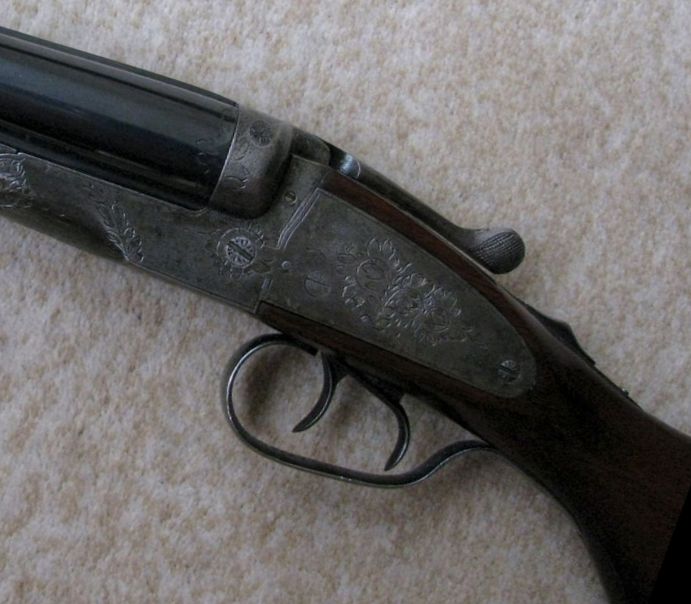
IJ-BK (from public sources)


After IJ-BK came:
  • IJ-B-36 (1937–1946, markings: "Иж.Б.36" / "Ij.B.36") - 12ga and 16ga, with traditional cocking system
  • IJ-B-36M (1947, small batch with ejectors) – 12ga and 16ga, with traditional cocking system
  • IJ-B-46 (16ga only, model of 1946)
  • IJ-B-47 (12ga and 16ga, model of 1947)
These models were better than the original IJ-BK but still not very successful. The victory over Germany in WW2 allowed the Soviets to tap into superior technologies.

IJ-B-36 (from public sources)


The next planned models were:
  • IJ-49 – a rework based on German Sauer shotgun (Model 8, Anson & Deeley boxlock action mated with the IJ-B-47 frame)
  • Izhevsk version of the Zlatoust ZK modification of the original IJ-5
IJ-49 had been manufactured only until 1952, when original firearms factory switched to Makarov pistols and SKS rifles, shotguns department became part of another Izhevsk factory. A bit messy story, but we have finally arrived at the first model that can be found in North America – IJ-54.

Available models guide (Izhevsk).

IJ-54
IJ-54 was a further Soviet take on the Sauer Model 8. The shotgun had a Greener crossbolt and cocking indicators. Made in 1955–1969, it was the first truly decent and popular model, and some sources believe it was the first USSR model successfully exported abroad. The drawbacks were its weight and manufacturing cost. It was also considered that 12ga was too powerful and not the best choice for commercial hunting, which was the big part of USSR export.
IJ-54 was mass-produced only in 12ga, there are mentions about 16ga and 20ga in catalogues, however it looks like they were made only on special orders and in very few numbers and no known examples survived. Originally, hammers were not rebounding, but after the IJ-57 development (see below), that was updated without changing the model name. Has auto-safety.
Barrels were 730mm and 750mm. Starting from 1955 only Custom and Improved grades got chrome-lined barrels, and in 1956 - all grades. Stock were in two configurations - most common is pistol grip stock, and then straight "English" type.
Variants. There were no "M" or any other variants, the exception is "IJ-54 Sport" - exclusive custom grade version that even had different shape of frame rear sides, they were made only for presentation purposes in small numbers.

Grades. In most cases the grade was not stamped on the flats; it was specified only in the firearm certificate (“passport”) along with the serial number

Model MarkingGrade NameKey Features
IJ-54 (plain)Standard / Base gradeStamped ornament decoration; walnut or beech stock; export versions had simplified engraving (ornament only, no animals) and large wavy “Made in USSR” on receiver sides.
IJ-54 (Sh1)Improved gradeCustom-finished; good shot pattern density; improved finish and engraving; walnut stock and forend; buttplate and grip cap accented with coloured inlay.
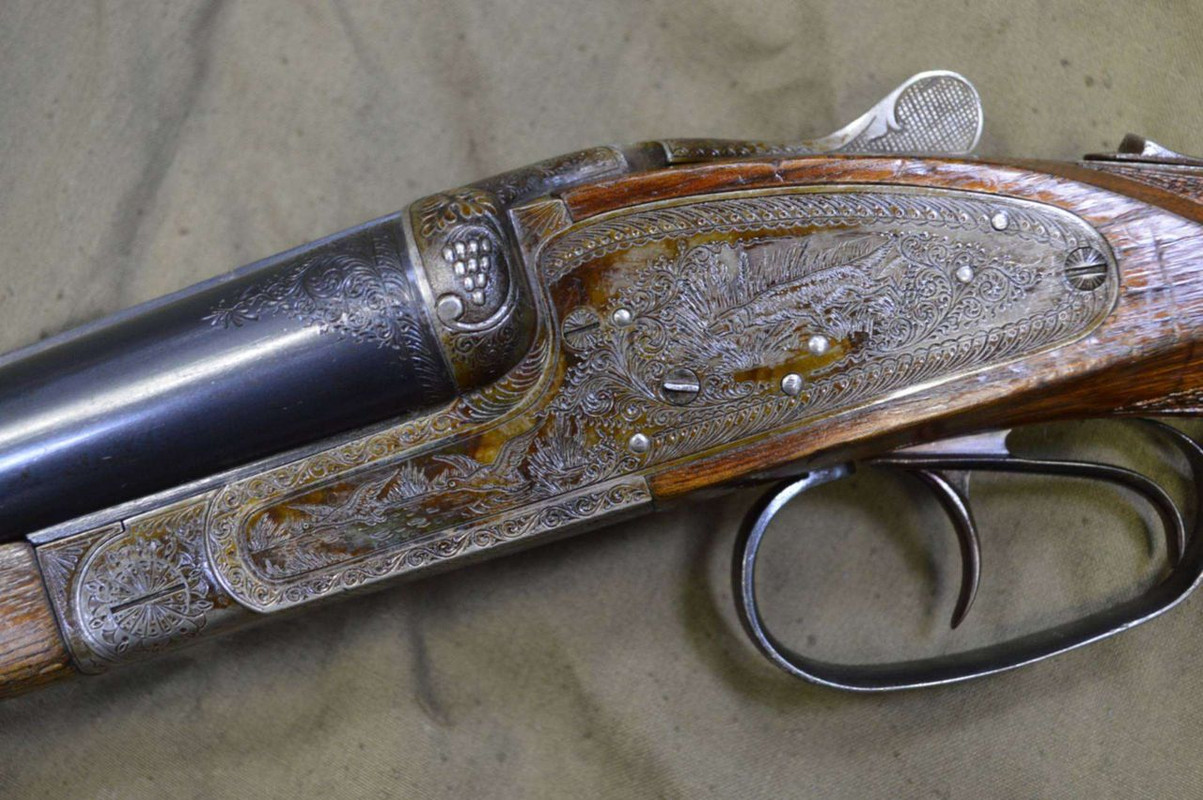
IJ-54 (Sh)Custom gradeCustom execution; superior shot pattern density; finely fitted mechanisms; decorated with ornaments plus animal/bird figures; chromed trigger mechanism parts; walnut stock and forend with coloured inlay on buttplate and grip cap.
IJ-54 (Sh2)Deluxe Custom grade (Level 2)Highest custom execution; very high shot pattern density; superior finish and engraving; walnut stock and forend; buttplate and grip cap with coloured inlay.
IJ-54 SportPresentation grade (special order)Made to special order; supplied with two barrel sets of different lengths; rich decoration; extremely rare.


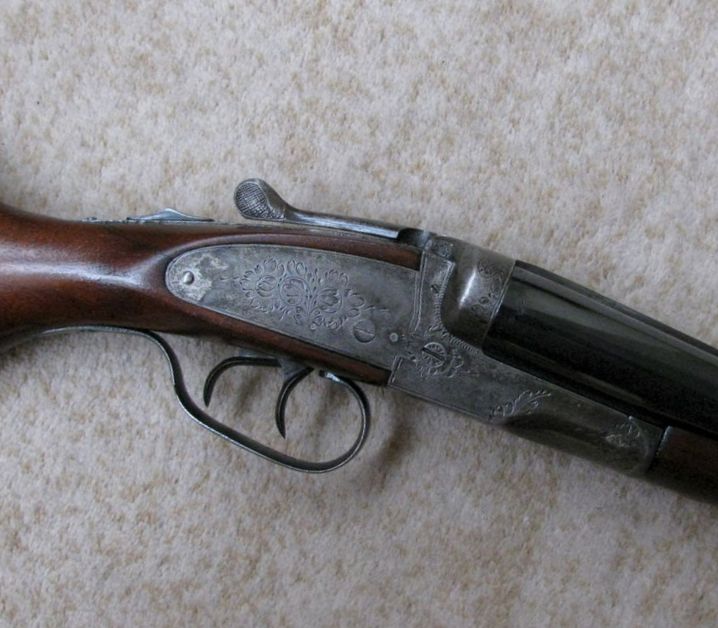
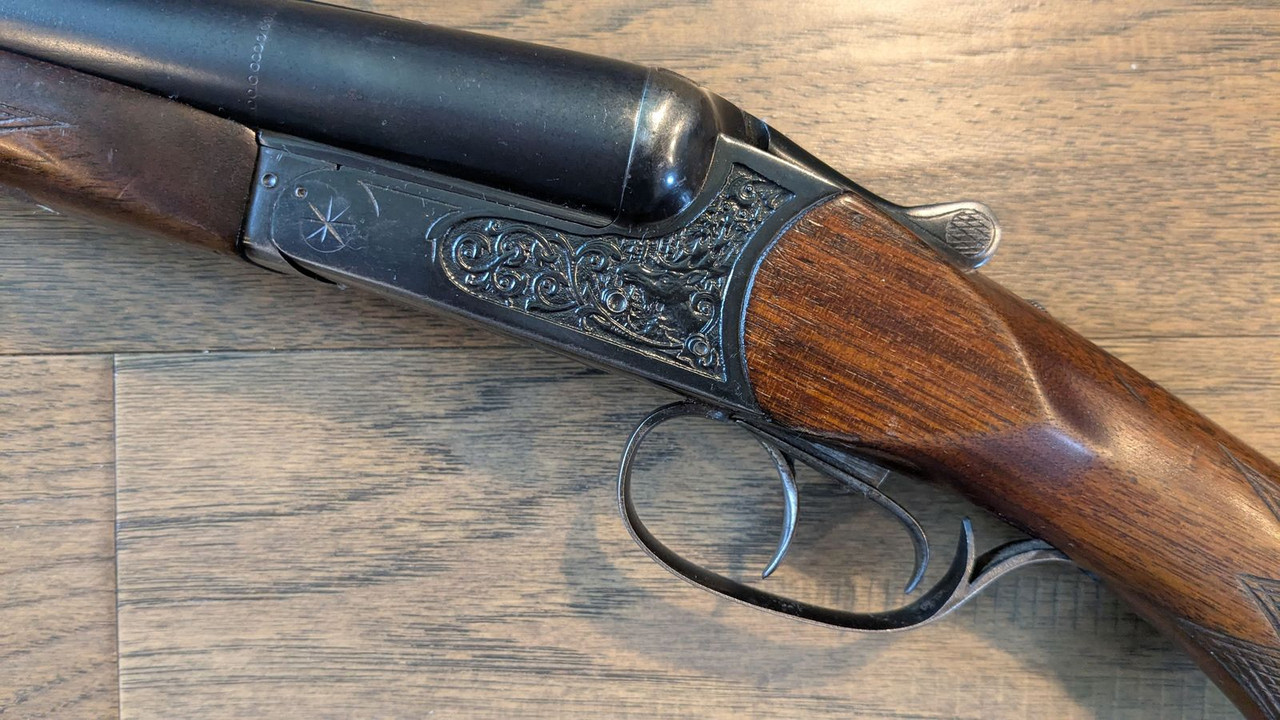
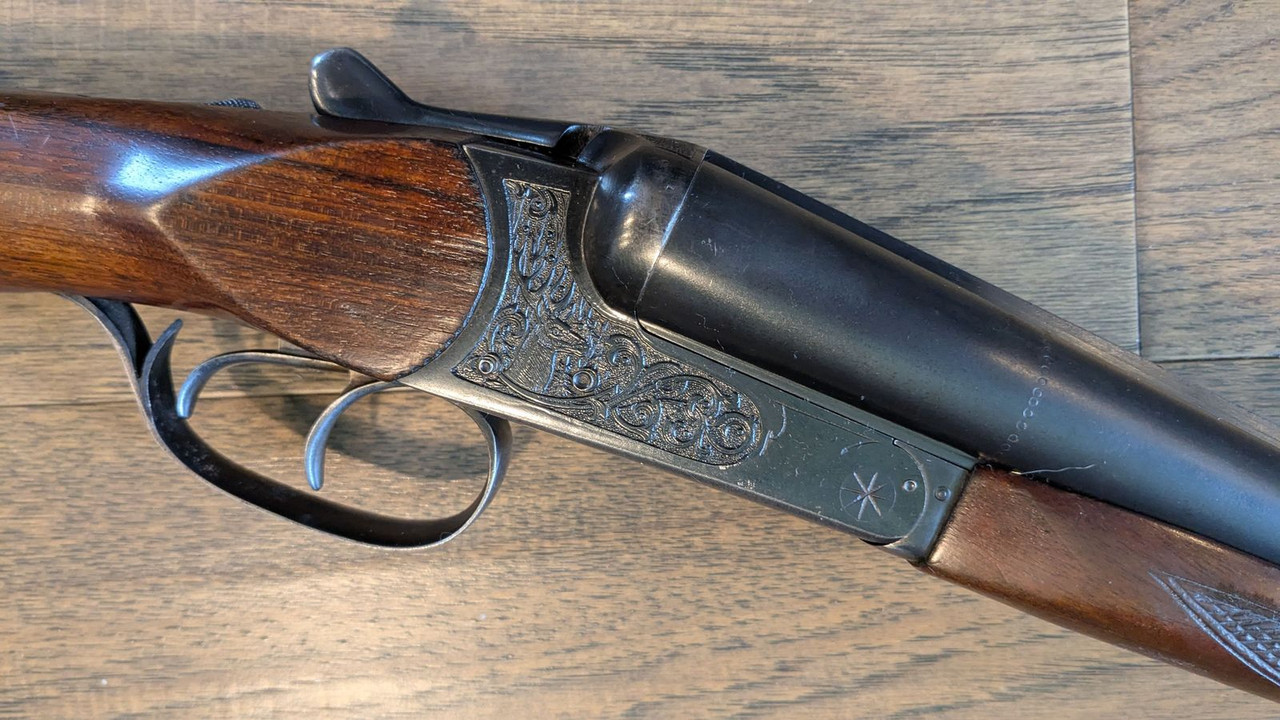
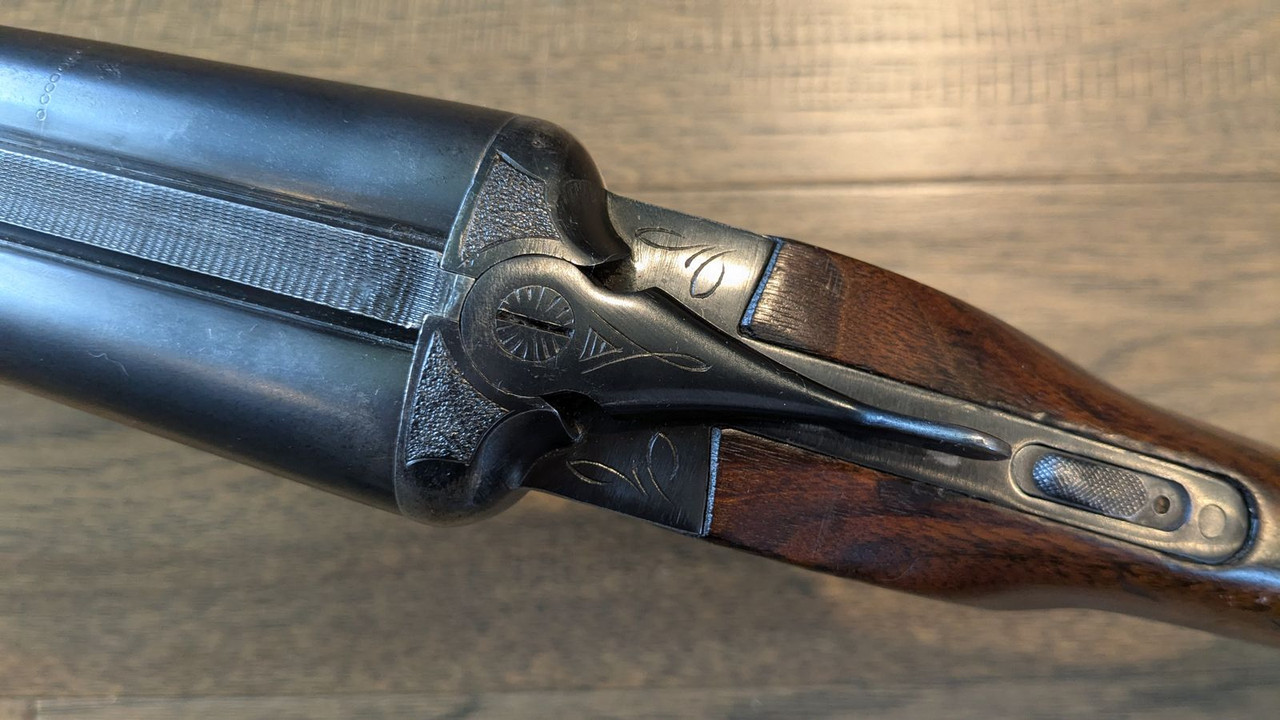
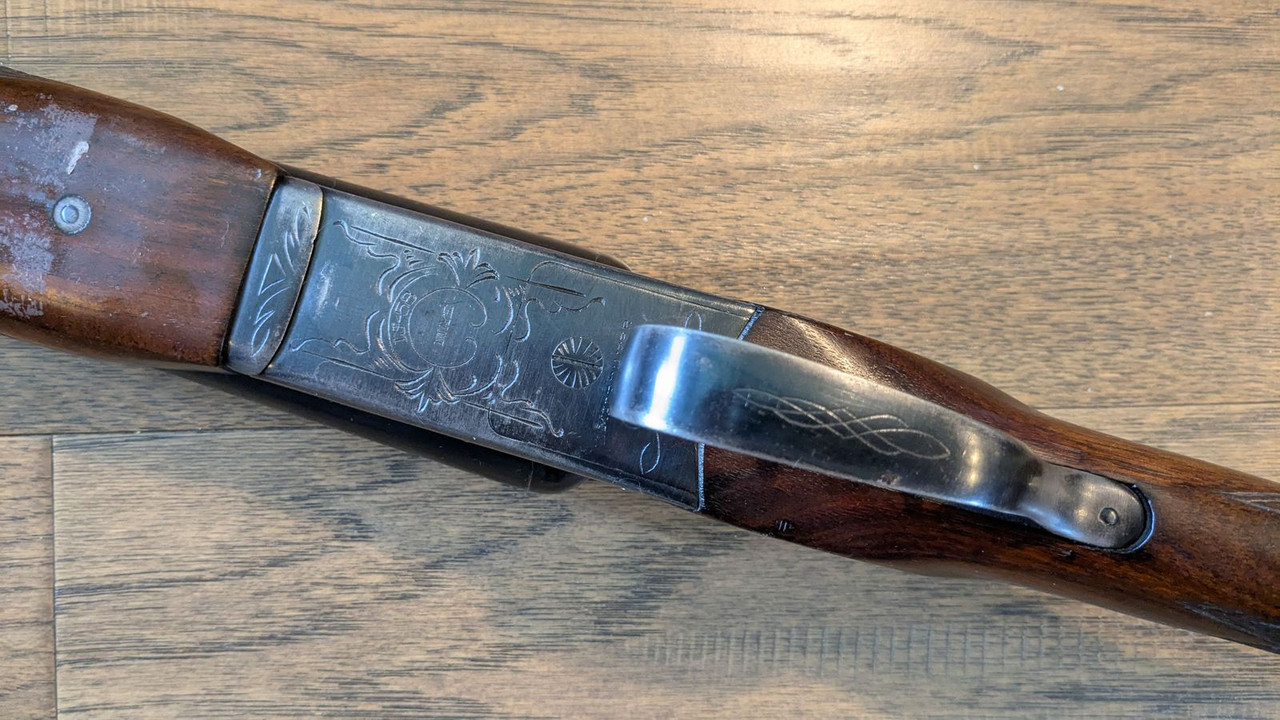
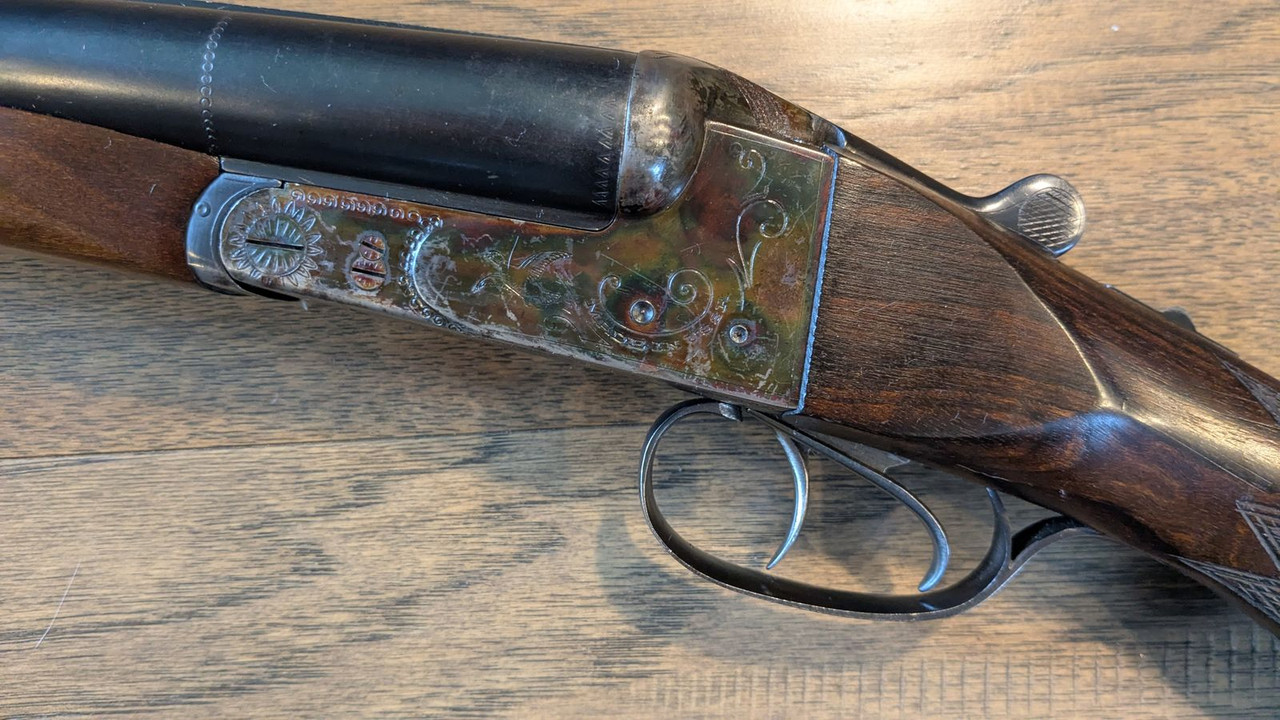
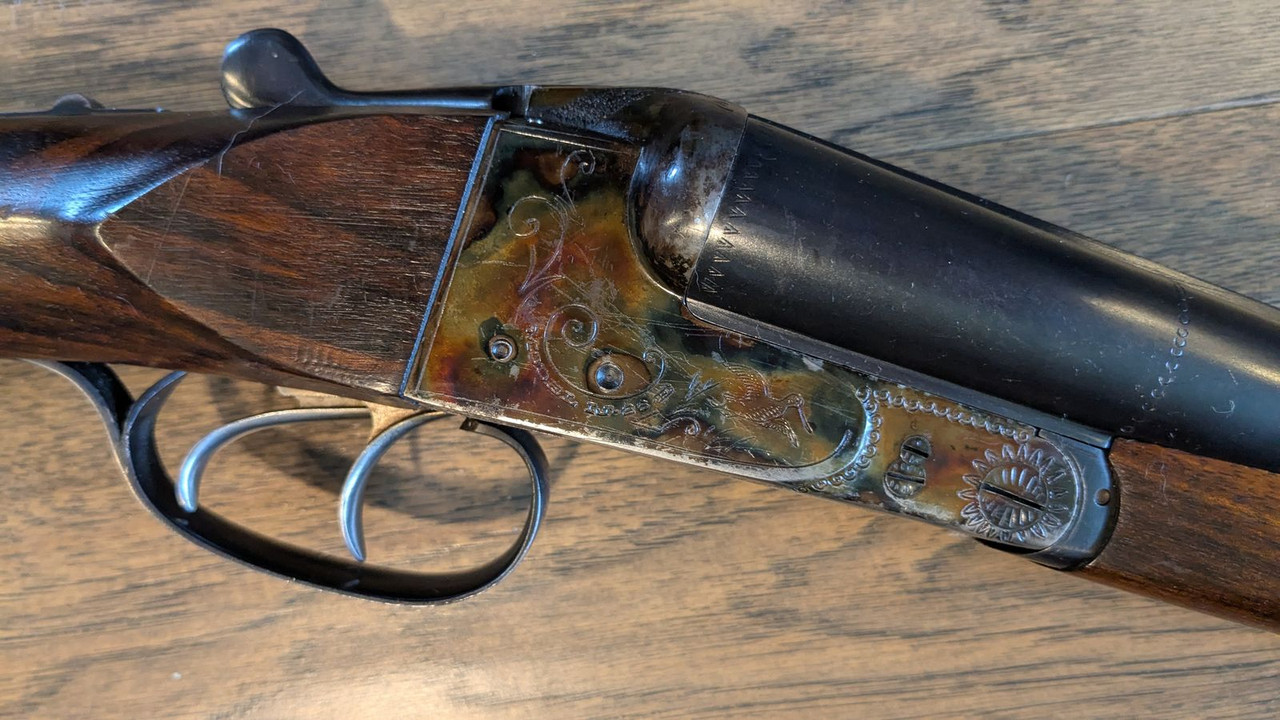
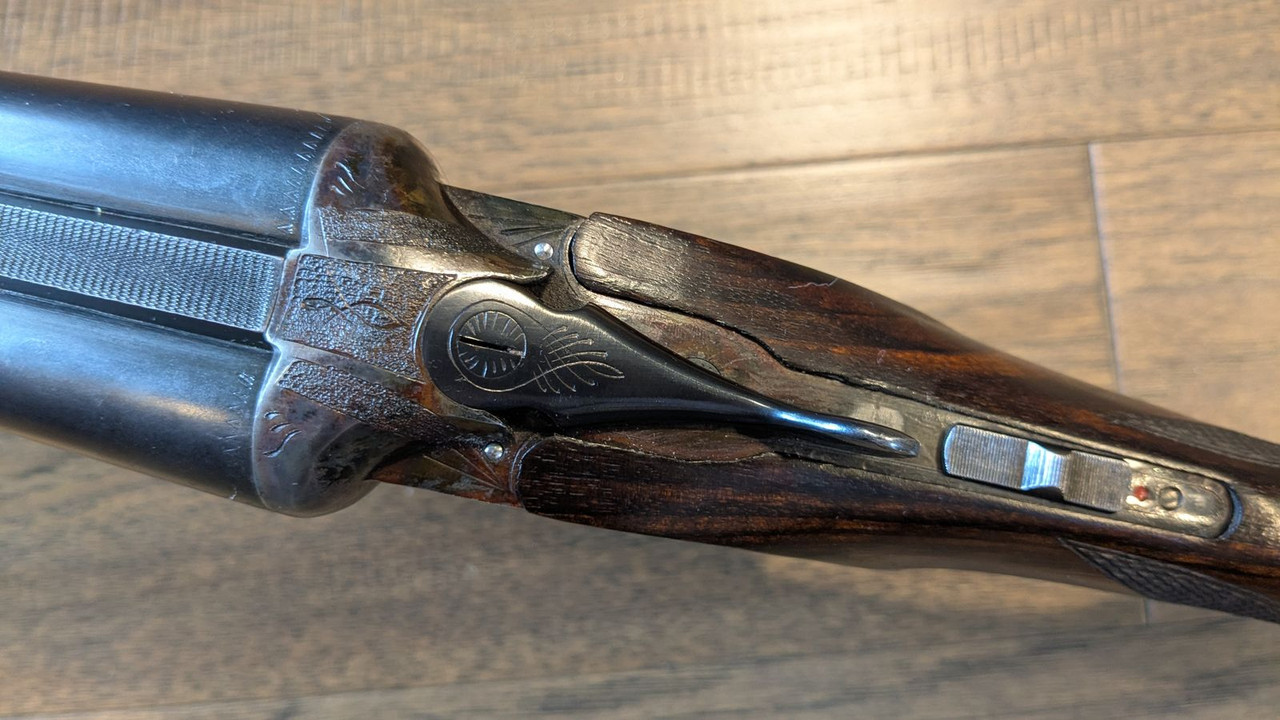
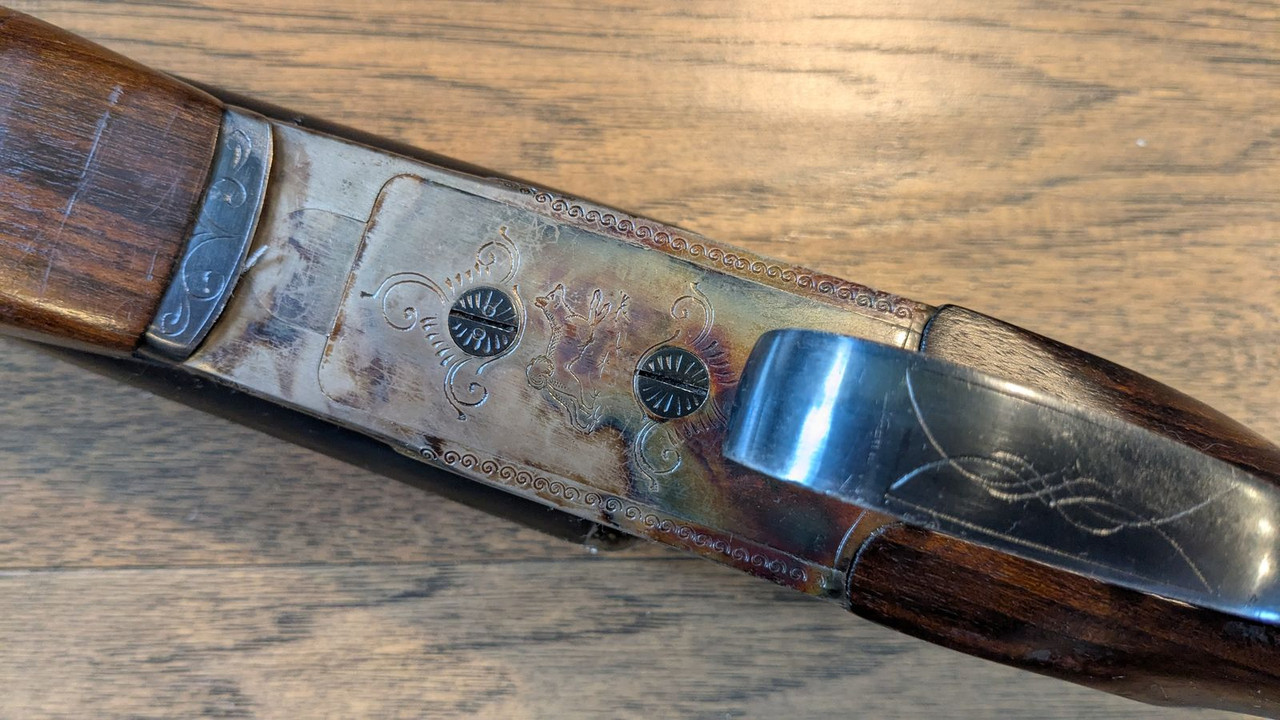
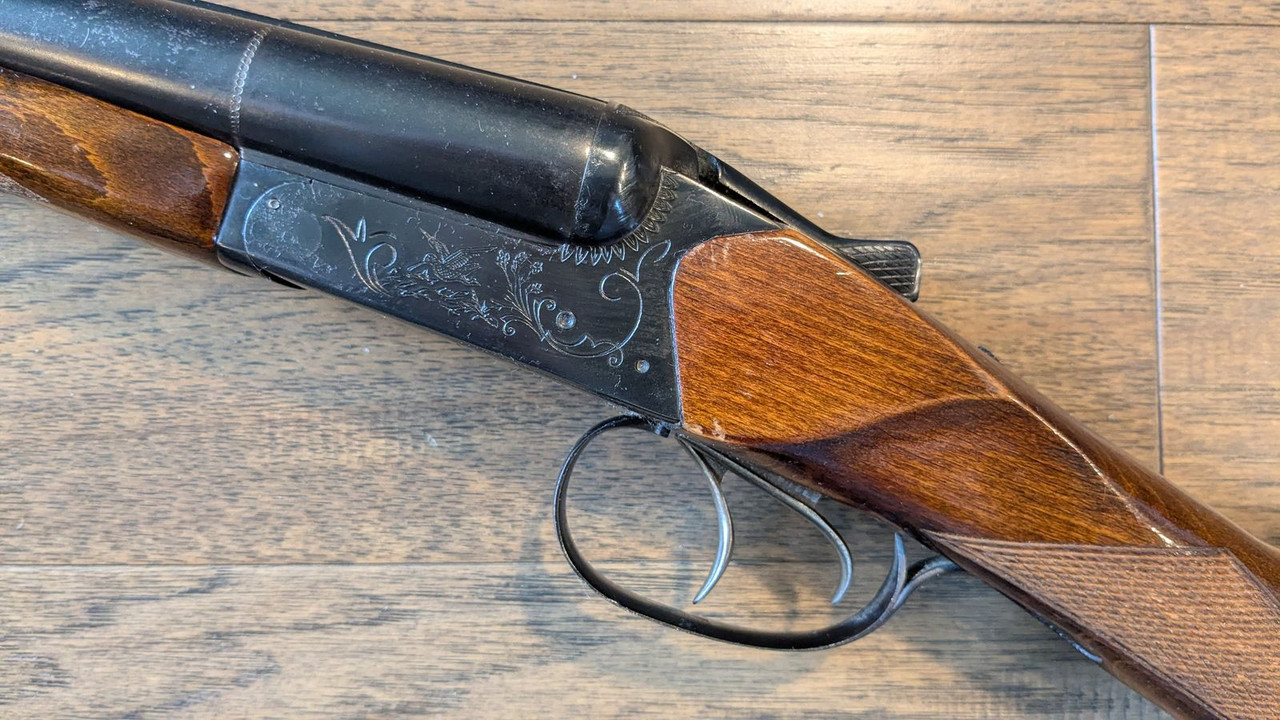
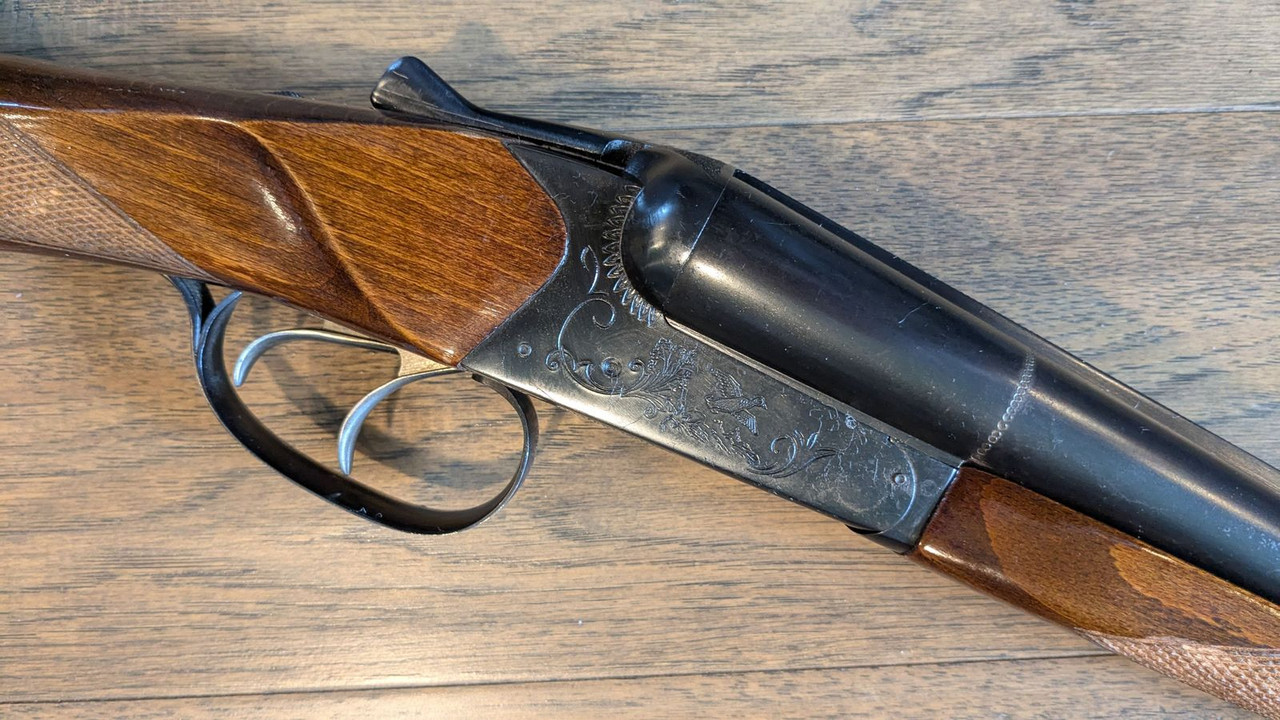
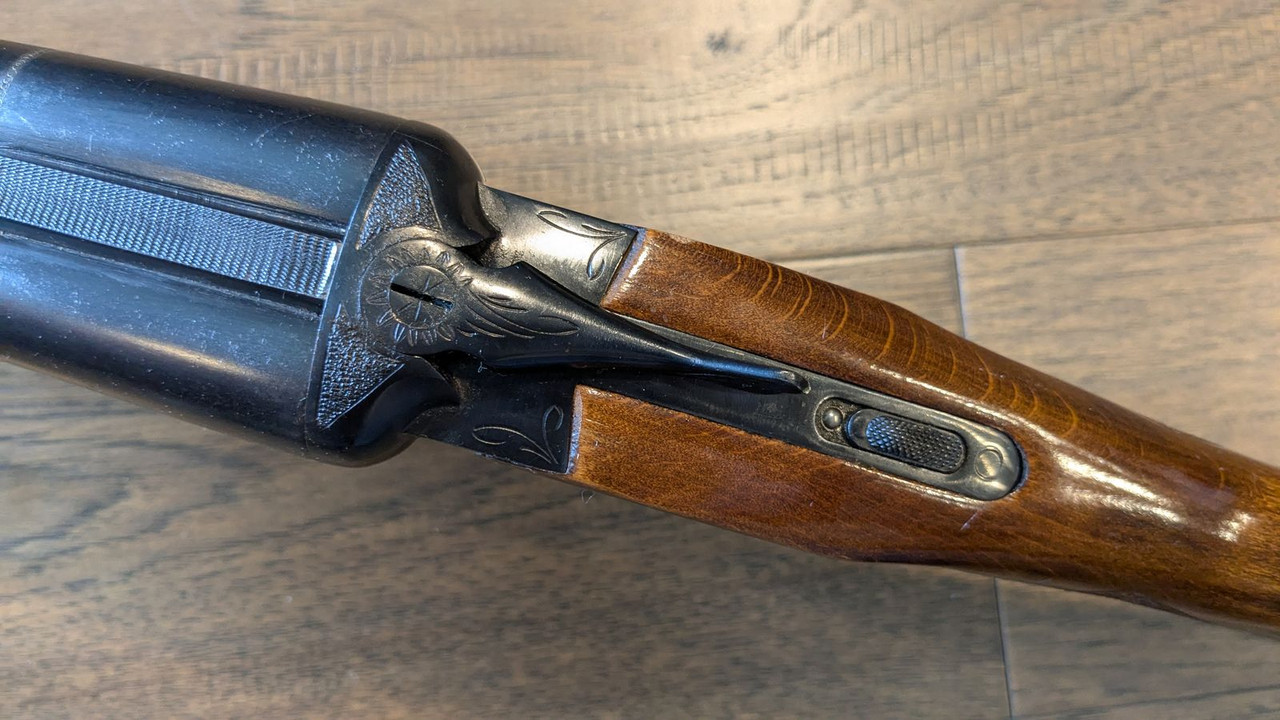
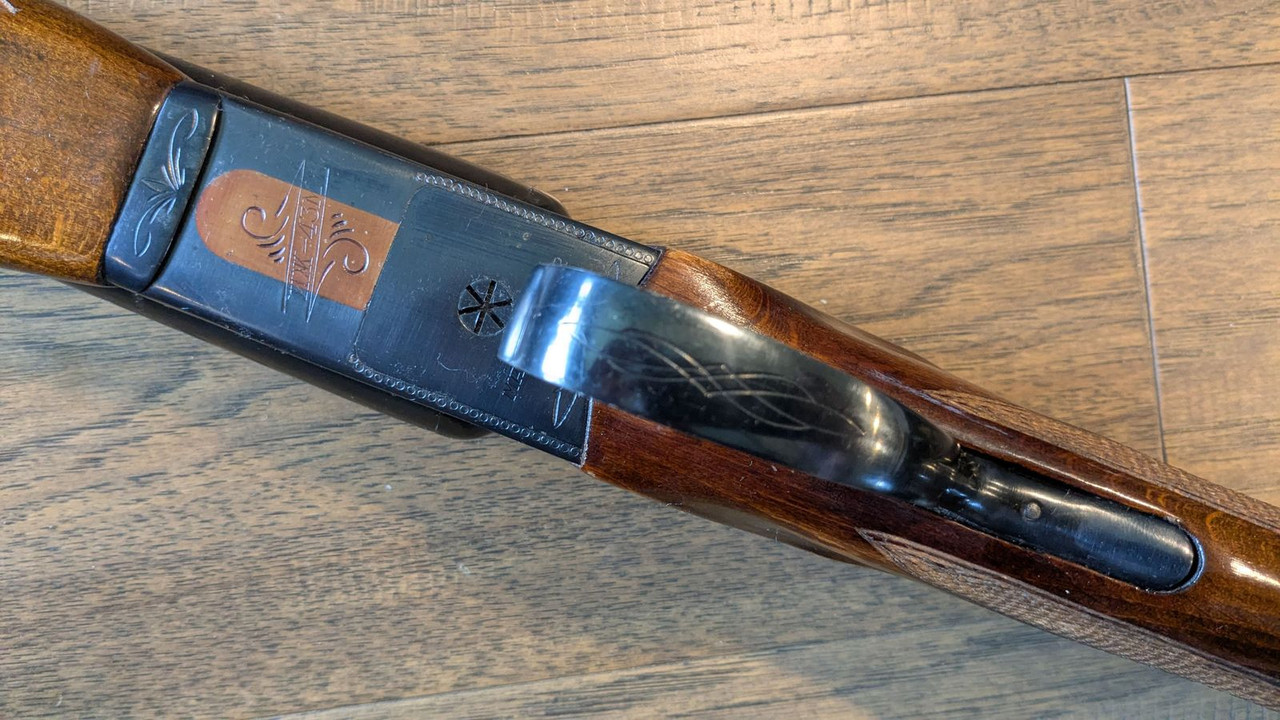
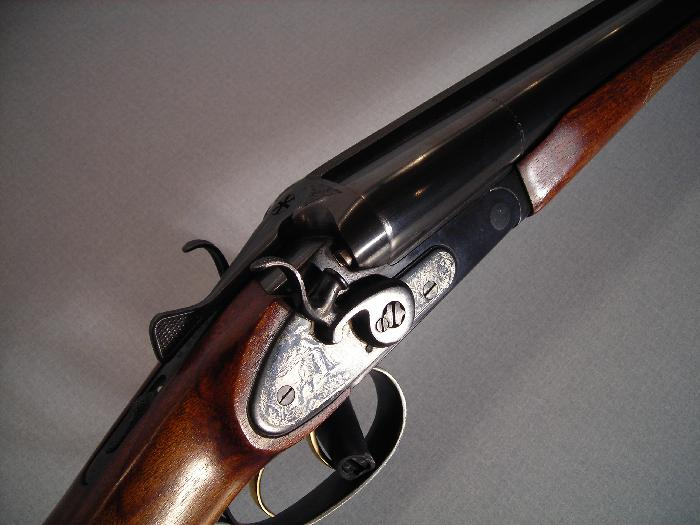
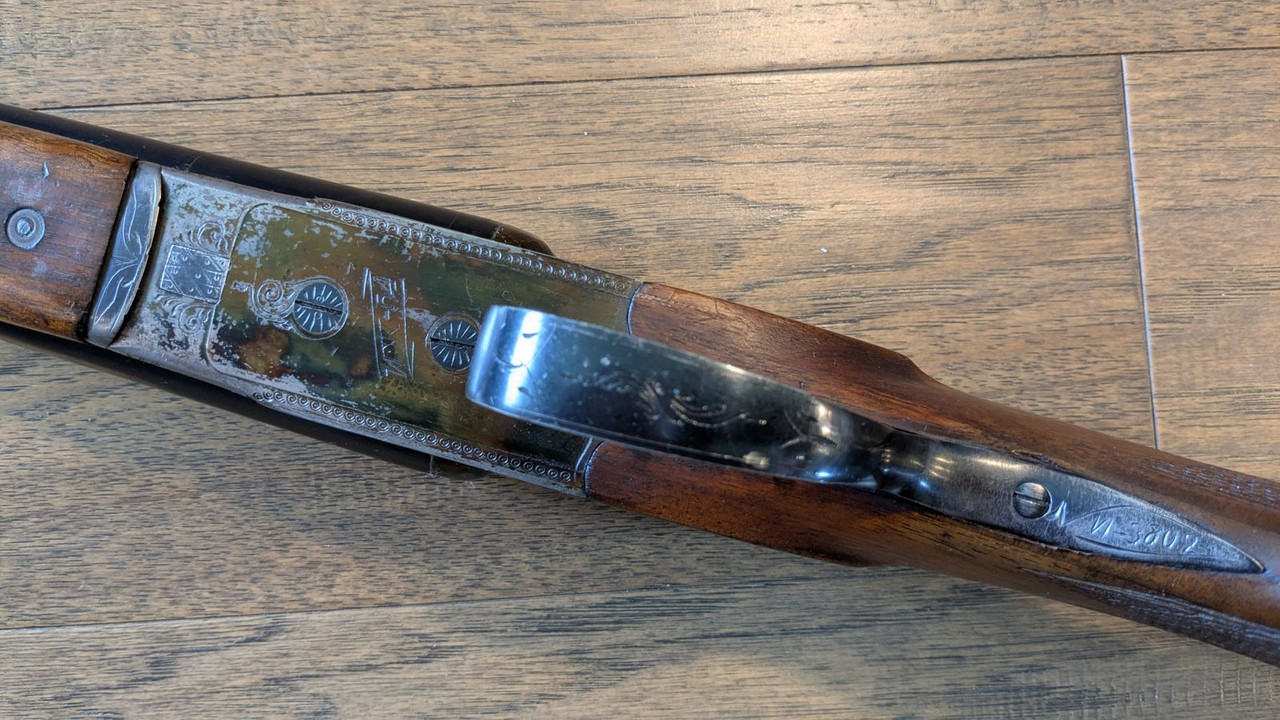
IJ-54 (from author collection). Note following visually identifiable features: straight line of wood joint, Greener crossbolt, cocking indicators, IJ-54 markings on the bottom of the frame.
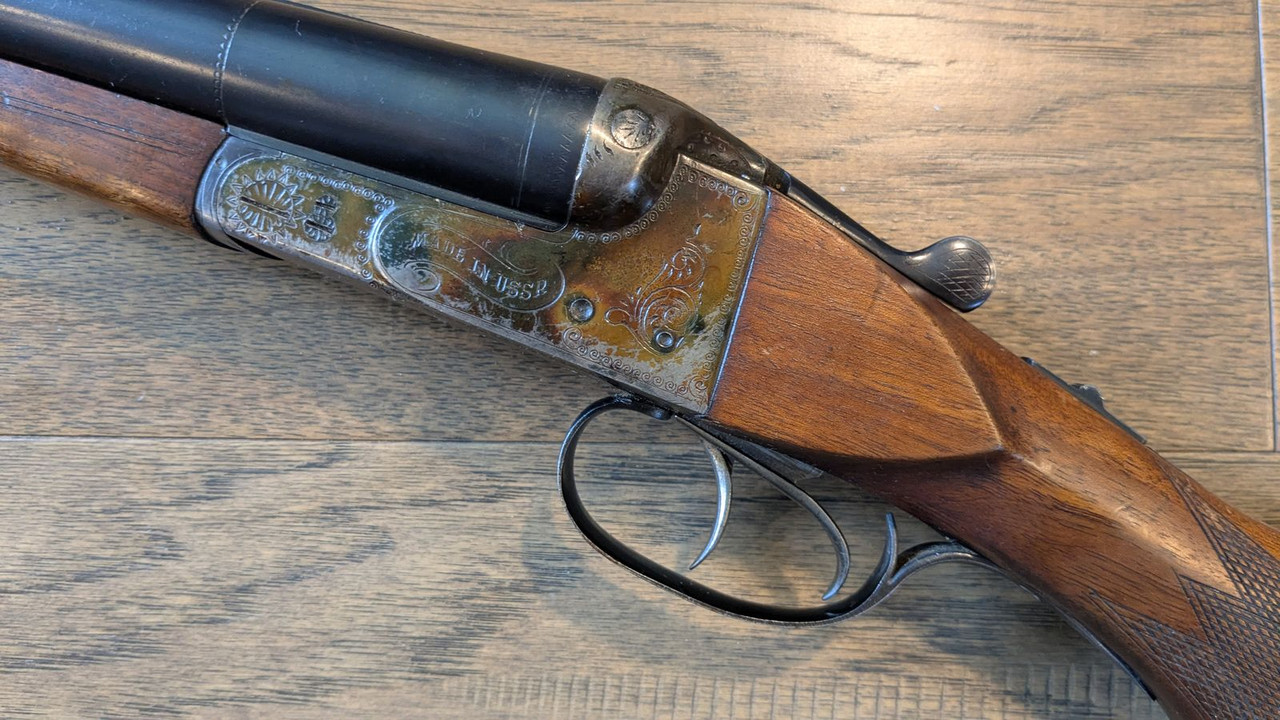
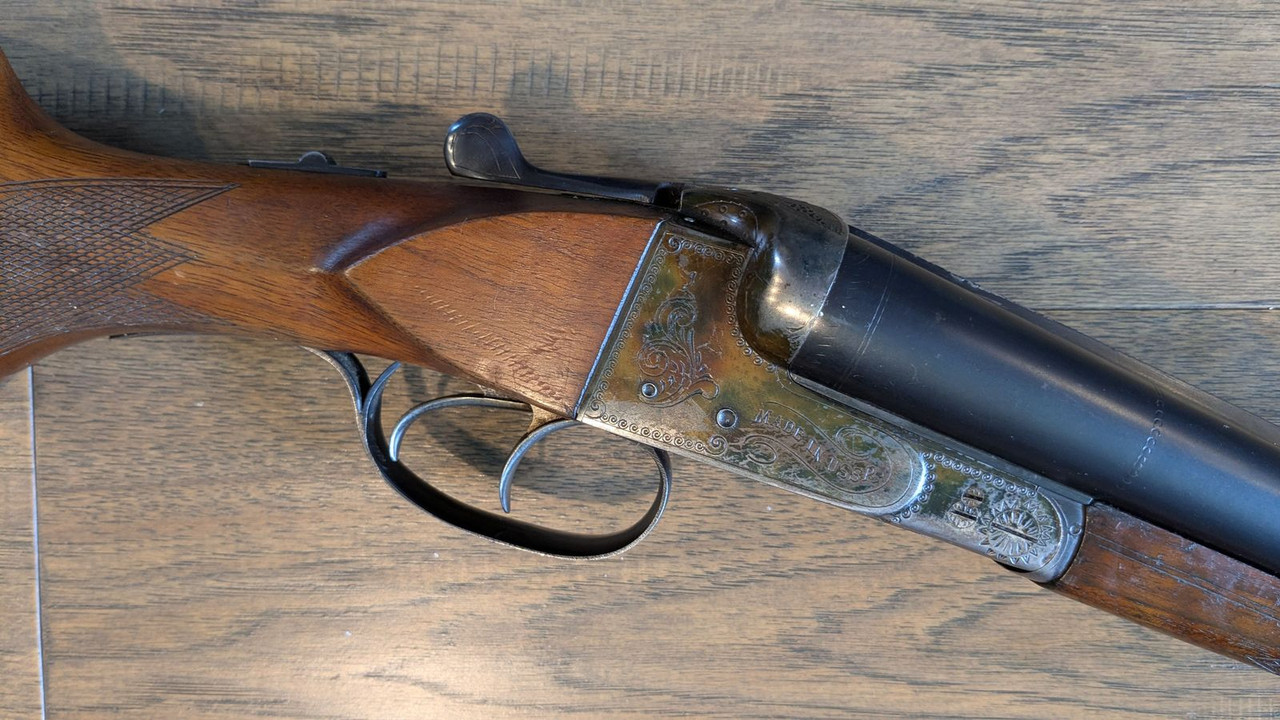
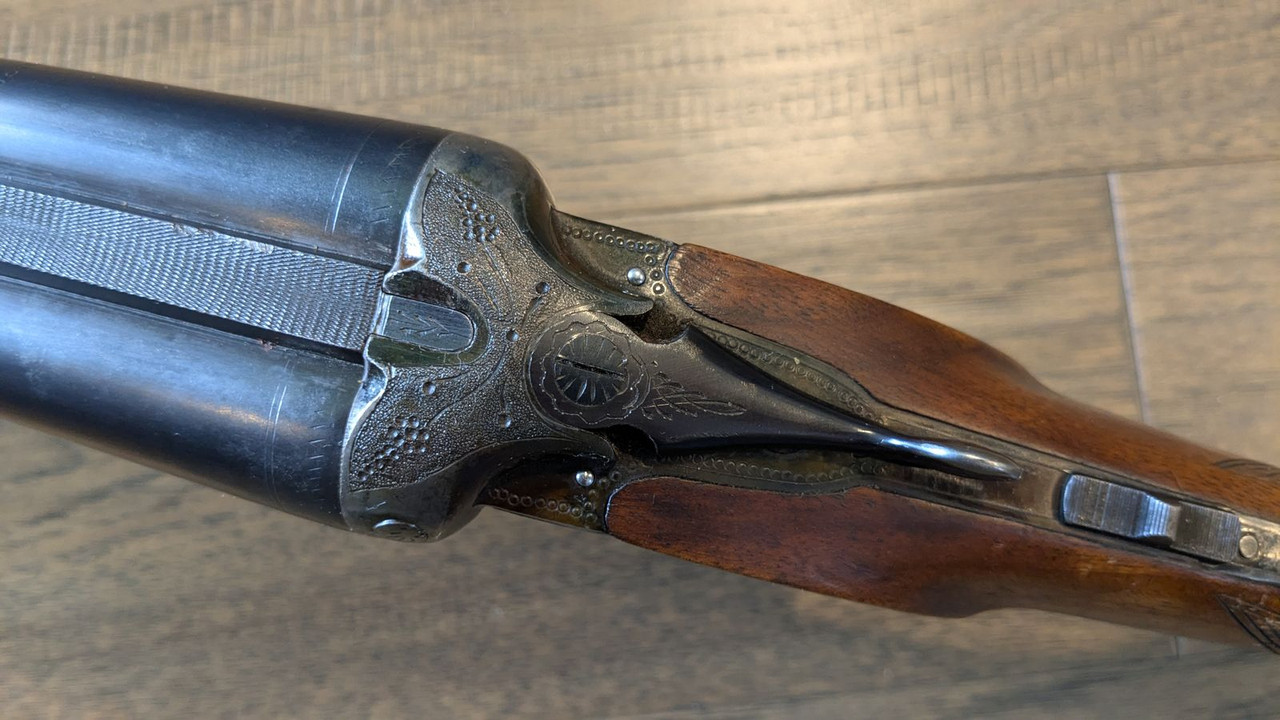

IJ-57 – 16ga, eliminated the Greener crossbolt, had rebounding hammers. Only 20,000 were made and it is very hard to find. I have no information if they were ever exported, so most likely not available on our market. It is only worth mentioning as a source of rebounding hammers feature backported to IJ-57.

IJ-57 (from public sources)
 
Last edited:
IJ-58
The next model available in North America is IJ-58. This is the last model where the number in the model designation stands for the year of adoption. 1.36 million were made. It was developed as a successor of IJ-54, with goals of simplification and cost reduction. The first IJ-58 were made only in 16ga and 20ga.
Only in 1971 (other sources point to 1973-1975, citing stock and receiver not strong enough to handle 12ga) modernized version was made, called IJ-58M. It was first to add 12ga to the “58” lineage. This created a bit of havoc with 16ga versions. Early IJ-58 in 16ga had a semi-oval joint of frame to stock and semi-cylindrical bolsters. IJ-58M had a semi-circular joint with the stock and semi-spherical bolsters. With “M” introduction, the original 16ga version (let’s call it “1st variant”) added two variants. 2nd variant – new semi-circular joint (as in M) and old semi-cylinder bolsters of original shape, it was still marked as IJ-58. 3rd variant looked exactly like 12ga IJ-58M - semi-circular joint with the stock and semi-spherical bolsters and was marked as IJ-58M with calibre being only difference. Quite possible it was all part of transitioning process to “M” frame, and factory did not care to assign specific names to these variants.
IJ-58M was able to beat its competitor IJ-26 (see below) in terms of weight and cost.

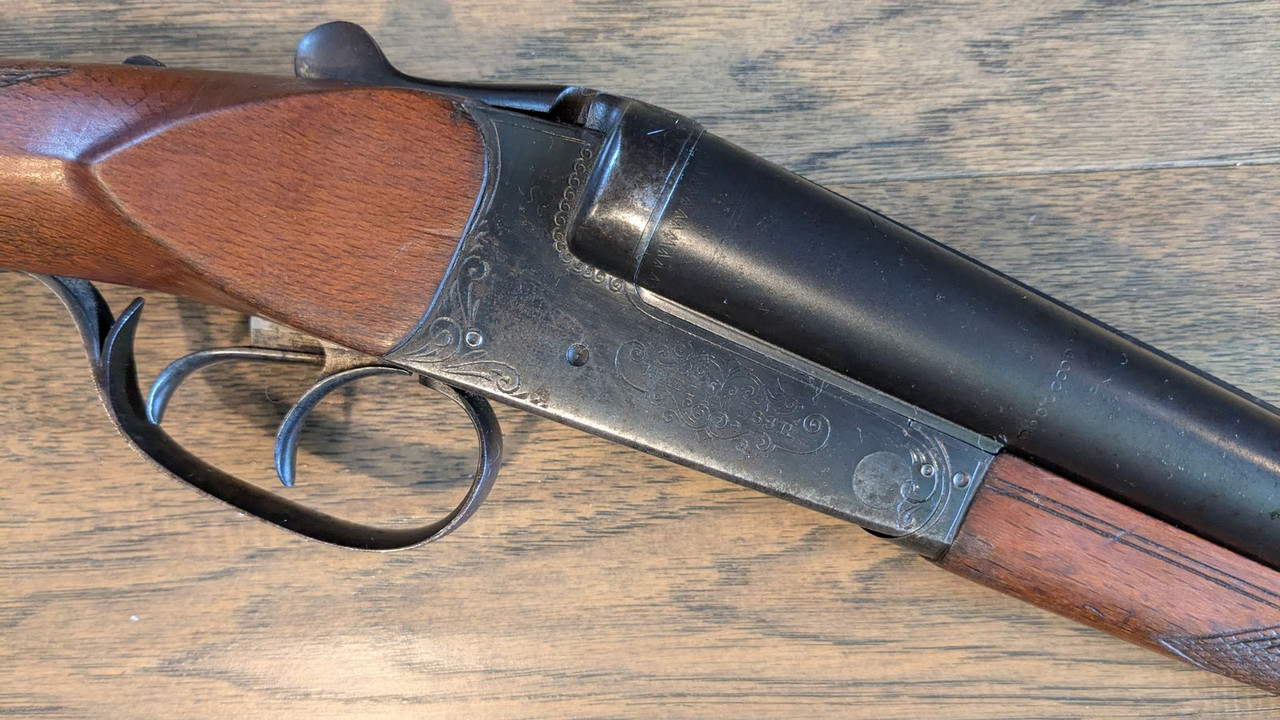
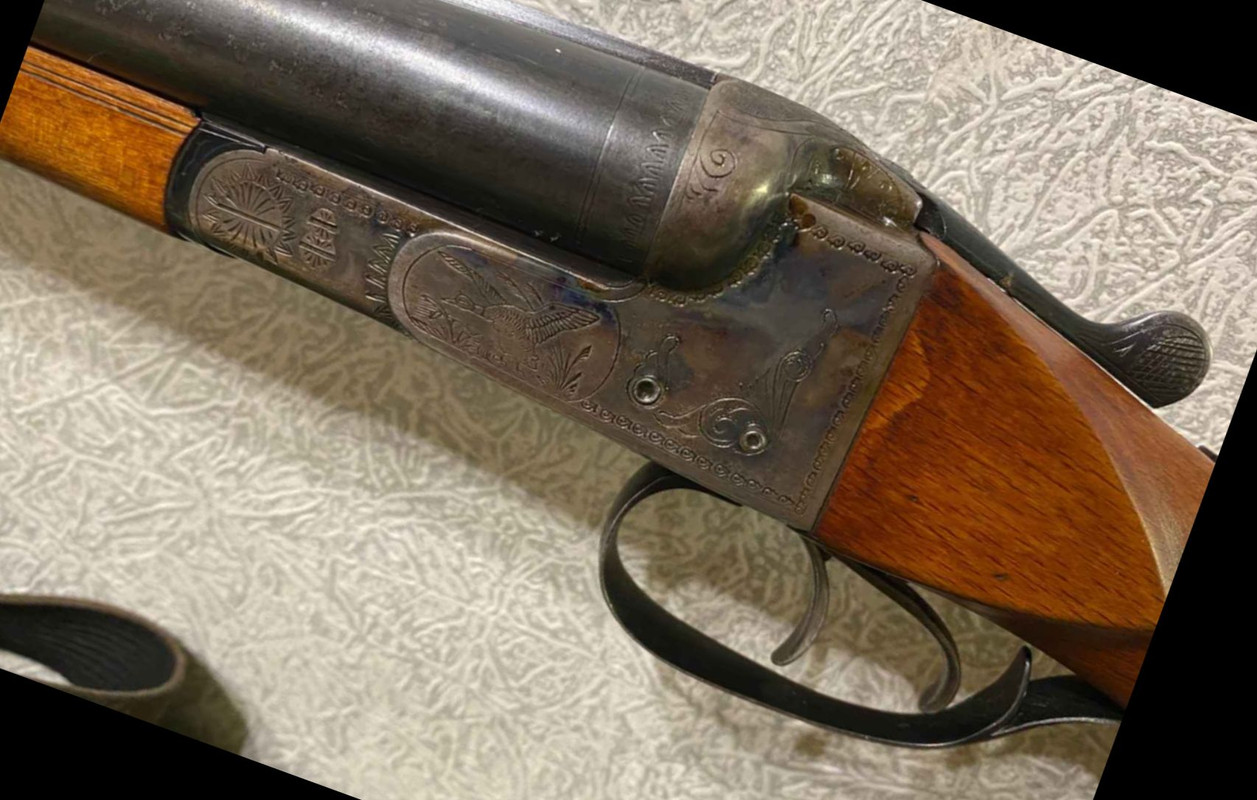
IJ-58 in 16ga 1st variant (from author's collection). Note semi-oval joint and semi-cylindrical bolsters.


Then came, in the mid-1970s:
  • IJ-58ME (modernized, ejectors)
  • IJ-58MA (1977, modernized, auto-safety)
  • IJ-58MAE (1977, modernized, auto-safety, ejectors)
IJ-58MAE (from author's collection). Note semi-circular joint and semi-spherical bolsters.


Last edited:
IJ-26
IJ-26 branch – As you might have noticed in the IJ-58 section, it started without a 12ga version and continued this way up to 1971. To meet mostly international market demand for 12ga shotguns, a direct derivative from IJ-54 was created, called IJ-26. This was the first model where the number refers to an internal factory model designation, not the year. It was manufactured from 1969 to 1975. Some sources suggest that initially it was an IJ-26E (ejectors), targeting international markets, and only later was the regular IJ-26 manufactured.

IJ-26E (from author's collection). Note frame shape similar to IJ-54 sans Greener crossbolt.


IJ-43
Meanwhile, further development of IJ-58 resulted in a new model, IJ-43 (again, note that “43” is a factory model number, not a year). This branch was available in:
  • 12x70 (70mm = 2¾”)
  • 16x70
  • 20x70 and 20x76
  • 32x70 and 410x76
  • Some sources mention 28ga without specifying chamber length
Initially, the idea was to make IJ-43 and IJ-43E (ejectors), both with universal double triggers (so one could choose traditional mode vs single trigger for both barrels). But there were some difficulties. Instead, production started with IJ-43M and IJ-43EM (ejectors), both with traditional double triggers; later the “M” letter was dropped. After two years of production, they finally manufactured guns with universal double triggers, allowing the operator to change how the triggers operate.

There are some unusual combinations, so I am not sure I have captured all of them. Notable single-trigger versions:
  • IJ-43-1C (“1 spusk” = single trigger)
  • IJ-43-E1CM (ejector, single trigger, modernized) – produced only after 1991 in modern Russia.
It is also worth mentioning IJ-43KH, an external-hammer model. Two variants of this model include the one with real hammers that strike pins and the one where external hammers only #### internal hammers but don't strike the pins, yeah.

Further history continues with this model’s manufacture (including under the new name MP-43) in modern Russia, which is out of my current interest. However, it is worth noting that manufacturing quality declined in the late USSR (1980s) and further, sometimes abysmally, in modern Russia (1990s). Therefore, IJ-43 exists both as USSR-era and modern Russian-made guns. Just for the purpose of identification I will note that Russian-made IJ-43 were also offered in 20ga, 28ga and 410ga and removable chokes compatible with "Colonial Arms chokes system".

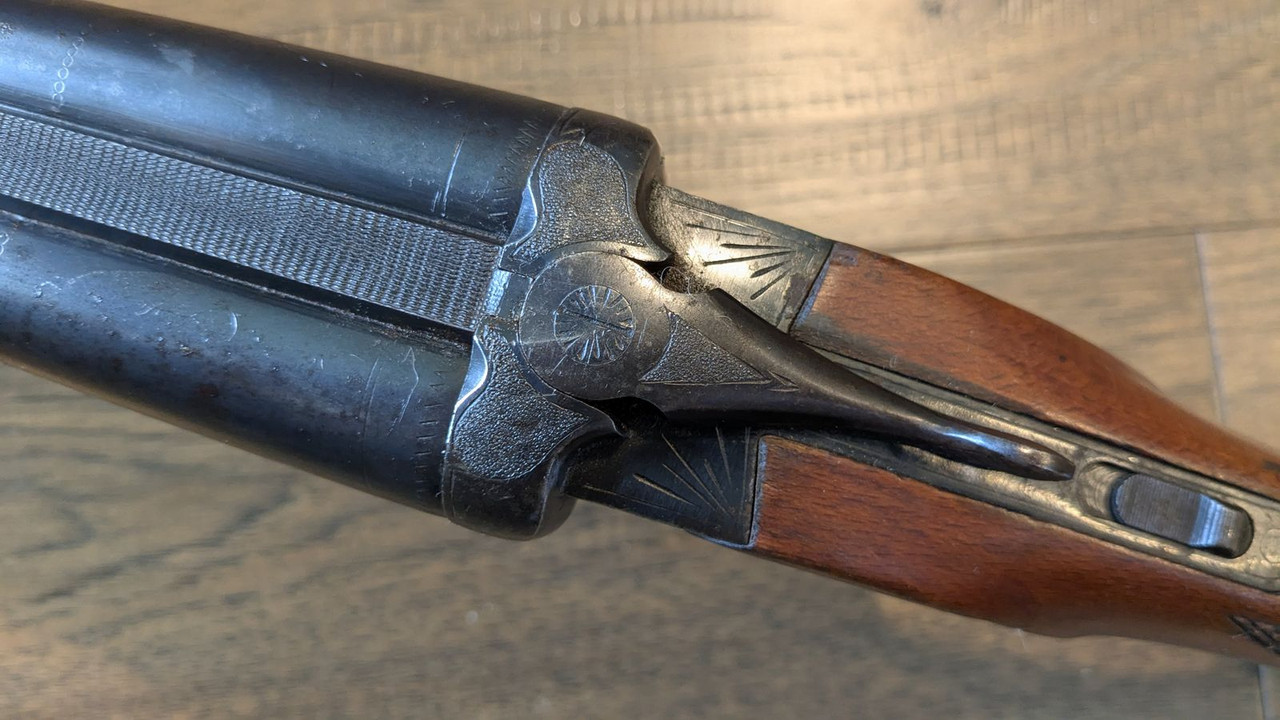
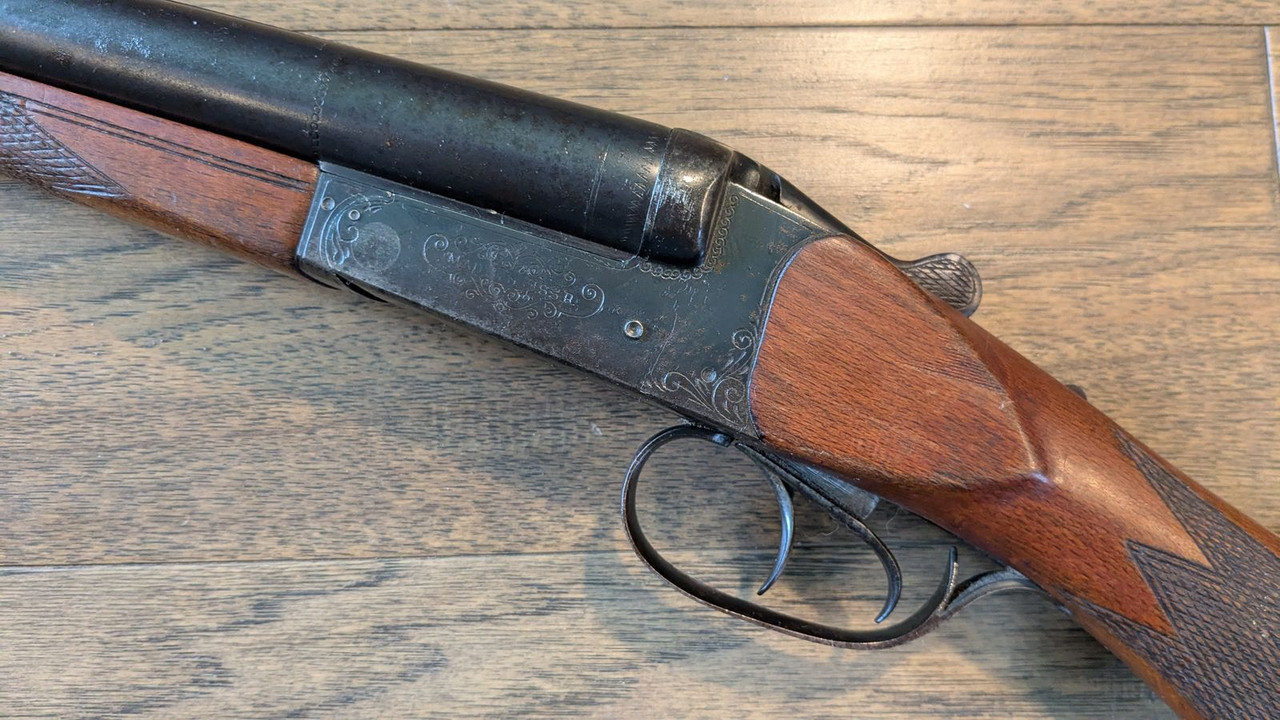
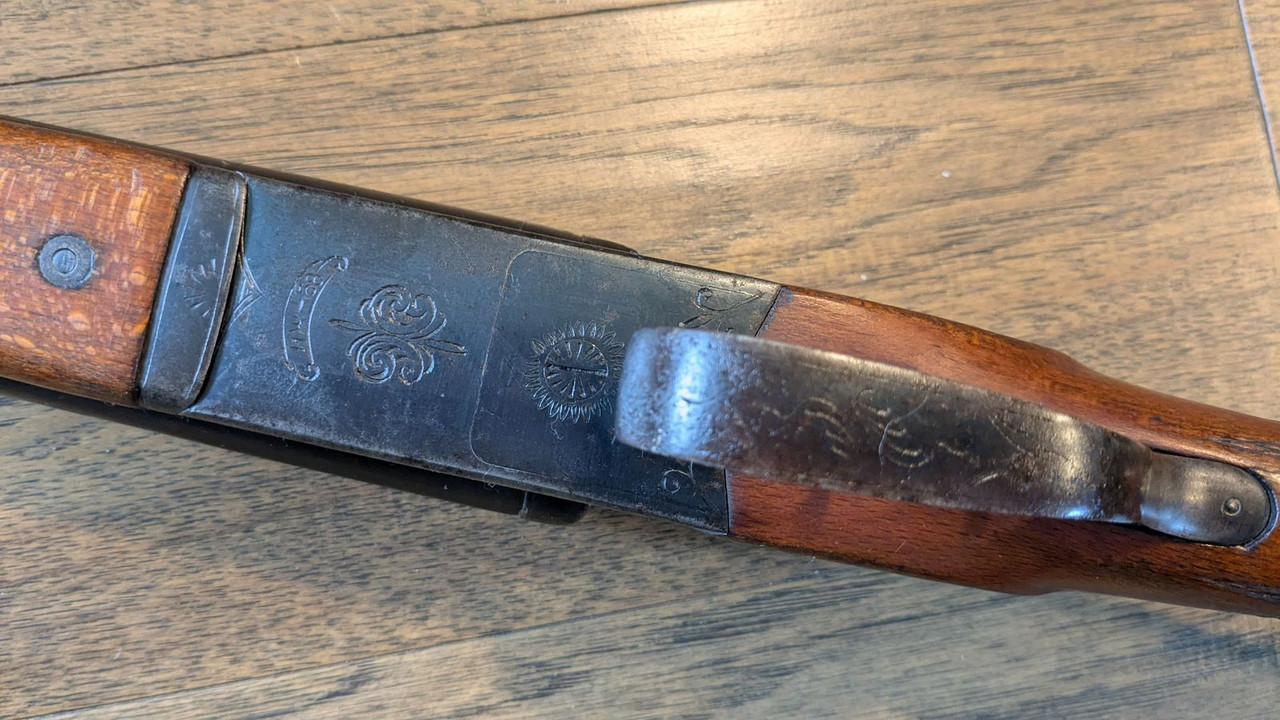
IJ-43M (from author's collection). Note bow-shaped joint, IJ-43M markings on bottom.


IJ-43KH (from public sources)
 
Last edited:
Izhevsk dating and markings

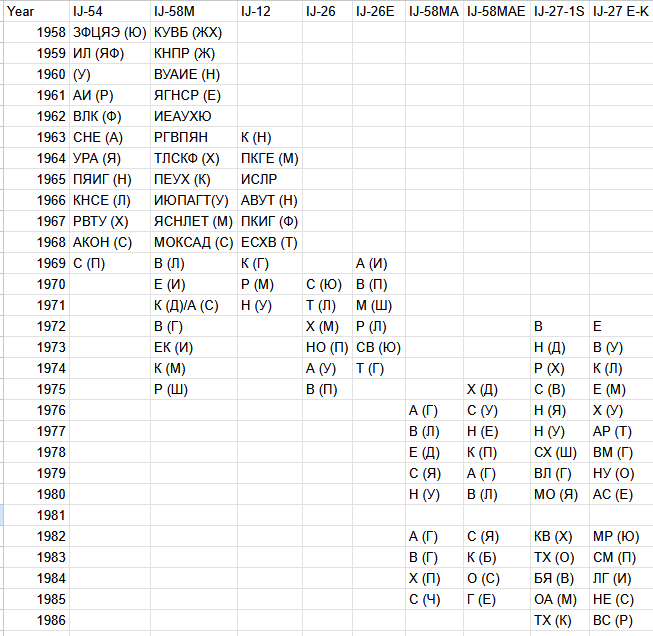
There are couple of challenges with dating Izhevsk made shotguns. One is the factory reusing letters of Cyrillic alphabet over and over again. And another one is that there is no documented information, what we have is an table representing information collected from shotguns owners that had original paperwork where the year of manufacture was specified. This table is better than nothing, but it is not always accurate and complete.
In each cell prefix letter defines the year, prefix letter in parentheses is for Custom Grade guns.


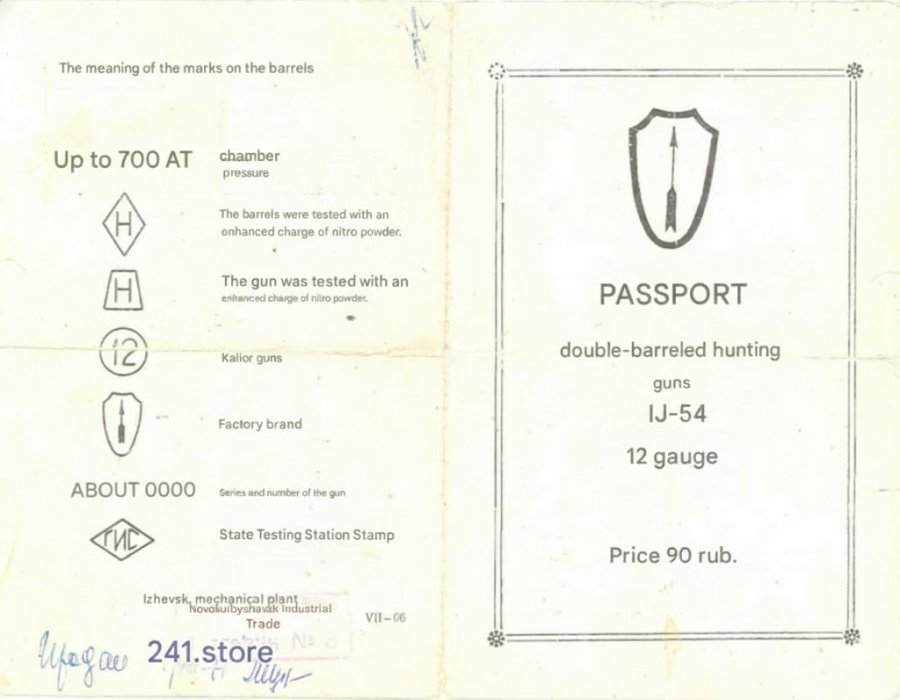
Marking you can find on IJ shotguns.
Pressure is in "atmospheres", "ABOUT 0000" is poor Google translation of "AB 0000" - prefix and serial.


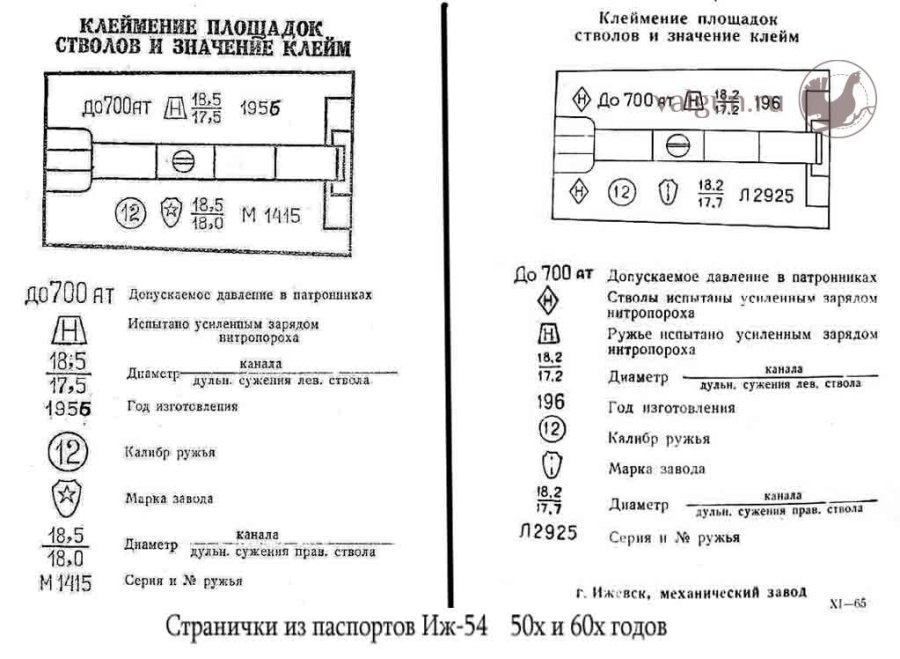
Markings on flats, left 1950x (actually I observed them on at least 1961 shotgun) and right 1960x.

1950:
- max pressure in the chambers
- increased nitro powder load test
- diameter of the bore and constricted part of the bore for the left barrel
- DOM
- calibre
- factory marking. Note that at least until 1961 Izhevsk factory used star in the shield and this sometimes confuses Western collectors thinking they have TOZ shotgun.
- diameter of the bore and constricted part of the bore for the right barrel
- prefix and serial of the shotgun

1960:
- max pressure in the chambers
- increased nitro powder load test for barrels
- increased nitro powder load test of the whole shotgun
- diameter of the bore and constricted part of the bore for the left barrel
- DOM
- calibre
- factory marking. Sometime in 1961 or 1962 Izhevsk factory changed to arrow in the shield
- diameter of the bore and constricted part of the bore for the right barrel
- prefix and serial of the shotgun

 
Last edited:

Forum limits you to 11 pics per post, no matter if attached pictures or references to pictures hosted elsewhere. So I reserved more posts if/when I have to add more pictures when elaborating and extending the guide.
 
Back
Top Bottom