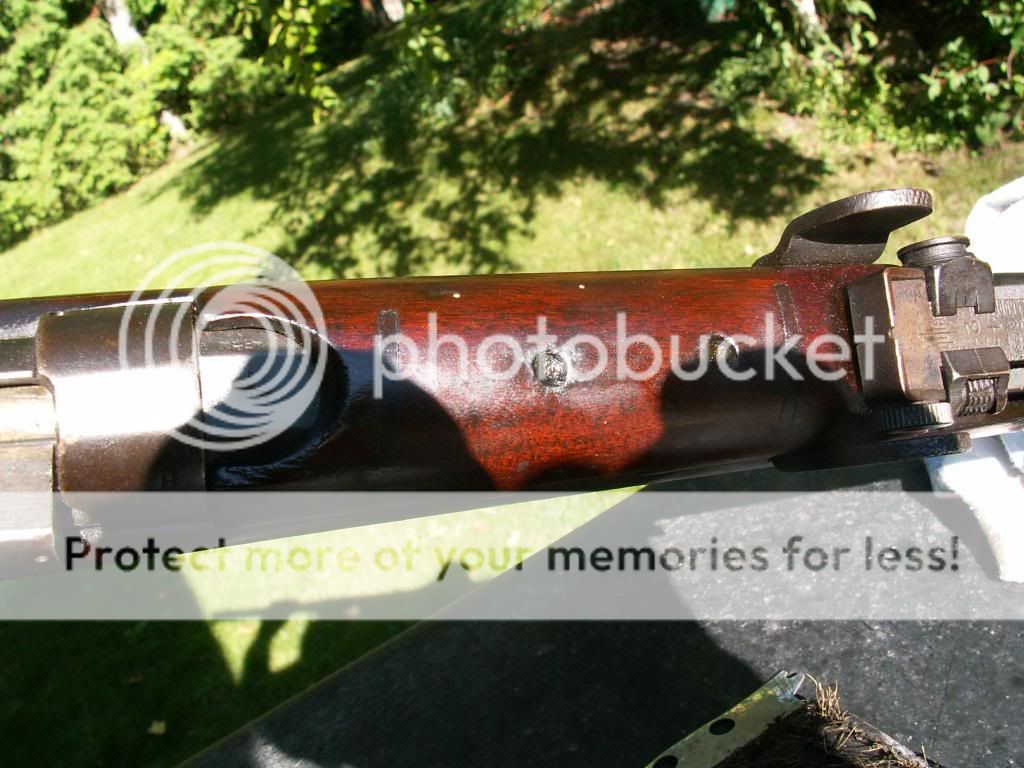
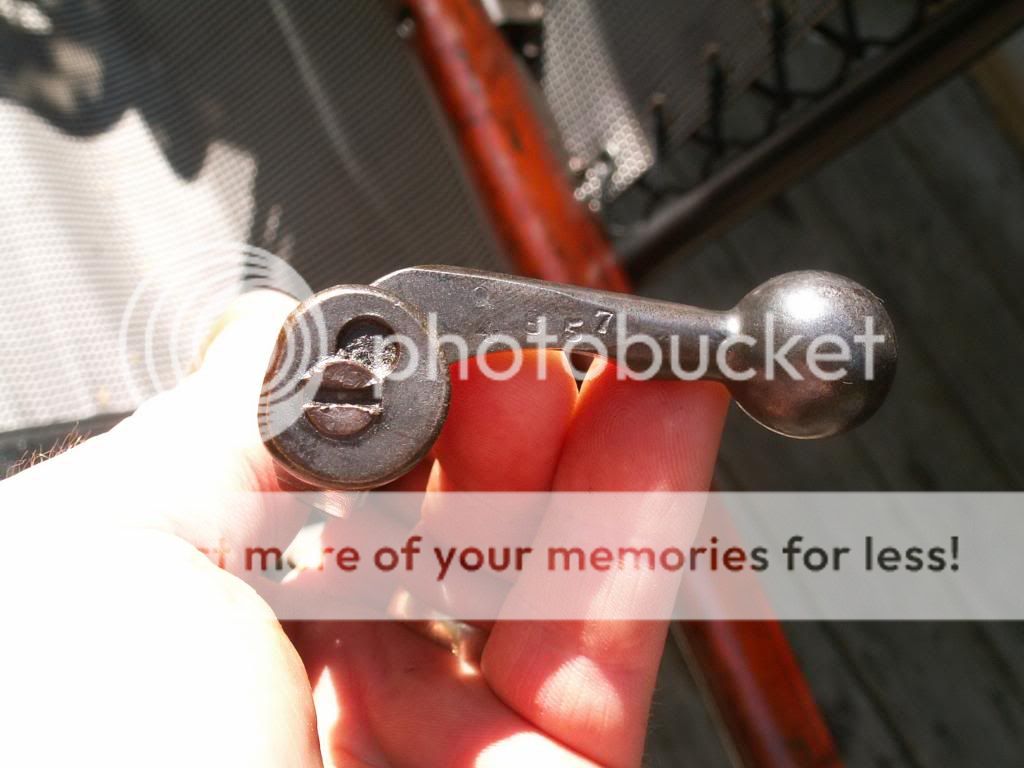
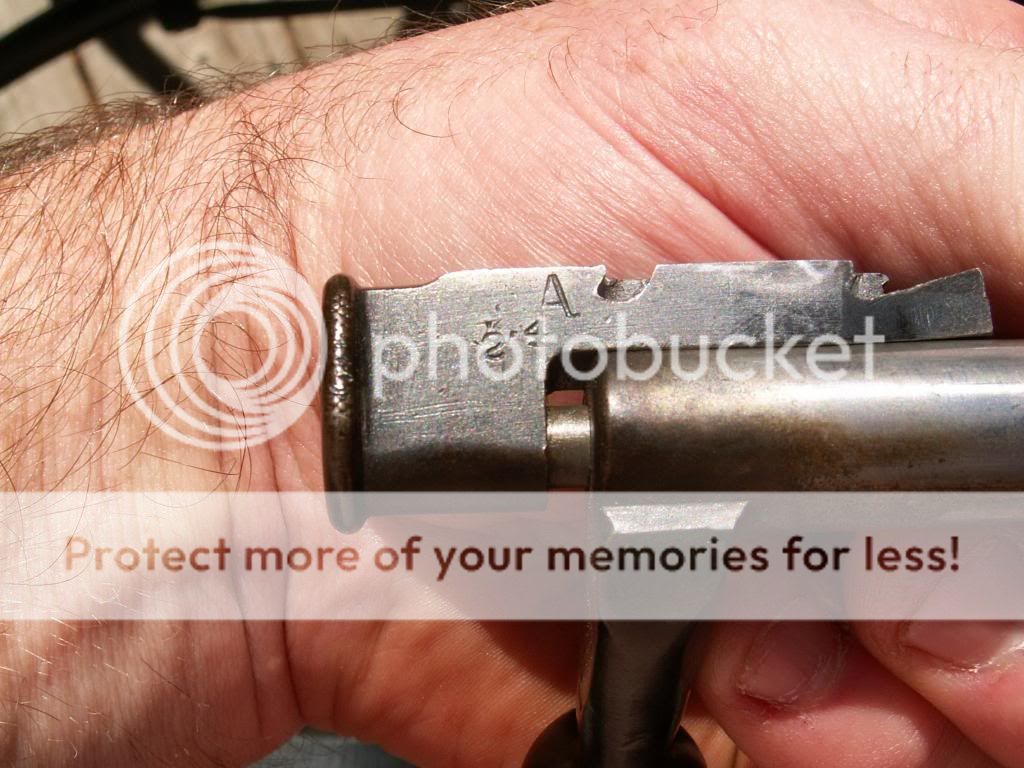
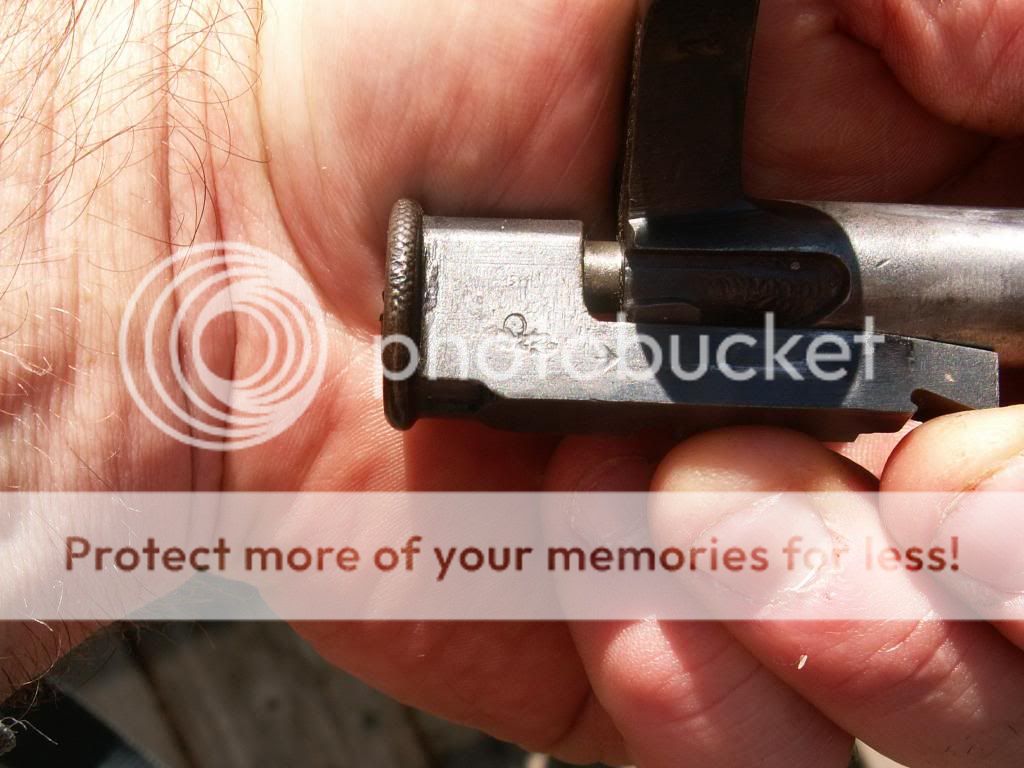
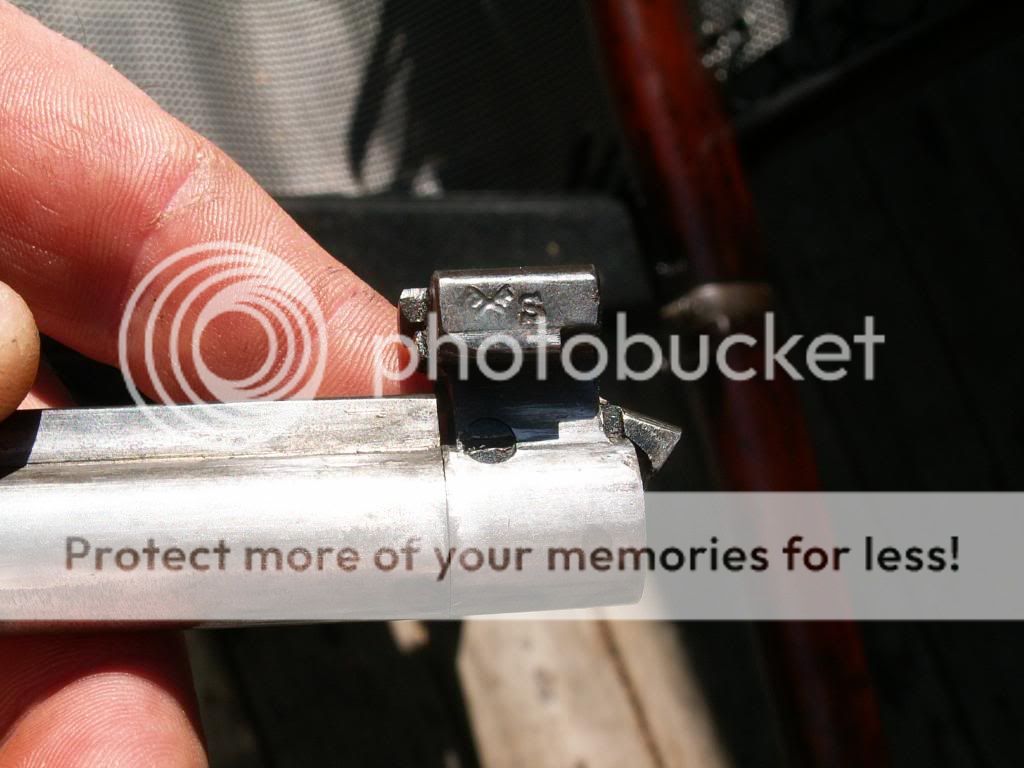
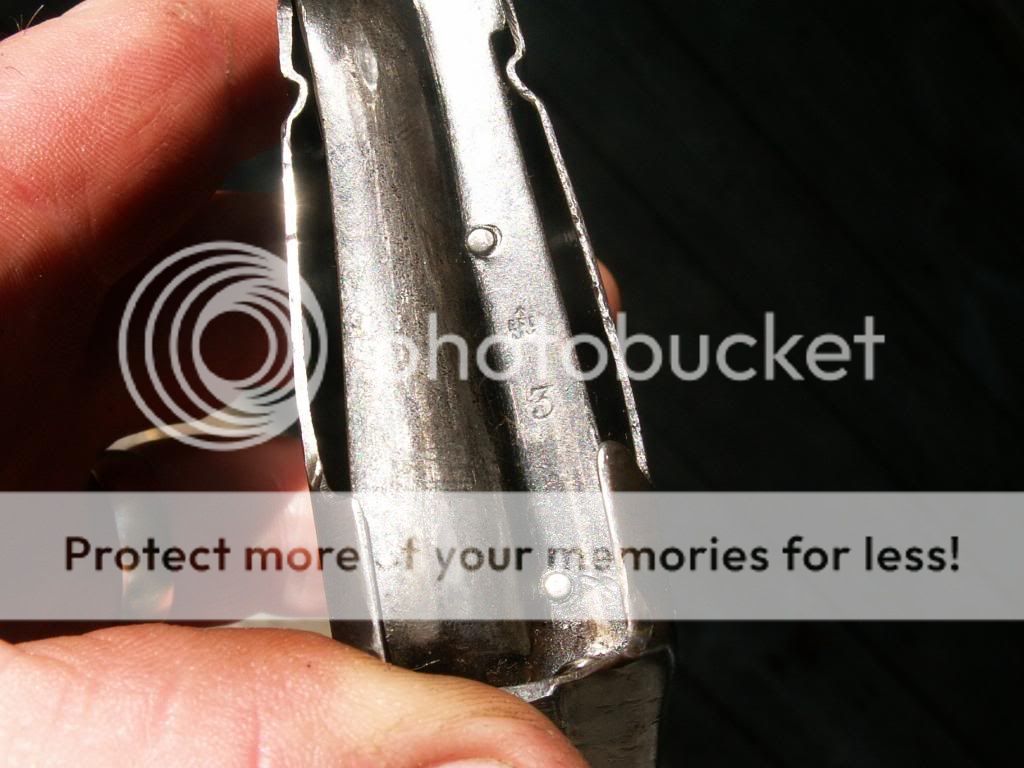
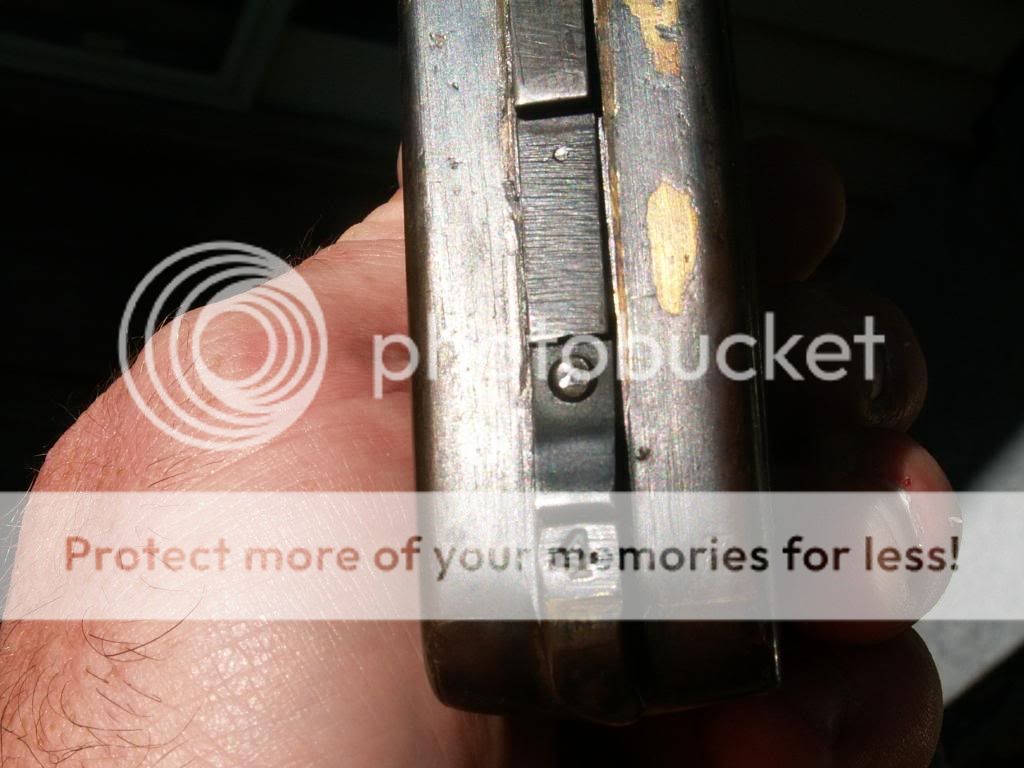
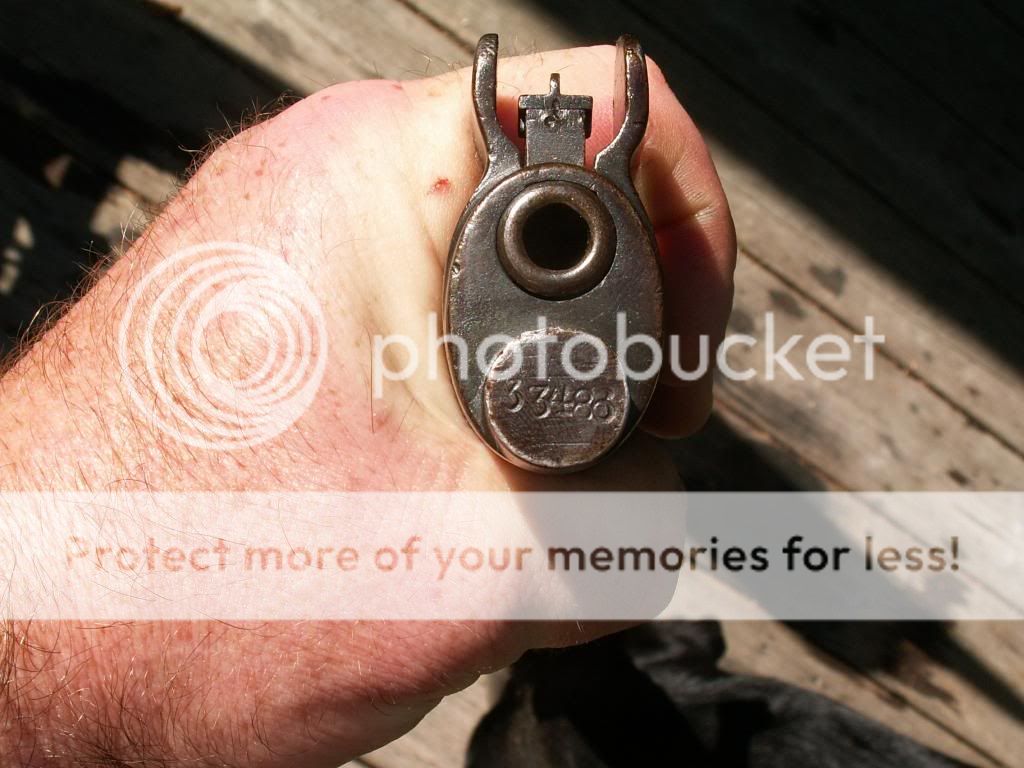
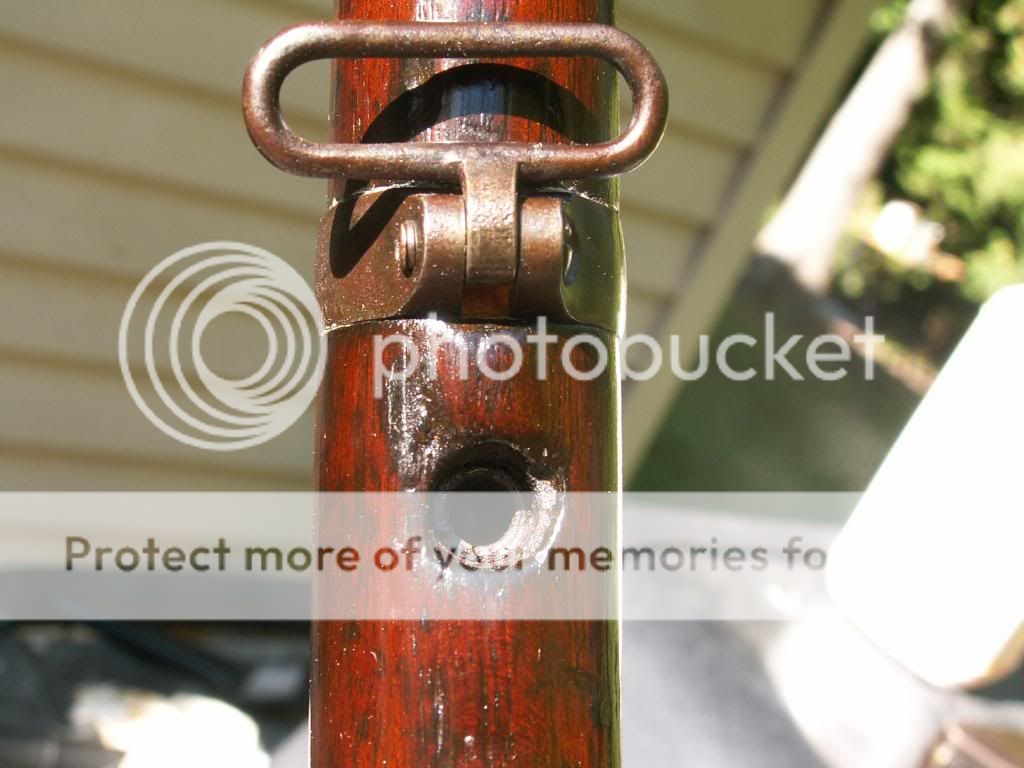
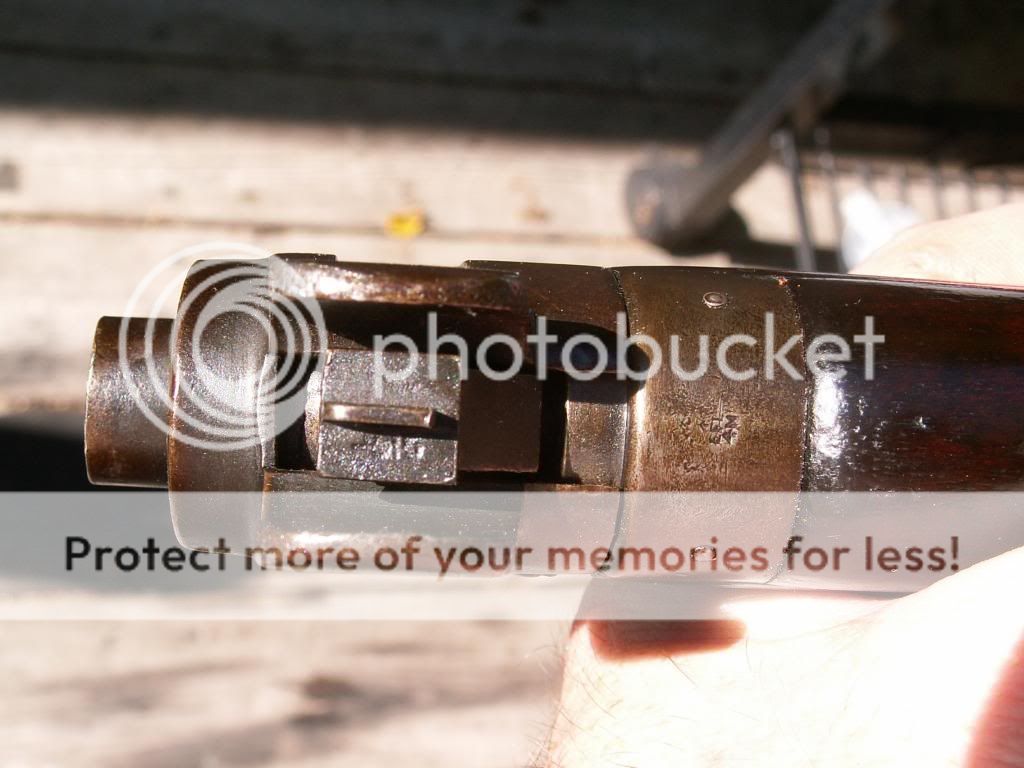
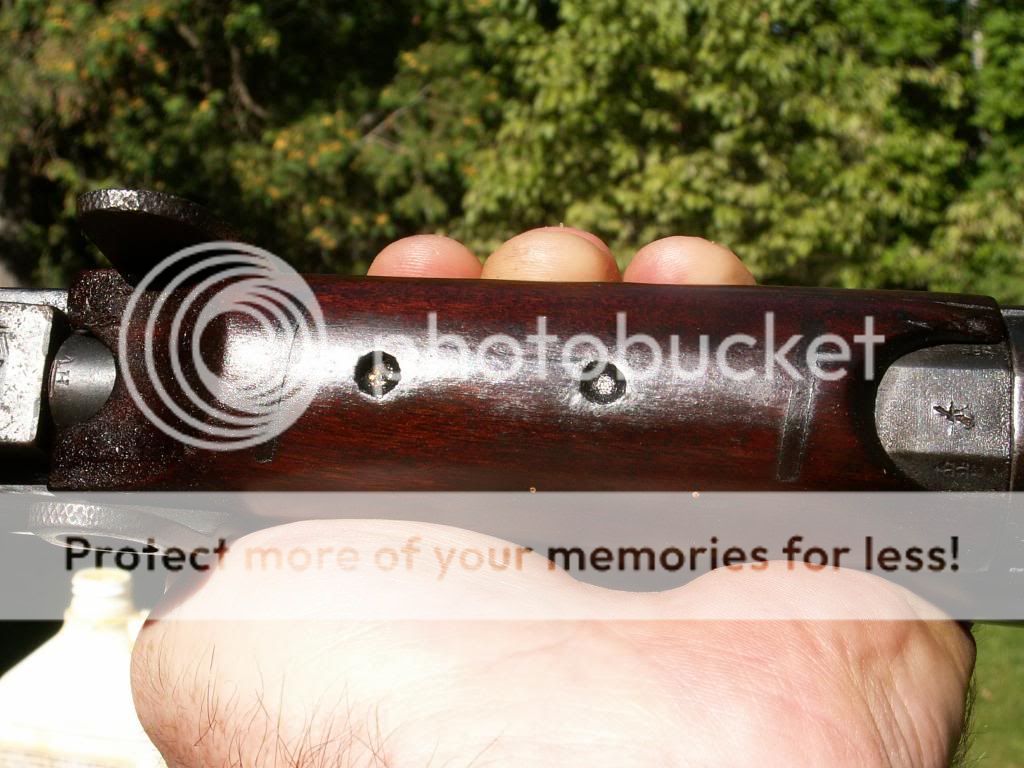
You HAVE the Inner Band Spring. All you need is the SCREW. The SCREW has a large flat on it which is designed to ADJUST COMPRESSION/DRAW on the Inner Band. Your Spring is in the right place: it bears on the SCREW SHOULDER, not on the Band itself.
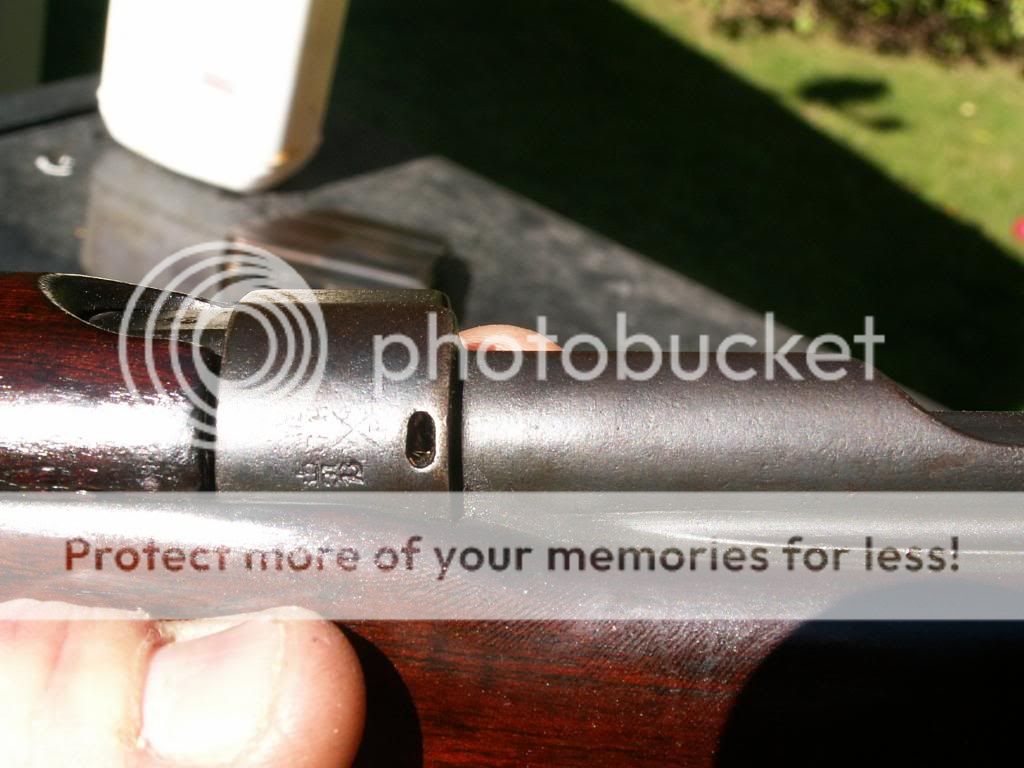
The idea with bedding the SMLE rifle was that the action was bedded solid at the Receiver Ring and around the Body and including the Chamber. From the Chamber forward, the Barrel floated. There was a 2-inch Reinforce just behind the MUZZLE. The Inner Band was to draw the Barrel DOWN close to or (sometimes) even touching the Inner Band Reinforce of the wood so that it had the correct DAMPING effect on the vibrations of the Barrel. SOME rifles would want this screwed down most of the way, some just would want a very slight damping; it was ADJUSTABLE and should not be cranked down solid. The peculiar shape of the Spring would hold the Screw in place.... or it should.
The old-time long-range shooters called this Inner Band Screw the "Magpie Screw". The rings on the Target were Bull (with X-ring in the middle) Inner, Magpie, Outer and right off the target. Turning this screw could change the Point of Impact of a rifle from the Magpie to the Bull. So you don't just crank it down solid.
SMLEs are very cantankerous critters. They are INDIVIDUALS; what works perfectly on one rifle might worsen the problem on another. For one example, the Muzzle Reinforce was 2 inches from the Factory. SOME (but not all) of the Canadian long-rang shooters would trim this back to ONE inch and find that their rifle shot better. Other rifles might NOT want this. I have a rifle here which shoots well under 1 MOA with the Reinforce cut back; it shot 3 times that previously. And I have several rifles which like the Reinforce left alone.
Target bedding an SMLE was more an Art than it was a Science. This is why so very few shops were GOOD at it and why their rifles became legendary. Think Holland and Holland, Alex Martin, Alfred G. Parker and a handful of others. The Army didn't have time to target-tune 4 million rifles. I was fortunate to have learned what bit I know from the former Captain of the Canadian Team. He was my rifle coach in Cadets, I shot with him and his cronies as a young man and, many years later, he had a gun shop here. Once he got into his 80s and found that I was still hanging around, he decided that perhaps a FEW secrets might be shared..... and I was listening! VERY closely, I might add! So don't thank ME: thank "Bisley Bill" Brown, the man who had the letter from the Queen on his wall.
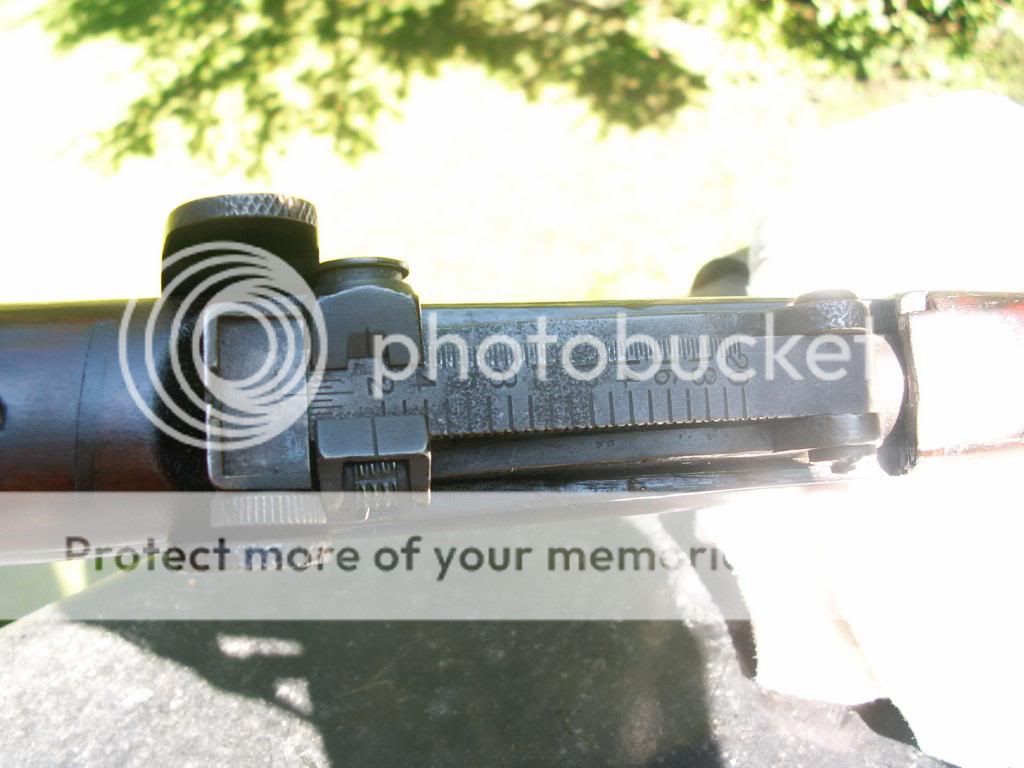
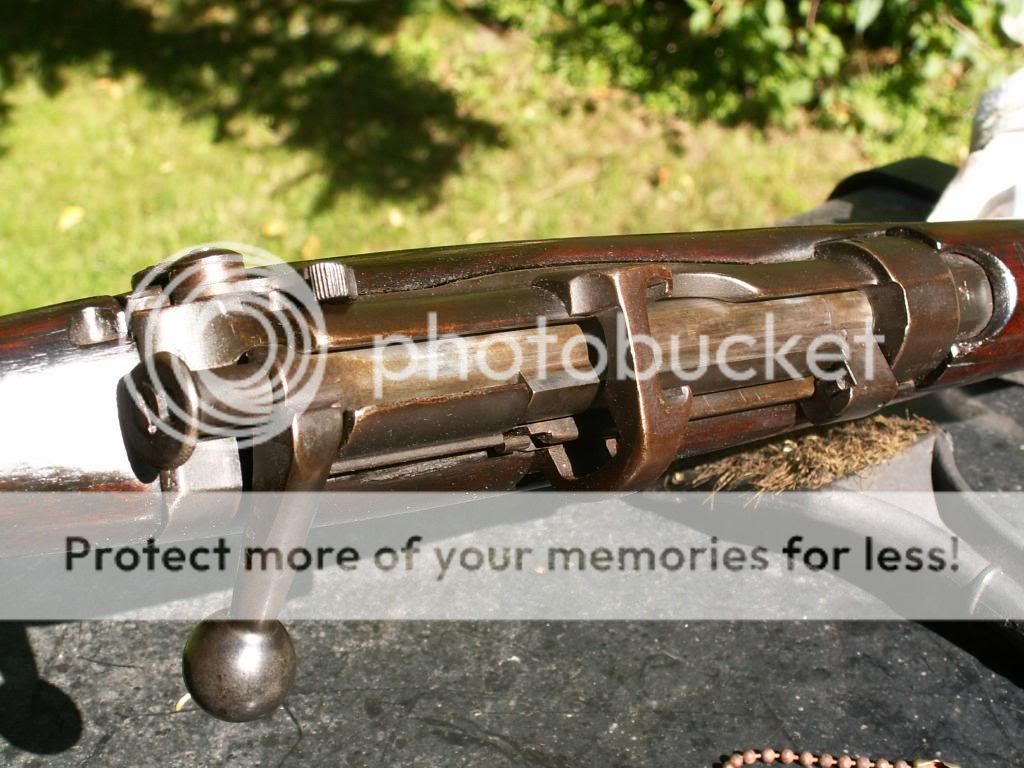
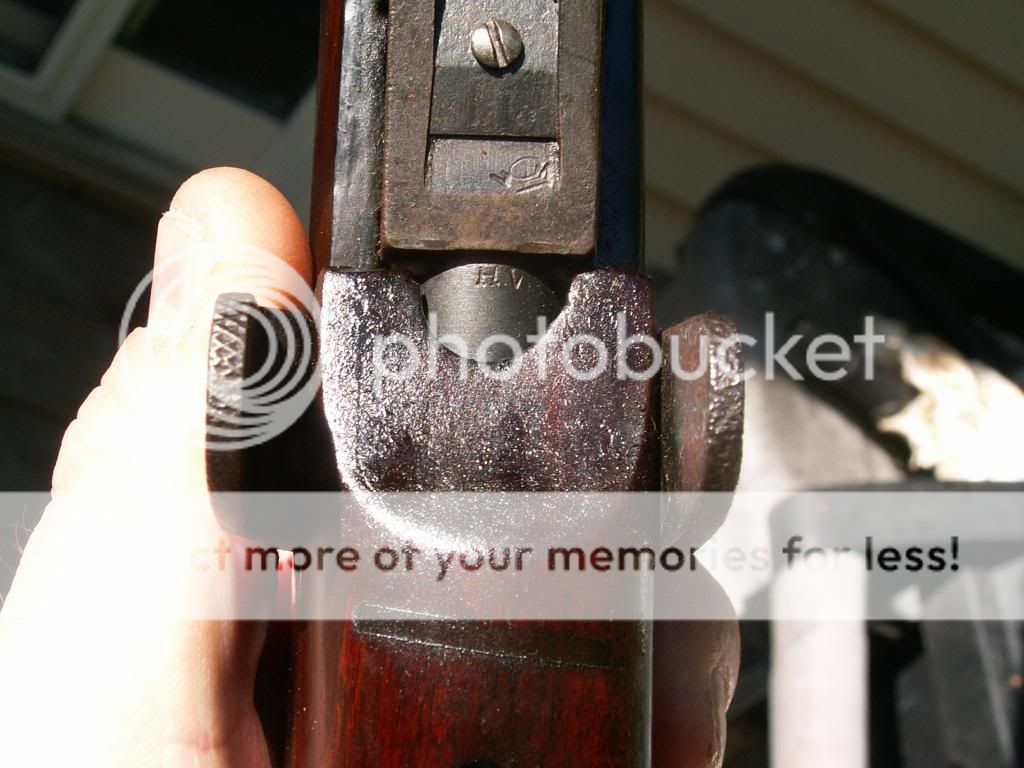
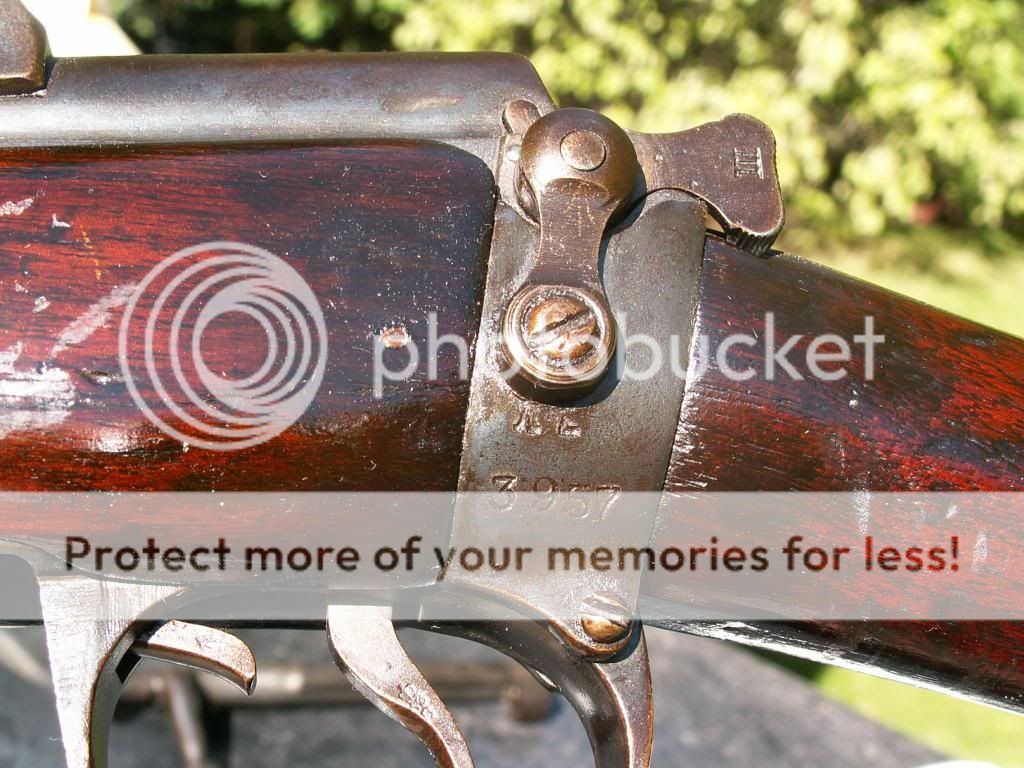
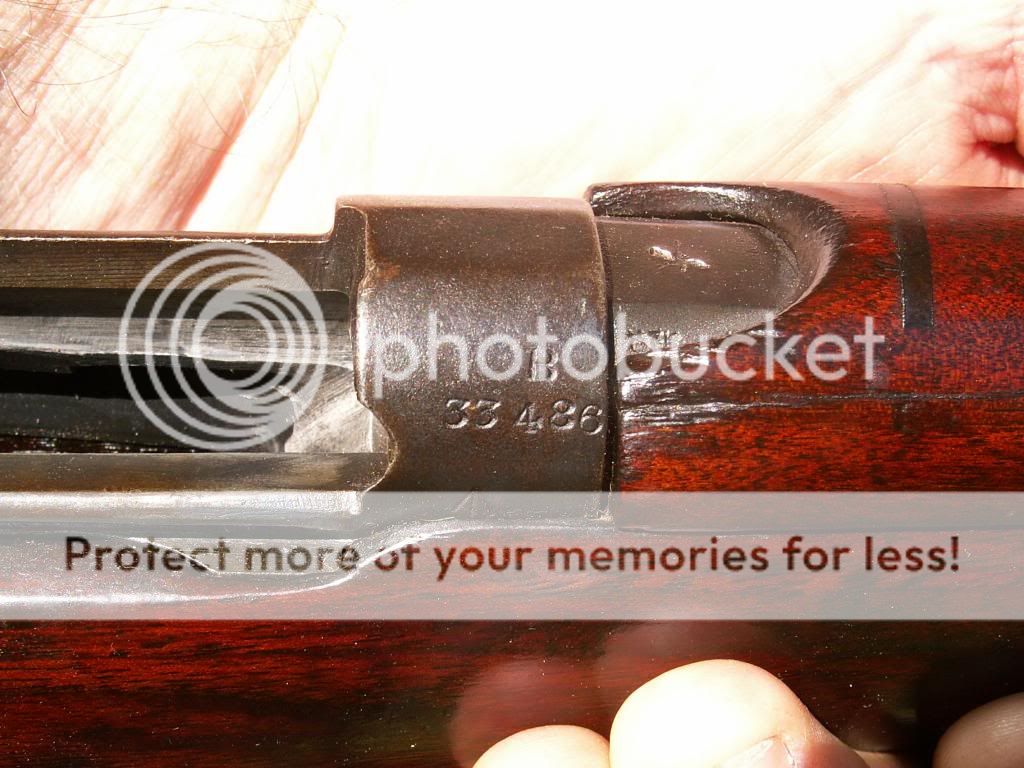
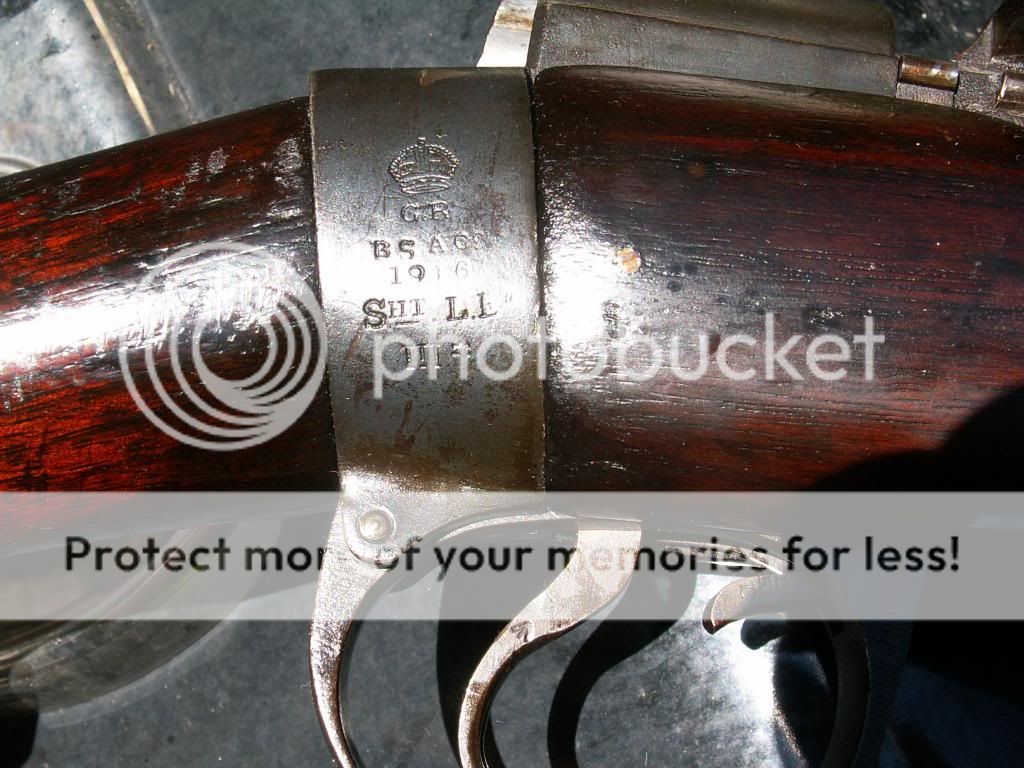
As to the REST of your rifle, I am pretty sure it has been through a re-fit some time AFTER the Great War, likely after the Second War. Your photos show lots of markings and they all look good: HV behind the Rear Sight Bed is for "High Velocity" ammunition (Mark 7) of course, other markings also look right. What is the BARREL DATE? (On the Chamber 10 o'clock, under the Rear Handguard.)
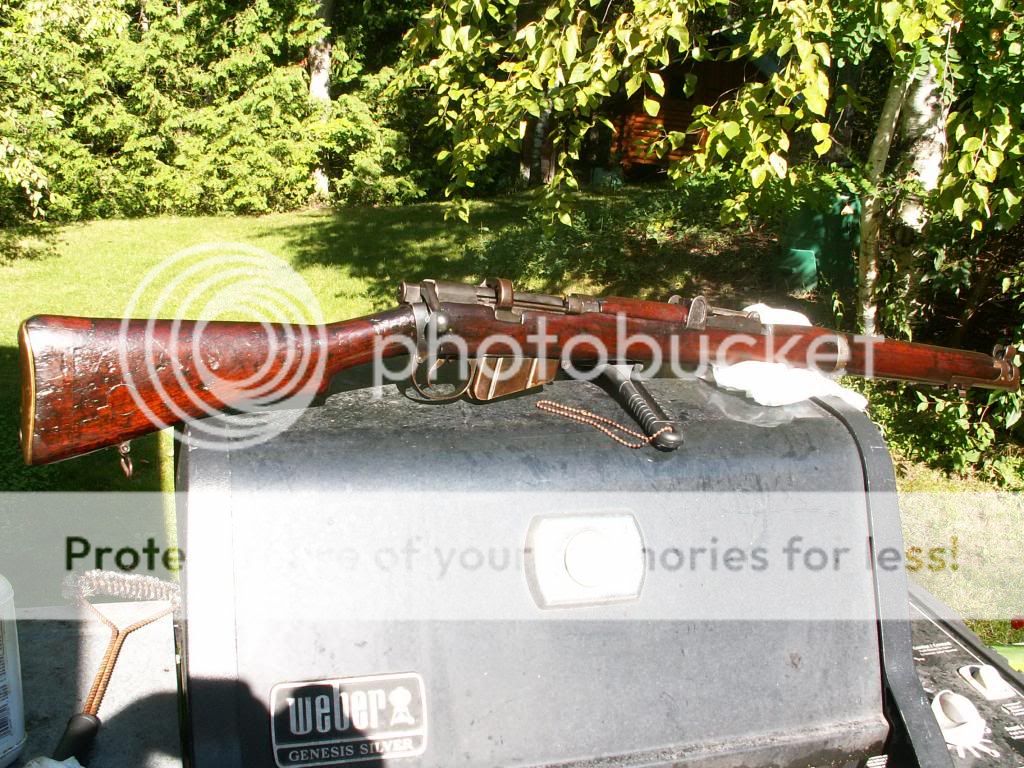
Your rifle has been kicked around, but that damage is mainly cosmetic and can be undone. It has also been maintained and serviced by people who knew what they were doing, so that is a Good Thing. A bit of steaming on some of those dents and you will have a rifle which you will be PROUD to take to the range and, if we can get it to shoot the way it CAN, it will be impressive.
ANYbody! PLEASE!!! Who put that AL Serial Number on the left side of the Body???????? It must be a control number or an issue number from somewhere but I don't think it is British. There are just SO many "AL###x" rifles around which have been kicked about in a manner which the Imperial Army simply would NOT tolerate! We have had several of them on here over the past 5 years or so, mostly Number 4s. MY current thinking is that they could be Italian rifles supplied by the British after War Two and before Italy set up to make the Garand.
Hope this helps.