
Okay guys I need to be schooled, I really need information on the gas system of the AR15. I know the basics of how it works but want to get more into it. For example can you use a rifle length gas system with a mid length ( 16" ) barrel. What about the reverse? What happens if you enlarge the gas port without lengthening the gas tube? I did some research on this but it ended up confusing me more than clarifying. I know that there are lots of members here that have a wealth of knowledge. About this system and would like to take advantage of it. The more I find out about this system the more I like it.














































You are using an out of date browser. It may not display this or other websites correctly.
You should upgrade or use an alternative browser.
You should upgrade or use an alternative browser.
AR 15 Gas System
- Thread starter twig_40
- Start date

Oh my, yes you do sound confused. "Mid Length" often refers to the length of the gas system not the barrel.
When talking about AR barrels, I've never heard anyone refer to their length in the form of a class.
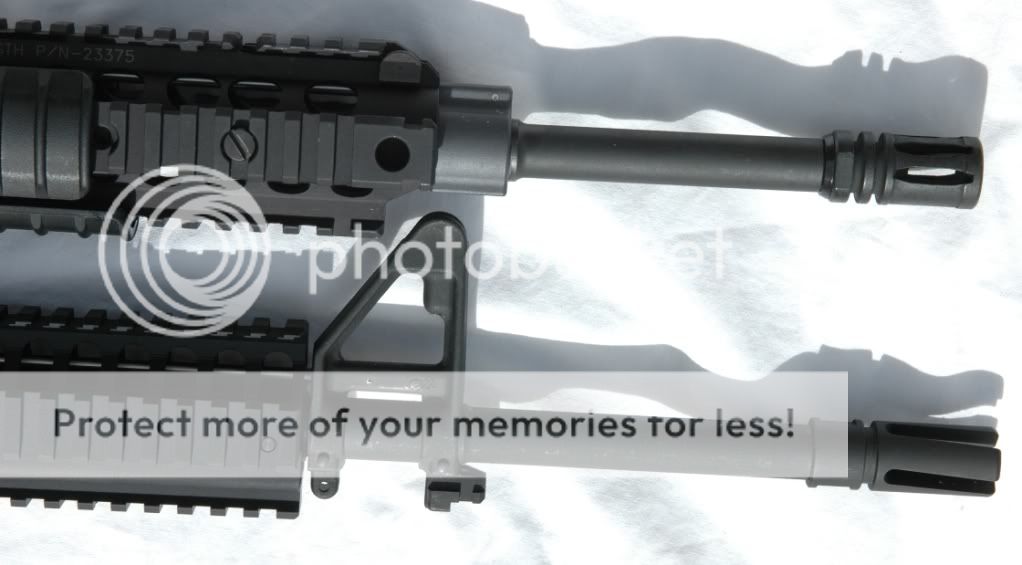
You have 3 basic Gas system lengths. Carbine, Mid, and Rifle. I'm going to generalize their measurements based on how they are recognized by their matching handguard. Carbine is 6", Mid is 9", Rifle is 12". This actual distance of the port from the chamber is diff', those are the rough numbers people often go by.
Based on that understanding of the terminology, No, you can't use a rifle length system on a 16" Mid-Length barrel, as Mid Length most like refers to the gas systems. You can however get 16" Rifle barrels, but they are less common. 16" Carbine barrels are very common.
You have to get the gas system that matches the barrel, which is usually listed in the barrels specs, eg: "16" Mid-Length" is a 16" barrel with a mid length gas system.
They are all basically the same except for the length of the gas tube. The gas block on one end, and the BCG on the other end are identical, no matter what barrel/gas system you get.
One does not simply enlarge a gas port. I've heard of it being done but it's rare. The manufacture has already sized it to it's optimal diameter, and believe me, it's allowing plenty of gas to pass as it is. You can get adjustable gas block if you want to throttle down, or just a heavier buffer to resist the force. Those are the 2 most common ways to fine tune your rifle past the selection of your barrel.
You biggest consideration at first, is your barrel length to gas length ratio. There are design specs that dictate the ideal ratio, but they've gotten wild over the years and it can cause problems when you build your own.
The ideal ratios are based on, 20" Rifle, 14.5" carbine, and 16" to 18" mid. Any barrel that is longer or shorter then that with a given gas system is either under gassed of over gassed respectively. For instance, a 16" Carbine is aggressively over gassed and inefficient, and a 10" carbine is grossly under gassed.
Ironically, but those configs usually require the use of a much heavier buffer to time them properly. The 16" to resist the extra pressure and slow down the bolt for smoother, less aggressive cycling, and the 10" to increase the dwell time so the pressure can build up enough to fully cycle the bolt.
To understand how this works, once the bullet passes the gas port, pressure is sent back to cycle the bolt, the longer the bullet has to travel past the gas port, the more time the pressure has to work it's way back to the bolt. Once the bullet leaves, the pressure is relieved. This is where timing comes in to play. Too much extra barrel, to much extra pressure, not much extra barrel, too little pressure.
You don't want to Bolt moving to pull the round out before the pressure is relieved, and you don't want it to either, to later after the pressure is relieved.
While the bullet is in the barrel and the powder is burning, the pressure keeps the round sealed in the chamber. If the bolt starts to work before the bullet has left, the round is still stuck in the chamber, and the bolt won't be able to extract it, or will be very difficult and damaging. This is a common failure on Carbines with too light a buffer using too long a barrel with too short a gas system. The round might get stuck in the chamber where the extractor jumped off the rim, and it can also be hard on the extractor and bolt lugs.
Visa versa, in the case of a short barrel, the bolt starts moving well after the bullet has left, and there is not enough pressure left in the system to fully cycle the bolt back and the rifle short stokes.
This is the reason you see a lot of different "Heavy Buffers" on the market. Unless you are using a 14" barrel with the carbine system then the standard 3oz buffer just doesn't cut it.
I do not recommend 16" Carbine barrels. They are a basterd config that was devised for the US civilian market as their "non-restricted" minimum barrel length is 16". Later on in AR development, the Mid system was introduced to improve on the AR system using a 16" barrel.
I'm not an expert, well, compared to some people, so some other members might chime in to add to, or contest this post. But that's gas systems in a nutshell as I understand them, and in a way that makes sense without getting too complicated.
There are also 2 common buffer system lengths but that's another story.
In short, don't worry about the Gas port size. Pick what barrel length you think you want, and go from there fine tuning it with buffer weights.
When talking about AR barrels, I've never heard anyone refer to their length in the form of a class.
You have 3 basic Gas system lengths. Carbine, Mid, and Rifle. I'm going to generalize their measurements based on how they are recognized by their matching handguard. Carbine is 6", Mid is 9", Rifle is 12". This actual distance of the port from the chamber is diff', those are the rough numbers people often go by.
Based on that understanding of the terminology, No, you can't use a rifle length system on a 16" Mid-Length barrel, as Mid Length most like refers to the gas systems. You can however get 16" Rifle barrels, but they are less common. 16" Carbine barrels are very common.
You have to get the gas system that matches the barrel, which is usually listed in the barrels specs, eg: "16" Mid-Length" is a 16" barrel with a mid length gas system.
They are all basically the same except for the length of the gas tube. The gas block on one end, and the BCG on the other end are identical, no matter what barrel/gas system you get.
One does not simply enlarge a gas port. I've heard of it being done but it's rare. The manufacture has already sized it to it's optimal diameter, and believe me, it's allowing plenty of gas to pass as it is. You can get adjustable gas block if you want to throttle down, or just a heavier buffer to resist the force. Those are the 2 most common ways to fine tune your rifle past the selection of your barrel.
You biggest consideration at first, is your barrel length to gas length ratio. There are design specs that dictate the ideal ratio, but they've gotten wild over the years and it can cause problems when you build your own.
The ideal ratios are based on, 20" Rifle, 14.5" carbine, and 16" to 18" mid. Any barrel that is longer or shorter then that with a given gas system is either under gassed of over gassed respectively. For instance, a 16" Carbine is aggressively over gassed and inefficient, and a 10" carbine is grossly under gassed.
Ironically, but those configs usually require the use of a much heavier buffer to time them properly. The 16" to resist the extra pressure and slow down the bolt for smoother, less aggressive cycling, and the 10" to increase the dwell time so the pressure can build up enough to fully cycle the bolt.
To understand how this works, once the bullet passes the gas port, pressure is sent back to cycle the bolt, the longer the bullet has to travel past the gas port, the more time the pressure has to work it's way back to the bolt. Once the bullet leaves, the pressure is relieved. This is where timing comes in to play. Too much extra barrel, to much extra pressure, not much extra barrel, too little pressure.
You don't want to Bolt moving to pull the round out before the pressure is relieved, and you don't want it to either, to later after the pressure is relieved.
While the bullet is in the barrel and the powder is burning, the pressure keeps the round sealed in the chamber. If the bolt starts to work before the bullet has left, the round is still stuck in the chamber, and the bolt won't be able to extract it, or will be very difficult and damaging. This is a common failure on Carbines with too light a buffer using too long a barrel with too short a gas system. The round might get stuck in the chamber where the extractor jumped off the rim, and it can also be hard on the extractor and bolt lugs.
Visa versa, in the case of a short barrel, the bolt starts moving well after the bullet has left, and there is not enough pressure left in the system to fully cycle the bolt back and the rifle short stokes.
This is the reason you see a lot of different "Heavy Buffers" on the market. Unless you are using a 14" barrel with the carbine system then the standard 3oz buffer just doesn't cut it.
I do not recommend 16" Carbine barrels. They are a basterd config that was devised for the US civilian market as their "non-restricted" minimum barrel length is 16". Later on in AR development, the Mid system was introduced to improve on the AR system using a 16" barrel.
I'm not an expert, well, compared to some people, so some other members might chime in to add to, or contest this post. But that's gas systems in a nutshell as I understand them, and in a way that makes sense without getting too complicated.
There are also 2 common buffer system lengths but that's another story.
In short, don't worry about the Gas port size. Pick what barrel length you think you want, and go from there fine tuning it with buffer weights.
Last edited:

Above post summarizes it very well
Here is a bit more detailed reading on the port pressure and dwell time differences
http://w w.ar15barrels.com/prod/operation.shtml
To further add to confusion , they have the Noveske / Vltor Intermediate gas system which is 2nd from top . Typically found in 18" Noveske barrels but can be had in Saber Defense ( out of business ) and custom Noveske 16" from MSTN
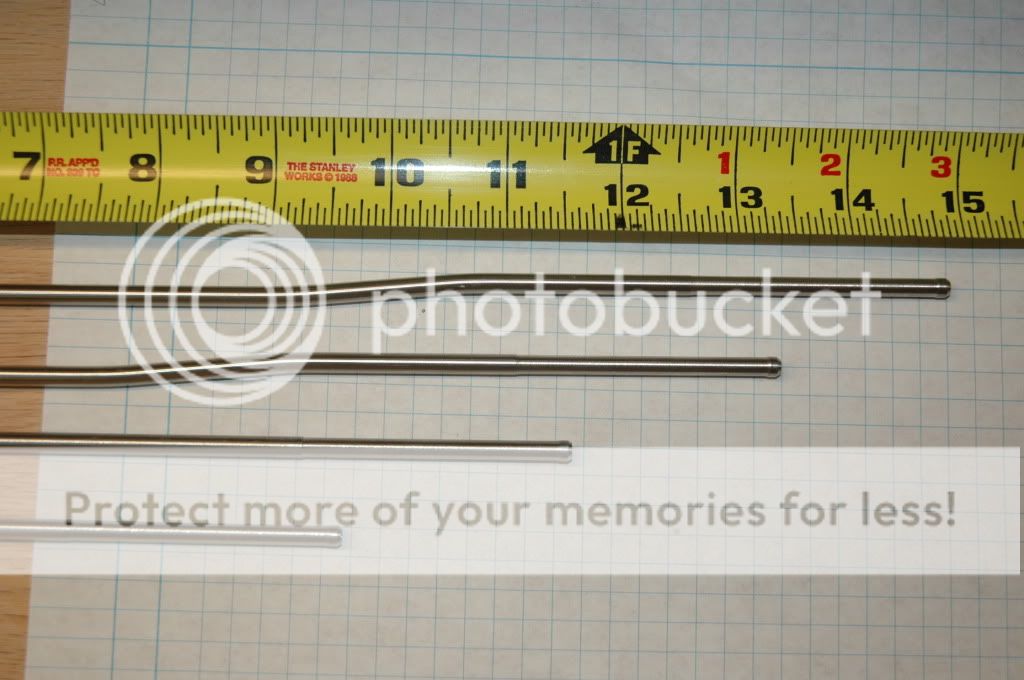
Finally you have the KAC SR15s "intermediate" which is slightly longer than a standard midlength ( Armalite midlength ). The KAC is on top. Notice where gas tube roll pin location is to give you reference. This puts it a bit shorter ( i think about .40" ) than the Intermediate
Here is a bit more detailed reading on the port pressure and dwell time differences
http://w w.ar15barrels.com/prod/operation.shtml
To further add to confusion , they have the Noveske / Vltor Intermediate gas system which is 2nd from top . Typically found in 18" Noveske barrels but can be had in Saber Defense ( out of business ) and custom Noveske 16" from MSTN
Finally you have the KAC SR15s "intermediate" which is slightly longer than a standard midlength ( Armalite midlength ). The KAC is on top. Notice where gas tube roll pin location is to give you reference. This puts it a bit shorter ( i think about .40" ) than the Intermediate

Great info here. Thanks guys.
What are your thoughts on a 10.5 with a carbine length gas system?
Any brand recommendations to make it work best, or can I buy any quality bcg, barrel, port, and tube from different manufacturers?
I plan on using a T2 buffer.
What are your thoughts on a 10.5 with a carbine length gas system?
Any brand recommendations to make it work best, or can I buy any quality bcg, barrel, port, and tube from different manufacturers?
I plan on using a T2 buffer.
Last edited:


Great info here. Thanks guys.
What are your thoughts on a 10.5 with a carbine length gas system?
Any brand recommendations to make it work best, or can I buy any quality bcg, barrel, port, and tube from different manufacturers?
I plan on using a T2 buffer.
FA BCG, 10.5 with a T2
You will do well.

While the bullet is in the barrel and the powder is burning, the pressure keeps the round sealed in the chamber. If the bolt starts to work before the bullet has left, the round is still stuck in the chamber, and the bolt won't be able to extract it, or will be very difficult and damaging. This is a common failure on Carbines with too light a buffer using too long a barrel with too short a gas system. The round might get stuck in the chamber where the extractor jumped off the rim, and it can also be hard on the extractor and bolt lugs.
Other than this part, that is a very good description. The gas system's technical description is "expansion and bleed-off". The gas expands on initiation and then bleeds off excess gas immediately on unlocking through the exhaust ports on the carrier.
The bolt does not unlock until the entire gas system is pressurized - including the interior of the carrier. This cannot happen until the bullet has passed the gas port, and the gas has pressurized the entire gas tube and the gas expansion chamber and this pressure has overcome the inertia of the carrier AND buffer AND the resistance of the return spring.
Bullet exit happens around 1.1 ms in a rifle. Unlocking happens at 4 ms.
This happens somewhat faster in a carbine or a pistol length system, but nonetheless bullet exit has happened well before any unlocking begins.
The case extraction problems you refer to are caused by unlocking beginning before obturation has subsided - or the case has elastically shrunk back down as chamber pressure decays. This has been addressed in the system by tuning the port size and increasing extraction spring force over the years. This is why the M4 has an O ring in the SOPMOD I kit - more extractor force. In very short systems, the weight of the buffer is increased to increase the time it takes for the pressure to move the carrier.
Thank you for the explanation that clears up the gas tube length confusion. I was also wondering about the various buffers and tube lengths, can you use a rifle length buffer and tube on a carbine, say with a 16" barrel?
Or is the weight of the buffer too much? I am assuming that the difference in buffer tube lengths is due to size of the buffer and not the weight, seeing as there is different weight carbine buffers.
I don't understand how a heavier buffer on the short system helps? If the system is under gassed wouldn't you need a lighter buffer because there is less pressure or are you trying to build up volume?
Or is the weight of the buffer too much? I am assuming that the difference in buffer tube lengths is due to size of the buffer and not the weight, seeing as there is different weight carbine buffers.
I don't understand how a heavier buffer on the short system helps? If the system is under gassed wouldn't you need a lighter buffer because there is less pressure or are you trying to build up volume?
There are 2 buffer system. Rifle and Carbine.
Parts from one buffer system are not interchangeable with the other. Either buffer system has a specific length buffer and spring that matches.
It doesn't matter what barrel length and gas system you use, you can use either buffer system.
The buffer weight in a standard Carbine Buffer System is roughly ~3oz.
The buffer weight in a standard Rifle Buffer System is roughly ~5oz.
The rifle buffer system is not too heavy for a Carbine Gas system. Quite the opposite. Due to the gas port tapping out closer to the chamber where the pressures are higher, the cycling is can very aggressive with too light a buffer.
I have no idea why the engineers that designed the system chose 3oz's, maybe some one else can shed some light, but I've never ran less then 5oz in my carbine systems. I typically run 6oz.
To answer your last question, yeah, you could say you are trying to "build up volume".
When the bullet passes the gas port in say, a 14.5" barrel, there is still several inches of travel for the bullet while it plugs the barrel to force extra gasses into the gas system. That gives the physics of the gas system enough time to do it's work.
When the bullet passes the gas port in say, a 10.5 barrel, there is 4 inches less travel, which mean less gas will be forced into the gas system before the bullet exits the barrel. The bolt carrier could start moving, then the bullet exits, then pressure drops leaving the bolt carrier without enough energy to complete the cycle. The 14.5" would still be forcing energy in it to help it along, but the 10.5" will fall short. When you put more mass behind bolt carrier, you prevent it from trying to move to early, it'll give the gas pressure just a little bit more time to "build up volume" so that there is enough for a proper cycle.
I have to admit, the understand is all squared away up in my brain, but I'm not the best with words sometimes.
C77 seems better at explaining these things. Some of what I'm saying isn't technically accurate, but I'm kind of using artistic license in hopes that you can visualize it better.
Heavier buffers just seems to be better all around. Some might argue otherwise, but I've yet to build a system yet that wasn't improved on with either and adjustable gas system or a heavier buffer.
Parts from one buffer system are not interchangeable with the other. Either buffer system has a specific length buffer and spring that matches.
It doesn't matter what barrel length and gas system you use, you can use either buffer system.
The buffer weight in a standard Carbine Buffer System is roughly ~3oz.
The buffer weight in a standard Rifle Buffer System is roughly ~5oz.
The rifle buffer system is not too heavy for a Carbine Gas system. Quite the opposite. Due to the gas port tapping out closer to the chamber where the pressures are higher, the cycling is can very aggressive with too light a buffer.
I have no idea why the engineers that designed the system chose 3oz's, maybe some one else can shed some light, but I've never ran less then 5oz in my carbine systems. I typically run 6oz.
To answer your last question, yeah, you could say you are trying to "build up volume".
When the bullet passes the gas port in say, a 14.5" barrel, there is still several inches of travel for the bullet while it plugs the barrel to force extra gasses into the gas system. That gives the physics of the gas system enough time to do it's work.
When the bullet passes the gas port in say, a 10.5 barrel, there is 4 inches less travel, which mean less gas will be forced into the gas system before the bullet exits the barrel. The bolt carrier could start moving, then the bullet exits, then pressure drops leaving the bolt carrier without enough energy to complete the cycle. The 14.5" would still be forcing energy in it to help it along, but the 10.5" will fall short. When you put more mass behind bolt carrier, you prevent it from trying to move to early, it'll give the gas pressure just a little bit more time to "build up volume" so that there is enough for a proper cycle.
I have to admit, the understand is all squared away up in my brain, but I'm not the best with words sometimes.
C77 seems better at explaining these things. Some of what I'm saying isn't technically accurate, but I'm kind of using artistic license in hopes that you can visualize it better.
Heavier buffers just seems to be better all around. Some might argue otherwise, but I've yet to build a system yet that wasn't improved on with either and adjustable gas system or a heavier buffer.
There are 2 buffer system. Rifle and Carbine.
Parts from one buffer system are not interchangeable with the other. Either buffer system has a specific length buffer and spring that matches.
It doesn't matter what barrel length and gas system you use, you can use either buffer system.
The buffer weight in a standard Carbine Buffer System is roughly ~3oz.
The buffer weight in a standard Rifle Buffer System is roughly ~5oz.
The rifle buffer system is not too heavy for a Carbine Gas system. Quite the opposite. Due to the gas port tapping out closer to the chamber where the pressures are higher, the cycling is can very aggressive with too light a buffer.
I have no idea why the engineers that designed the system chose 3oz's, maybe some one else can shed some light, but I've never ran less then 5oz in my carbine systems. I typically run 6oz.
There are actually more than two. The rifle buffer is much longer than the carbine, and does not fit the carbine.
Carbine buffers have three weights inside. The purpose of the weights is to "buffer" out bolt bounce when firing on automatic. There is no real need for a buffer in a semi-auto only rifle. When Colt's introduced the plastic spring guide for the AR15 there was crying in the streets.
Those weights are mild steel in a standard buffer (3.8 oz). To make a carbine H buffer (4.6 oz), one weight is replaced with carbide which is heavier. An HH or 2H or T2 buffer will have two carbide weights, and a 3H, HHH (5.4 oz) will have three carbide weights.
Colt also manufactures a prototype 6H and there are several hydraulic buffers and loads of after-market mechanical rate reducing buffers etc.
Amateurs use the buffer weights to add weight to a standard carbine system to try to "tune" it, though most very short barrels will require the added weight to counter a very large gas port size that is used compensate for an earlier drop in pressure.
The real reason for the extra weight is to compensate for larger barrels, rails or attachments. To fire reliably on full auto, an HBAR would require more buffer weight than a pencil barrel. Likewise the attachment of RIS/RAS or a GL will effectively increase the weight of the barrel.
When the bullet passes the gas port in say, a 10.5 barrel, there is 4 inches less travel, which mean less gas will be forced into the gas system before the bullet exits the barrel. The bolt carrier could start moving, then the bullet exits, then pressure drops leaving the bolt carrier without enough energy to complete the cycle. The 14.5" would still be forcing energy in it to help it along, but the 10.5" will fall short. When you put more mass behind bolt carrier, you prevent it from trying to move to early, it'll give the gas pressure just a little bit more time to "build up volume" so that there is enough for a proper cycle.
You have the concept right but the bolt or carrier will NOT move while the bullet is in the barrel. In a 10.5 inch barrel, the bullet will be travelling at nearly 2500 fps at the port, and reach the port in around 1 ms. A 10.5 inch barrel has around 2.5 inches of barrel forward of the port. The bullet moves around 300 feet per ms past the port. Unlocking happens around 3-4 ms, meaning the bullet will be at least 900 feet away from the muzzle.
I actually heard a guy at NSCC tell his buddies that the last round rom a five round mag would group differently than the others since the bolt would lock back while the bullet was still in the barrel and affect it's release.
Thank you for all the information, last night I checked out the links and it made perfect sense. This is exactly what I was trying to get into. I wanted to know the specifics of how this rifle works. On one level it is very simple, but when you start talking dwell time, port pressure and so on it can get complicated quickly. What better way to learn how it works by having a discussion about it.
I find this topic to be very interesting.
I was just thinking that while I was researching this comments were made that a lot of backyard gunsmiths will enlarge the gas ports when there are issues, that leads me to believe that they think the system is under gassed when in reality most systems are over gassed.
In one of those links they talked about one of the symptoms of bad timing was the extractor would leave marks on the brass, can you describe these marks? I couldn't make them out in the pictures.
I find this topic to be very interesting.
I was just thinking that while I was researching this comments were made that a lot of backyard gunsmiths will enlarge the gas ports when there are issues, that leads me to believe that they think the system is under gassed when in reality most systems are over gassed.
In one of those links they talked about one of the symptoms of bad timing was the extractor would leave marks on the brass, can you describe these marks? I couldn't make them out in the pictures.

Travis Bickle
CGN Ultra frequent flyer
- Location
- Upper Lower Middle Alberta
Would a 14.5" barrel have trouble pushing a standard length, standard weight buffer and spring? As in would a carbine length barrel have any issue pushing an A2 style stock buffer and spring?
Just curious and has me thinking from reading this thread.
Just curious and has me thinking from reading this thread.
Would a 14.5" barrel have trouble pushing a standard length, standard weight buffer and spring? As in would a carbine length barrel have any issue pushing an A2 style stock buffer and spring?
Just curious and has me thinking from reading this thread.
It should work fine, yeah.
There are actually more than two. The rifle buffer is much longer than the carbine, and does not fit the carbine.
True. I'm just narrowing things down to the basics.
Carbine buffers have three weights inside. The purpose of the weights is to "buffer" out bolt bounce when firing on automatic. There is no real need for a buffer in a semi-auto only rifle. When Colt's introduced the plastic spring guide for the AR15 there was crying in the streets.
That comes are a surprise, I never heard about that myself. I know that that bolt bounce is a matter of safety in a full auto, but from what I understand it can still excelorate wear in even a semi system, and make for inconsistent cambering which is bad if you are going for accuracy.
I am under the impression that bolt bounce is to be avoided if possible.
Those weights are mild steel in a standard buffer (3.8 oz). To make a carbine H buffer (4.6 oz), one weight is replaced with carbide which is heavier. An HH or 2H or T2 buffer will have two carbide weights, and a 3H, HHH (5.4 oz) will have three carbide weights.
Colt also manufactures a prototype 6H and there are several hydraulic buffers and loads of after-market mechanical rate reducing buffers etc.
Amateurs use the buffer weights to add weight to a standard carbine system to try to "tune" it, though most very short barrels will require the added weight to counter a very large gas port size that is used compensate for an earlier drop in pressure.
How do professionals tune their systems ?
The real reason for the extra weight is to compensate for larger barrels, rails or attachments. To fire reliably on full auto, an HBAR would require more buffer weight than a pencil barrel. Likewise the attachment of RIS/RAS or a GL will effectively increase the weight of the barrel.
Is this concept similar to the physics of "limp wristing" ?
You have the concept right but the bolt or carrier will NOT move while the bullet is in the barrel. In a 10.5 inch barrel, the bullet will be travelling at nearly 2500 fps at the port, and reach the port in around 1 ms. A 10.5 inch barrel has around 2.5 inches of barrel forward of the port. The bullet moves around 300 feet per ms past the port. Unlocking happens around 3-4 ms, meaning the bullet will be at least 900 feet away from the muzzle.
Yeah I know, it's just find it a bit easier to explain the concept if you can visualize that it is possible for the carrier to move while but bullet is still in motion. As I said, artistic license. Saves me having to explain the physics of the powder still burning with enough pressure to seal the case with no bullet in the barrel, but not enough back pressure to drive the system . . . yadda yadda, you know.
I explain it like a fairy tale, you explain it like a scientist. Hah.
I actually heard a guy at NSCC tell his buddies that the last round rom a five round mag would group differently than the others since the bolt would lock back while the bullet was still in the barrel and affect it's release.
Actually, this a a true phenomenon, but not for that reason, that's just silly. I never noticed this in an AR before either. In an M14 tho' . . . the last round never hits with the same POI as the previous rounds. If I'm shooting groups, I need to change out or drop the mag before the last shot. I never bothered to research why that happens, just know that it does.
...

I have a 14.5" Norinco. With full power ammo it ejects very violently. I found I could really down load my ammo a long way before it would stop cycling. For CQB, downloaded ammo works just fine.
What can I do to slow it down for full power ammo? Use a heavier buffer?
What can I do to slow it down for full power ammo? Use a heavier buffer?
I think I discussed loading with you before. I use ~20.5g of 4198 and it cycles a 11.5" and 16" with a 6oz buffer perfectly.
Yeah, you could use a heavier buffer, much heavier depending on how violent you think it is, or an adjustable gas block. The buffer method tends more consistent reliable.
I've never ran a 14.5" before, but I know what my 16" is obnoxious with full power ammo even with a 6oz buffer. I think it might take an 8oz to tame that beast. Mind you, my full power ammo uses slow/gassy BL-C(2) powder with a mid-hot load to simulate a hot 5.56 military round. Whatever you are using might not have as much kahonas. I hate the 16" carbine barrel, kind of wish I never got one, but it's accurate and shoots well with the right ammo so I only ever run 4198 loads in it.
C77 has suggested that tweeking buffer weights is an amateur way of tuning your rifle, but I'm not about to start resizing gas holes or replacing all my gas blocks. Not sure what other options there are yet to make the best of an existing system, so for now, I'm a huge proponent of buffer weights.
I got an adjustable A/T kit from "heavybuffers dot com" and it has been invaluable to me.
Yeah, you could use a heavier buffer, much heavier depending on how violent you think it is, or an adjustable gas block. The buffer method tends more consistent reliable.
I've never ran a 14.5" before, but I know what my 16" is obnoxious with full power ammo even with a 6oz buffer. I think it might take an 8oz to tame that beast. Mind you, my full power ammo uses slow/gassy BL-C(2) powder with a mid-hot load to simulate a hot 5.56 military round. Whatever you are using might not have as much kahonas. I hate the 16" carbine barrel, kind of wish I never got one, but it's accurate and shoots well with the right ammo so I only ever run 4198 loads in it.
C77 has suggested that tweeking buffer weights is an amateur way of tuning your rifle, but I'm not about to start resizing gas holes or replacing all my gas blocks. Not sure what other options there are yet to make the best of an existing system, so for now, I'm a huge proponent of buffer weights.
I got an adjustable A/T kit from "heavybuffers dot com" and it has been invaluable to me.






















