I picked up a nice sporterized P17 today at the North Battleford gun show. Gonna clean it up and take some pics to post later. Has original sights, ears are still attached to the front sights, and bore is clean and shiny. Think I found my new hunting rifle. Could be a good candidate for restoration too. Anything I should know the old girl before I shoot it?













































You are using an out of date browser. It may not display this or other websites correctly.
You should upgrade or use an alternative browser.
You should upgrade or use an alternative browser.
Bought a P17 today
- Thread starter saskadude
- Start date

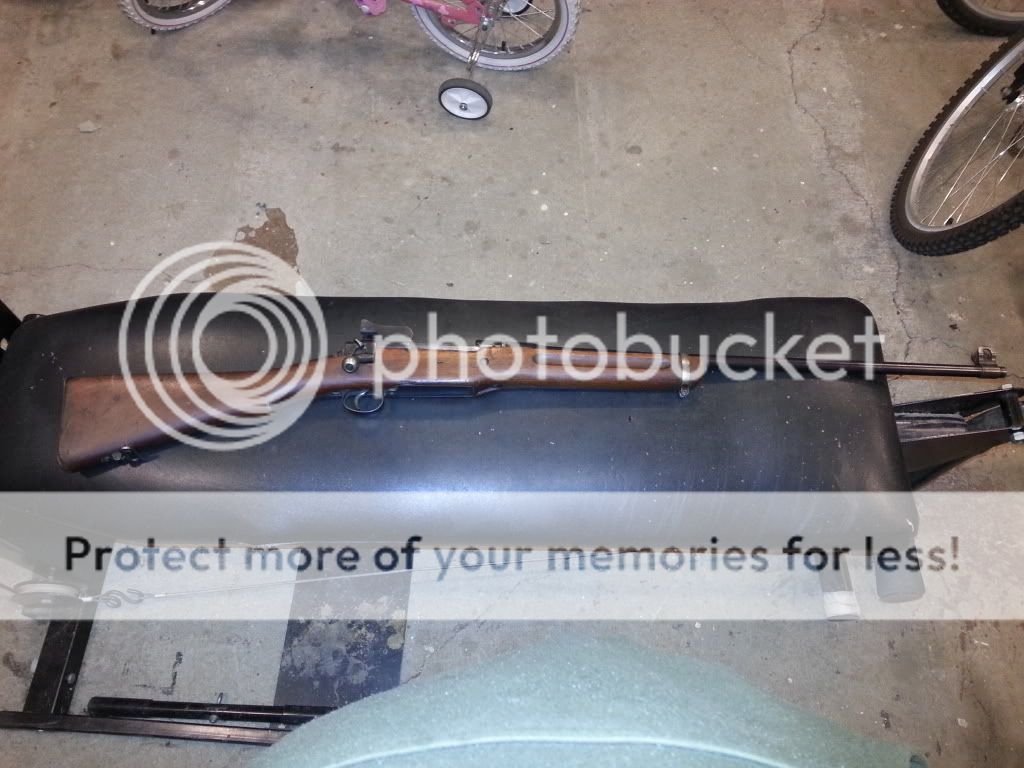
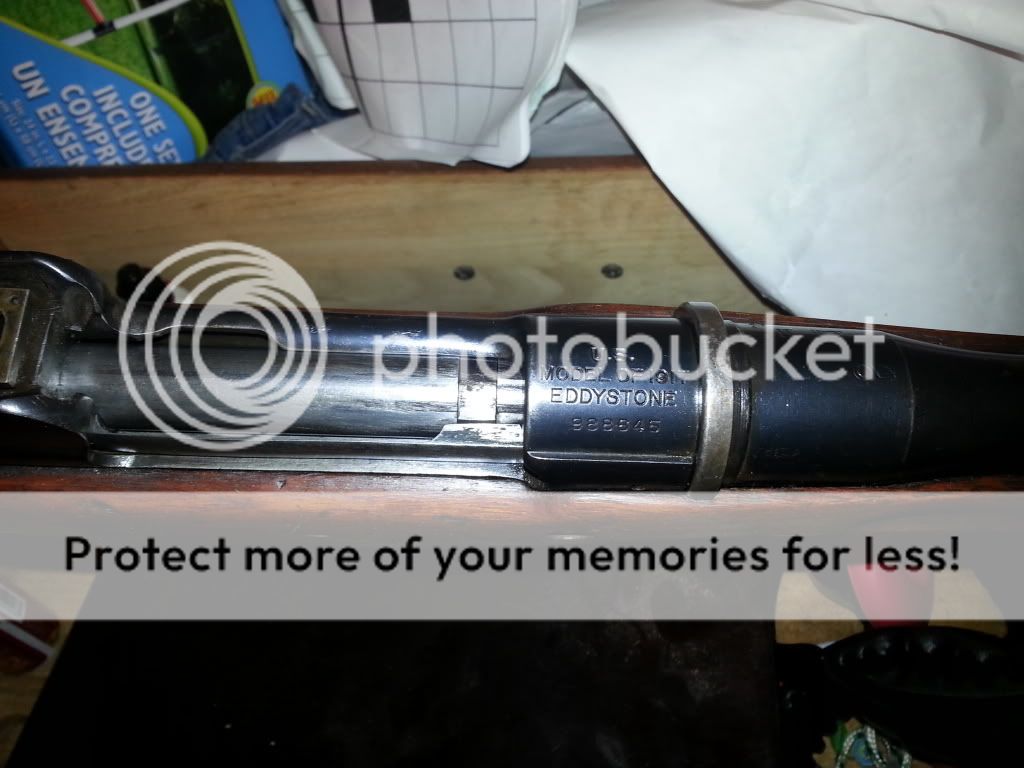
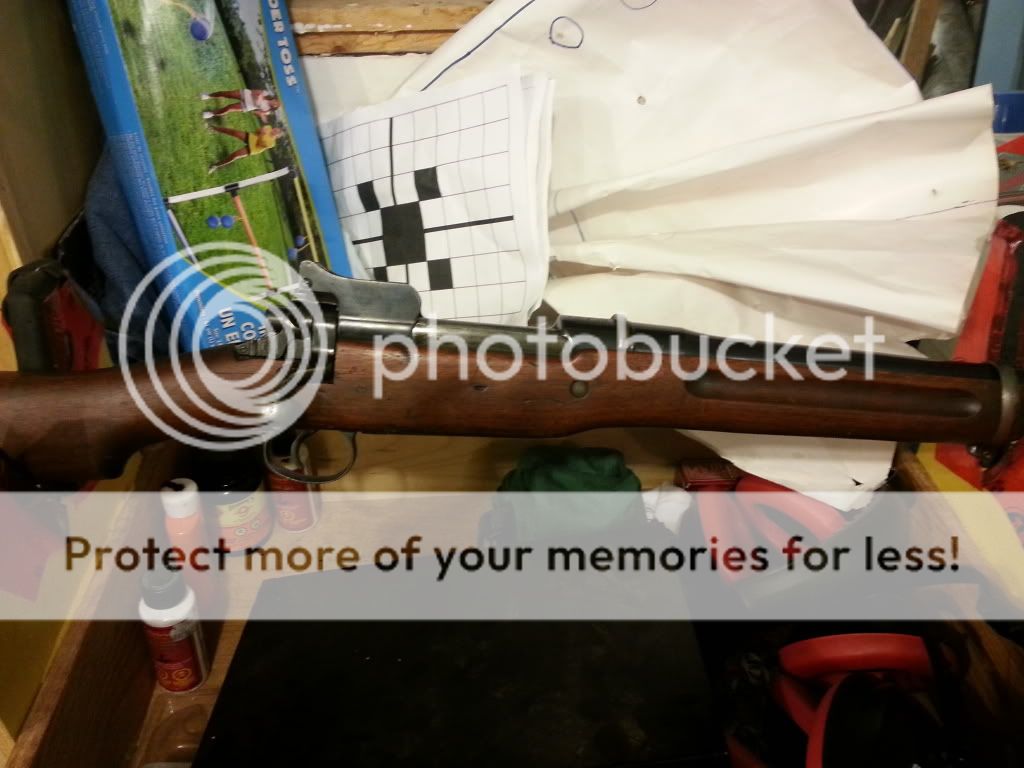


Good score that's a friggin eddy stone for $150!!!!
I found the rifles at a gun show that I went to were quite reasonable. Cheaper than the EE. I got a little over whelmed at the last gun show I was at and spent most of my time looking at the prohibited and restricted rifles I can't have. Also a guy was looking over a nice ross I was waiting for him to put it down so I could buy it. He took it home.
I found the rifles at a gun show that I went to were quite reasonable. Cheaper than the EE. I got a little over whelmed at the last gun show I was at and spent most of my time looking at the prohibited and restricted rifles I can't have. Also a guy was looking over a nice ross I was waiting for him to put it down so I could buy it. He took it home.
I don't know about now, but Numrich used to have some original overrun stocks for these, as did Sarco.
It was officially the "U.S. Rifle, Caliber .30, Model of 1917" in the States. In common usage, this became "M-1917"; the "M17" designation came in the 1930s. Here, it became known informally as the P-'17 because it is so very obviously a development of our P-'14, "P" in both cases meaning "Pattern of".
Canada got a whole bunch of these from the US in the early part of War Two, when we were building a huge army and had shipped everything we could spare (and a lot that we couldn't spare) to England. Rifles need manuals and so manuals were printed...... in Canada..... by the Canadian military...... describing it as the "P17"...... which was the official name of the rifle in CANADIAN Service. The greater part of the M-1917 rifles delivered to Canada were of Eddystone manufacture and so they became known, at least in the RCAF, as the "Eddystone Rifle".
It is a .30-'06 but it has a 5-groove barrel with Enfield rifling, 1 turn in 10 inches, Left. Standard American rifling was 1 turn in 10 inches, Right, Mauser type. Mauser type rifling has the grooves 3 times the width of the Lands. Enfield rifling has lands and grooves of EQUAL width and the grooves are quite deep. As well, the odd number of equal-width grooves puts a land opposite each groove, all the way around the barrel. This asks the bullet to do a LOT of deforming and reforming to get down that barrel. The ultimate effect is that Enfield rifling can be extremely accurate, it lasts half of forever..... but it has a definite and pronounced preference for bullets with a FLAT base. Nice thing is that flatbase bullets are cheaper than boat-tails. Your rifle is sighted for a 150-grain flatbase bullet starting out at 2750 ft/sec. It will stabilise bullets between 130 and 220 grains without difficulty.
Enfield rifling is the prototype for the ultra-modern, super-accurate, last-forever 5R rifling...... just LEFT handed and without a neat-oh US patent. It was developed by William Metford and used in British rifles from lt 1895 onward into the 1950s.
Hope this helps.
Great score!
It was officially the "U.S. Rifle, Caliber .30, Model of 1917" in the States. In common usage, this became "M-1917"; the "M17" designation came in the 1930s. Here, it became known informally as the P-'17 because it is so very obviously a development of our P-'14, "P" in both cases meaning "Pattern of".
Canada got a whole bunch of these from the US in the early part of War Two, when we were building a huge army and had shipped everything we could spare (and a lot that we couldn't spare) to England. Rifles need manuals and so manuals were printed...... in Canada..... by the Canadian military...... describing it as the "P17"...... which was the official name of the rifle in CANADIAN Service. The greater part of the M-1917 rifles delivered to Canada were of Eddystone manufacture and so they became known, at least in the RCAF, as the "Eddystone Rifle".
It is a .30-'06 but it has a 5-groove barrel with Enfield rifling, 1 turn in 10 inches, Left. Standard American rifling was 1 turn in 10 inches, Right, Mauser type. Mauser type rifling has the grooves 3 times the width of the Lands. Enfield rifling has lands and grooves of EQUAL width and the grooves are quite deep. As well, the odd number of equal-width grooves puts a land opposite each groove, all the way around the barrel. This asks the bullet to do a LOT of deforming and reforming to get down that barrel. The ultimate effect is that Enfield rifling can be extremely accurate, it lasts half of forever..... but it has a definite and pronounced preference for bullets with a FLAT base. Nice thing is that flatbase bullets are cheaper than boat-tails. Your rifle is sighted for a 150-grain flatbase bullet starting out at 2750 ft/sec. It will stabilise bullets between 130 and 220 grains without difficulty.
Enfield rifling is the prototype for the ultra-modern, super-accurate, last-forever 5R rifling...... just LEFT handed and without a neat-oh US patent. It was developed by William Metford and used in British rifles from lt 1895 onward into the 1950s.
Hope this helps.
Great score!






















