













































XMAS GIFT FOR YOU LIKE MINDED GUN NUTZ OUT THERE WHO HATE CHRISTMAS, well just the commercialization of it all, So here is some Gun #### for you. Enjoy
Originally Posted by englishman_ca
A picture is worth a thousand words, thank you for the many pics. I think that I now understand what you have there.
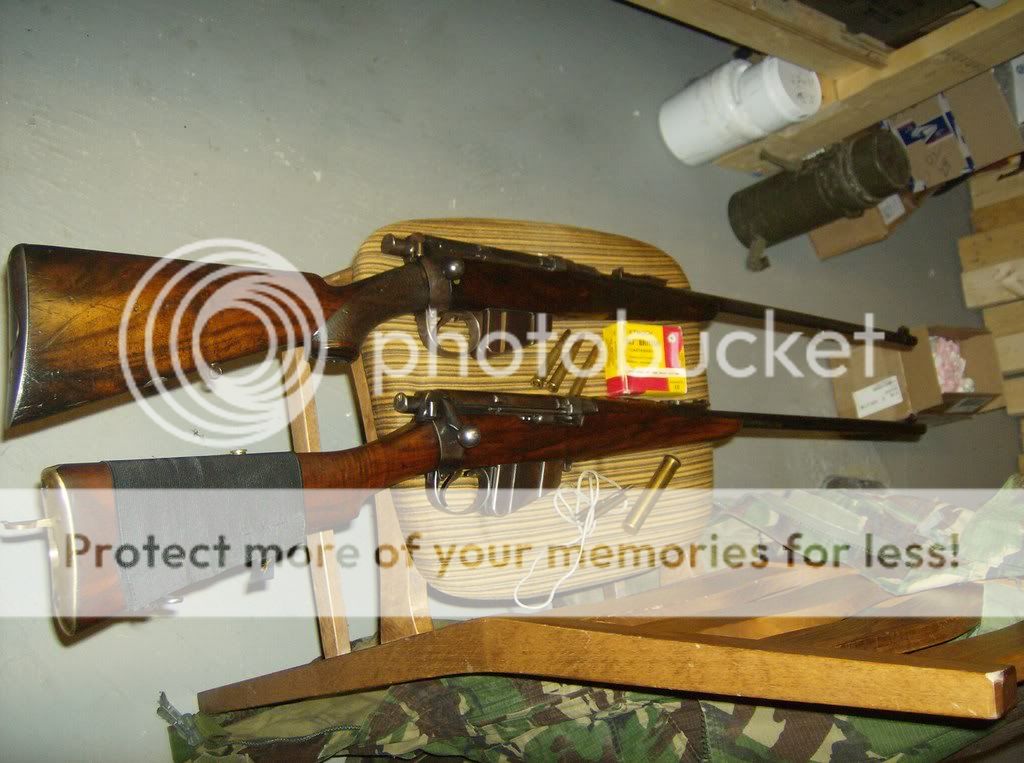
Your rifle started out circa 1906-1910 as a Long Lee volunteer pattern rifle, generaly of the style of the MLE Mk.I
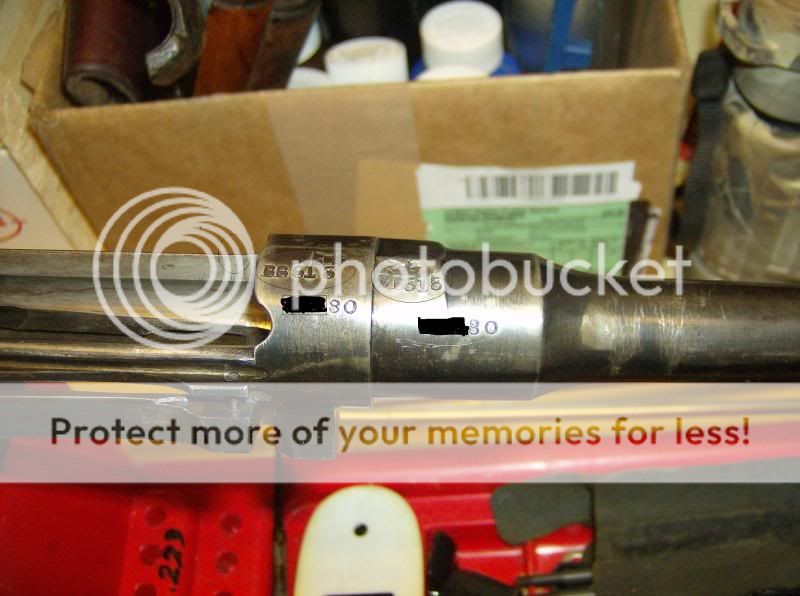
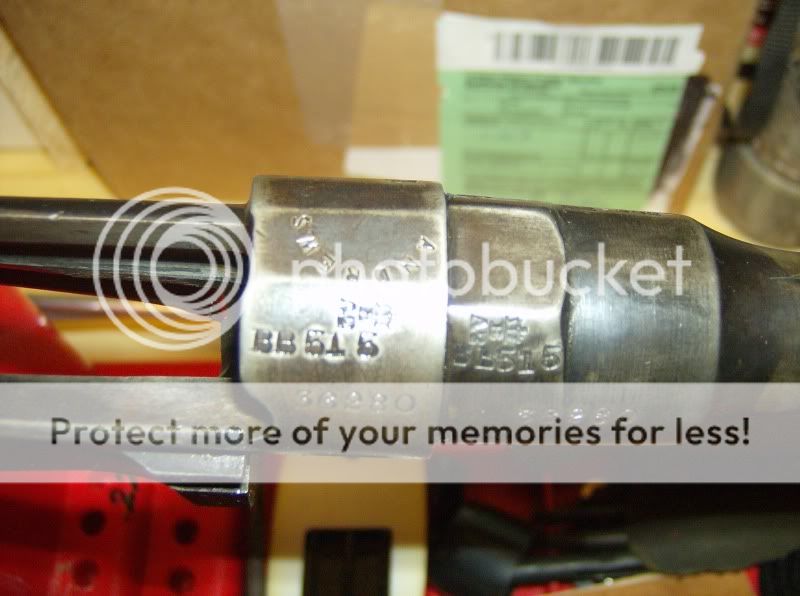
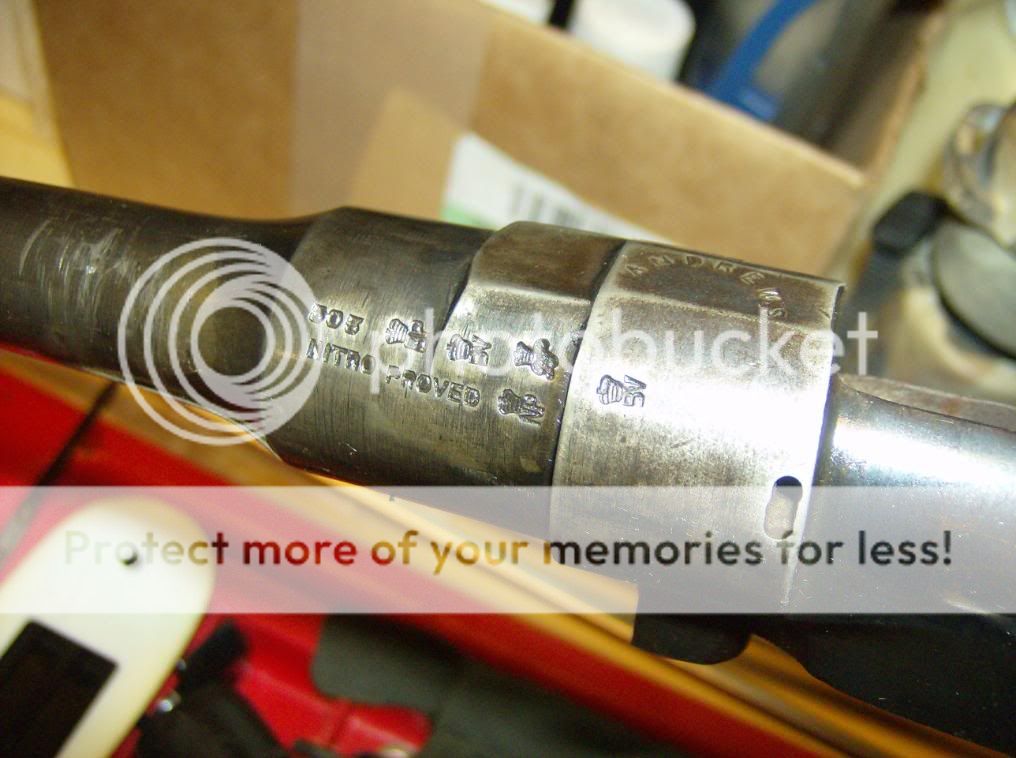
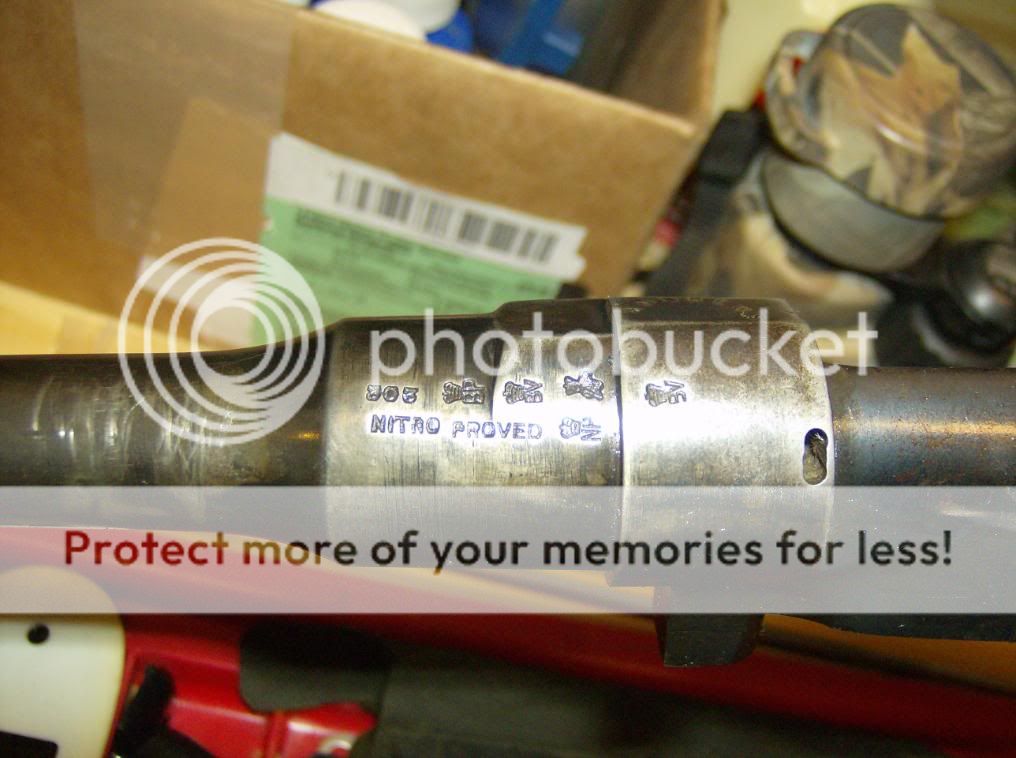
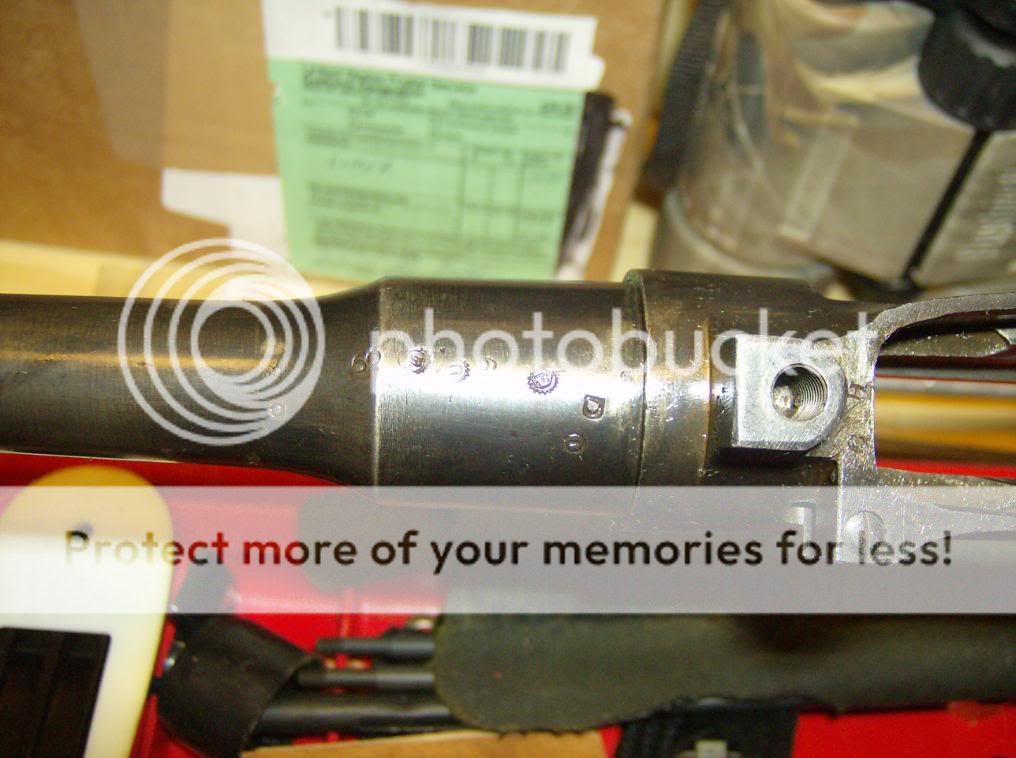
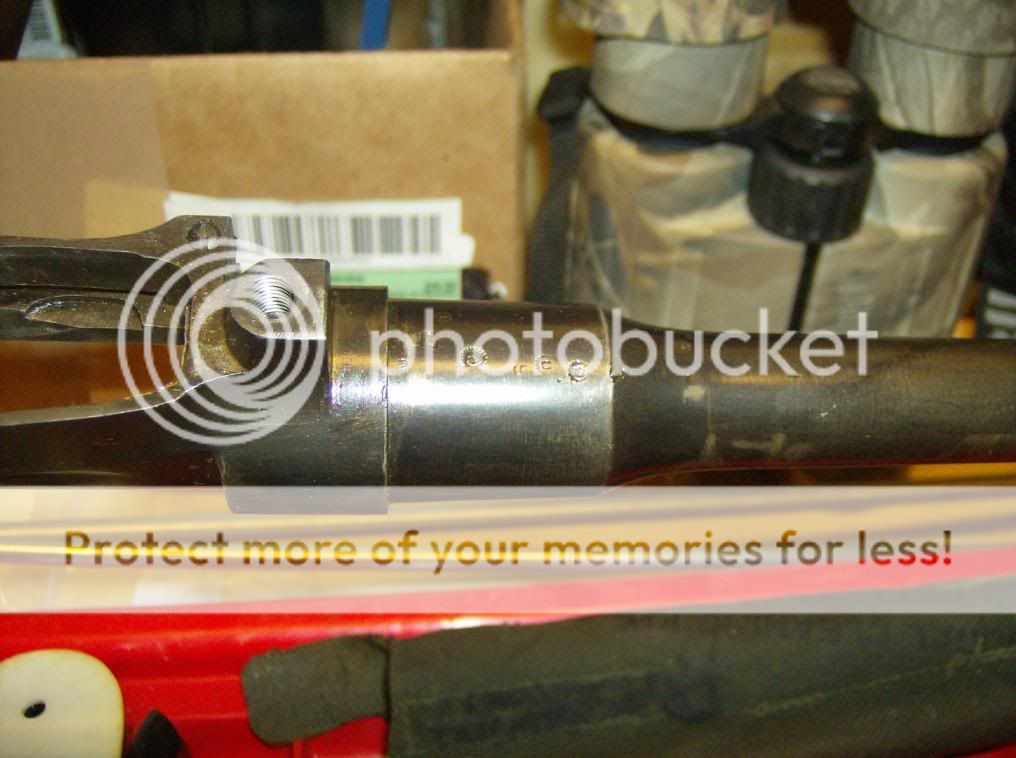
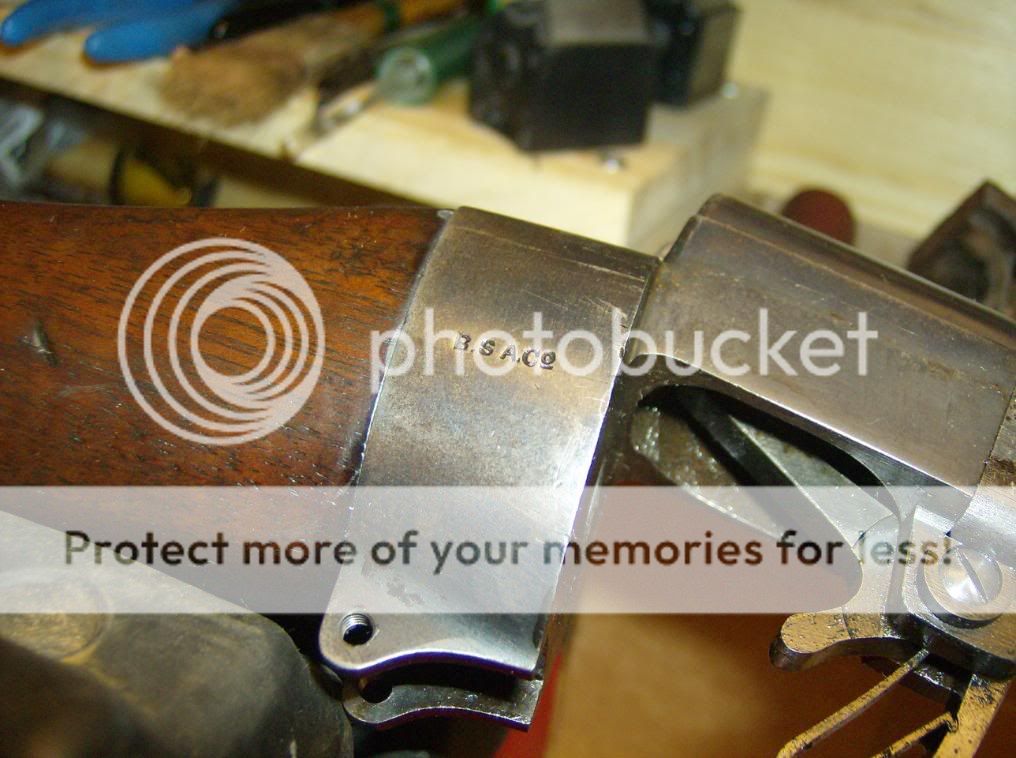
The markings on the barrel nocks form are all standard Birmingham civvy smokeless proof marks, 1910 up. There is a Birmingham View (BV) mark on the left side receiver ring and also a Sparkbrook inspector mark on the right (B/A2). BSA bought the Sparkbrook factory in 1906.
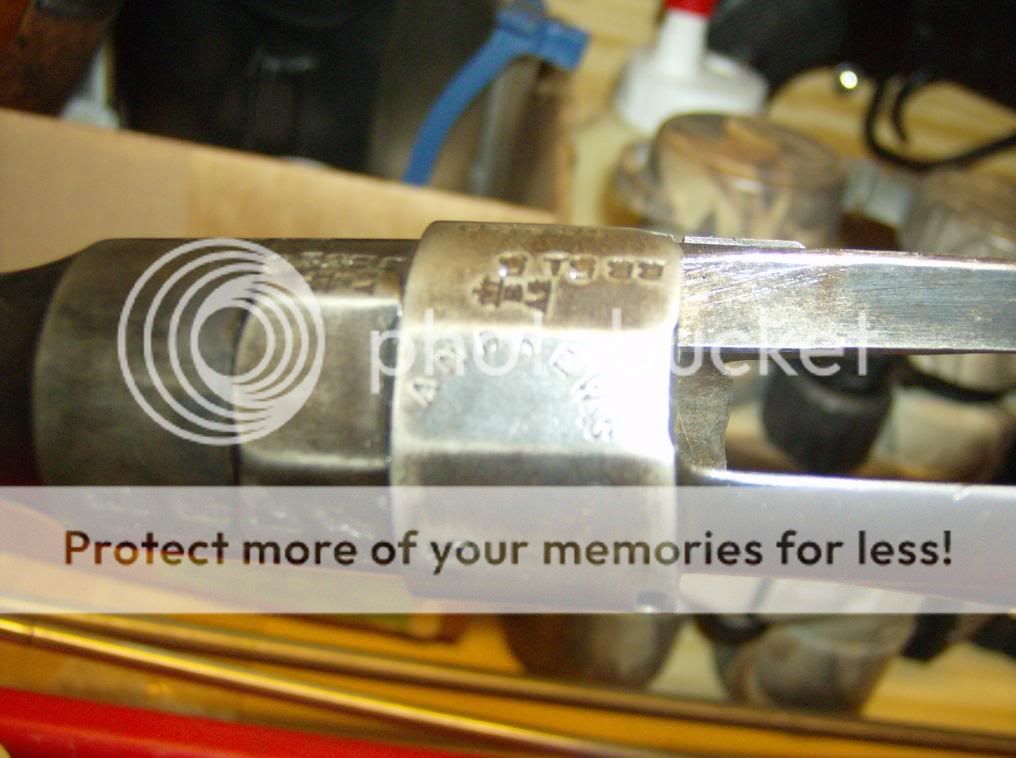
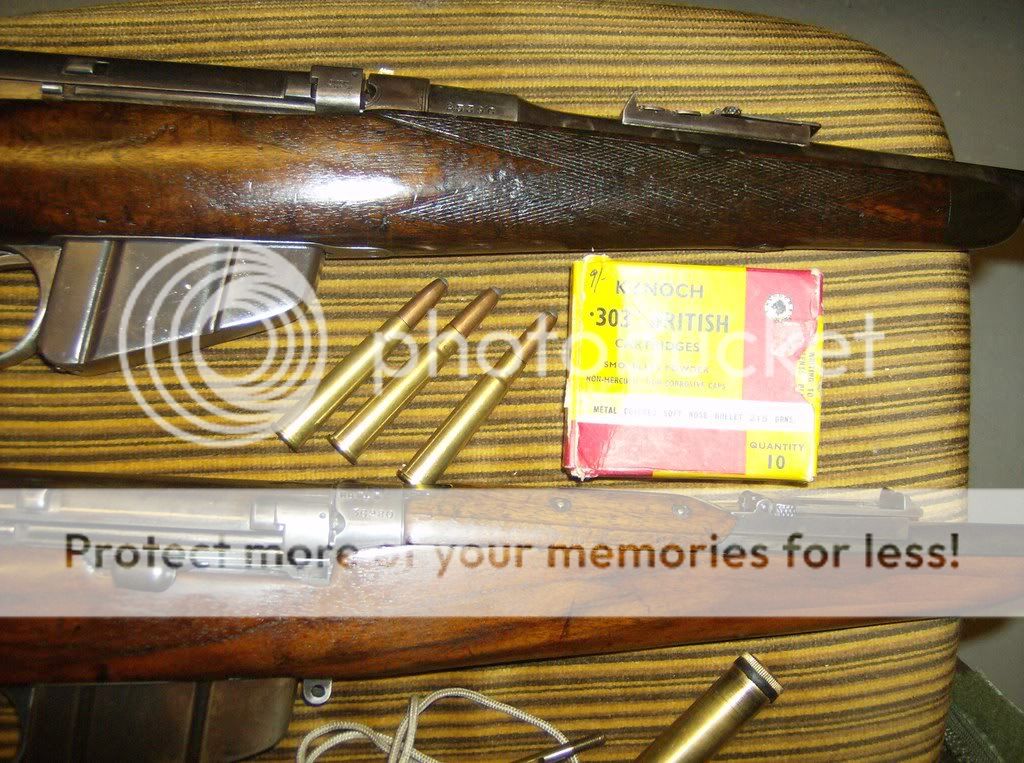
Rifle retains its original barrel, 36280 is the serial applied at the BSA factory with the same roll die on both receiver and barrel. BB515 was applied with separate stamps by hand. I would bet it is a rack number and this was a civilian 'club rifle'. (Boys Brigade #515?). ANDREWS could be the name of the club (in those days many schools and colleges had ranges) in Canada, England, Australia, no way to tell with a civvy arm. Probably has been shot alot. How is the bore?
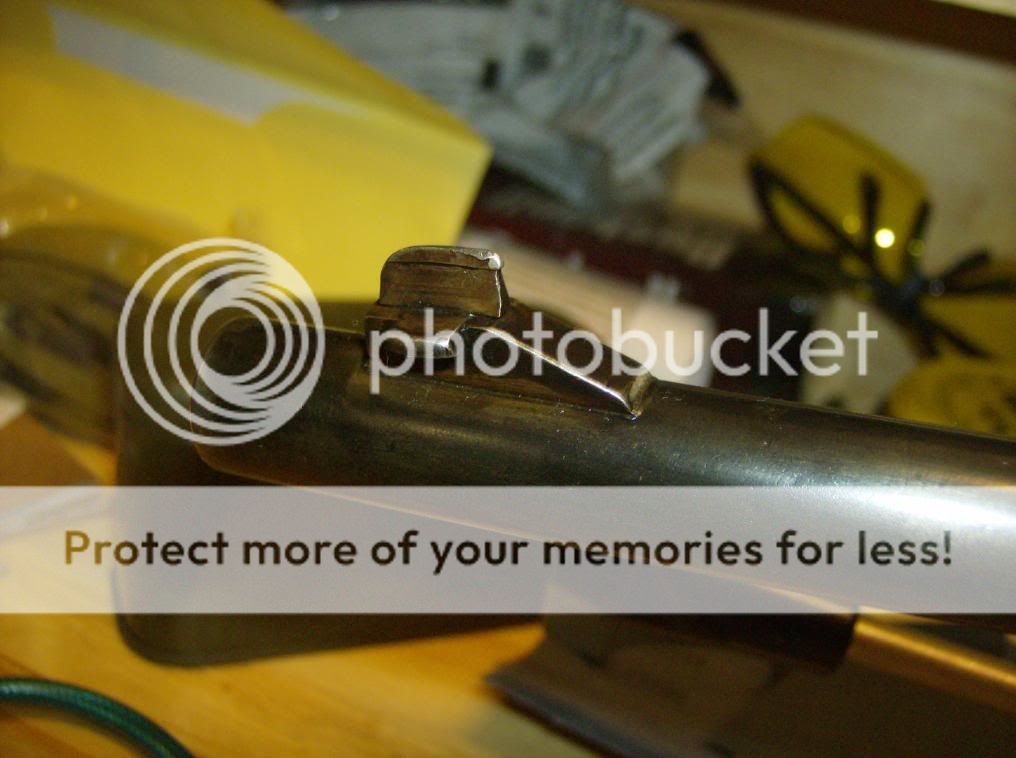
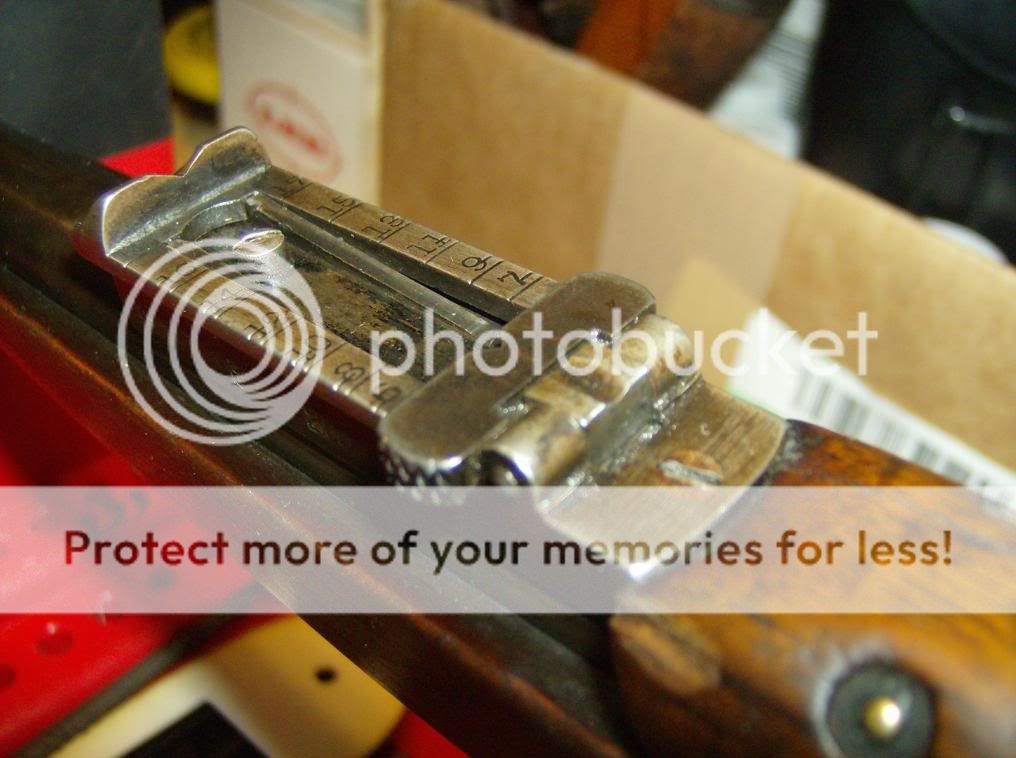
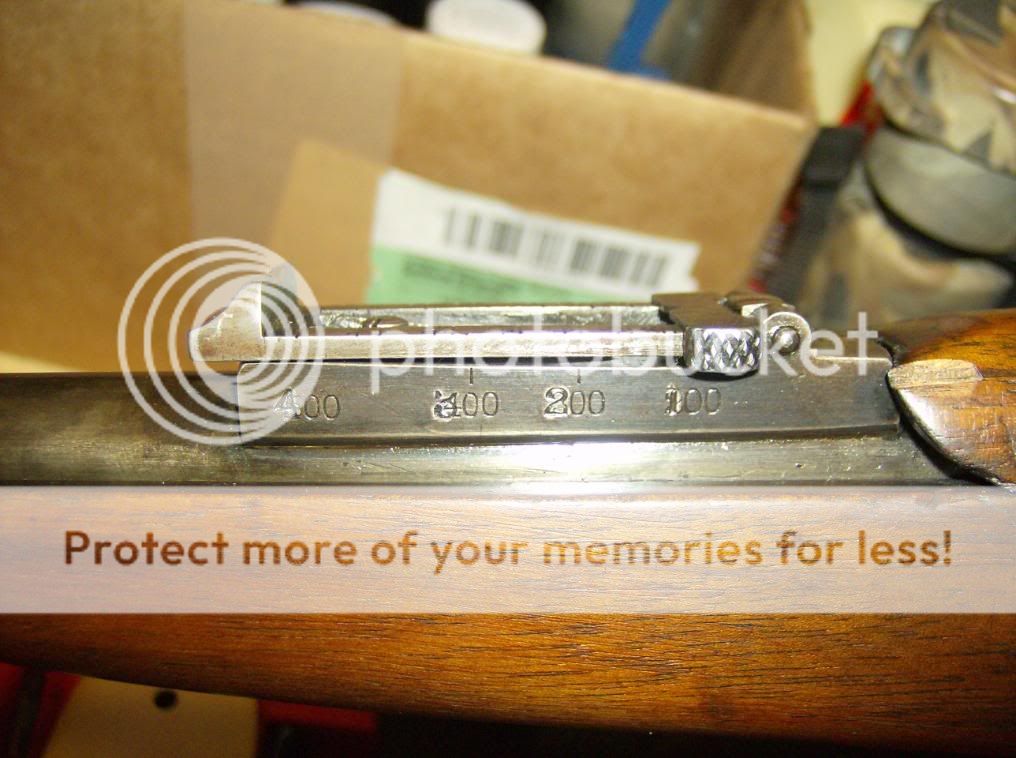
A great deal of competition would be at 100 yards. However, the lowest setting on mil spec sights is 200. So the sight base was renumbered to show 100 and a very tall front sight blade was fitted to compensate and correct the sighting.
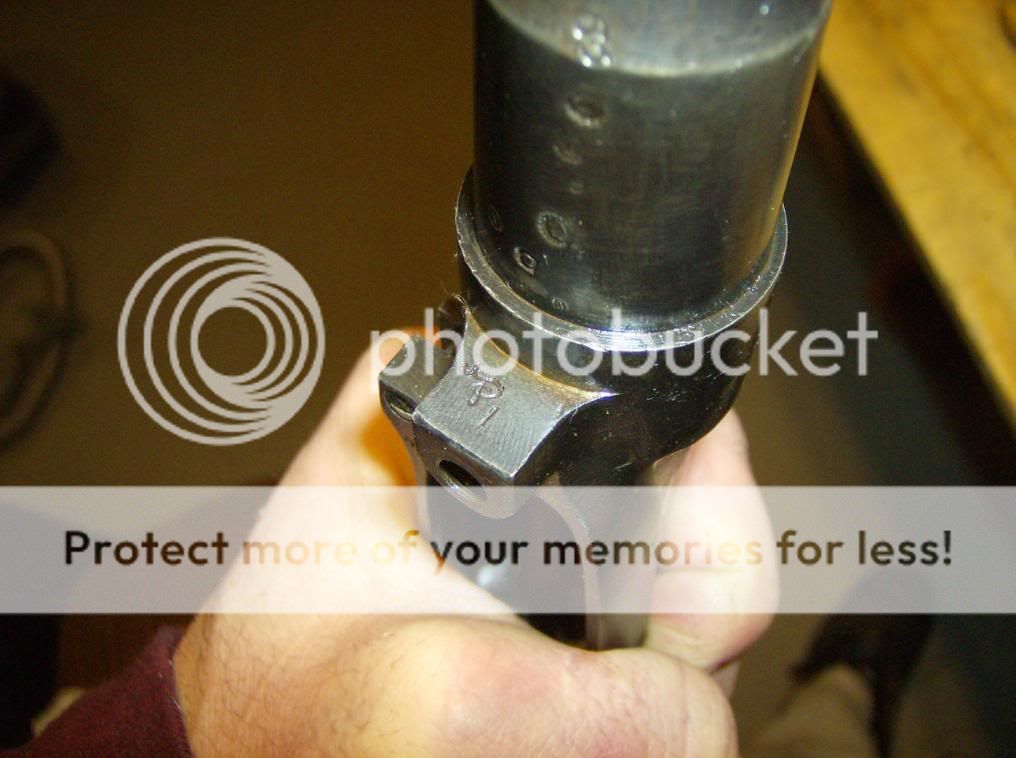
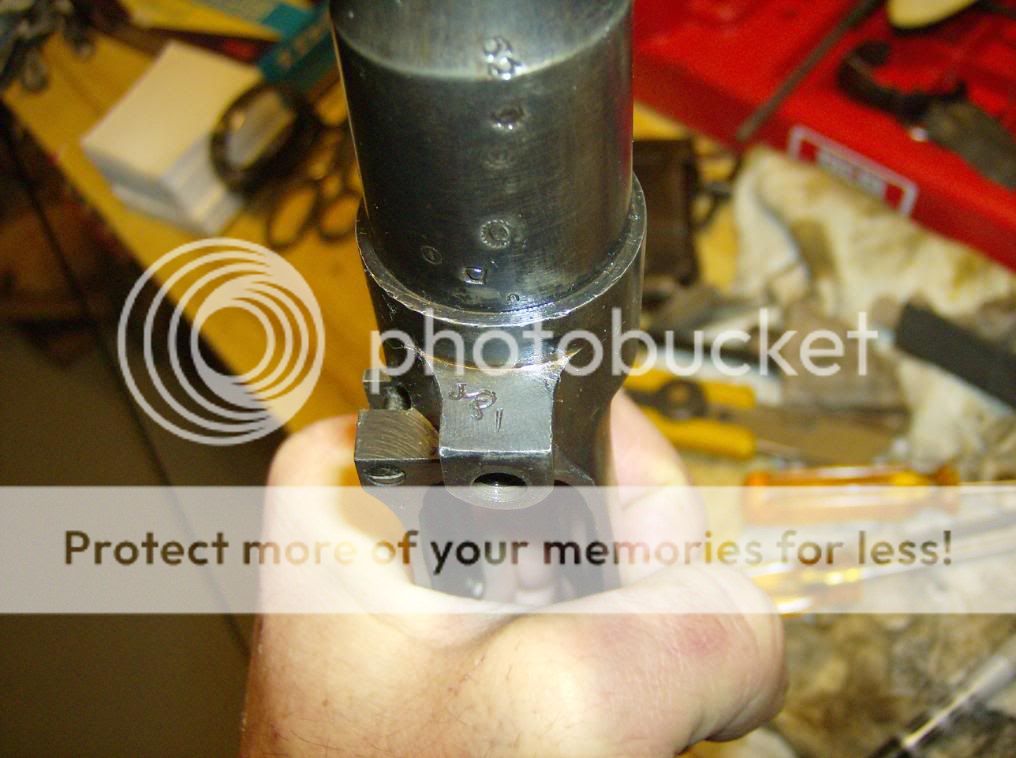
The markings under the barrel are all production and batch numbers and marks. Nothing unusual there. The JP marking underneath the receiver is often seen on forged parts, and is likely the subcontractor who made the receiver's forged blank (J.B.Priestly Ltd.?).
The rest of the rifle is a mix match. The forearm has been replaced with one from a Sht LE Mk.I, and has been sportered by a previous owner.
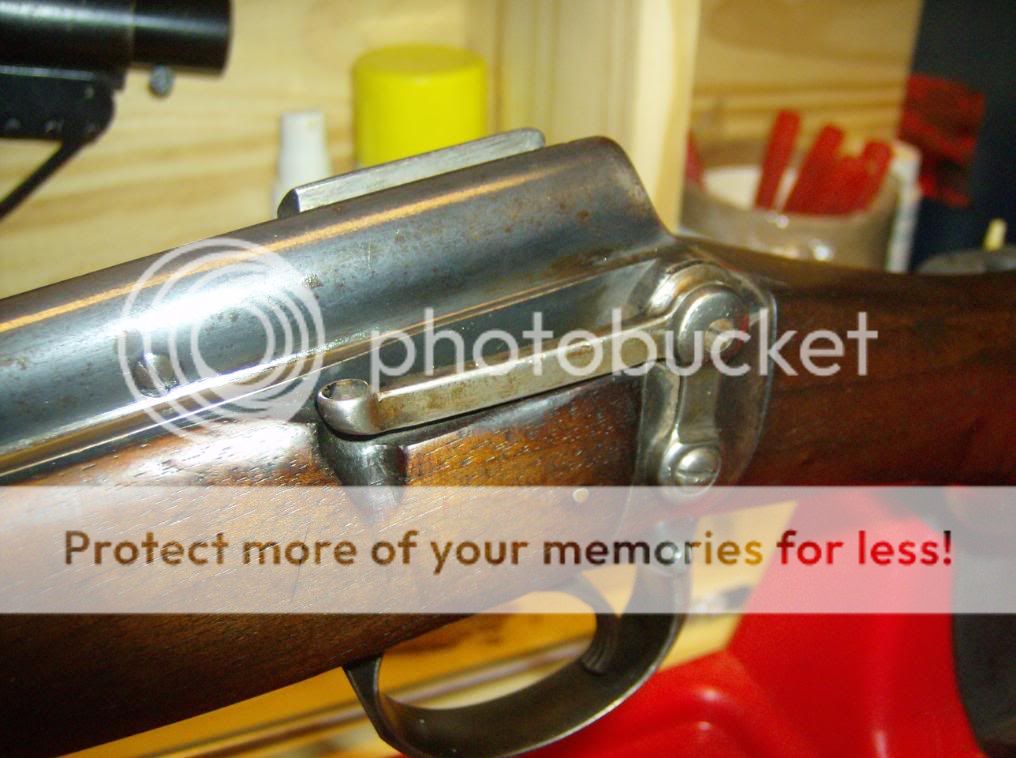
The mag is Sht LE Mk.I as is the trigger guard. Also the dogbone spring for the rear aperture sight has a countersunk for the bottom mounting screw, which is also a Sht LE part.
So to sum up, you have a volunteer pattern Long Lee that was at one time used as a club rifle on the 100 yard range.
Parts and wood were replaced with those from a 1903-07 Sht LE Mk.I. The rifle has been sportered by a previous owner.
Rifle has since been sold on CGN. Knew information since Englishman give a report of this rifles history, I have found a cross reference to the ANDREWS name on the top of the receiver. The Book "Big Game Hunting in North-Eastern Rhodesia (the Peter Capstick Library)
by Owen Letcher" makes reference to a somewhat lessor known Gun maker in London of which the author Owen Letcher indicates was named "ANDREWS" and that is who made Mr. Letcher's 375 which he used during his African adventure.
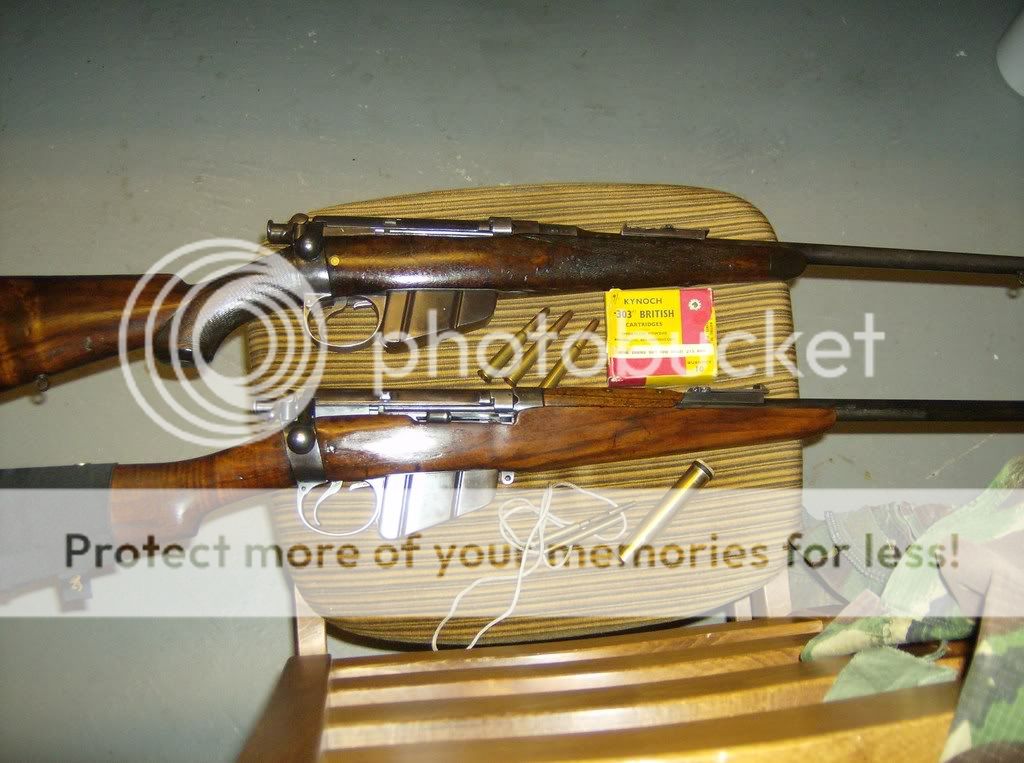
Originally Posted by englishman_ca
A picture is worth a thousand words, thank you for the many pics. I think that I now understand what you have there.
Your rifle started out circa 1906-1910 as a Long Lee volunteer pattern rifle, generaly of the style of the MLE Mk.I
The markings on the barrel nocks form are all standard Birmingham civvy smokeless proof marks, 1910 up. There is a Birmingham View (BV) mark on the left side receiver ring and also a Sparkbrook inspector mark on the right (B/A2). BSA bought the Sparkbrook factory in 1906.
Rifle retains its original barrel, 36280 is the serial applied at the BSA factory with the same roll die on both receiver and barrel. BB515 was applied with separate stamps by hand. I would bet it is a rack number and this was a civilian 'club rifle'. (Boys Brigade #515?). ANDREWS could be the name of the club (in those days many schools and colleges had ranges) in Canada, England, Australia, no way to tell with a civvy arm. Probably has been shot alot. How is the bore?
A great deal of competition would be at 100 yards. However, the lowest setting on mil spec sights is 200. So the sight base was renumbered to show 100 and a very tall front sight blade was fitted to compensate and correct the sighting.
The markings under the barrel are all production and batch numbers and marks. Nothing unusual there. The JP marking underneath the receiver is often seen on forged parts, and is likely the subcontractor who made the receiver's forged blank (J.B.Priestly Ltd.?).
The rest of the rifle is a mix match. The forearm has been replaced with one from a Sht LE Mk.I, and has been sportered by a previous owner.
The mag is Sht LE Mk.I as is the trigger guard. Also the dogbone spring for the rear aperture sight has a countersunk for the bottom mounting screw, which is also a Sht LE part.
So to sum up, you have a volunteer pattern Long Lee that was at one time used as a club rifle on the 100 yard range.
Parts and wood were replaced with those from a 1903-07 Sht LE Mk.I. The rifle has been sportered by a previous owner.
Rifle has since been sold on CGN. Knew information since Englishman give a report of this rifles history, I have found a cross reference to the ANDREWS name on the top of the receiver. The Book "Big Game Hunting in North-Eastern Rhodesia (the Peter Capstick Library)
by Owen Letcher" makes reference to a somewhat lessor known Gun maker in London of which the author Owen Letcher indicates was named "ANDREWS" and that is who made Mr. Letcher's 375 which he used during his African adventure.

 If it ever warms up above -25 I'll take it out and try it.




















