Building AR by clamping barrel

Duncan71

Regular
Rating - 100%
178   0   2
Location
Calgary AB
Alright folks... got a strange one.

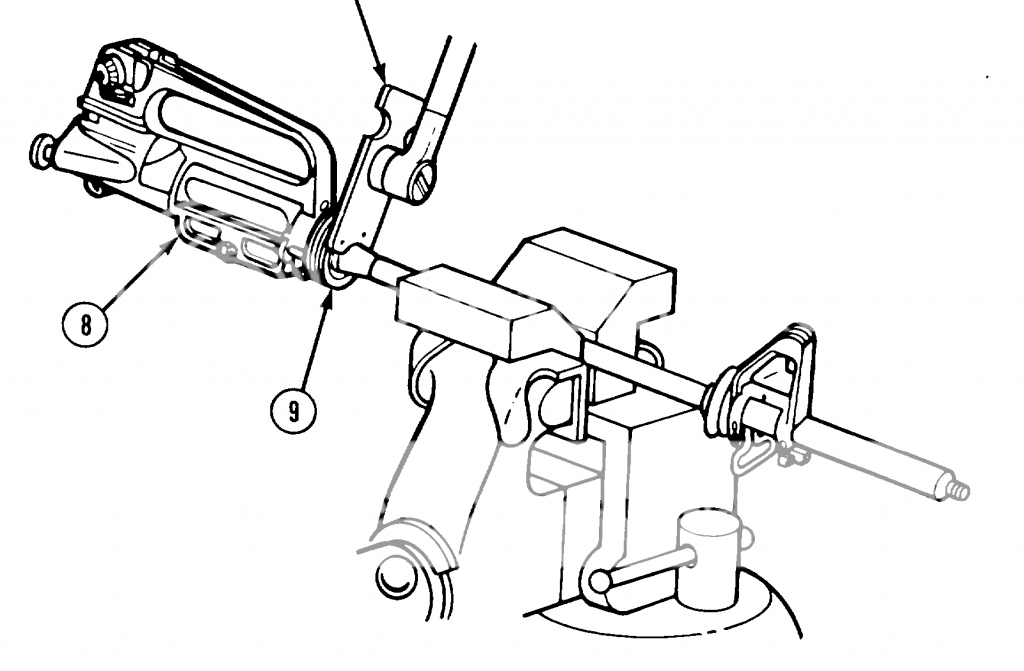
So I recently bought parts and assembled an AR 15. Obviously a Bev block or reaction rod are the way to go... but can anyone see any reason why you can’t clamp the barrel actual in a vice to torque the barrel nut?

For instance... with gas block and tube off slide the barrel nut and get it finger tight. Clamp the barrel in a soft jaw vice, besides concerns for finish or marring the barrel is there any other concievable way the part can be damaged?

Thanks
 
You would be torqing against the barrel index pin... I doubt the pin would break, but the barrel index groove in the upper might get hammered out.

For the $20 or whatever true north arms wants for the proper jig I wouldnt mess around
 
If you're not going to build a lot of rifles, just put out the word if anyone local to you is willing to lend you the tools.
I've got a reaction rod I don't mind lending out.
 
If you're not going to build a lot of rifles, just put out the word if anyone local to you is willing to lend you the tools.
I've got a reaction rod I don't mind lending out.

This ^^^
Reaction rod or BEV block are the only way to do it right. If you were around Edmonton I'd come over with my reaction rod and give you a hand. Take up FoxAlpha on his offer or if you can wait I'll be in Calgary the weekend of the 28th and can bring mine with me.
 
US Army says to put the barrel in a vise. So I'll go with that.

I've done this and it works perfectly. Just use wood blocks with a channel cut into them.
Personally I would rather clamp the steel barrel in a vise, that way you're not applying torque to the upper. Even if the upper is in a block, it's still just an aluminium part and imo should not be subjected to twisting forces.
You will never hurt that steel barrel in a vise.

https://imgur.com/a/FH10lLI

<blockquote class="imgur-embed-pub" lang="en" data-id="a/FH10lLI"><a href="//imgur.com/FH10lLI"></a></blockquote><script async src="//s.imgur.com/min/embed.js" charset="utf-8"></script>
 
Last edited:
Alright folks... got a strange one.

So I recently bought parts and assembled an AR 15. Obviously a Bev block or reaction rod are the way to go... but can anyone see any reason why you can’t clamp the barrel actual in a vice to torque the barrel nut?

This is the standard method in the M4/M16A2 armour manual, to torque the barrel nut by clamping down on the barrel through a barrel vice block.

It is NEVER in the armourer manual that the upper is held on to the vice by the receiver or the barrel extension. The torque on the barrel nut to the barrel is 30 to 80 MAX ft lb. The torque on the barrel extension to the barrel is 100 to 150 ft-lb, so it is OK

Bev block or reaction block is something of the recent because people are using free floating hand guard ( and people are scared of living marks on barrels), so it is impossible or a hassle to take off the hand guard to install muzzle device. There are also more variation of barrel contours so sometime the barrel block doesn't fit perfectly.

It is better to use the barrel extension instead of clamping on the upper to install muzzle devices. Instead of transferring the torque to the index pin and the aluminum extension, muzzle device only needs 20 to 30 ft lb so the barrel extension is way more than adequate to handle the torque.
 
Last edited:
You would be torqing against the barrel index pin... I doubt the pin would break, but the barrel index groove in the upper might get hammered out.

For the $20 or whatever true north arms wants for the proper jig I wouldnt mess around
Only the BEV block prevents the index pin slot of the upper form taking torque during barrel nut installation.

The basic reaction rod types only keep the barrel extension in place, not the upper, so the upper index pin slot still takes force.


However, either way you do it, it's pretty much a non-issue, there is a metric #### ton of people who installed barrels using upper receiver blocks, without much data about it causing damage. 7075 T6 is pretty damn tough.


If you install a muzzle device, now you really need to clamp the barrel, and not the upper.
 
Last edited:
Alright folks... got a strange one.

So I recently bought parts and assembled an AR 15. Obviously a Bev block or reaction rod are the way to go... but can anyone see any reason why you can’t clamp the barrel actual in a vice to torque the barrel nut?

For instance... with gas block and tube off slide the barrel nut and get it finger tight. Clamp the barrel in a soft jaw vice, besides concerns for finish or marring the barrel is there any other concievable way the part can be damaged?

Thanks

I change a lot of barrels at my job and honestly, clamping the barrel in the vice shouldn't be a problem. Just put a little bit of moly grease or something on the outside of the barrel extension so it slides into the upper nicely and won't seize up. Do not use copper-based anti-seize for the aluminum upper and don't put anything on the threads of the upper to torque the barrel nut on, leave it bare.
 
Only the BEV block prevents the index pin slot of the upper form taking torque during barrel nut installation.

The basic reaction rod types only keep the barrel extension in place, not the upper, so the upper index pin slot still takes force.


However, either way you do it, it's pretty much a non-issue, there is a metric #### ton of people who installed barrels using upper receiver blocks, without much data about it causing damage. 7075 T6 is pretty damn tough.


If you install a muzzle device, now you really need to clamp the barrel, and not the upper.

Am i not wrong in thinking that when torquing the barrel nut it shouldnt be putting much pressure on the pin due to fact the nut Is squeezing the barrel to the action not twistin the barrel?
 
Clamping on the barrel is the proper way to do it. Having said that, a Bev block or reaction rod will work just fine as well.

barrelinstal.png


Once the barrel extension is seated in the upper, and the barrel nut is snug, you are imparting no more force on the index pin by clamping on the barrel than you would be using a Bev Block/reaction rod.

Upper receiver blocks should not be used because you can actually twist/warp the upper receiver.

The problem you will run into regardless of which method you use is 'barrel makers' who don't actually torque their barrel extensions to 150 ft-lbs, and instead rely on 'glue' (loctite or rockset) to keep their extensions in place (looking pointedly at 2 Canadian manufacturers)
 
Wouldn’t the torsional load be exactly the same? In both cases you are anchoring the barrel, and applying torque to the nut, the friction between the nut and the receiver is the only force acting upon the receiver. I suppose the BEV block would maybe reduce that if it’s a tight fit in the magwell but I can’t really comprehend the difference adding up to much. Feel free to school me, but I tighten a lot of bolts and can’t see how this could be much different either way.
 
I've tried both as have others. I prefer using reaction rods. It allows me to work on the upper horizontally and vertically if that matters.
 
I change a lot of barrels at my job and honestly, clamping the barrel in the vice shouldn't be a problem. Just put a little bit of moly grease or something on the outside of the barrel extension so it slides into the upper nicely and won't seize up. Do not use copper-based anti-seize for the aluminum upper and don't put anything on the threads of the upper to torque the barrel nut on, leave it bare.
That is some top level disinformation right there.

You change "a lot of barrels" this way? Holy ####.
 
That is some top level disinformation right there.

You change "a lot of barrels" this way? Holy ####.

He’s not entirely wrong, moly based anti-sieze is better for preventing galvanic corrosion, it’s actually what it’s for. Leaves a plating. In fact I would say it’s superior in every application based on my experience as a HD mechanic, most new equipment calls for moly based grease. I like jet-lube MP-50. I wonder how nickel based anti seize performs, like ni-kal
 
...and don't put anything on the threads of the upper to torque the barrel nut on, leave it bare.

I most strongly disagree.

I have seen many upper receivers destroyed this way, and I've been working on many hundreds of AR's since 1980. I'm also a machinist who understands mechanical assemblies. Always, always grease high torque aluminum threads. Grease the nut threads too. Torque and loosen 2 or 3 times before final tightening.

In the 80's barrel vice blocks were all that was available, and they worked ok. But I much prefer clamping the upper receiver or using a barrel extension wrench.

Just put a little bit of moly grease or something on the outside of the barrel extension so it slides into the upper nicely and won't seize up.

Definitely.
 
Back
Top Bottom