Calculating scope depth of field? Scope for HFT

sillymike

CGN Ultra frequent flyer
Rating - 100%
202   0   0
Ok, seems like my google-fu is not up to par today...

Anyone knows a simple way to calculate a rifle scope depth of field?
- I know that as you increase magnification, DOF will shorten
- I know that a smaller objective will give you a greater DOF

What I'm trying to figure out is how much "less" DOF would a 10x scope with a 44mm objective would have, compared to a 10x scope with a 38mm objective
 
Last edited:
I don't think it would change if the two scopes had the same focal length. In other words, if the objectives were both ground to focus on the front erector lens from the same distance, the only other factor would be the zoom lens and its focal distance from the rear ocular lens. However, that distance wouldn't need to change if all the lenses rearward of the objective were the same size in each scope.

The only changes in relation to objective size in a scope are image quality, exit pupil and brightness, all else being equal.

Generally, scopes with larger objectives have longer focal lengths so that the image doesn't get compressed as quickly, and that will change the depth of field.
 
Last edited:

FOV = how wide is the image, at a set distance
DOF = when the scope is focused at a set distance, how far ahead/behind will the image remain in focus

This is correct. Scope manufacturers don't give specs for DOF. There are complicated calculations for figuring it out, but without knowing the focal lengths it remains a total crapshoot.

Also keep in mind that DOF applies almost exclusively to scopes with adjustable parallax where you're adjusting the range of the objective or the side adjustable parallax lens (on or in front of the outer erector tube) which straightenes the light before passage into the erector tube.

Another variable is the erector tube itself. It is a tube within a tube. The inner erector tube with its lenses cams and rotates as it slides back and forth within the outer erector tube. This changes the zoom by varying the distance of the inner lenses from the front light-straightening lens. This varies focal length as well. Some of the distance change is made up at the rear ocular lens but as the zoom compresses the light into a smaller exit pupil, it alters the focal distance and depth of field further.
 
Last edited:

I think I might have caught cabin fever and started to overthink things... Seems to happen at this time of year when I have more time on my hand.

This whole questioning came about some research for a scope to use in Hunting Field Target match (air rifle).
- Targets can be set anywhere between 8 meters to 42 meters.
- Once you've started the match, you cannot change anything on your scope.

Seems like most people like to have their parallax/focus adjusted for +/- 20M
- In eastern Europe, one of the popular scope is the Burris Timberline 4.5-14x32
- In western Europe, the MTC Connect 3-12x32 is quite popular
- Around 10x seems to be the most popular power

Now my gripes.
- The Burris: Nice enough optic, but I don't like balistic-plex.
- MTC: My experience with "airgun" specific optic hasn't been all that good... So if I've got nice optic on my powder-burner, I don't think I'm willing to compromise for a airgun scope
 
Some of the nicer scopes I had a look at, wouldn't have worked all that well because their DOF is too narrow.
- A moot point when you can adjust parallax... but a no go in HFT

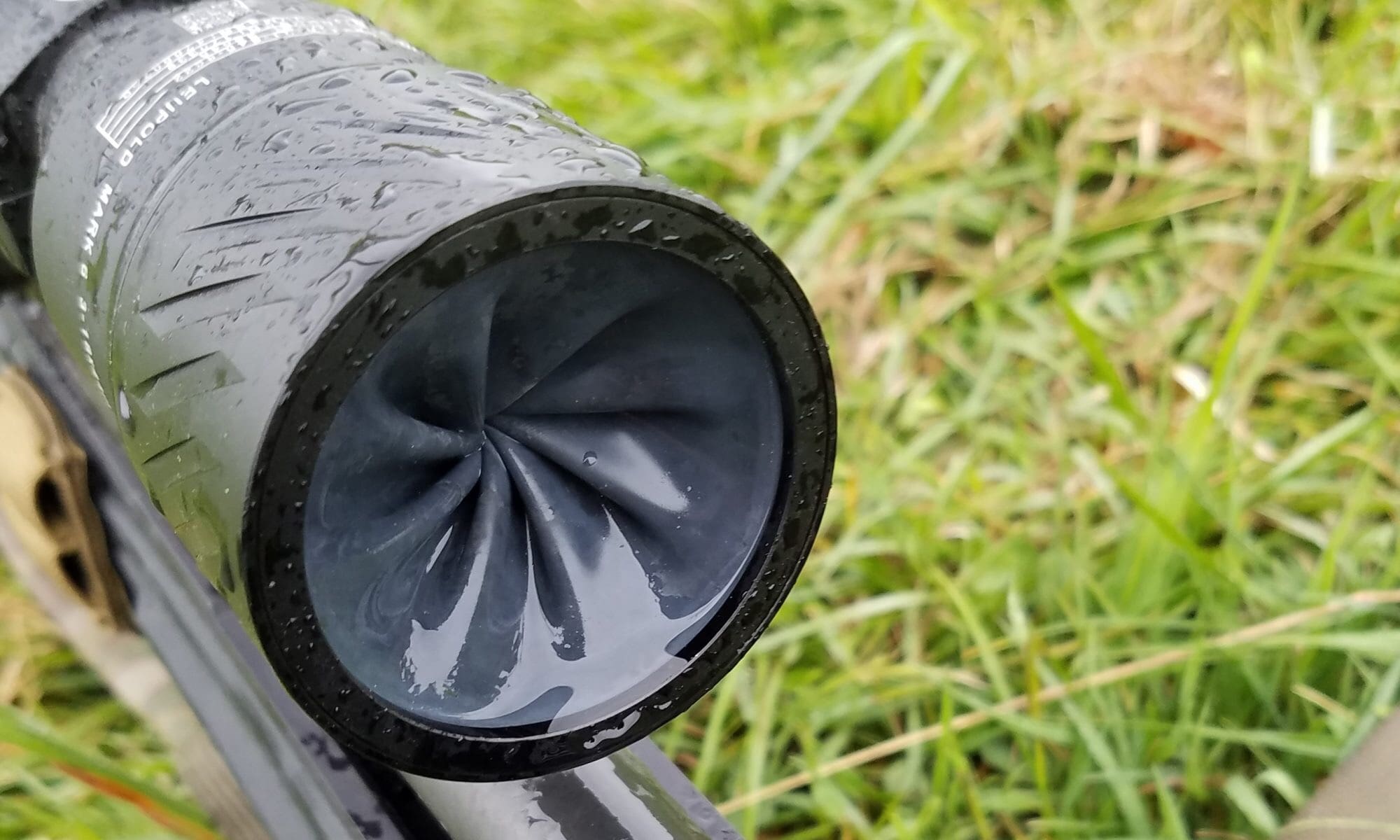
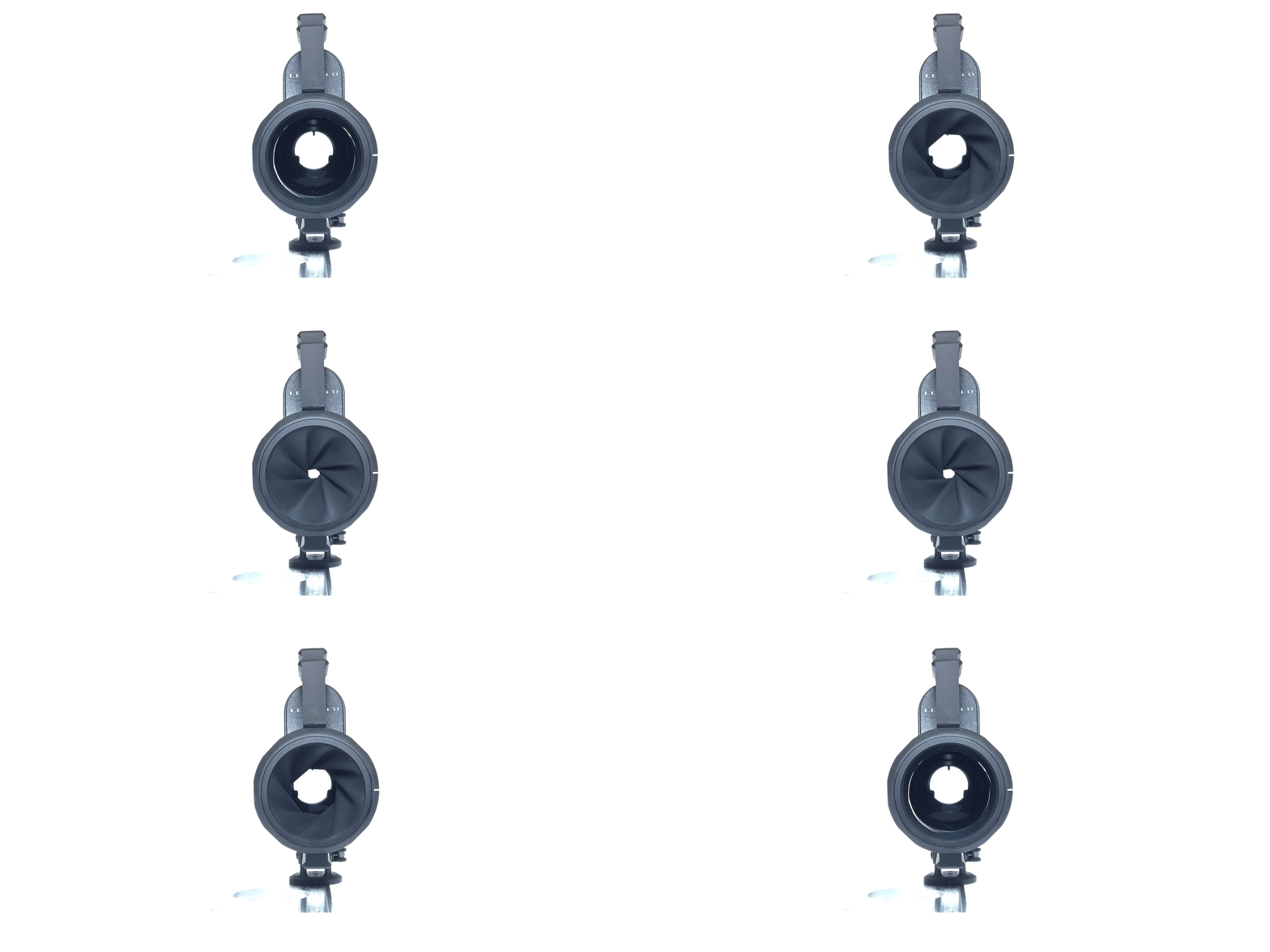
This said, while browsing the Marsh website, I saw they offer objective reducer (they call it MD Disks) for people wanting/needing bigger DOF

md-disk.jpg

- So something similar could probably be jerry-rigged for other scopes
 
Some of the nicer scopes I had a look at, wouldn't have worked all that well because their DOF is too narrow.
- A moot point when you can adjust parallax... but a no go in HFT

This said, while browsing the Marsh website, I saw they offer objective reducer (they call it MD Disks) for people wanting/needing bigger DOF

md-disk.jpg

- So something similar could probably be jerry-rigged for other scopes

That's interesting how March says that the device increases depth of field. The geometry of the light coming from the objective lens stays the same, just a narrower beam. I guess it works by allowing you to push the collector lens further into a narrower cone. It would certainly reduce resolution but be good for the task.
 
Last edited:
It's on days like this that I realize how little I know about optics...

Perusing some birding forum (They're one picky bunch when it comes to optic), it seems like folks with large-diameter objective will sometime use a adjustable iris to increase the F-stop/reduce its light gathering abilities

4-60mm-18pcs-Blades-Adjustable-Zoom-Optical-Iris-Diaphragm-Aperture-Condenser-Digital-Camera-Microscope-Adapter-Use.jpg
 
It's becoming apparent to me that the depth of field is mostly dependent on the angle of the beam from the objective to the collector lens and how far the collector is into the cone. An F-stop artificially narrows the angle of the cone at every point so the collector will pick up the image on a straighter angle, increasing DOF.

That being said, a larger objective lens must be placed farther away from the collector to get the same cone angle. If a large and small objective lens are mounted at the same distance, the larger lens will have a sharper cone and less depth of field. It's where the collector lens is placed in that cone that determines depth of field. It's why larger-objective scopes have to be longer, or you'll lose so much depth that you'll be constantly focusing with the slightest distance change.
 
Back
Top Bottom