Calling Ross and Enfield Masters. Info Needed.

greyman441

CGN Regular
Rating - 100%
271   0   0
Location
Wasaga Beach, ON
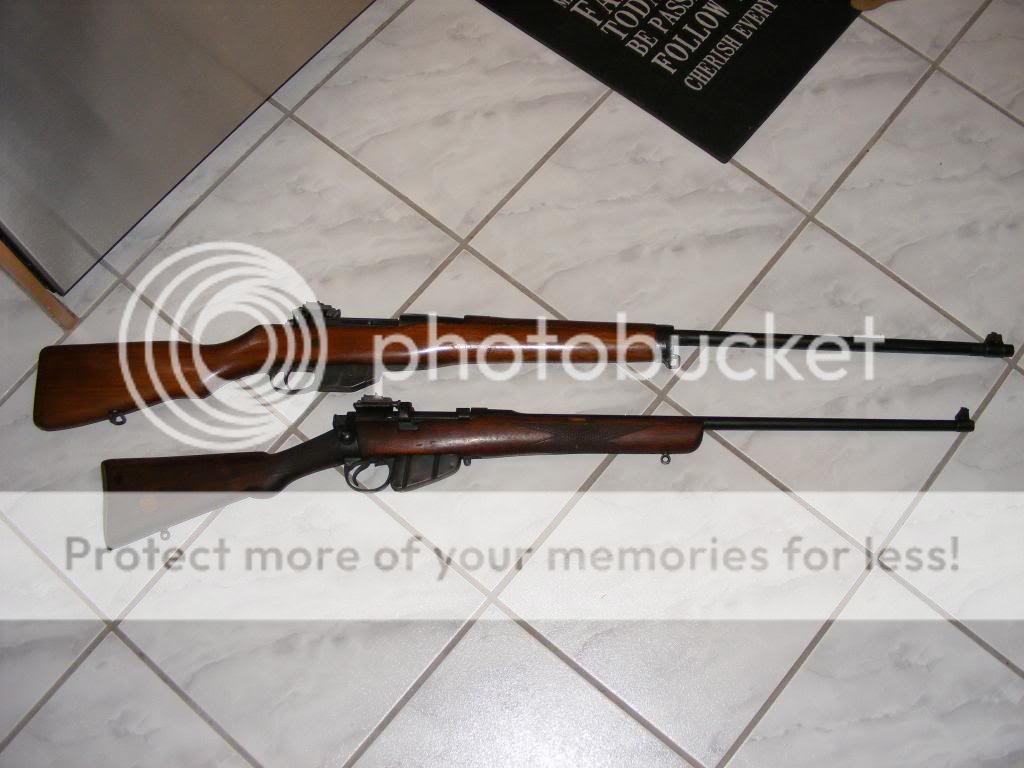
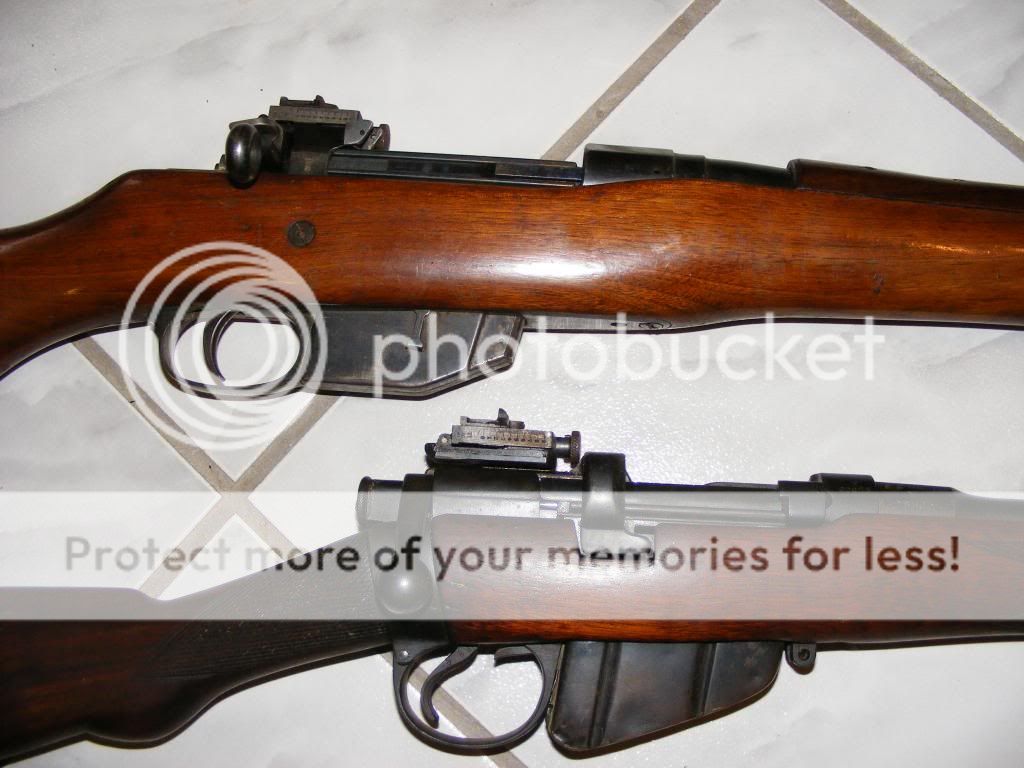
So today I got talking to a friend of a friend that said he had a couple rifles he doesn't shoot and wants to sell to buy a new bow. I told him to bring them in so I could take a look and these are what he brought me. The top rifle I believe to be a standard sporterized Ross M10 but the bottom on is a 1915 BSA 22LR that looks strange to me and the rear site is one that I haven't seen before. The barrel is a original 22LR barrel. It is NOT sleeved and that stock looks to have factory checkering.
Can anyone let me know some info on these rifles.


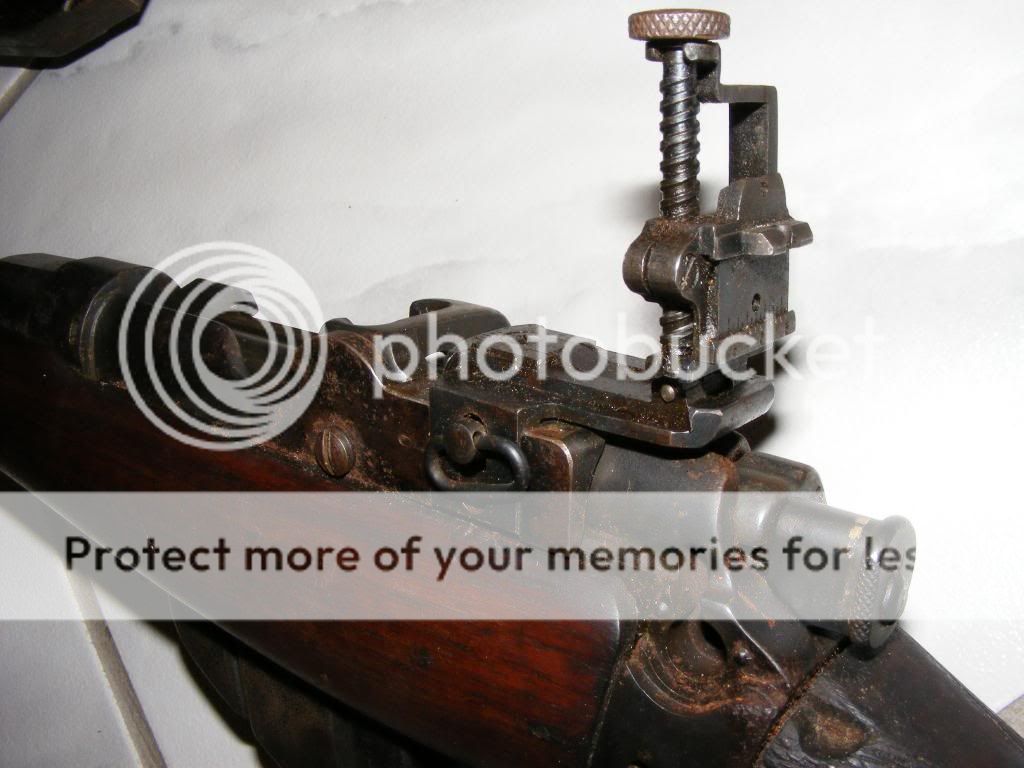
You have seen that rear sight before. Its on your Ross rifle M10 mk3 too! The safety is gone on the enfield and it looks like a sling swivel was put on the side?? Im not familiar with Enfield 22s but that is odd. Coupled with the checkered stock and swivel studs, I think the enfield too is bubbafied.
 
Last edited:
The Ross may look like a Bubba sporty, but it is not.... quite The fore-end cut in front of the band was standard for the "stripped Ross" as used by the majority of Canadian snipers in the Great War.

After surviving rifles were released, some were cut as yours: stock shortened but the barrel left full-length. From the look of the cut, though, this one was done out in the shed, not by the Army. The Army chopped theirs about an inch forward of where yours is cut, then rounded off the protruding wood. Yours, however, will be MUCH easier to restore. Correct wood is generally American Walnut on this model.

This rifle is restorable to issue configuration if you can find wood and a nosecap. You can just splice on a new section of wood for the fore-arm, then shape, stain and finish.

I wish the LE were a bit closer so I could have a good look at it. Can you give us clear photos of anything marked on BOTH sides of the Butt Socket? Likely that will tell the tale.

You have a couple of very real Prizes there. Take good care of them.

BTW, a good Ross with a full-length barrel can clear a 500-yard plate course faster than a Minimi. We proved this several years ago in a match at CFB Shilo!
 
The 22 has been sporterized. The rear sight is a training sight by Cooey...these are worth a fair buck by themselves. 22 could be put back to original military configuration. Ron
 
Look's to me the Ross barrel has been cut. How long is it?
The 22 look's like a factory built by the cross rifle's/BSA marking on the top of the chamber
 
The Mk. III could be restored by a splicing wood underneath the band. That is the easy part. Finding a nosecap will be a major problem. I would be inclined to leave it as is until a nose cap turns up.
The .22 is fitted with a Cooey made sight base which adapts the Ross sight to the rifle. This rifle is very much worth restoring.
 
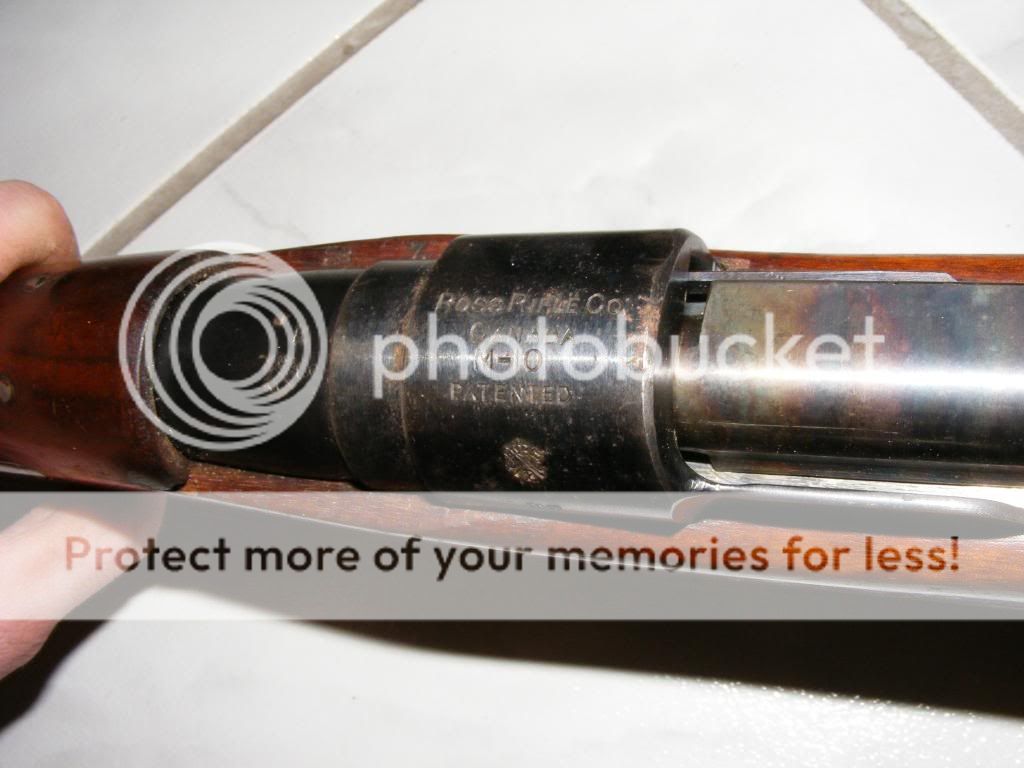
That last photo tells the tale. If you look closely, you will see that the markings have been applied in two different batches.

First batch tells you that it is a Government rifle (Crown and Royal Signet GR representing King George V). BSA Co. tells you that it was a contract-made rifle produced by the Birmingham Small Arms Company in their Small Heath plant at Birmingham. 1915 is the date of original manufacture.

Now we come to the fun part. The original marking, which has not been scrubbed entirely, read "Sht. MLE" on one line, with a Roman "III" under it. This means that the rifle was a Short, Magazine Lee-Enfield rifle, Mark III: a .303. This marking would have been scrubbed when the rifle was altered to a different model, in this case to a Mark IV*, which happened to be a .22" rimfire rifle.

Don't get anyone wrong here: the .22" rifles were not toys for boys; they were valuable instruments for teaching the elements iof marksmanship to recruits, for use on restricted indoor ranges, and for diagnostic shooting as well as for teaching how to correct shooting problems. An added advantage was that a .303 round was loud, recoiled hard and cost 7 cents, whereas a .22" rimfire recoiled but little, made little deafening noise and cost half a cent.

The barrels on military conversions WERE tubed (lined) but the people doing the work were experts at what they were doing AND the steel they used in their liners was the same type as used in the original barrels, so it browned (blued) the same colour.

That Ross rear sight was used almost exclusively on Canadian target rifles. The special rear-sight mount was made by Howard W. Cooey in Toronto. He also made many Ross Mark III rear sights on contract, so this also could be his work: look for a little HWC in an oval. Also look for a C with a Broad Arrow ( like this: /!\ ) inside it. That is the Canadian Government ownership mark of the period.

The Ross, once restored properly, will be worth the guts out of a grand, the Lee-Enfield about half of that. You are having a couple of Very Nice Treasures dumped on you. If I were you, I would take the man shopping and get him pretty much whatever bow he wanted. That way, he will be set up the way he wants to be.

YOU, on the other hand, will be set up for THIS YEAR: 2014 is the 100th anniversary of the outbreak of the Great War for which both of these fine old rifles were made.

Go buy a lottery ticket; you're on a roll!

 
No not get overly excited about rebuilding the .22. Many were made in that configuration for .22 shooting at the military colleges in Canada. Have it checked over first
 
Back
Top Bottom