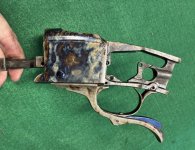
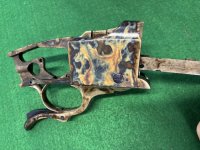
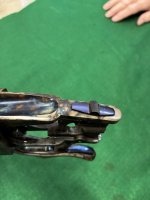
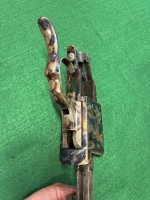
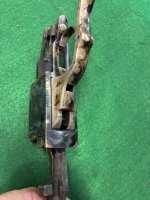
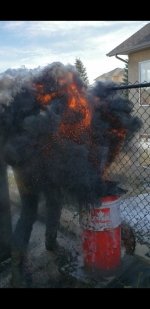
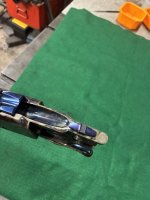
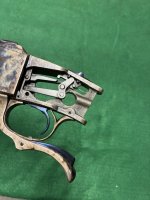
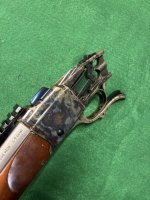
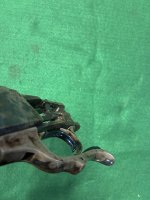
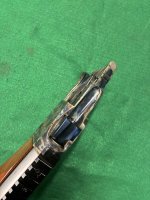
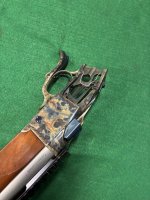
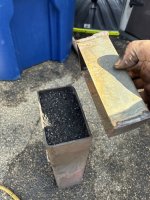
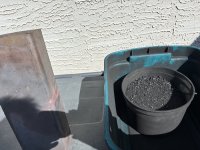
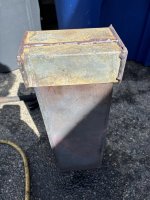
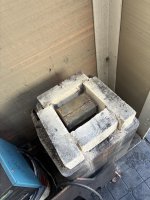
Casehardened a Ruger #1

Very impressive and even more so being your first one!! Hopefully you will do more. Looks amazing
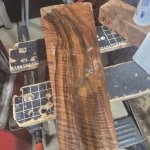
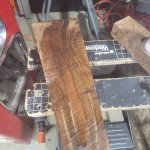
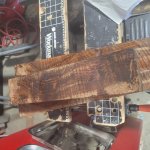
I have casehardened quite a few actions but this is the first time for a #1. They are investment castings in 8620 and I have done other actions with the same steel and they always seem to turn out very pretty. This rifle has an incredible piece of wood but I am adding an ebony nose cap to it. I think it will be a very nice 222.
 
I have casehardened quite a few actions but this is the first time for a #1. They are investment castings in 8620 and I have done other actions with the same steel and they always seem to turn out very pretty. This rifle has an incredible piece of wood but I am adding an ebony nose cap to it. I think it will be a very nice 222.
One of the members corrected me. It appears that the action may be 4140 not 8620. I have done other actions made from 4140 and they all turned out super pretty.
 
  • Like
Reactions: DGY
Looks awesome, would the steel be stronger also?
Always like that bone hardening look

Ruger#1 action is already a bank vault to start with.
Case hardening, if it was heated and quenched, does infact harden the steel. It hardens the case(outside) of the steel. The steel when encased(surrounded) by carbon, and heated, absorbes or diffuses into the outside layer of the steel. The thickness and amount depends on the source of carbon used, the heat, and the exposure time.

it's case colouring it does not change the metal strength it was designed to add durability to the under finish to slow the wearing process

Case coloring, as you stated doesn't change the strength of the metal. I do believe the original poster is using the term case hardening incorrectly. As you correctly stated, it would be just case coloring. I think people use them incorrectly when they are not. Older firearms used to use low carbon steel and be case hardened to add strength, so I assume the term just carried over in this application. I am not sure though. But using the term case hardening in this application would be a misnomer.
 
I heat treat in charcoal for 2 hours. Normally it is thought the carbon penetrates 10 thou per hour so the carbon surface is only about 20 thousands deep and I quench at a relatively low temperature to avoid warpage or hard spots so it really is more of a casecoloring process. If I bumped the temperature another 100 C or so then it would be more of a hardening process. I have done that for some parts that I want very tough but have low carbon content. The colors are much darker at that temperature, however.
 
Let’s see your 222 after it’s finished. What model of Ruger no.1? I have a martini cadet in 22k hornet that I had some case hardening done on the buttplate and lever. I want the action done as well.
 
I have casehardened quite a few actions but this is the first time for a #1. They are investment castings in 8620 and I have done other actions with the same steel and they always seem to turn out very pretty. This rifle has an incredible piece of wood but I am adding an ebony nose cap to it. I think it will be a very nice 222.
It will definitely be a stunning piece with a figured piece of wood and the ebony cap. Great classic calibre the triple deuce and one of my favourites. Pictures of the final piece would be awesome but may require absorbent material at hand!!
 
  • Like
Reactions: DGY
Very nice colours. I hope you can explain what steels can/can’t/shouldn’t be colour case hardened. I have read several opinions over the years talking about modern actions and never know what to believe. For example, a well known guild member wrote the below quote about colour casehardening the Dakota model 10 which surprised me. Especially when I’ve seen modern actions done by Kob, turnbull, ruger/browning etc.

“the recessed safeties can crack at the rear of the action when case hardened and the drawbolt is over tightened. I would never case harden a 4140 high carbon #10 action. I know it was done a lot but that doesn't make it a good idea. Hagn actions were made from relatively low carbon 8620 for exactly that reason. This was a well known option that Don Allen chose to ignore.”
 
Very nice colours. I hope you can explain what steels can/can’t/shouldn’t be colour case hardened. I have read several opinions over the years talking about modern actions and never know what to believe. For example, a well known guild member wrote the below quote about colour casehardening the Dakota model 10 which surprised me. Especially when I’ve seen modern actions done by Kob, turnbull, ruger/browning etc.

“the recessed safeties can crack at the rear of the action when case hardened and the drawbolt is over tightened. I would never case harden a 4140 high carbon #10 action. I know it was done a lot but that doesn't make it a good idea. Hagn actions were made from relatively low carbon 8620 for exactly that reason. This was a well known option that Don Allen chose to ignore.”
Calling 4140 "high carbon" is pretty laughable.
 
I'm wondering just how much
" overtightening " it takes to Crack the receiver?
Cat
Not sure, but the guy has done some pretty impressive things to the model 10 so it’s hard for me to dismiss his opinion. He suggested using a Hagn action as the basis of a build if one wants colours and that’s the type of enabling I always welcome. 😂
Calling 4140 "high carbon" is pretty laughable.
I can’t comment, as I have no idea - but the guy is far from clueless. He has written books, and taught many classes on gun making over the last 30+ years.


That said, I would much rather hear from the people actually doing the case hardening as they would know best as to what steels can and can’t be colour cased. Gentleman like Rwnblack and Mr.Kob are a dying breed, and I am always looking to learn more from these type of guys.
 
Not sure, but the guy has done some pretty impressive things to the model 10 so it’s hard for me to dismiss his opinion. He suggested using a Hagn action as the basis of a build if one wants colours and that’s the type of enabling I always welcome. 😂

I can’t comment, as I have no idea - but the guy is far from clueless. He has written books, and taught many classes on gun making over the last 30+ years.


That said, I would much rather hear from the people actually doing the case hardening as they would know best as to what steels can and can’t be colour cased. Gentleman like Rwnblack and Mr.Kob are a dying breed, and I am always looking to learn more from these type of guys.
I have never seen a stripped down Model 10 receiver, I wonder how much different they are in design from a No.1 or a M&H.
Cat
 
I can’t comment, as I have no idea - but the guy is far from clueless. He has written books, and taught many classes on gun making over the last 30+ years.
"High Carbon" steels start around .75% carbon and run up to .95%. Typically they harden anywhere from 5-10 points harder on the Rockwell C scale. Low Carbon steels, like 4140 can harden, but only into the mid 50s. I can't imagine how much tightening pressure you would have to put on something made of 4140 that was hardened into the 50s to get it to crack, but you would have to work awfully hard, to the point of abuse.
 
I always wanted to get one of my old Remington model 8 rifles case hardened but I was told the reciever sides might be too thin for it to work
 
Back
Top Bottom