












































You are using an out of date browser. It may not display this or other websites correctly.
You should upgrade or use an alternative browser.
You should upgrade or use an alternative browser.
CCI Small pistol primers vs mag primers vs rifle primers
- Thread starter Balance
- Start date


- Location
- West Quebec
tagged


From your question, you're wondering between
Small Pistol
Small Pistol Magnum
Small Rifle
The primer's explosive charge is based on the amount of ignition energy required by the cartridge design; a standard primer would be used for smaller charges or faster-burning powders, while a magnum primer would be used for the larger charges or slower-burning powders used with large cartridges or heavy charges.
This is from Chuckhawk's site: http://www.chuckhawks.com/primers.htm
Google up small pistol vs small rifle primers, there's some info, most of it contradictory. Apparently using Small Rifle primers in small pistol cartridge with hot loads is not uncommon, it's not so much they burn hotter and longer (they do) as that they're made of thicker metal, making them less prone to cratering or puncture but also more likely to properly seal the primer pocket when firing a hot pistol load (and conversely, more likely to see leaks around the primer on lighter loads). There's some info saying that a Small Pistol Magnum primer has more energy than a Small Rifle Primer.
See this post (repost of an article from Guns Magazine), and the following posts, it's very interesting reading: http://www.sksboards.com/smf/?topic=56422.0
This said, I'm using CCI 550 Small Magnum Pistol primers in both my 9 mm Luger and .357 Magnum, with slow-ish ball powder. With the 9mm, I tend to go for a large COAL of 1.120"-1.150" rather than those compact, high pressure minimum lengths cartridges. I haven't seen a sign of overpressure on my fired brass (yet!). I see no point in using a small rifle primer, seeing as the tougher cup might lead to misfires.
The article I linked also has a note saying that "According to Speer/CCI Technical Services - Both the CCI 550 Small Pistol Magnum and CCI 400 Small Rifle primers are identical in size. Both primers use the same cup metal and share the same cup thickness. Both primers use the same primer compound formula and same amount of primer compound. They can be used interchangeably."
Small Pistol
Small Pistol Magnum
Small Rifle
The primer's explosive charge is based on the amount of ignition energy required by the cartridge design; a standard primer would be used for smaller charges or faster-burning powders, while a magnum primer would be used for the larger charges or slower-burning powders used with large cartridges or heavy charges.
This is from Chuckhawk's site: http://www.chuckhawks.com/primers.htm
Rifle primers use tougher cups than pistol primers because the firing pin blow of rifles is usually harder than the firing pin blow of pistols. Rifle primers also contain more priming compound than pistol primers, since rifle cartridges typically contain more powder than pistol cartridges.
Magnum primers are "hotter" than standard primers. CCI/Speer typically recommends that magnum primers be used with ball (or spherical) powders, when loading magnum or other large capacity cases, and when it is anticipated that the cartridges will be used at temperatures below 20 degrees F. Ball powders are generally harder to ignite than flake and extruded powders and magnum primers are often called for, even in non-magnum rifle and pistol cartridges
Primers affect the pressure generated by the cartridge. Changing from standard to magnum primers may substantially raise the maximum average pressure of the cartridge and indiscriminate changes are not recommended. The A-Square Company conducted pressure tests involving six different primers. These tests used the 7mm Remington Magnum cartridge with a 160 grain Sierra BT bullet and 66.0 grains of H4831 powder and the results were reported in the A-Square reloading manual Any Shot You Want. A-Square used {a sampling of several standard and magnum rifle primers} in these tests. They revealed a total spread in pressure of 12,800 psi from the mildest standard (the CCI 200) to the hottest magnum (WLRM) primer tested.
Magnum primers are "hotter" than standard primers. CCI/Speer typically recommends that magnum primers be used with ball (or spherical) powders, when loading magnum or other large capacity cases, and when it is anticipated that the cartridges will be used at temperatures below 20 degrees F. Ball powders are generally harder to ignite than flake and extruded powders and magnum primers are often called for, even in non-magnum rifle and pistol cartridges
Primers affect the pressure generated by the cartridge. Changing from standard to magnum primers may substantially raise the maximum average pressure of the cartridge and indiscriminate changes are not recommended. The A-Square Company conducted pressure tests involving six different primers. These tests used the 7mm Remington Magnum cartridge with a 160 grain Sierra BT bullet and 66.0 grains of H4831 powder and the results were reported in the A-Square reloading manual Any Shot You Want. A-Square used {a sampling of several standard and magnum rifle primers} in these tests. They revealed a total spread in pressure of 12,800 psi from the mildest standard (the CCI 200) to the hottest magnum (WLRM) primer tested.
Google up small pistol vs small rifle primers, there's some info, most of it contradictory. Apparently using Small Rifle primers in small pistol cartridge with hot loads is not uncommon, it's not so much they burn hotter and longer (they do) as that they're made of thicker metal, making them less prone to cratering or puncture but also more likely to properly seal the primer pocket when firing a hot pistol load (and conversely, more likely to see leaks around the primer on lighter loads). There's some info saying that a Small Pistol Magnum primer has more energy than a Small Rifle Primer.
See this post (repost of an article from Guns Magazine), and the following posts, it's very interesting reading: http://www.sksboards.com/smf/?topic=56422.0
This said, I'm using CCI 550 Small Magnum Pistol primers in both my 9 mm Luger and .357 Magnum, with slow-ish ball powder. With the 9mm, I tend to go for a large COAL of 1.120"-1.150" rather than those compact, high pressure minimum lengths cartridges. I haven't seen a sign of overpressure on my fired brass (yet!). I see no point in using a small rifle primer, seeing as the tougher cup might lead to misfires.
The article I linked also has a note saying that "According to Speer/CCI Technical Services - Both the CCI 550 Small Pistol Magnum and CCI 400 Small Rifle primers are identical in size. Both primers use the same cup metal and share the same cup thickness. Both primers use the same primer compound formula and same amount of primer compound. They can be used interchangeably."
Last edited:
From your question, you're wondering between
Small Pistol
Small Pistol Magnum
Small Rifle
The primer's explosive charge is based on the amount of ignition energy required by the cartridge design; a standard primer would be used for smaller charges or faster-burning powders, while a magnum primer would be used for the larger charges or slower-burning powders used with large cartridges or heavy charges.
This is from Chuckhawk's site: http://www.chuckhawks.com/primers.htm
Rifle primers use tougher cups than pistol primers because the firing pin blow of rifles is usually harder than the firing pin blow of pistols. Rifle primers also contain more priming compound than pistol primers, since rifle cartridges typically contain more powder than pistol cartridges.
Magnum primers are "hotter" than standard primers. CCI/Speer typically recommends that magnum primers be used with ball (or spherical) powders, when loading magnum or other large capacity cases, and when it is anticipated that the cartridges will be used at temperatures below 20 degrees F. Ball powders are generally harder to ignite than flake and extruded powders and magnum primers are often called for, even in non-magnum rifle and pistol cartridges
Primers affect the pressure generated by the cartridge. Changing from standard to magnum primers may substantially raise the maximum average pressure of the cartridge and indiscriminate changes are not recommended. The A-Square Company conducted pressure tests involving six different primers. These tests used the 7mm Remington Magnum cartridge with a 160 grain Sierra BT bullet and 66.0 grains of H4831 powder and the results were reported in the A-Square reloading manual Any Shot You Want. A-Square used {a sampling of several standard and magnum rifle primers} in these tests. They revealed a total spread in pressure of 12,800 psi from the mildest standard (the CCI 200) to the hottest magnum (WLRM) primer tested.
Google up small pistol vs small rifle primers, there's some info, most of it contradictory. Apparently using Small Rifle primers in small pistol cartridge with hot loads is not uncommon, it's not so much they burn hotter and longer (they do) as that they're made of thicker metal, making them less prone to cratering or puncture but also more likely to properly seal the primer pocket when firing a hot pistol load (and conversely, more likely to see leaks around the primer on lighter loads). There's some info saying that a Small Pistol Magnum primer has more energy than a Small Rifle Primer.
See this post (repost of an article from Guns Magazine), and the following posts, it's very interesting reading: http://www.sksboards.com/smf/?topic=56422.0
This said, I'm using CCI 550 Small Magnum Pistol primers in both my 9 mm Luger and .357 Magnum, with slow-ish ball powder. With the 9mm, I tend to go for a large COAL of 1.120"-1.150" rather than those compact, high pressure minimum lengths cartridges. I haven't seen a sign of overpressure on my fired brass (yet!). I see no point in using a small rifle primer, seeing as the tougher cup might lead to misfires.
The article I linked also has a note saying that "According to Speer/CCI Technical Services - Both the CCI 550 Small Pistol Magnum and CCI 400 Small Rifle primers are identical in size. Both primers use the same cup metal and share the same cup thickness. Both primers use the same primer compound formula and same amount of primer compound. They can be used interchangeably."
Good info, thanks!

Given that H110 is a difficult powder to ignite, a rifle primer would be a good choice.
However, many revolvers have had the hammer spring reduced and as a result, you may not get reliable firing of the primers.
I reduce the tension on my S&W hammers using the adjustment screw. I load empty cases with rifle primers and increase tension until they fire. I then assume there is more than enough for regular primers.
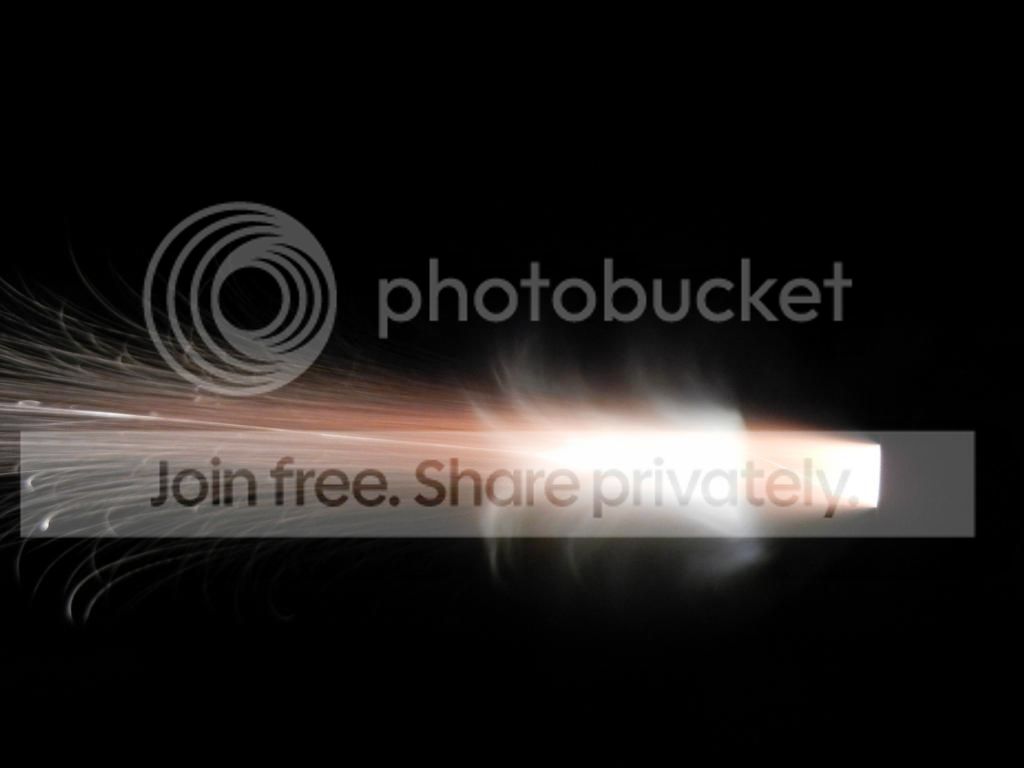
I test primers to see what is hottest/mildest. For some loads it matters. I fire the primer in an empty case, in a revolver, at night, and take a picture.
S&B Small Pistol primer

CCI Small Rifle
However, many revolvers have had the hammer spring reduced and as a result, you may not get reliable firing of the primers.
I reduce the tension on my S&W hammers using the adjustment screw. I load empty cases with rifle primers and increase tension until they fire. I then assume there is more than enough for regular primers.
I test primers to see what is hottest/mildest. For some loads it matters. I fire the primer in an empty case, in a revolver, at night, and take a picture.
S&B Small Pistol primer
CCI Small Rifle

One should always use a magnum primer with H110 or Win 296 and a heavy roll crimp........not doing so can produce a very ugly situation which I can relate from experience..........My faux pas was with a 44 RM and Iwas using what I thought was a magnum primer but actually wasn't....I was told all Win primers were magnum equivalent, which I found out later to be false.....regardless I was young and listened to someone who should have known better. I was merrily firing my 44 at the range one afternoon when the normal boom of a full house magnum 44 changed to a pop and then smoke just broiled from the old Super Blackhawk..........Of course I didn't work the hammer again and threw the pistol on the ground until it stopped hissing at me and belching smoke. I picked her up and she was seized up solid so I pulled back the two clicks on the hammer and removed the cylinder with some difficulty. My pistol looked like some one had poured moulten black glass all over the front of the cylinder and into the other chambers, the bullet had just cleared the cyl and forcing come and stuck in the barrel, it was a hell of a mess and took 2 days of soaking in carb cleaner and lots of scrubbing to get the mess all cleaned off. Lucky I had another Super Blackhawk in my truck to finish the silhouette match with.
Further investigation also showed a very tiny crack in the case mouth so a combination of moderate primer and reduced bullet tension had caused the grief. It wasn't long after that that I took to trimming all my 44 brass and used nothing but CCI magnum primers from there out. If one is using H110/Win296 I highly recommend that you start with cases all trimmed to the same length so your crimp is consistent and ALWAYS use magnum primers.
Further investigation also showed a very tiny crack in the case mouth so a combination of moderate primer and reduced bullet tension had caused the grief. It wasn't long after that that I took to trimming all my 44 brass and used nothing but CCI magnum primers from there out. If one is using H110/Win296 I highly recommend that you start with cases all trimmed to the same length so your crimp is consistent and ALWAYS use magnum primers.





















