Collet die question

Fore300

Regular
Rating - 100%
52   0   0
Location
Southern Alberta
In sizing brass for my .300wsm I have found that full length sizing produces my best groupings but I find my full length die does not produce the best Consintricity .
Should I full length size, use expander ball to expand the mouth and then use a collet die?
Full length die produces about .005 to .007 run out . Collet produces a .001 to .002 run out
This is a hunting load so likely don't need to get so in depth but I really do enjoy getting the best accuracy in any of my rifles
 
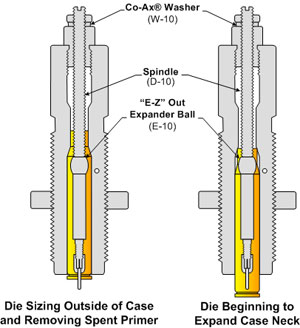
The main cause of case neck runout is caused when the expander is locked down off center and then pulls the case neck off center.

The best full length die for reducing neck runout is the Forster benchrest dies with the high mounted floating expander.

With the Forster die the neck of the case is held and centered in the neck of the die when the floating expander enters the case neck.

Y7Iyv8o.jpg


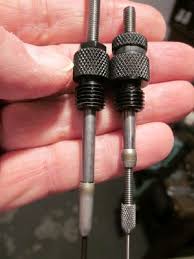
I also installed the Forster expander assemblies on all my older RCBS full length dies to reduce neck runout

Below the Forster .223 expander assembly on the right next to the RCBS expander on the left. The RCBS expander has been raised as high as it will move and will not work like the Forster unit.

5kfnKwd.jpg
 
Maybe full length resize with the dies expander assembly removed, then use your collet die to expand and straighten the necks.
Can the full length sized case necks be measured for runout with out a bullet seated? If yes, test the runout of a sized case with & without using the neck expander assembly from the full length die. These measurements may help you set up the expander so it does not pull the case neck off center.
 
Last edited:
Maybe full length resize with the dies expander assembly removed, then use your collet die to expand and straighten the necks.
Can the full length sized case necks be measured for runout with out a bullet seated? If yes, test the runout of a sized case with & without using the neck expander assembly from the full length die. These measurements may help you set up the expander so it does not pull the case neck off center.

When you remove the expander from a full length die and size a case the case will be as straight and concentric as it will ever be. "BUT" the neck will still need to be expanded, either with the dies expander or a expander die that expands the case neck on the upstroke of the press with the case resting on its base. And remember any dings in the case rim can cause the case to tilt in the shell holder and cause neck runout on the down stroke of the press. This is what makes the Forster die better than other dies because it holds and centers the case neck in the die when the floating expander enters the case neck. Meaning the expander can not pull the case neck off center and induce neck runout.

The quality of the brass and its neck thickness variations can effect case neck runout. I sort my cases with a Redding neck thickness gauge and select the cases with the least thickness variations when full length resizing. And with my Forster full length benchrest die I can easily get .001 or less neck runout.

Just remember a full length resized case has more "wiggle room" to let the bullet to be self aligning with the bore. Meaning the body of the case and the case neck do not touch the chamber walls, and have very little guiding effect on the bullet.

Below was from the shut down website "The Rifleman's Journal" by German Salazar a national long range competitive shooter. Mr. Salizar was asked about "partial full length resizing and he explains why total full length resizing is better.

Reloading: Partial Neck Sizing
by German A. Salazar
http://riflemansjournal.########.com/2010/06/reloading-partial-neck-sizing.html

"Now the last scenario, a full-length sized case in which the neck is also fully sized. There is clearance at the neck and in the body of the case, the closest fit anywhere is the bullet in the throat. If the neck to bullet concentricity is good (although it needn't be perfect), then the bullet will find good alignment in the throat and the case body and neck will have minimal influence. Let's not forget that the base of the case is supported by the bolt face or the extractor to a certain degree as well; this is yet another influence on alignment. As you can see, there are several points from base to bullet that can have an effect. My procedure is to minimize the influence of those that I can control, namely the case body and neck, and let the alignment be dictated by the fit of the bullet in the throat and to some extent by the bolt's support of the base. Barring a seriously out of square case head, I don't think the bolt can have a negative effect on alignment, only a slightly positive effect from minimizing "case droop" in the chamber. Given that a resized case will usually have a maximum of 0.001" diametrical clearance at the web, this isn't much of a factor anyway."


A neck sized case with case thickness variations can warp and cause bullet misalignment with the bore. Meaning neck sizing works best with high grade quality brass that has been inspected with a runout gauge. And cases that are full length resized are more forgiving because they have wiggle room in the chamber.

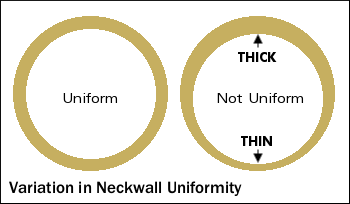
Below a case with neck thickness variations will have a high probability that the case body also has variations. And when fired the thin side of the case will expand more causing the case to warp and become banana shaped. I found out about this the hard way when reloading for milsurp rifles with large diameter chambers that gave extra room for the cases to warp.

NlyA8oI.png


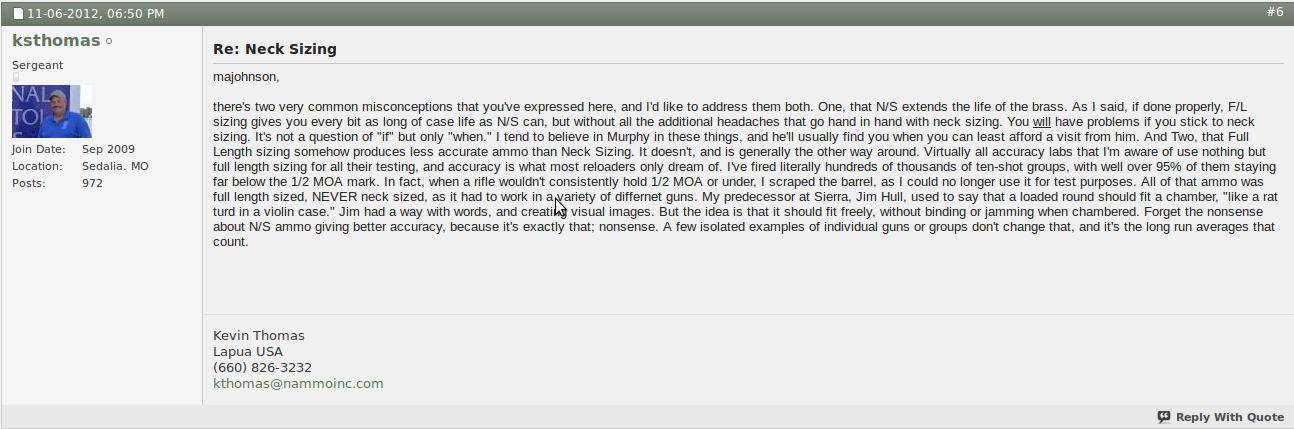
Below Kevin Thomas who worked in the Sierra balistic test lab and now shoots for Team Lapua USA. And please notice he is also a member of the "rat turd in the violin case club". ;)

Y3IiYL5.jpg


Bottom line the average shooter with average off the shelf factory rifles with SAAMI chambers is better off full length resizing. And a Forster full length benchrest die solves a lot of problems and headaches with average Remchester brass. And I can tell you I see very little to no accuracy improvement with neck turned brass and doing anything else to the cases with factory rifles.

 
When you remove the expander from a full length die and size a case the case will be as straight and concentric as it will ever be. "BUT" the neck will still need to be expanded, either with the dies expander or a expander die that expands the case neck on the upstroke of the press with the case resting on its base. And remember any dings in the case rim can cause the case to tilt in the shell holder and cause neck runout on the down stroke of the press. This is what makes the Forster die better than other dies because it holds and centers the case neck in the die when the floating expander enters the case neck. Meaning the expander can not pull the case neck off center and induce neck runout.

The quality of the brass and its neck thickness variations can effect case neck runout. I sort my cases with a Redding neck thickness gauge and select the cases with the least thickness variations when full length resizing. And with my Forster full length benchrest die I can easily get .001 or less neck runout.

Just remember a full length resized case has more "wiggle room" to let the bullet to be self aligning with the bore. Meaning the body of the case and the case neck do not touch the chamber walls, and have very little guiding effect on the bullet.

Below was from the shut down website "The Rifleman's Journal" by German Salazar a national long range competitive shooter. Mr. Salizar was asked about "partial full length resizing and he explains why total full length resizing is better.

Reloading: Partial Neck Sizing
by German A. Salazar
http://riflemansjournal.########.com/2010/06/reloading-partial-neck-sizing.html

"Now the last scenario, a full-length sized case in which the neck is also fully sized. There is clearance at the neck and in the body of the case, the closest fit anywhere is the bullet in the throat. If the neck to bullet concentricity is good (although it needn't be perfect), then the bullet will find good alignment in the throat and the case body and neck will have minimal influence. Let's not forget that the base of the case is supported by the bolt face or the extractor to a certain degree as well; this is yet another influence on alignment. As you can see, there are several points from base to bullet that can have an effect. My procedure is to minimize the influence of those that I can control, namely the case body and neck, and let the alignment be dictated by the fit of the bullet in the throat and to some extent by the bolt's support of the base. Barring a seriously out of square case head, I don't think the bolt can have a negative effect on alignment, only a slightly positive effect from minimizing "case droop" in the chamber. Given that a resized case will usually have a maximum of 0.001" diametrical clearance at the web, this isn't much of a factor anyway."


A neck sized case with case thickness variations can warp and cause bullet misalignment with the bore. Meaning neck sizing works best with high grade quality brass that has been inspected with a runout gauge. And cases that are full length resized are more forgiving because they have wiggle room in the chamber.

Below a case with neck thickness variations will have a high probability that the case body also has variations. And when fired the thin side of the case will expand more causing the case to warp and become banana shaped. I found out about this the hard way when reloading for milsurp rifles with large diameter chambers that gave extra room for the cases to warp.

NlyA8oI.png


Below Kevin Thomas who worked in the Sierra balistic test lab and now shoots for Team Lapua USA. And please notice he is also a member of the "rat turd in the violin case club". ;)

Y3IiYL5.jpg


Bottom line the average shooter with average off the shelf factory rifles with SAAMI chambers is better off full length resizing. And a Forster full length benchrest die solves a lot of problems and headaches with average Remchester brass. And I can tell you I see very little to no accuracy improvement with neck turned brass and doing anything else to the cases with factory rifles.


Thank you, that is an interesting read. I actually had fire formed and only neck sized also neck turned all my brass for my 30-06 long range (it is a factory action and barrel) I had actually noticed an increase in accuracy with each of these steps so I started to test the same with my .300wsm and 22-250. The 300wsm actually shot better with full length size and not neck turning. My 22-250 improved with neck turning but got worse when I only neck sized.
I am going to take a look at the Forester dies as that is what I use on my 260 and they work great and give awesome results.

Thanks for all the info, I really appreciate it
 
Back
Top Bottom