Colt 1889 vs 1877 vs S+W Model 3 opinions

sask3500

Member
Rating - 100%
15   0   0
Location
Under a rock
Bit out of my wheelhouse here, not sure what to ask.

I have had a rpal for over 20 years and never bought a handgun but am looking at Colt 1889 and 1877 models as well as the S&W Model 3. I'm looking for opinions on the reliability, accuracy and repairability of the three models.

My two trains of thought is either a below market value gunsmithing project or buy a quality piece to maintain and enjoy. I do reload and I'm not afraid to fix things and learn how to do it properly. I'm looking at something to own long term as a target oriented plinker.

I know this isn't a specific question, just looking for opinions from people that have owned and shot them. Thanks.
 
My experience with the Colt double action revolvers 1877 & 1889 says that unless you have a reliable source for parts stay away from them many small parts that wear and break, the 1892 colt is the better choice colt made many improvements with the 92 but part for them are hard to find and if you do find parts they are not drop in pieces they have to be hand fitted
 
You’ve picked 2 of the 3 Antiques which are about the most finicky POS’s around. I don’t have a #3 so I won’t comment on something I don’t have firsthand knowledge of.
I have 2 Colt 1889’s and 2 Colt 1877’s. I bought both 1877’s in good working condition. I fired about 30 rounds through one of them. It developed a very lazy trigger return spring so I’ve stopped shooting it. I’ve never shot the other one because I’m not confident that it is tough enough for actual use. They appear to be a real nightmare to fix. If the 1877 appeals to you, I would recommend an 1878, a way more reliable model that is quite similar. I have one in .455 Webley that I shoot all the time and it never skips a beat.
The 1889 is a bit better than the 1877 as far as reliability goes. It is a flawed design as far as being a military service revolver but it isn’t too bad for a range toy (none of these revolvers are something you’d want to trust your life to). I bought a couple of 1889’s over the years, when prices weren’t so insane. I bought one that was a beautiful basket case for $500, about $300 in parts from Numrich and I’ve got a gun that people are asking $3k+ for! I was hesitant to buy a fixer-upper because I’d read that it was complicated. Well I can tell you that it’s not all that hard to get it working nice and slick, because I’m not all that smart and it’s mechanism didn’t seem especially complicated to me. It is definitely one of the most “modern” antique revolvers you can find. Neither of these are even close to a Single Action Army as far as being a real shooter that you feel comfortable shooting regularly, or packing along on fishing trips and that kinda thing.
I collect Antique Colts and shoot them from time to time, so I figure I can give you a valid opinion on them. 1889 is a better gun than an 1877 (1877 looks better though), but I would recommend saving up for a bit longer and buying an 1873 Single Action Army or 1878 Double Action Frontier. I guarantee you that they are far superior guns and you will be glad you invested in the better firearms. Every antique is so expensive now that I just couldn’t see spending $3,000 on a gun with poor reliability if you’re going to be shooting it. If you’re not shooting them, just looking at them, then it doesn’t really matter.
Cheers.
 
rnrogers does bring up an important point. While the parts to repair my broken 1889 weren’t hard to get, a couple of them were new reproduction parts and required careful fitting to make work. I should have mentioned that. While the mechanism wasn’t as complicated as I’d thought it would be, the fitting of the parts was harder than I’d figured it would be, lots of Dremel Tool work.
I destroyed a brand new Hand and had to order another one when I shaped something a little too aggressively. The fitting was kind of a pain in the ass!
 
So I’m on my 6th 1877 in the last year, all thunderers, and I’ve only kept one I got as a project off a user on this site.

My experience has been an adventure to say the least, here’s how I would break it down.

I had to learn how to make my own sear/stop springs, Numrich rarely has them and nobody else ships them. They aren’t rocket science but they are on the more complicated end of “flat springs” if you can call them that. They’re a strange shape and feature two prongs, a lot of variables and fitting involved and in the end has become a side hobby of its own for me along with trigger studs.

Reloading was easy but good 41 LC brass is slim pickings, not impossible just harder to source in any good quantity.

Working on them is less gunsmithing and probably closer to Norse mythology. What I mean by that is, it’s not complicated to learn how the gun functions, it’s over complicated and flimsy but it can be mapped out, but it’s poor design does leave a lot of variables when you’re trouble shooting, although 90% of the time it’s one of 3 components, the trigger stud is worn out or misaligned, the sear/stop spring is busted or installed wrong, or someone didn’t understand how those two worked and modified the sear/hammer/etc to what they thought would fix the problem. You can replace and fit all the parts, and reassemble it 15 times in a row, following the steps to a fine point, and with no explanation or sign have it fail to cycle properly each time until on the 15th some entity in the cosmic realm decides your fingertips have suffered enough and you’re now worthy.

I’ve yet to find one I couldn’t fix or restore but I’ve sure gone cross eyed enough, and certainly no expert gunsmith. However I find I shoot it less because I know if something breaks it’s 5-10 hours of making a new spring, treating and tempering, fitting and tinkering. That’s also a best case scenario because if something larger breaks (I’ve had one project show up with a split hammer) it’s really a waiting game until I find one, until the day I can’t.

If I was doing it over again with the intent of doing more shooting, or buying another one for the purpose of plinking/target, I’d probably do an 1892 all day, or 1889. I also think a lot of the time it may have been a better investment to just save up for an 1873 SAA just for the parts and durability of them. I love my 1877s, especially the one I’ve stuck with, the history and lore with them is something of a niche if you’re into them, but it’s a labour of love. They’re also getting up there in price and harder to find in the desirable configurations.

I don’t know anything about the smiths but I know I see a lot more 44 Russian brass floating about.
 
I’d go with a model 3
Easier to load for & find/make brass and bullets
More powerful and accurate
And you can get a target version in 32,38,44,450.
And gunsmiths will work on them
 
Are there models I've overlooked? I'm partial to western revolvers but haven't looked much at anything from Europe. The 1889 Colt sounds to be a bit ahead of the older Colt as far as simplicity goes.

Are there laws restricting repair on antique firearms? For instance re-sleeving a barrel or cylinder, rebarreling or adding an adjustable sight?

I'm assuming anything like that, if legal here, keeps it in the same price range as a basket case?
 
There’s a couple conversion Colts and Remingtons in Rimfire cartridges, there’s kits to reloading them that look relatively strait-forward.

Webleys, I imagine there was a few of them even in the west, never fired one but they always seem
In relatively good condition and I’ve seen shaved cylinders for some modern calibers.

There’s also what I previously mentioned but deleted but cap and ball colts and Remingtons, they’re an experience on their own, more accurate than I initially imagined too. I had paper cartridge kits for loading mine, made things super simple. That’s about as western as it gets.

As for repair I don’t know much about barre resleaves, I don’t know how that would work with the old irons. To my knowledge there’s no laws against adding sights, you see it done fairly often especially on refurbs and restorations. I’m not as well versed but I was under the impression as long as you don’t swap to a no-go caliber, so staying antique, you’re good to go. Heck I’ve build an 1877 out of a box full of mismatched parts before.
 
Not a 89's are the same, OP. Some have the capability to upgrade to 92's. I've owned both in my time, never actually got around to trying the upgrade.
I'm going with MM13's opinion...Remingtons are a great opinion. Italian parts fit them I understand as well.
 
The Colt 1892 is a huge improvement over the 1889, though they are quite difficult to find these days.

I snapped up 2 for parts guns. I wasn't any more impressed with the 92 than I was with the 89.
Almost get the 2 lockup systems fighting one another. I don't consider 92's to have 3 lockup systems as the one just stops the cylinder from advancing on its own.
How Colt went backwards from the 73...I don't know
 
Okay, let me weigh in on this one - I have handled all of the above models, and - full disclosure - I am partial to S&W. The Colt M1877 is a strange beast. It's over-engineered to the max. At a time when simple and reliable double action mechanisms were already on the market in Europe, Colt (for some unknown reason) insisted on re-inventing the wheel. The result was the M1877. It must have been quite successful though, as they manufactured it for 32 years. It's got the nickname "gunsmith's favorite" for a reason, and anyone who ever had to work on one will know why. Unnecessarily complicated! The M1878 was a huge improvement, heavier construction, simplified mechanics, more reliable. Then, for whatever reason, Colt went backwards and came out with the M1889. It's a poor design, and the company realized this pretty soon. The biggest problem with this one is the fact that the only thing which keeps the cylinder aligned with the barrel is the claw-shaped hand. Not very reliable. Colt soon realized that the gun ought to have a positive, locking cylinder lug, and they began milling a slot into the bottom of the frame almost immediately after the M1889 came to market to accommodate such a lock. It was not until 1892 that they actually put a cylinder lock into the mechanism. The M1892 is a fine gun, and one of the first to use a crane-mounted, swing-out cylinder.
My favorite antique revolver ever is the S&W No. 3 frame. Either the "Russian" models, the "American" models or the No. 3 New Model or Double Action, in my opinion, they are the best to shoot, service, get ammo for, and so on. I have 44 American, 44 Russians, 45 Schofields, 38-44 and 32-44, and they are all fine shooters. My only criticism with the S&W's is the small size of the grips (except the American model, which is quite adequate), which can be a bit of a pain for someone with big hands. Other than that, I have no issue with the Smith & Wessons. They are very accurate, easy to load and un-load, easy to clean and service, and making ammo for them is a cinch (except 44 American).
European makes are good, too. Webleys are very well made and reliable, I'm just not a big fan of their shape. The WG is clumsy and awkward to hold, the Mk1 and 2 are okay, but the short barrel doesn't make them very good as target guns. Other makers, such as Warnant, Spirlet, Nagant, etc. made fine guns but some of them are in such odd calibers that it's almost impossible to find ammo for. The German Reichsrevolver is another good one - it takes 44 Russian ammo, is built like a tank and very reliable. The 1879 model with the long barrel actually makes for a fine target revolver. So, here you have it. It's my personal opinion, and I'm sticking with it.
Oh, by the way, as far as re-sleeving or re-barreling an antique goes, you are free to change it to any caliber except the one's listed as "exempt from antique status". Your antique will remain antique, even if it's a 357 magnum...

 
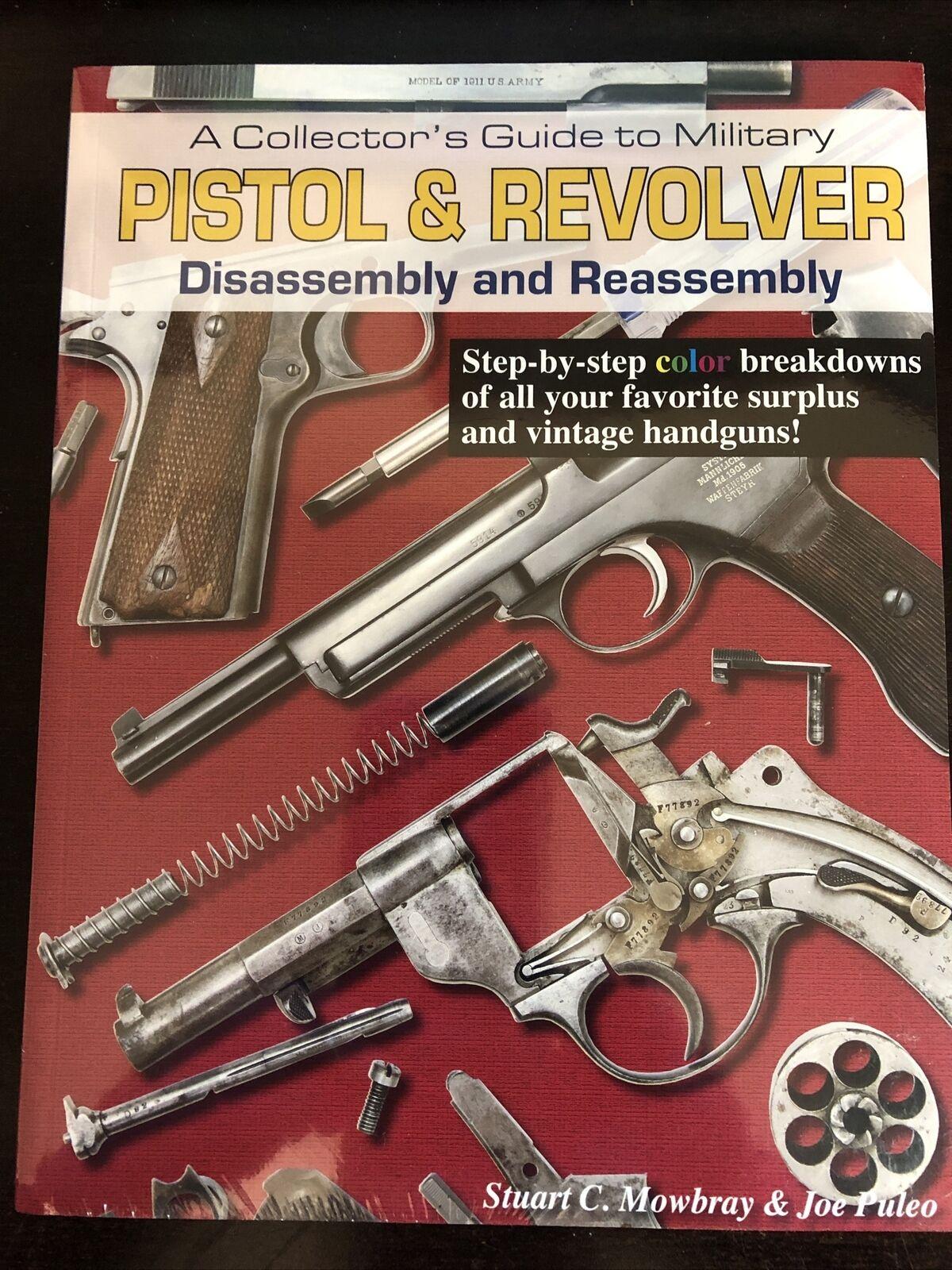
I'm recalling a comment from 'A collectors Guide to Military Pistol and Revolver Disassembly and Reassembly' from Mowbray and Puleo.
Nk7u8nc.jpeg

They compared a S & W No. 3 ( IIRC, not having access to the book at present ) to some of the European offerings. They referred to a S & W action as having a clockwork mechanism and too delicate from robust usage.
I am also a fan of the No. 3...but am not fond of finicky mechanisms. The 89 is finicky enough. I don't want to go down another wormhole with delicate guns.
I highly recommend the book BTW. Marvelous guide if one plays such games.
 
...The German Reichsrevolver is another good one - it takes 44 Russian ammo, is built like a tank and very reliable. The 1879 model with the long barrel actually makes for a fine target revolver...

Hi Chris. Can the Reichsrevolver fire 44 Russian (antique safe handloads of course) without any modification to the 44 Russian case?

 
I’ll weigh in here as I own all three models. This is all just my opinion, so keep that in mind.

The 1877 is a great looking and great shooting gun when working properly. I think it’s more of a collectors piece that can be shot occasionally. Depending on your mechanical ability, they can be worked on. It’s not hard, but it takes a lot of patience. If you’re going to have a collection of old Colts, you need one. If you’re looking for a shooter, keep on moving. The 1877 cylinder walls are paper thin and I only use black powder.

The 1889 is a more reliable shooter than the 1877. Yes, they still have issues. I find 1889s and 1892s easy to work on. New parts do need to be hand-fit, so you still need patience. Unlike the 1877, you don’t need three hands and X-ray vision. 41LC brass is very hard to come by these days, but you can expand 38SPL to work. This has been done for over half a century and the only problems I’ve heard of is split brass. 38SPL brass is cheap. I use my stash of 41LC Starline brass for full case black powder loads, and use expanded 38SPL brass for light loads of Unique. MP Molds has a great hollowbase mold for the bullets. For parts and advice, I have had very good luck on this forum. I was also able to snap up a few 1892s that were restricted before the freeze to keep for parts. The restricted ones were cheap at the time. *edited to add: the 1889s and 1892s were military issued guns. I think a lot of the bad reputation for reliability comes from extreme use in battle situations. If you think about it, they would have been recalled and out of the army within 6 months if they were as bad as people say. Instead, they were the army and navy sidearms for over a decade. To me, that means they are more than suitable for civilian use. The catch is that they are over 100 years old now, so like any antique, the probability of failure increases.

The S&W is another iconic western gun. I have had no issues with mine, so I haven’t had to work on them…yet. As Tokguy says, they have been described as clockwork and difficult, but I don’t think they can be any harder than the Colts. Once you get into working on these old guns it gets easier as you go. 44 Russian brass is getting harder to find, but you can easily shorten 44SPL. You can also shorten 44MAG, but the case wall gets thicker and can pose problems with chambering once loaded. Lee bullet molds are cheap.

I cast soft pure lead with 3% tin for these old guns and pan lube the bullets with a 50/50 beeswax/olive oil lube.

I also have a Colt 1878. This is my favourite gun. I have had to completely disassemble it and build a spring from scratch. Anneal it, cut and shape it, and harden it. This all took patience as well, but it was relatively easy to disassemble and reassemble multiple times until I had it right. It’s chambered for 476 but accepts 45 Schofield with thinned rims. BIG BOOM! Ha ha!

For the guns you mention, I think the S&W fits the bill the best for the price. The Colts seem to be going up in price and the loading components are harder to find.
 
Last edited:
I’d go with a model 3
Easier to load for & find/make brass and bullets
More powerful and accurate
And you can get a target version in 32,38,44,450.
And gunsmiths will work on them

X2! I have a very nice S&W 1st. Mod. double action. I have all the reloading goodies and it's a joy to shoot with a much more robust mechanism than the Colt Thunderers. I haven't shot the NM#3 but I've hear a lot of good things about them in terms of reliability. As snurge pointed out, there are lot of gunsmiths that will work on them. I haven't personally checked this out but I wonder if parts are interchangeable with the Uberti copies. Wouldn't it be great if you could order grips or a mainspring or sear or whatnot from Uberti to repair an original? Just spitballin' here.
 
Back
Top Bottom