












































You are using an out of date browser. It may not display this or other websites correctly.
You should upgrade or use an alternative browser.
You should upgrade or use an alternative browser.
Commercial vs Cannister grade powder
- Thread starter Bigbubba
- Start date


To my knowledge. Canister grade is what you buy in stores and is strictly regulated to be of similar quality between batches.
Commercial grade is less regulated and varies from lot to lot, and as such you should redevelop your loads as you change batches.
To my knowledge, I'm sure someone else will correct any mistakes.
Commercial grade is less regulated and varies from lot to lot, and as such you should redevelop your loads as you change batches.
To my knowledge, I'm sure someone else will correct any mistakes.

There's a lot of effort to make the can of powder you buy this time very similar to the one you bought last time. Its not perfect; but most of the time you won't see any difference.
Commercial powder isn't under the same constraints. The factory can vary their charge to load the tons of powder they have; instead the ton they wish it was.
We handloaders aren't even a drop in the bucket in the powder market.
Commercial powder isn't under the same constraints. The factory can vary their charge to load the tons of powder they have; instead the ton they wish it was.
We handloaders aren't even a drop in the bucket in the powder market.

Powder is made to a recipe. A typical lot is 1000 to 10,000 pounds.
Each lot is slightly different. If a given lot happens to match the specs of a "canister grade" powder, it can be put aside and sold as such.
The other lots are documented as to speed, density, burn temp, etc. and sold to commercial users. The user would buy a "4350sih" powder and use it to load ammo suited to a 4350 type powder. The actual powder charge used would be the charge that gets the velocity desired.
The actual powder could be significantly faster or slower than the canister grade 4350 you might buy.
I recall using Red Dot powder for shotgun loading. It was offered as RD1, RD2, RD3 and RD4. 1 being the fast flavour and 4 being the slow flavour. This choice was handy when trying to make the wad column come out the right size.
A powder maker makes a number of different powders between the fast and the slowest, with only about every 4th or 5th step being sold as a canister offering.
EXPRO (maker of IMR powders) had 8506 powder that had a fine grain like 4895 but was much slower, equal to a fast lot of 4350. I found it very useful for many different applications and suggested that they offer it as a new canister powder.
BOFORS (who make the ReLoader powders) makes RP28, a fine grain powder between 3031 and 4895. Much easier to meter than 3031 and produced single digit SDs easily in 308 type cases. I still use it for match ammo. I thought it would make a fine canister offering. A step faster than RL15.
This is part of the spec sheet the powder maker supplies the commercial buyer.
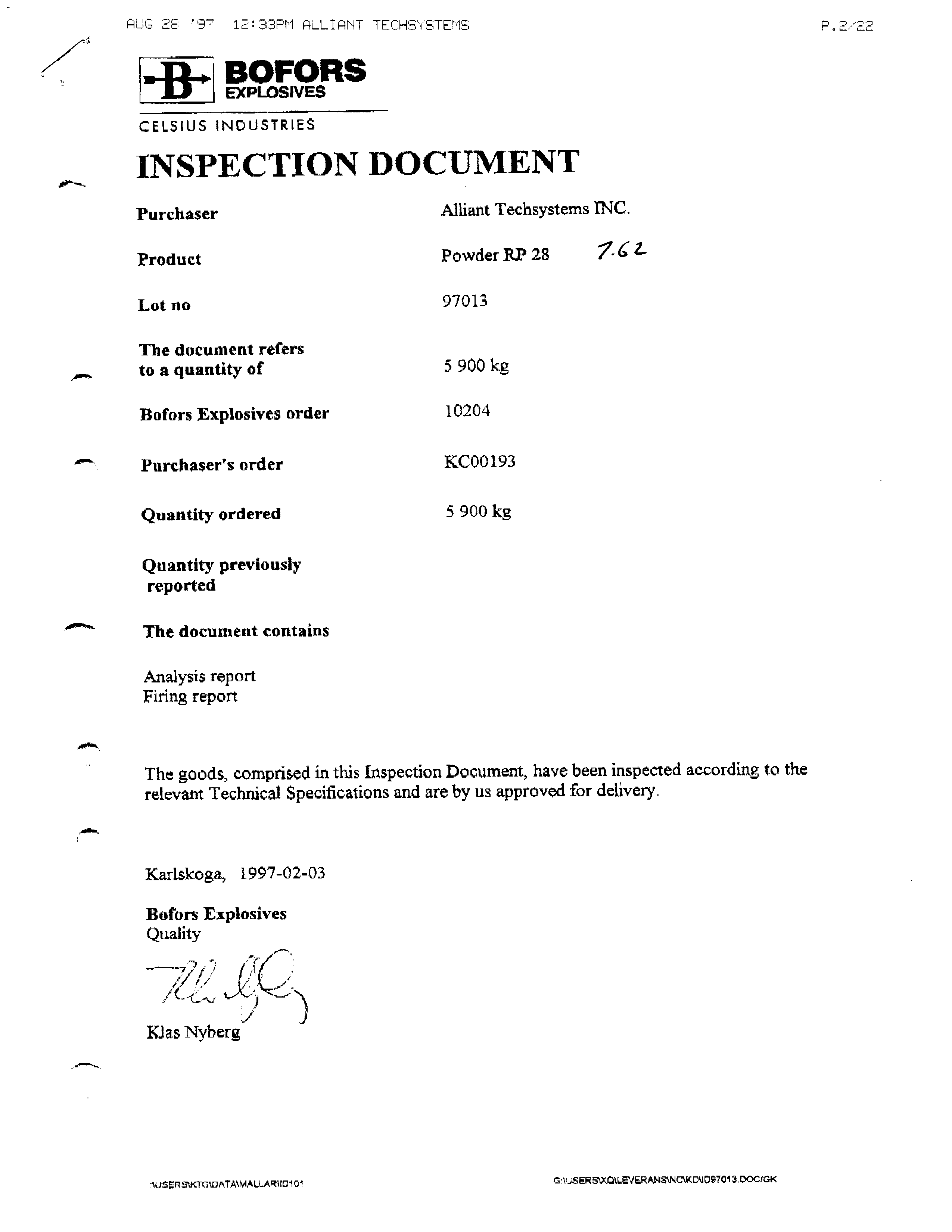
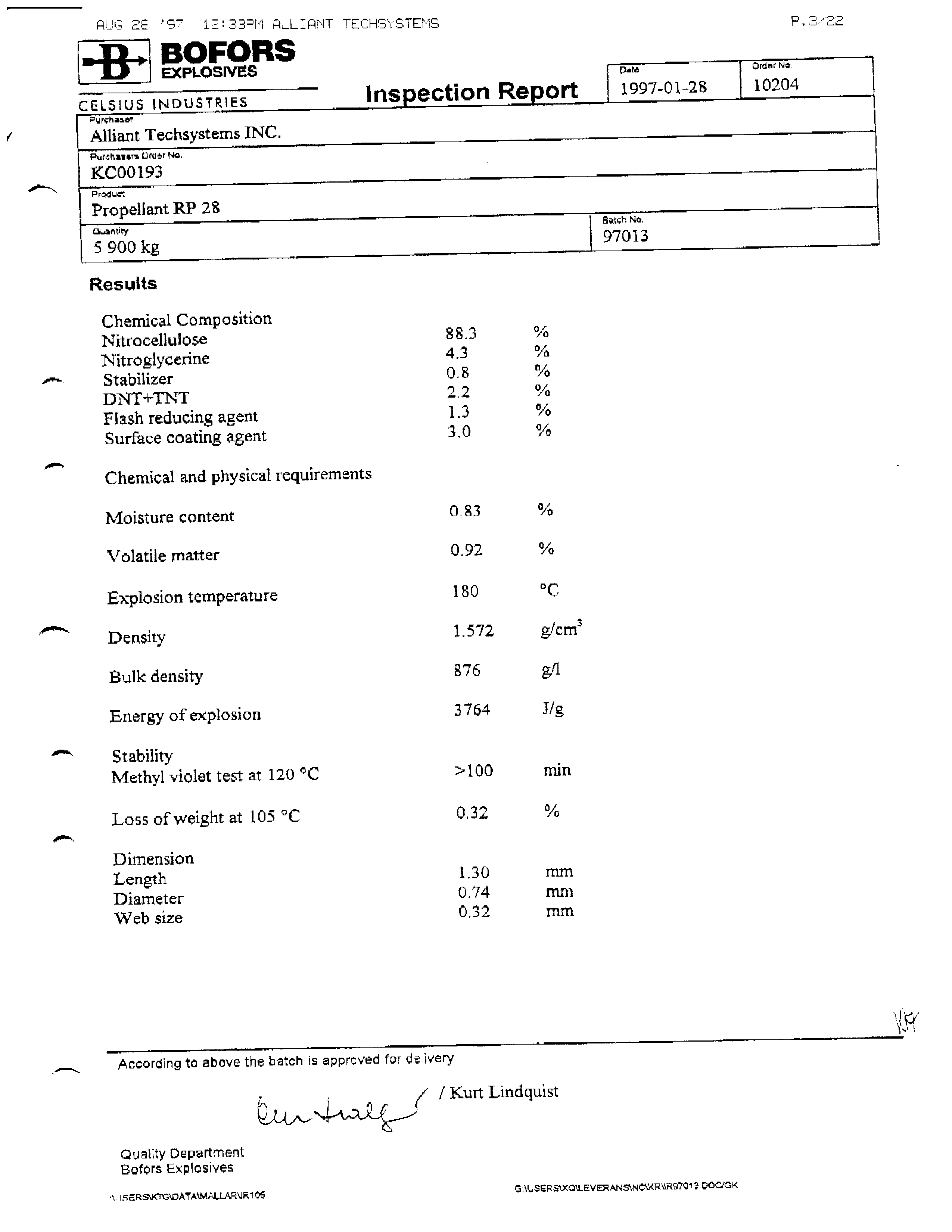
Each lot is slightly different. If a given lot happens to match the specs of a "canister grade" powder, it can be put aside and sold as such.
The other lots are documented as to speed, density, burn temp, etc. and sold to commercial users. The user would buy a "4350sih" powder and use it to load ammo suited to a 4350 type powder. The actual powder charge used would be the charge that gets the velocity desired.
The actual powder could be significantly faster or slower than the canister grade 4350 you might buy.
I recall using Red Dot powder for shotgun loading. It was offered as RD1, RD2, RD3 and RD4. 1 being the fast flavour and 4 being the slow flavour. This choice was handy when trying to make the wad column come out the right size.
A powder maker makes a number of different powders between the fast and the slowest, with only about every 4th or 5th step being sold as a canister offering.
EXPRO (maker of IMR powders) had 8506 powder that had a fine grain like 4895 but was much slower, equal to a fast lot of 4350. I found it very useful for many different applications and suggested that they offer it as a new canister powder.
BOFORS (who make the ReLoader powders) makes RP28, a fine grain powder between 3031 and 4895. Much easier to meter than 3031 and produced single digit SDs easily in 308 type cases. I still use it for match ammo. I thought it would make a fine canister offering. A step faster than RL15.
This is part of the spec sheet the powder maker supplies the commercial buyer.
The above comments are very good and describe the difference very well.
One thing not mentioned is canister grade powders will keep things such as harmonics within a manageable range in our rifles without a lot of extra load development between lots.
As Ganderite mentioned, commercial lots will vary significantly in quickness and maybe even in granule size. The end user will do their own tests to factor this into a safe load in a velocity range that comes close to their mean.
They do this in the same manner any handloader would. They know the powder burns within a specific range from the spec sheets that come with it and start their load development with a minimum load. They meticulously record their findings until they establish a parameter to work from. Then they make up a load in cartridges that are made up to SAAMI specs dimensions with a charge that will give them a velocity as close as possible to their goal.
This is all fine and safe but firearms are entities unto themselves. Most will shoot acceptably with that load, many won't. They may have shot extremely well with a previous lot but won't give a decent group with a different lot.
Harmonics are usually the culprits.
That's where handloaders usually have an advantage. They can develop loads with new batches of powder that will match the harmonics of their previous loads, in their personal firearms.
Commercial manufacturers of ammunition obviously can't make up a load that will work well in every firearm out there so they control the only factors they can, cartridge dimensions within established parameters and powder charge loads that develop velocities within similar parameters. They certainly don't pay as much for powder as the average handloader. They couldn't keep the price of their products competitive if they did. They purchase in bulk quantities and eliminate the cost of packaging and they take what the powder manufacturer has to offer at any given moment to keep costs down. They pay the end fee of packaging their own product and distributing it.
TURF THE LIBERALS IN 2019
One thing not mentioned is canister grade powders will keep things such as harmonics within a manageable range in our rifles without a lot of extra load development between lots.
As Ganderite mentioned, commercial lots will vary significantly in quickness and maybe even in granule size. The end user will do their own tests to factor this into a safe load in a velocity range that comes close to their mean.
They do this in the same manner any handloader would. They know the powder burns within a specific range from the spec sheets that come with it and start their load development with a minimum load. They meticulously record their findings until they establish a parameter to work from. Then they make up a load in cartridges that are made up to SAAMI specs dimensions with a charge that will give them a velocity as close as possible to their goal.
This is all fine and safe but firearms are entities unto themselves. Most will shoot acceptably with that load, many won't. They may have shot extremely well with a previous lot but won't give a decent group with a different lot.
Harmonics are usually the culprits.
That's where handloaders usually have an advantage. They can develop loads with new batches of powder that will match the harmonics of their previous loads, in their personal firearms.
Commercial manufacturers of ammunition obviously can't make up a load that will work well in every firearm out there so they control the only factors they can, cartridge dimensions within established parameters and powder charge loads that develop velocities within similar parameters. They certainly don't pay as much for powder as the average handloader. They couldn't keep the price of their products competitive if they did. They purchase in bulk quantities and eliminate the cost of packaging and they take what the powder manufacturer has to offer at any given moment to keep costs down. They pay the end fee of packaging their own product and distributing it.
TURF THE LIBERALS IN 2019

Cannister grade: means the powder matches a set specification, ie: H4350 should be close enough to be safe with the same published reloading data batch after batch after batch.
Commercial grade: made to general specs, may vary faster or slower by a bit and the load data needs to be adjusted to the powder.
Commercial grade: made to general specs, may vary faster or slower by a bit and the load data needs to be adjusted to the powder.

nowarningshot
CGN Ultra frequent flyer
Canister grade is often blended to minimize variance lot to lot. For example they test a bulk amount of "4350" and add/blend a slower or faster previous lot to bring it to cannister grade.
Pretty sure i just paraphrased previous posts by Ganderite.
Pretty sure i just paraphrased previous posts by Ganderite.
Canister grade is often blended to minimize variance lot to lot. For example they test a bulk amount of "4350" and add/blend a slower or faster previous lot to bring it to cannister grade.
Pretty sure i just paraphrased previous posts by Ganderite.
Yes, sometimes.
There are two sources of 'canister" powders. A powder maker (e.g. Olin or Vhtivouri) can decide to offer some of their powders as "canister" powders. They make many batches of a given receipe and the batches that are similar in spec to a canister spec can be put aside. Thus you get N135, N140, N150 or 760 or 785.
Or a powder seller, distributor (Ramshot, Alliant) can buy powders from powder makers (like 2208 form ADI and call it Varget), or RP 44 from Bofors and call it RL-15, or 846 from Olin and call it BLC2. I don't know how a distributor makes arrangements to get similar batches of powder to call them canister grade. Maybe the lot to loot varies more than the canister grade from a powder maker.
Olin makes a rifle ball powder and tests it. If it is at the fast end of the spec, they call it 844 and some of it gets packages as H335. If it is slower, they call it 846 and it gets sold as BLC2. Just different speeds of the same powder.





















