A forum member was asking me about this via PM, and after typing it up, I thought it might be worth posting as someone else will maybe benefit from it.
I did't take pics when I last did this job (a few days ago), I didn't think to at the time, but here are the steps involved (written) as I relayed them via PM:
The member asked:
My answer (Part 1):
Then after a follow up question, I responded:
Again, sorry I can't offer pics, but I still hope you find this of interest here on CGN.
Now that I think of it, stating the obvious, you ALSO NEED A 3" CHAMBERED BARREL! A 2,3/4" barrel can be chamber reamed to 3", if desired.
I did't take pics when I last did this job (a few days ago), I didn't think to at the time, but here are the steps involved (written) as I relayed them via PM:
The member asked:
Need to pick your brain. What's involved in converting a 2 3/4" Wingmaster to 3"?
I know experts like Casey at TacOrd can do anything 870 related.
Your thoughts?
My answer (Part 1):
Hi ###X:
It's pretty simple but you need to either buy or make a couple specific tools. All access is through the ejection port, and you should strip the gun down to just a receiver first.
First, you grind a punch or other hard steel rod into a narrow chisel that will fit inside the profile of the ejector assembly. You need to first shear the head off the pin that retains the ejector spring. Make sure the tool is made or harder steel, like a punch, so it will cut through the soft steel rivet. Remove the spring from the rivet.
Next you need to shear off any remaining riveted-over material from both the front and rear rivets. Use the chisel again for this purpose. You could also grind them off with an appropriate sized dremel bit, if that is easier for you. With a punch, pound the rivets out from the inside of the receiver (they fall out the back side the the receiver (the side with no ejection port).
The whole ejector assembly will now lift out. You now have two choices, you can either buy a $25 3" ejector, or if you have one to measure, you can file back the ejector lip on the 2,3/4" ejector to match the dimensions of a 3" unit. I usually re-use the older one and just file to to the right size, that saves $25 on the job.
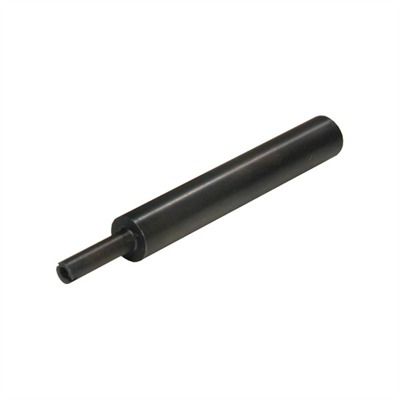
Next you re-install the ejector base. To do this you need the rivets (you can buy from Brownells for about $7US each), or if you have time you can make them on a lathe. They are not interchangeable. You need a front rivet and a back rivet. You put the rivets in from the back side of the receiver. You need to rivet in the front rivet first and you need to make or buy the right tool. It's a hollow punch that has a rectangular tip with a hole in the middle so that you don't round over the "tit" that the ejector spring fits on. You support the back of the rivet on any flat steel surface (anvil), you get a friend to hold the receiver steady, and you use the punch to hammer/squeeze the rivet until it's tight. When you remove the punch, the "tit" should be un-peened. The ejector spring will sip over that later.
Now you repeat that process with the rear rivet, except this punch is NOT hollow. You must rivet the head over completely. Nothing will attach this this later.
At this stage, if you want the outside of the gun to look more "Wingmaster" (vs. Express), you hold the punches you used in a vise and get your friend to balance the receiver over the punches with the punch tips resting on their respective rivets. You take another steel punch or gunsmithing peen (a type of hammer) and you "smush" the backsides of the rivets to ensure they expend and fill the shoulder recess in the receiver. The rivets are about 2mm round of the receiver before you do this, and will crush down to about 1.5mm proud as they expand and fill any remaining gaps. If you don't do this, there will be a hairline around each rivet. No big deal, but it's a cleaner job if you flatten them. Flip the receiver back over when done.
Now you slide the ejector spring over the "tit" on the front rivet and use the same punch from the rear rivet to flatten the exposed tip of the "tit". This holds the ejector spring in place. You are almost done. At this point, the gun is already functional for 3" mags.
Flip the action back over and look at the rivets that remain proud of the receiver flat. You need to file these almost flush. I protect the surrounding receiver with some masking tape and file them pretty flat. I remove the tape and switch to 180 grit paper wrapped around a mill file and I file them perfectly flush with the receiver. Then you go through the different paper grits until I get the surface finish I'm after.
Obviously, you will have to either touch up the area with cold blue, or re-fiinish the receiver. But functionally, the gun is now 3". The ejection ports are the same size on all Wingmasters the only differences are in the ejector and spring.
Hope that helps? TacOrd can definitely do this job if you want to pay for it. Most smiths should charge around $75, I think. About half that is parts cost. Maybe more if they don't re-use the old ejector.
Claven2
Then after a follow up question, I responded:
No worries ###X. This job is WAY less complicated than it sounds, it's no more difficult than what you do at ######XX, you just need a few tools. Assuming you already have a few weights of light ball peen hammer and some punches, you really only need these tools:
http://www.brownells.com/gunsmith-tools-supplies/shotgun-tools/staking-tools/remington-870-rivet-staking-tool-set-prod653.aspx
This rivet:
http://www.brownells.com/shotgun-parts/receiver-action-parts/ejector-parts/ejector-hardware/ejector-rivet-front-prod10795.aspx
This rivet:
http://www.brownells.com/shotgun-pa...or-hardware/ejector-rivet-rear-prod10796.aspx
This spring:
http://www.brownells.com/shotgun-parts/receiver-action-parts/ejector-parts/ejector-springs/ejector-spring-prod10803.aspx
And (potentially) this ejector (if you don't just mod the one you already have):
http://www.brownells.com/shotgun-parts/receiver-action-parts/ejector-parts/ejectors/ejector-prod10802.aspx
The hardest part is to re-blue the gun. The last couple I did, I was getting the guns cerakoted anyhow, so it didn't matter. They sandblast the guns before applying the cerakote.
If you were nearby, we could do it together to show you. Really pretty easy.
Cheers,
Claven2
Again, sorry I can't offer pics, but I still hope you find this of interest here on CGN.
Now that I think of it, stating the obvious, you ALSO NEED A 3" CHAMBERED BARREL!
A 2,3/4" barrel can be chamber reamed to 3", if desired.
Last edited: