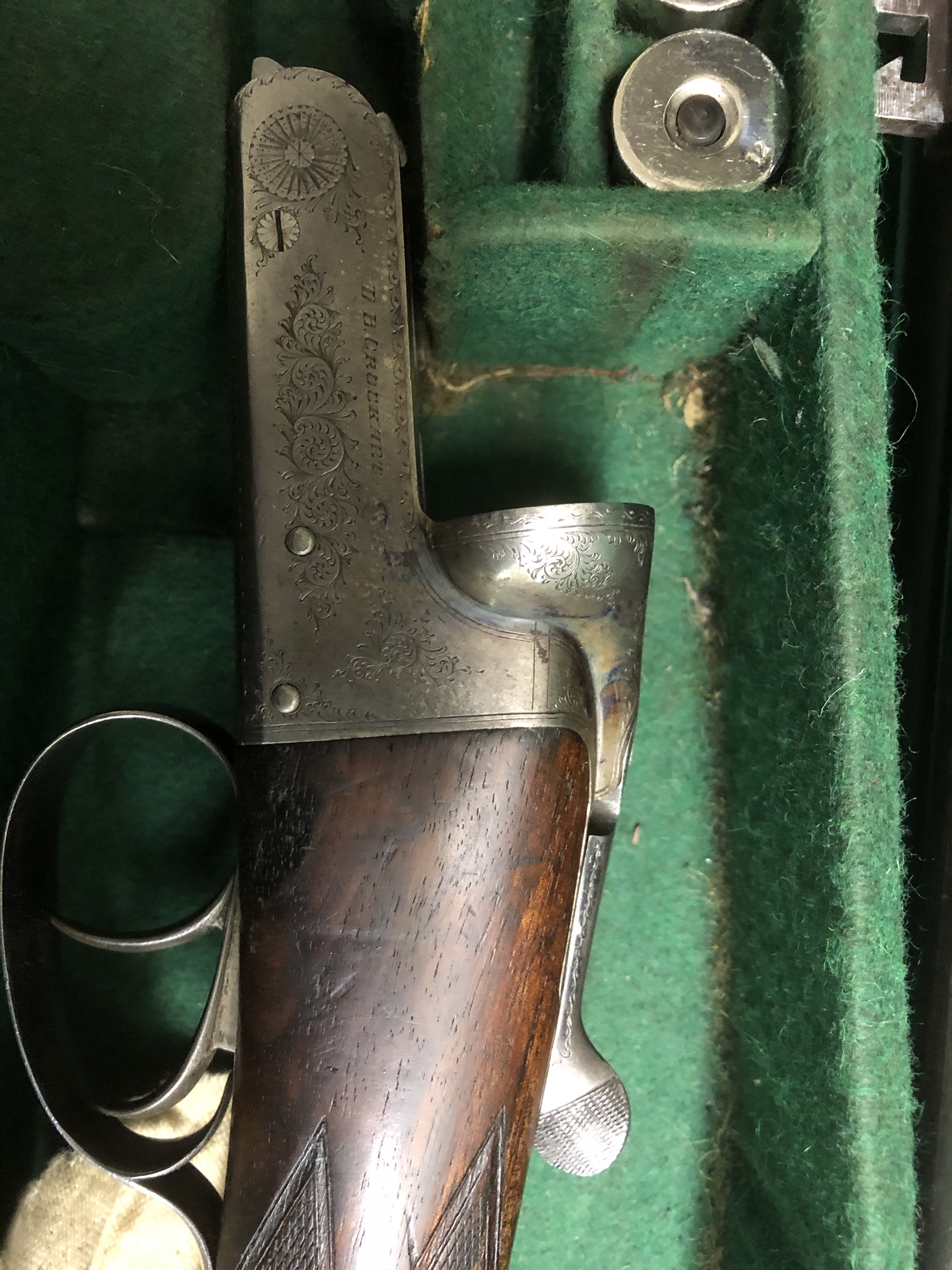
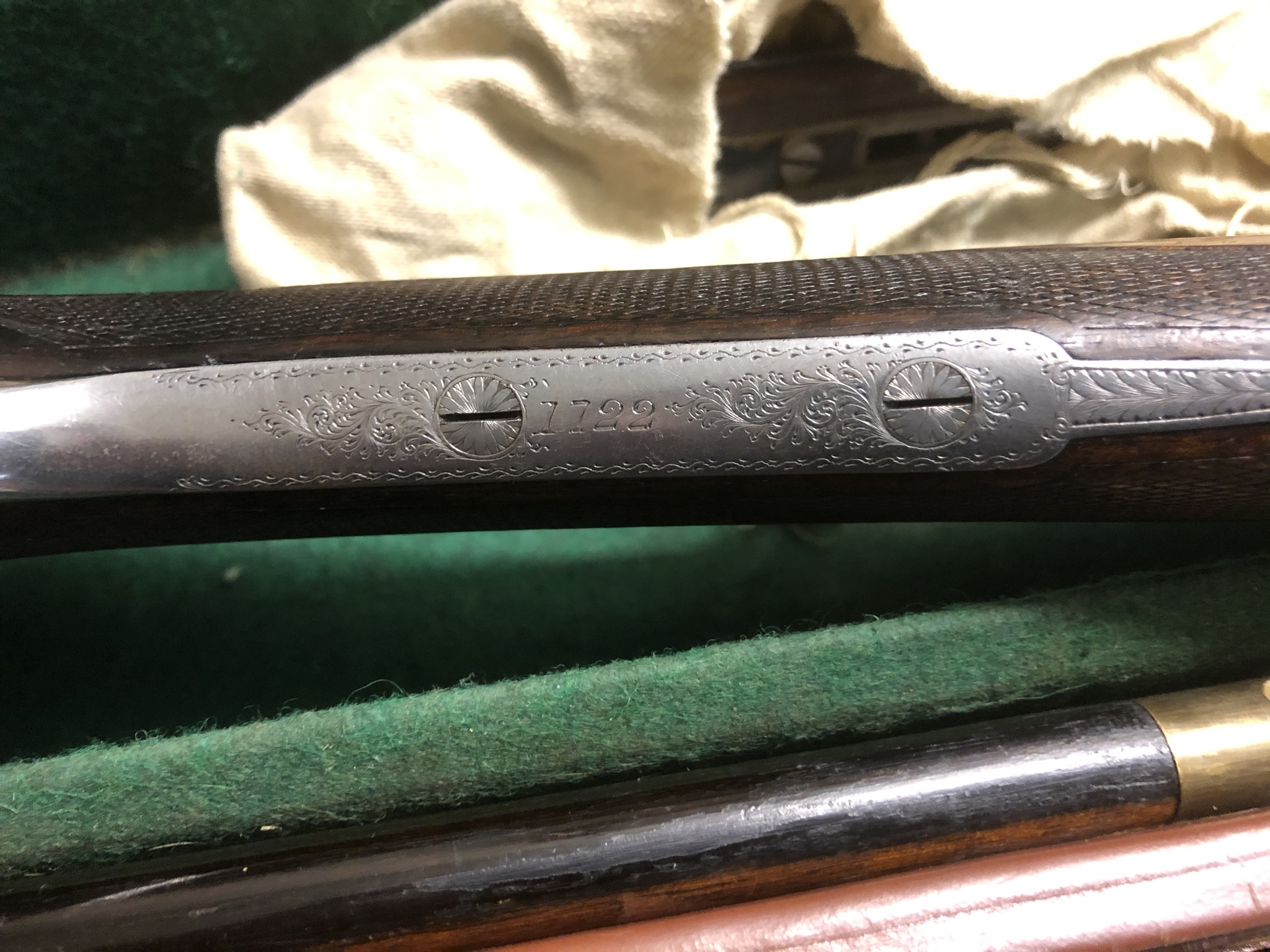
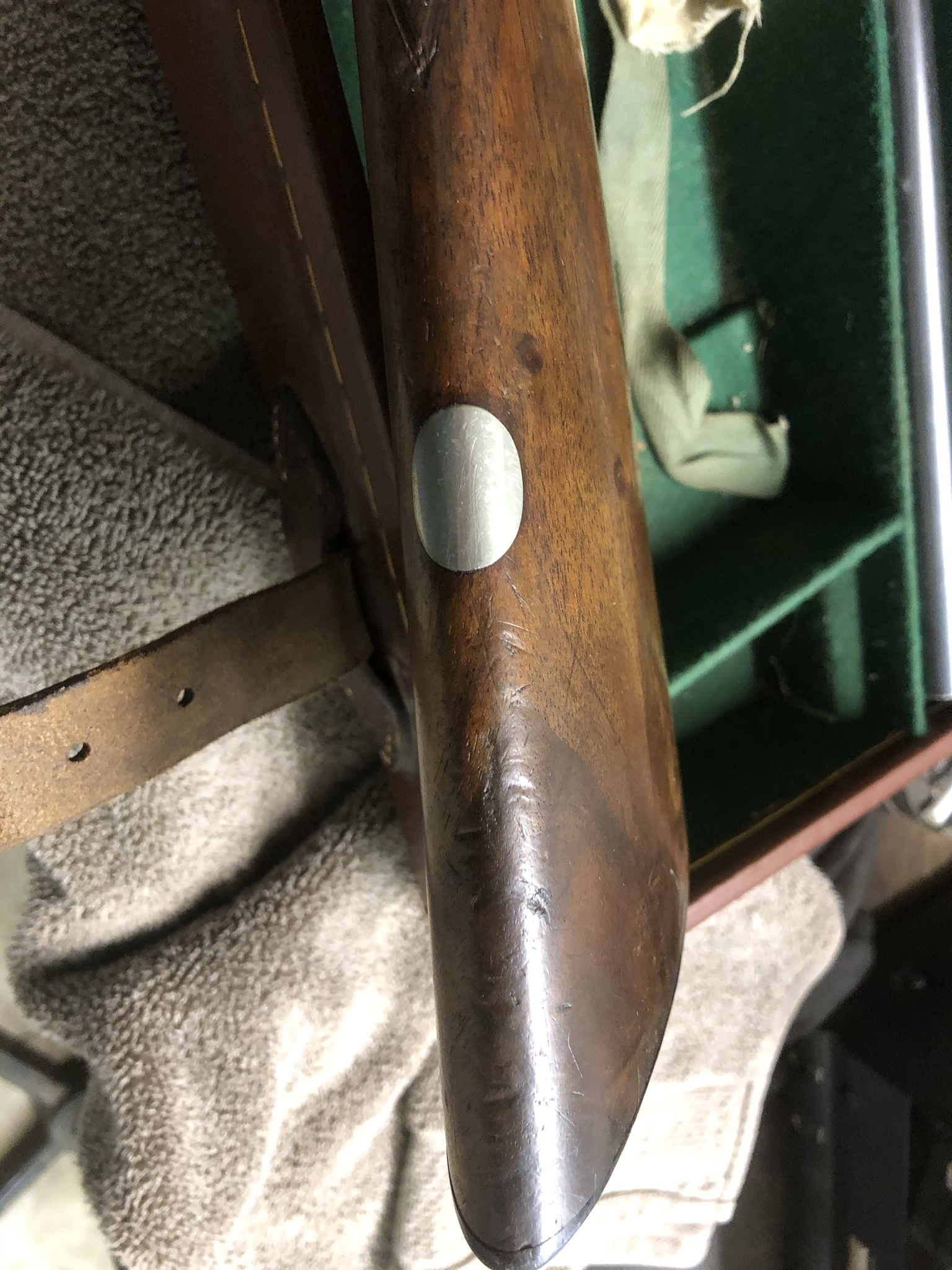
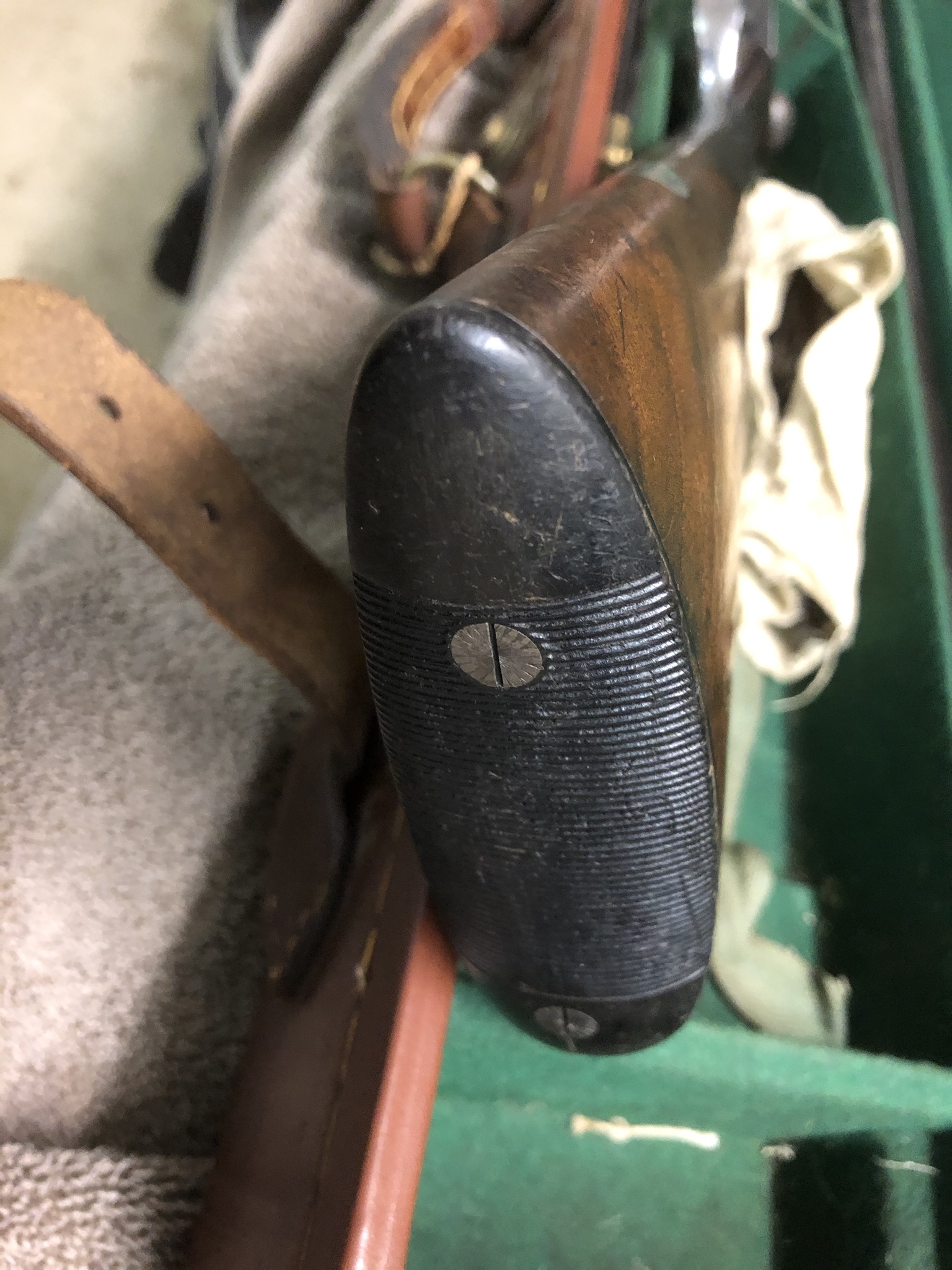
A friend stopped by looking for some info on an heirloom SxS. I wasn’t a lot of help and should have taken more pictures. It has 28” barrels and ejectors. Came in a beautiful case with brass and dowel cleaner, snap caps etc. Any info would be appreciated. Curious as to it’s date of manufacture. Thank you.
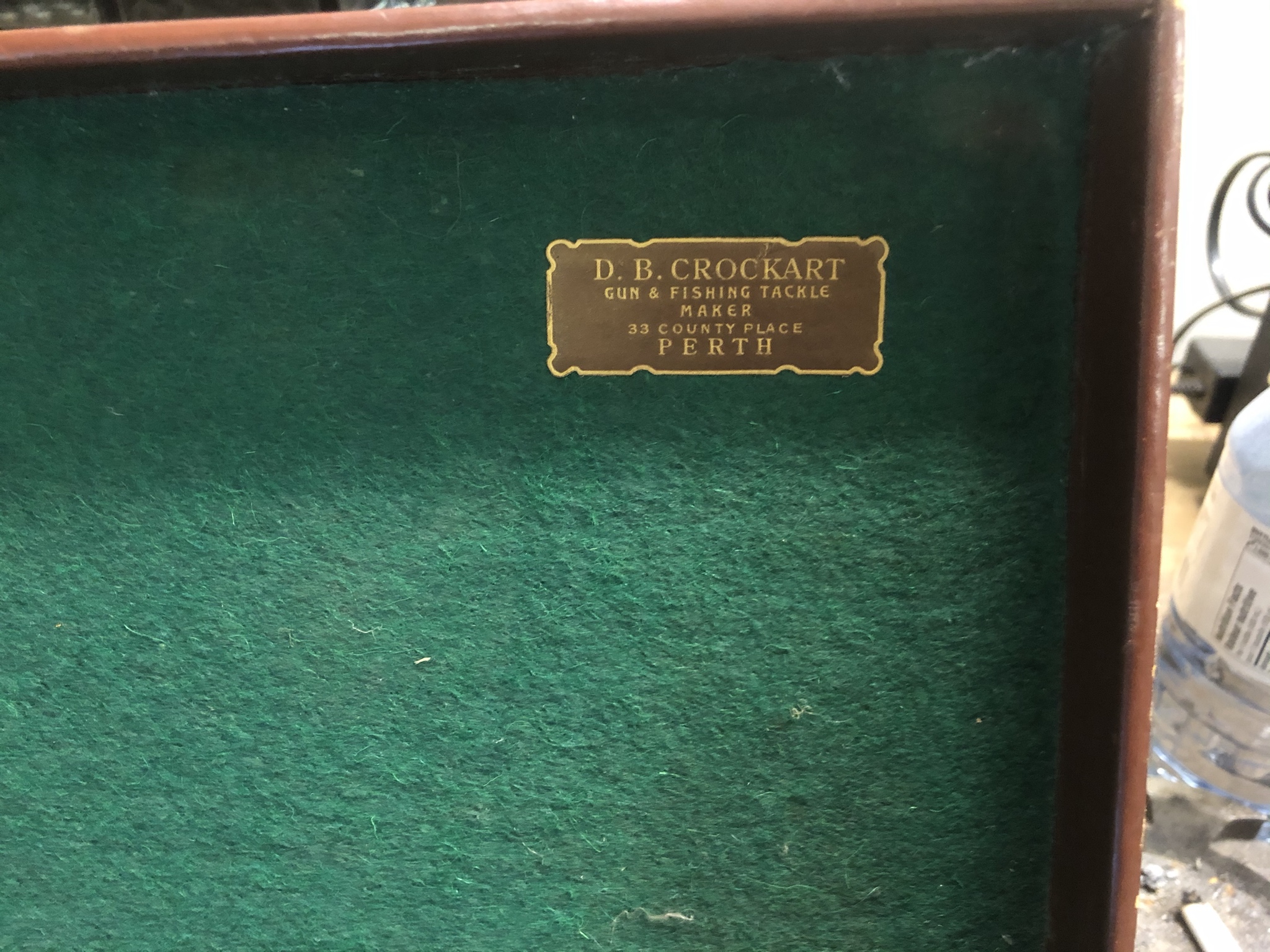
From the Internet Gun Club database, David Bissett Crockart was the second son of David C Crockart. In about 1890 David C bought the business of Edward Paton & Son at 44 George Street, Perth, where he traded as D Crockart. In about 1894 he sold the business to James MacNaughton, and in about 1907 MacNaughton sold the business to David C Crockart's son, David Bissett Crockart who moved the business to 33 York Place (the address on your friend's label), and in about 1913 to 33 County Place. At about this time D B Crockart bought guns from Holloway of Birmingham (who may well have made your friend's gun). In about 1976 the firm moved to 51 York Place. It is not known when the firm closed or was sold. The records of the firm (1941-1974) are held by P D Malloch of 259 Old High Street, Perth, Scotland PH1 5QN.
As to Holloway, George Percival Holloway (born 1871) and Sidney Leonard Holloway (born 1880) were the sons of George O'Connor Holloway (1846-1920) of Holloway & Co of 10, 12 & 14 Vesey Street. They worked for their father, and when he sold the business in 1902, they opened their own gunmaking business under the name of Holloway & Sons at the Imperial Works, Vesey Street. They changed the name to George P & Sydney Holloway. The firm probably started as both trade and retail gunmakers, they supplied most of the Scottish gunmakers. In 1914 the name of the firm changed to George & S Holloway, and the firm's principal address at this time was Loveday Street Works. After the First World War, the firm were trade suppliers, principally of barrelled actions and component parts. In 1923 the name changed to G & S Holloway, it became G & S Holloway Ltd in about 1943.
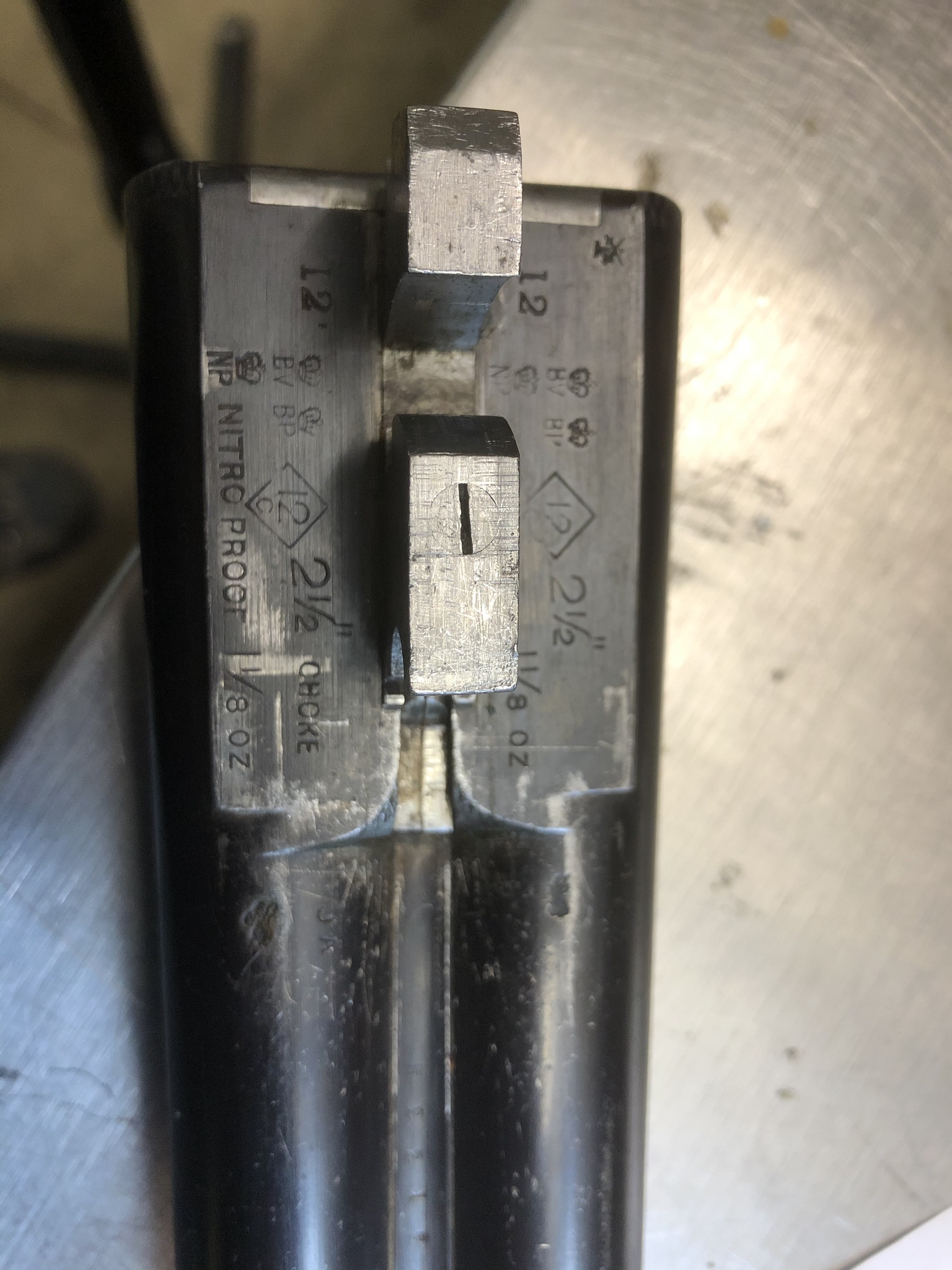
It looks like the gun was originally proofed for black powder, then re-proofed for nitro (2 1/2", 1 1/8oz). Someone more knowledgeable about changes in British proof mark annotations might be able to narrow down the dates for you, but my area of interest is pre-1870...
I hope this helps!
Pinfire