Moderators - I know there is a DIY forum but please leave this here as it may be applicable for hunting properties that had the same problem I had to deal with.
When my late father and I bought some land in northwestern Ontario for deer hunting, one of the first challenges we ran into was that the property was predominantly bed rock with spruce, balsam fir and Jack pine growing on it. There is pretty much no soil – the trees are basically growing in the moss and lichen covering the bedrock. So my wife says “And how are you going to put an outhouse on it?”. It took some research and thinking and this is what I ended up doing.
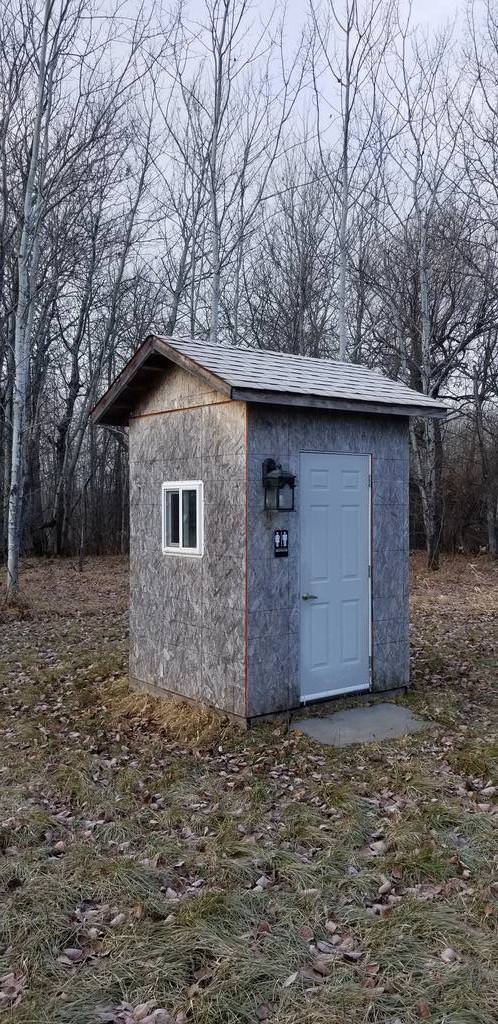
There is no hydro on or near the property so it was going to be off the grid for anything I built. I didn’t want to purchase a composting toilet as I didn’t want to have it stolen. So last summer I drew up some plans and started prefabricating a structure that I built and hauled to the property where my wife and cousin helped me put it together. Basically it’s 4 feet square and built on 4x4 skids to get it off the ground (and so I can skid it somewhere else should I decide to). The beauty is that all of it except for the framing studs was material that I was given or salvaged. Walls are stained 5/8 inch aspenite, floor is ¾ inch plywood, and metal roofing. Window is from an old camper trailer.

On the floor near the back wall I drilled three 2 ½ inch holes and covered with screen to prevent flies and rodents from getting into the “composting chamber”, while allowing fresh air to enter into it. Being up on skids allows air to enter from the bottom of the building.

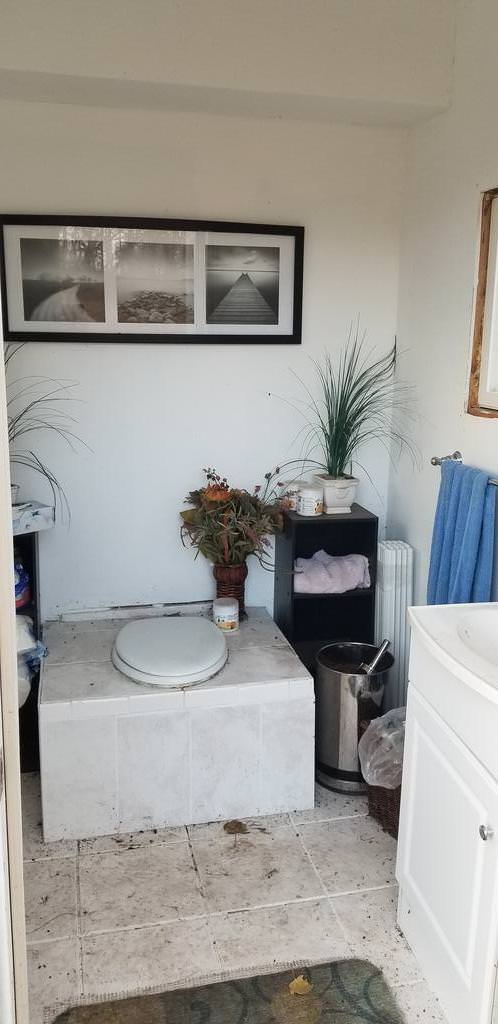
I then framed a box with 2x2’s and covered with plywood, leaving the bottom of the box open. I applied silicone caulking to the 2x2's before screwing on the plywood in order to make it as airtight as possible. I cut out the hole for the toilet seat and then screwed the seat into place. The bottom of the seat was silicone caulked to the box and the lid had a thick foam weather strip placed on the bottom, again to produce as airtight a seal as possible. I have used a rock on the lid all winter but the lid seems to have set now so that it stays tightly closed on its own. A Rubbermaid tote was placed in the box as the “catchment” container (everything I read stressed that don’t cheap out on the tote – make sure it’s thick walled and sturdy – you don’t want it cracking or leaking). A “splash shield” was fabricated by cutting a
crazy carpet and stapling it on the inside front of the box and placing the bottom of it into the tote, thereby funneling all liquids into the tote.

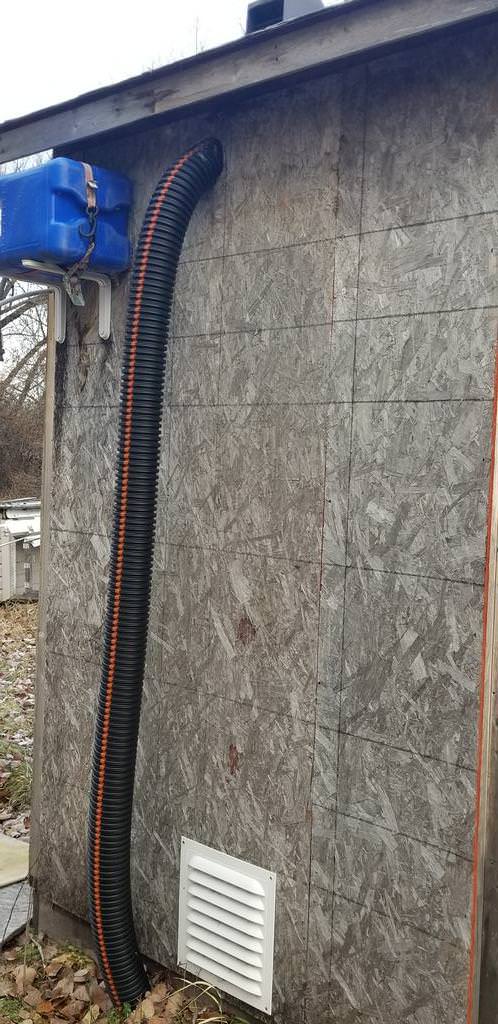
The basic premise of how this works is using air movement to desiccate everything in the tote and break it down. The chamber is now moved against the back wall making sure that the tote doesn’t cover the 3 screened holes as they are the air intake for the chamber. I cut a short piece of 4 inch ABS pipe which I cemented to a 90 degree fixture, cut a corresponding hole in the top of the box, coated the ABS with silicone caulking and jammed it in the hole. I then attached a 12 volt 4 inch marine exhaust fan to the 90 degree fixture and ran another piece of pipe from the fan out through the wall of the outhouse. I covered the exhaust end with nylon screen held in place with a gear clamp and slid another connector over this to prevent bugs from entering the box.

In order to power the fan, I wired it to a 12v battery (I have a deep cycle battery but forgot it at home so for the time being I am using an old ATV battery). To keep it charged I purchased a solar panel and fabricated a frame to keep it angled for best sun exposure and attached it to the back wall of the outhouse which faces south. Interesting enough the panel will run the fan when directly wired to it, but I put the battery in to provide some power in low light days and at night. The fan uses 3 amps and the panel produces 7 amps so I should get a decent run time when I hook up the big battery.


To use the outhouse, when you are finished you throw a scoop of cedar mulch in the tote covering your deposit. I have read to not use dried shavings from kiln dried lumber (such as cedar shavings) as they are too dry and wont break down. I can tell you that when the fan is running it really pulls the air between your thighs . By sucking the air in through the bottom of the box and out through the top it creates a draft which causes things to dry out and break down. To speed things up you need to stir the contents every now and then.

Couple of lessons learned – the chamber box should have been a couple of inches wider as the tote is a really tight fit – to the point where I may not be able to lift the chamber off the tote. A slightly bigger building would have given a bit more room to work with but what I built works ok. When the fan is running wide open it really is moving more air than needed – I have ordered a 12V dimmer switch and will install it so I can reduce the speed of the fan and hopefully prolong battery life during low light periods. I also looked at a solar chamber to heat it but didnt do it - there are lots of plans online for solar heaters and maybe one day I will build one and pipe it into the bottom of the box to speed up the drying process.
There are a few more things to finish like interior walls and I will probably throw some linoleum or peel and stick tiles on the floor for easier maintenance. It was an interesting project and the best part was I only had to buy the fan, solar panel, tote and 2x2’s. A lot cheaper than buying a composting toilet. So far it’s working very well and now my wife has no excuse to not go to the property!
When my late father and I bought some land in northwestern Ontario for deer hunting, one of the first challenges we ran into was that the property was predominantly bed rock with spruce, balsam fir and Jack pine growing on it. There is pretty much no soil – the trees are basically growing in the moss and lichen covering the bedrock. So my wife says “And how are you going to put an outhouse on it?”. It took some research and thinking and this is what I ended up doing.
There is no hydro on or near the property so it was going to be off the grid for anything I built. I didn’t want to purchase a composting toilet as I didn’t want to have it stolen. So last summer I drew up some plans and started prefabricating a structure that I built and hauled to the property where my wife and cousin helped me put it together. Basically it’s 4 feet square and built on 4x4 skids to get it off the ground (and so I can skid it somewhere else should I decide to). The beauty is that all of it except for the framing studs was material that I was given or salvaged. Walls are stained 5/8 inch aspenite, floor is ¾ inch plywood, and metal roofing. Window is from an old camper trailer.
On the floor near the back wall I drilled three 2 ½ inch holes and covered with screen to prevent flies and rodents from getting into the “composting chamber”, while allowing fresh air to enter into it. Being up on skids allows air to enter from the bottom of the building.
I then framed a box with 2x2’s and covered with plywood, leaving the bottom of the box open. I applied silicone caulking to the 2x2's before screwing on the plywood in order to make it as airtight as possible. I cut out the hole for the toilet seat and then screwed the seat into place. The bottom of the seat was silicone caulked to the box and the lid had a thick foam weather strip placed on the bottom, again to produce as airtight a seal as possible. I have used a rock on the lid all winter but the lid seems to have set now so that it stays tightly closed on its own. A Rubbermaid tote was placed in the box as the “catchment” container (everything I read stressed that don’t cheap out on the tote – make sure it’s thick walled and sturdy – you don’t want it cracking or leaking). A “splash shield” was fabricated by cutting a
crazy carpet and stapling it on the inside front of the box and placing the bottom of it into the tote, thereby funneling all liquids into the tote.
The basic premise of how this works is using air movement to desiccate everything in the tote and break it down. The chamber is now moved against the back wall making sure that the tote doesn’t cover the 3 screened holes as they are the air intake for the chamber. I cut a short piece of 4 inch ABS pipe which I cemented to a 90 degree fixture, cut a corresponding hole in the top of the box, coated the ABS with silicone caulking and jammed it in the hole. I then attached a 12 volt 4 inch marine exhaust fan to the 90 degree fixture and ran another piece of pipe from the fan out through the wall of the outhouse. I covered the exhaust end with nylon screen held in place with a gear clamp and slid another connector over this to prevent bugs from entering the box.
In order to power the fan, I wired it to a 12v battery (I have a deep cycle battery but forgot it at home so for the time being I am using an old ATV battery). To keep it charged I purchased a solar panel and fabricated a frame to keep it angled for best sun exposure and attached it to the back wall of the outhouse which faces south. Interesting enough the panel will run the fan when directly wired to it, but I put the battery in to provide some power in low light days and at night. The fan uses 3 amps and the panel produces 7 amps so I should get a decent run time when I hook up the big battery.
To use the outhouse, when you are finished you throw a scoop of cedar mulch in the tote covering your deposit. I have read to not use dried shavings from kiln dried lumber (such as cedar shavings) as they are too dry and wont break down. I can tell you that when the fan is running it really pulls the air between your thighs
. By sucking the air in through the bottom of the box and out through the top it creates a draft which causes things to dry out and break down. To speed things up you need to stir the contents every now and then.
Couple of lessons learned – the chamber box should have been a couple of inches wider as the tote is a really tight fit – to the point where I may not be able to lift the chamber off the tote. A slightly bigger building would have given a bit more room to work with but what I built works ok. When the fan is running wide open it really is moving more air than needed – I have ordered a 12V dimmer switch and will install it so I can reduce the speed of the fan and hopefully prolong battery life during low light periods. I also looked at a solar chamber to heat it but didnt do it - there are lots of plans online for solar heaters and maybe one day I will build one and pipe it into the bottom of the box to speed up the drying process.
There are a few more things to finish like interior walls and I will probably throw some linoleum or peel and stick tiles on the floor for easier maintenance. It was an interesting project and the best part was I only had to buy the fan, solar panel, tote and 2x2’s. A lot cheaper than buying a composting toilet. So far it’s working very well and now my wife has no excuse to not go to the property!