Difference Between a Case Guage and a Chamber Checker?

the case gauge lets you know whether your cases fit in a standard chamber
the chamber checker block contains many case gauges in one item

I use case gauges to figure out which cases need trimming
 
If you are new to reloading, why are you getting this kind of specialized equipment? I don't have one and I have been reloading for decades. Some particular problem you are worried about, or was this advice from someone?
 
Al-Sway doesn't need them so neither should you, lol.

Kinda what I was thinking, too. If you don't know the answer to a question you have, you ask. If you get different answers, then you do more research.

If someone asks me a question I don't know the answer to, I'll tell them that.
 
I have a block that is cut to chamber size, fired brass will not fit all the way down, resized will. does not measure for brass length. the case measure will swallow fired, but show which brass needs trimming to length. I prefer calipers. look at getting a comparator as well. if you don't measure, you don't know. for some ignorance is bliss.
 
I have a block that is cut to chamber size, fired brass will not fit all the way down, resized will. does not measure for brass length. the case measure will swallow fired, but show which brass needs trimming to length. I prefer calipers. look at getting a comparator as well. if you don't measure, you don't know. for some ignorance is bliss.

I agree.

I only reload rimless bottle-neck rifle cases, so any advice I have comes from that experience.

OP, what are you loading?
 
If you are "just starting" at reloading, remember to walk before running. Get full length sizing die, and set up as per maker instructions. Lube and size cases. Maybe buy the Lee Case Length Gauge for your cartridge and the trimmer kit - trims all cases to same length - no measuring involved. But, at minimum, use a calliper and measure the overall length of your sized cases - having them too long is a "thing", so pretty much need a way to trim back to length anyway. Many case shapes + sizing die + chambers do result in the case getting a bit longer each time - some don't, but most do - want to check that almost every time you have re-sized. If you want to take a first "running" step - get a tool for measuring case runout - the RCBS one also measures the neck thickness. If you have cases with fairly even thickness of necks all the way around, full length sized, all the same length, and the loaded rounds assembled straight (say .002" runout or less), you will be well on your way to making very good ammunition. Most other "gizmos" don't help nearly as much as these first steps - in a factory centerfire rifle.
 
The chamber checker or case gauge is the same thing, Not to be confused with headspace gauges. The reason for chamber checkers or a case gauge is to run your loaded rounds through the gauge to make sure they will fit in your chamber before you get to the range. It is very frustrating to find an oversize cartridge halfway through a stage in a speed match. You could put your cartridges in your barrel or cylinder and archive the same thing. The gauge is just a tool for the bench because we need a lot of stuff there to make us feel good LOL.
I personaly run every loaded round through the chamber checker ,that I take to a cowboy action match. I always get a few that do not quite pass the test. They get put in the practice box. Most of the ones that do not pass have a cracked neck and did not get a good crimp . Some times a bullet will shave a little lead and the checker will pick it up. They need to be keeped clean.even a bit of bullet lube can keep a cartridge from seating in the gauge. I keep a nylon bore brush handy to give it clean now and again.
 
I'm new to reloading and I'm looking at buying a multiple caliber chamber checker block and wasn't sure what the difference between that and a case gauge is.

If you are using range pickup brass fired in a multitude of different chambers you can have problems with brass spring back after sizing. Meaning these gauges are used to check case diameter after sizing and also loaded cases checking for bulging crimps. For pistol cases you may have read about plop tests where you want the cartridge to drop in the gauge and fall out without binding.

The problem with these type gauges is they can vary in diameter and some are only good for checking case length. And why you hear people say your chamber is your best gauge meaning length and diameter.

I buy bulk once fired Lake City 7.62 and 5,56 brass and once fired military 9mm brass. I'm also loading for my pistols and rifles and my two sons rifles and pistols and want to make sure my reloads will work in their firearms without any problems.

Below are examples of case gauges that vary in diameter. The Dillon .308 case gauge below has a "FIRED" Lake City 7.62 case in the gauge and its diameter is preventing all the way into the gauge.

UPCvxyL.jpg


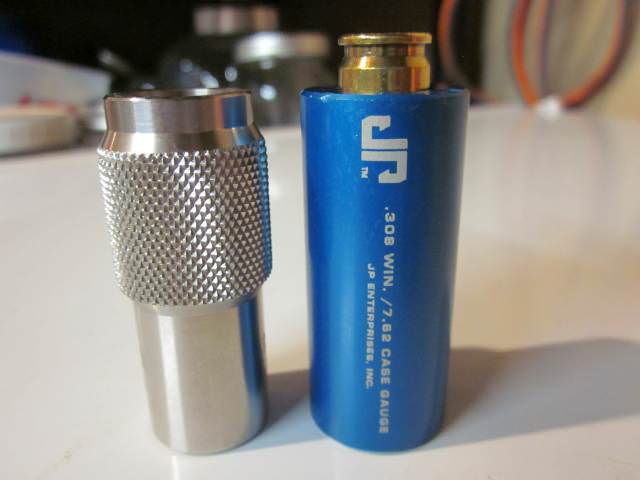
Below is the same "FIRED" case in a JP Enterprise gauge and this gauge is closer to SAAMI minimum diameter. And if the resized and loaded cartridge drops all the way into the gauge it will chamber in any rifle. I have other gauges to check case length and case headspace length and the gauges pictured are just what I use to check case diameter. Many of the 7.62 and some of the 5.56 cases were fired in machine guns with larger diameter chambers and I'm checking for brass spring back after sizing.

zOVqgmU.jpg


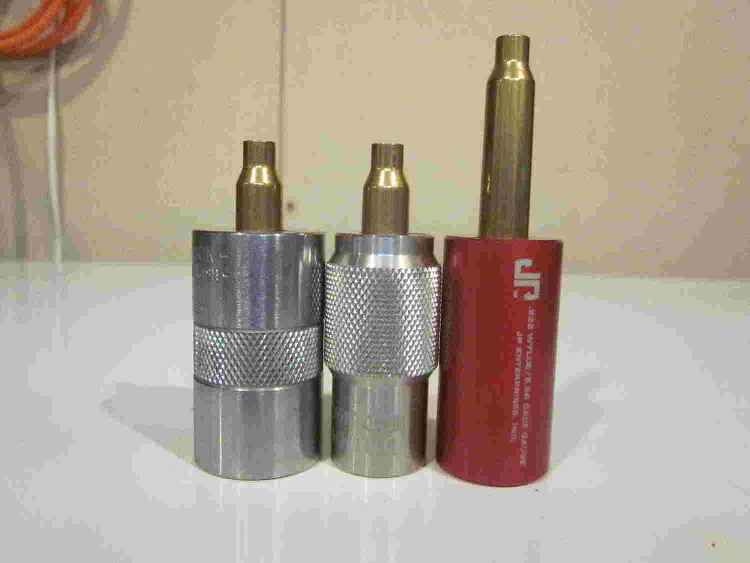
Another example with .223/5.56 case gauges, a Wilson, Dillon and JP Enterprise gauges showing the JP Enterprise gauge is smaller in diameter.

KSB3ZvP.jpg


Chambers and reloaded cases can vary in diameter and if your cases bind when chambering you need to find out why.

1. Range pickup brass can vary in diameter after sizing due to brass spring back.
2. Crimping can cause the case to bulge below the crimp and bind in the chamber. And trimming the cases to the same length and proper die setup will help prevent crimping bulge.
3. Many of these type gauges are used by competitive shooters who pickup cases that were not fired in their pistol.
4 Lee makes undersized pistol dies that size the case .002 to .003 smaller in diameter. The more the case is fired and reloaded the harder the brass becomes and they spring back more after sizing.

Bottom line, I'm 69 and have been reloading for over 48 years and for much of that time never used a case gauge. "BUT" with a case gauge closer to minimum case diameter you can check a case after resizing and again checking your loaded cases. But as long as you are reloading brass fired in your firearms and not over crimping your cases causing a bulge you most likely do not need these type gauges.

One of the main reasons I have these case gauges is because I'm loading for my sons firearms and Dad isn't going to be blamed for making bad ammo.
 
Last edited:
As others have stated; same/same.
I used these religiously when loading pistol ammo for IPSC matches.
The rapid output of a progressive press can allow minute sizing differences and a chamber checker finds these. Spots split cases too.

However they are not without their own issues.

Your gun was cut with one reamer, your dies another and the chamber checker with a third. All of these have +/- tolerances.
If you get a tight tolerance chamber and a loose tolerance checker the process is pointless.
The other way around it can be very beneficial, especially after the beep...
On custom work gunsmiths can cut a checker with the same cutter used on the barrel and with skill they can supply a perfectly matching checker, this is handy, so long as your commissioning this kind of work.
However lately I’ve been shooting CZ 75’s in 9mm and mine eat everything I put in it so the checkers have been collecting dust...
 
Get one gauge to check the brass dimensions and another gauge to check cartridge overall length with the projectile. The lyman single ammo gauge is a good starter must have and its fairly cheap.

Many OEMs have different names for the same purpose.
 
Back
Top Bottom