Hey guys,
Recently with the help of two members here I have been working on putting together a display of sorts to display alongside some of my second world war firearms. As a note to quickly get this out of the way - any Nazi, Communist or other symbol are here simply as they relate to history. In no way, shape or form am I pro Nazi, Communist etc... so please lets not open a political discussion. This is a display of historical items. Period.
I would also like to thank Joe n for the bayonets themselves, aswell as detailing where they were found etc... Joe, you are a true gentleman and your help is more then appreciated! Also want to say thanks to Steve1987 for the German Infantry Assault badge and all the help he is providing in historical details... more to come!
History
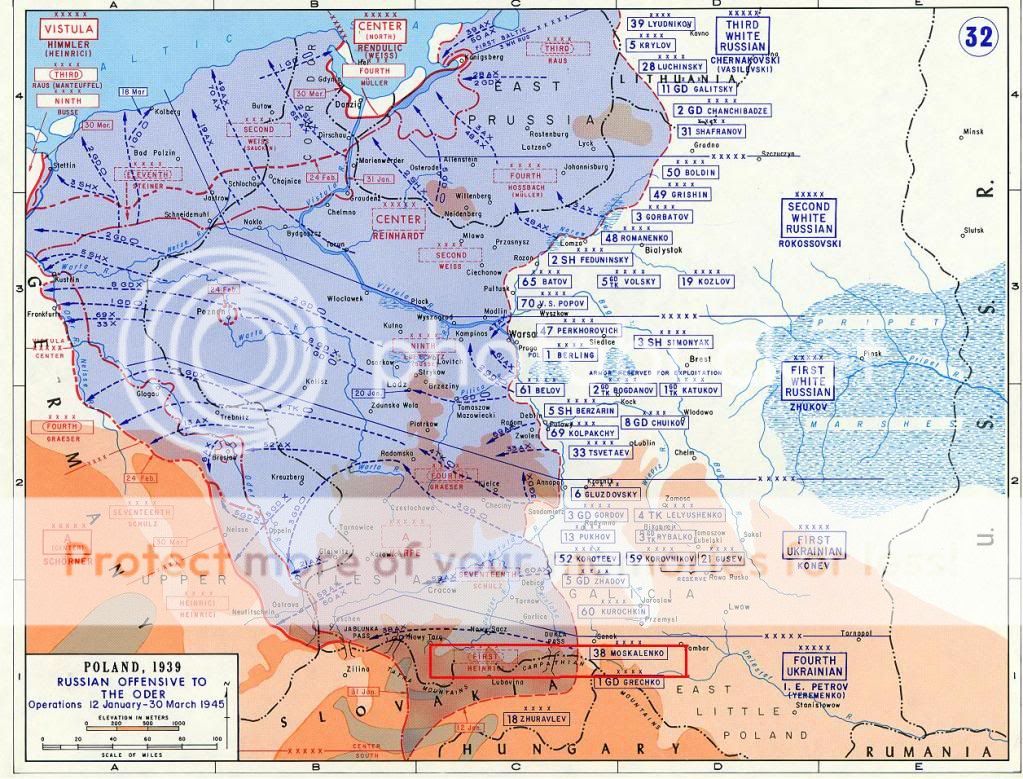
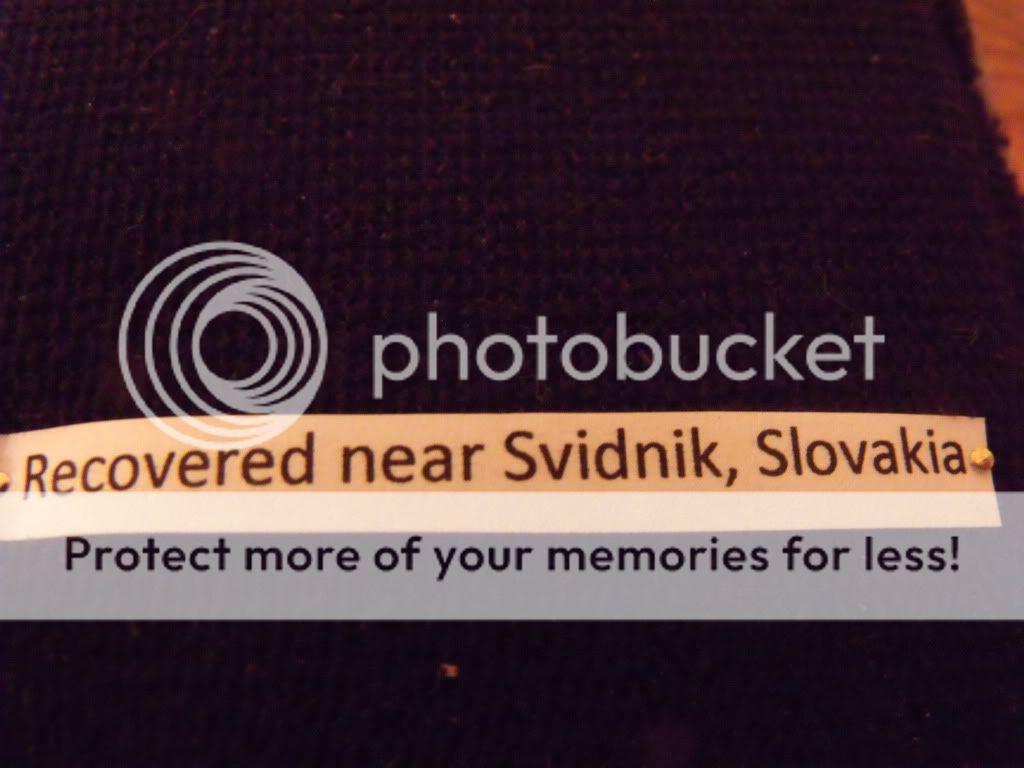
Anyway, I put this display together using two bayonets recovered near Svidnik, Slovakia, an area of VERY HEAVY fighting between German forces and the Soviets throughout the latter half of 1944. From iabsi.com
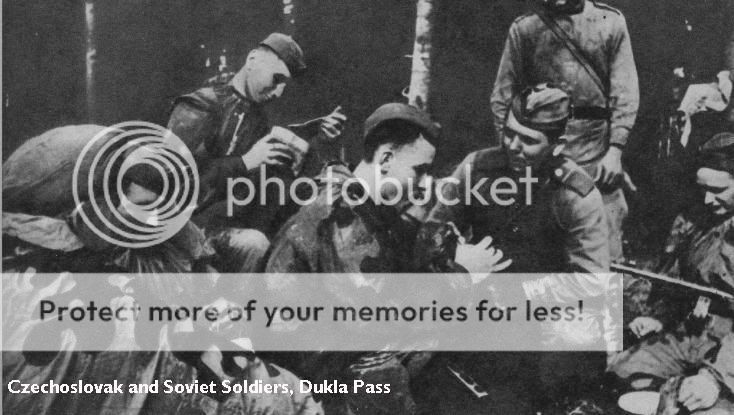
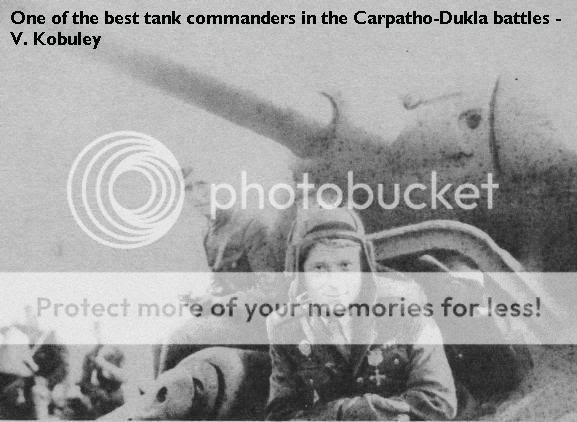
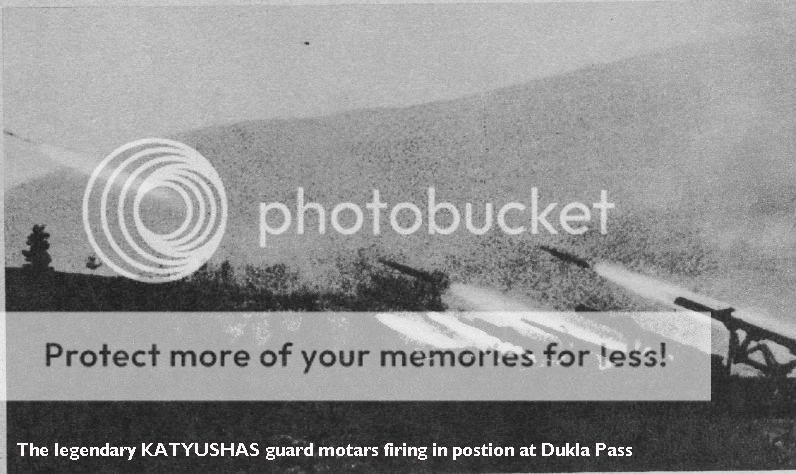
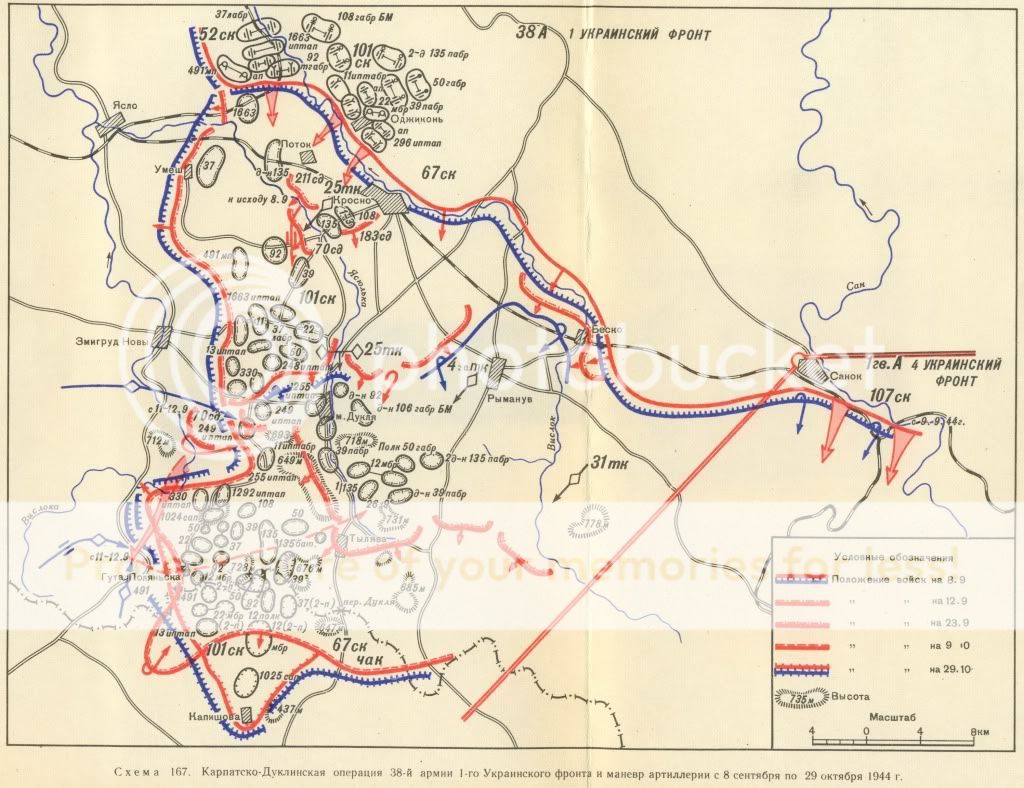
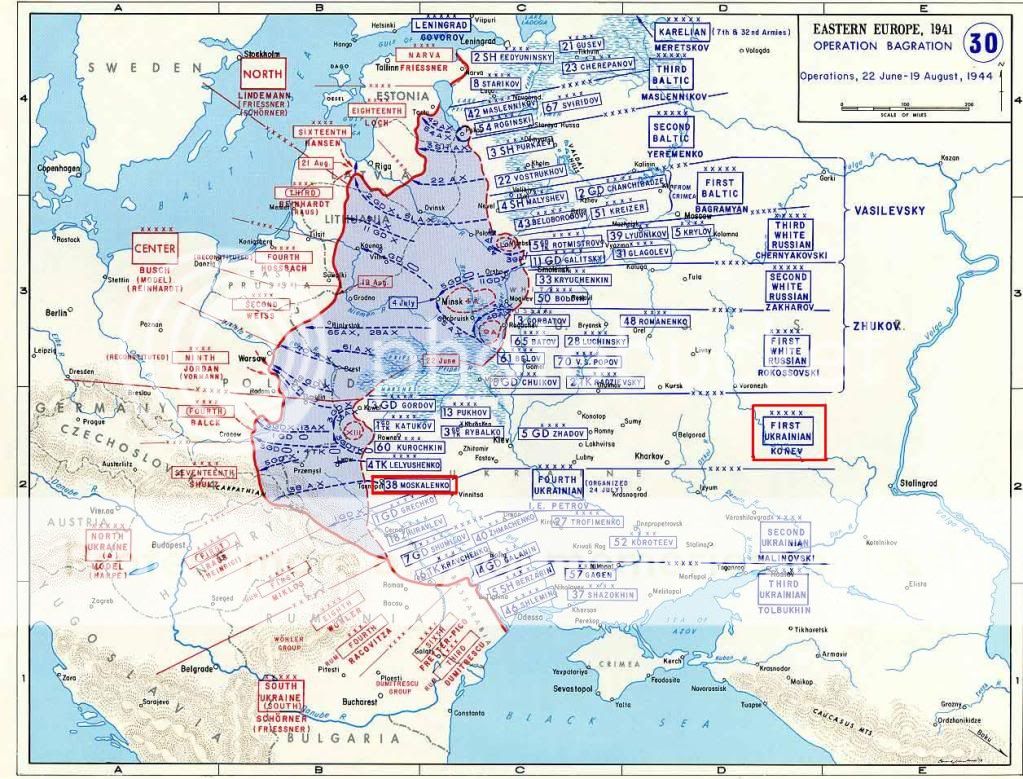
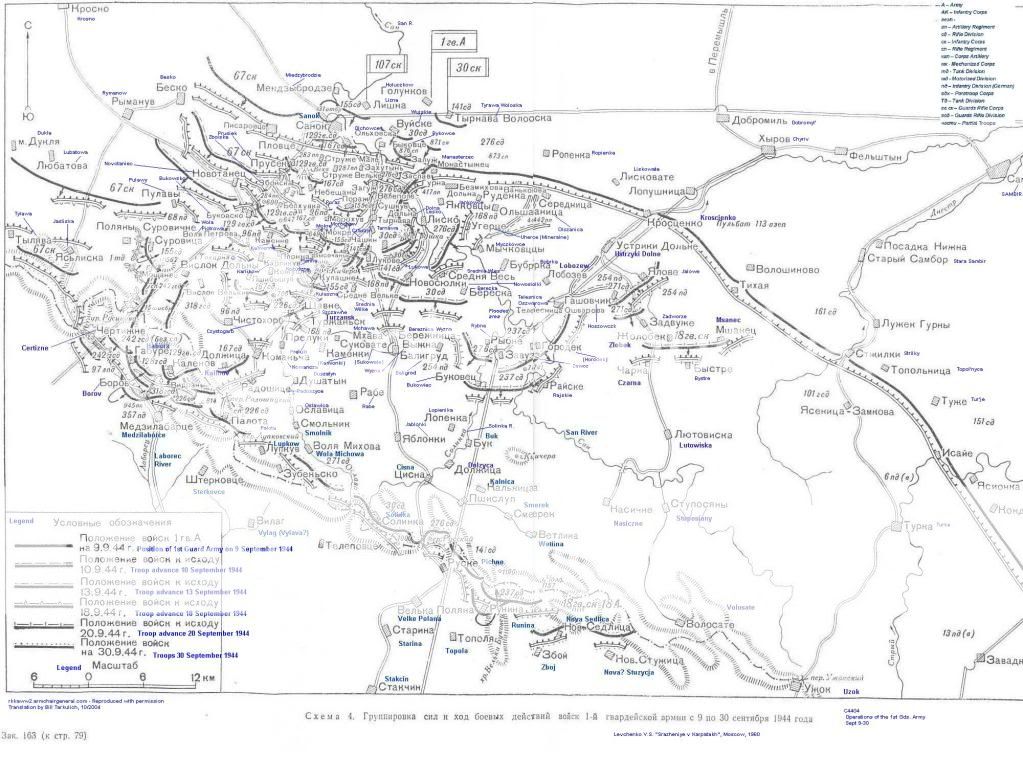
"In the Autumn of 1944, the 38th Soviet Army, combined with the Czechoslovak First Army Corps began its offensive into the German occupied nation of Slovakia. On September 8th, the armies began an assault southward from Poland intent on breaking through the Dukla mountain Pass (at the Polish border, near Svidnik, Slovakia) and meeting up with insurgents deep within Slovakia. This particularly long and bloody Carpathian Mountain operation was a component of the First Ukrainian Front (Soviet General Konev). The Germans positioned the 97th, 100th and 101st Jager, 254th Infantry and 82nd Division to defend the land in then-Slovakia. The battlefield was well-defended with artillery and mechanized vehicles. The area of battle stretched nearly 20 kilometers deep.
The original Soviet battle plan did not include entering Slovakia via Dukla Pass. The Soviet troops were originally proceeding east to west across a broad front, from Ukraine into Poland and Ukraine, through Hungary to Slovakia. Troops in Poland were expected to continue their westward assault towards Germany. The Dukla operation was quickly conceived in order to support the SNP partisan uprising in Slovakia. The Soviet and Czechoslovak armies expected to take the pass quickly. However, the help they expected in terms of rebel troops of the East Slovak Army Corps did not arise. The partisan uprising was quickly being suppressed by German troops and the Slovak Army was disbanded. Consequentially the battle lasted for 50 days. The pass was taken on October 6th, but vicious fighting persisted for another month. The German 254th retreated through Presov, Levoca and Poprad. More than 46,000 Soviet, Czechoslovak and German soldiers perished. Over 93,000 Soviet and Czechoslovak troops were wounded. A large military cemetery in Svidnik contains the graves of over 9,000 Soviet soldiers. As the Germans retreated, they burned what remained of Svidnik.
The major troops involved in the Dukla operations included: Soviet Soviet 38th Army (KS Moskalenko),Czechoslovakia First Army (Ludvik Svoboda) and the German First Panzer Army, ###XIII and ###XVIII Corps, Army Group East 24th Panzer Division & 246th Infantry Division (General Gotthard Heinrici).
Attacking Slovakia from the east (through Ukraine and Hungary) were the First Guard Army (General Colonel Andrei A Grechko), Third Mountain Division Corps of the First Guard Army (General Major A J Vedenin.)"
Display
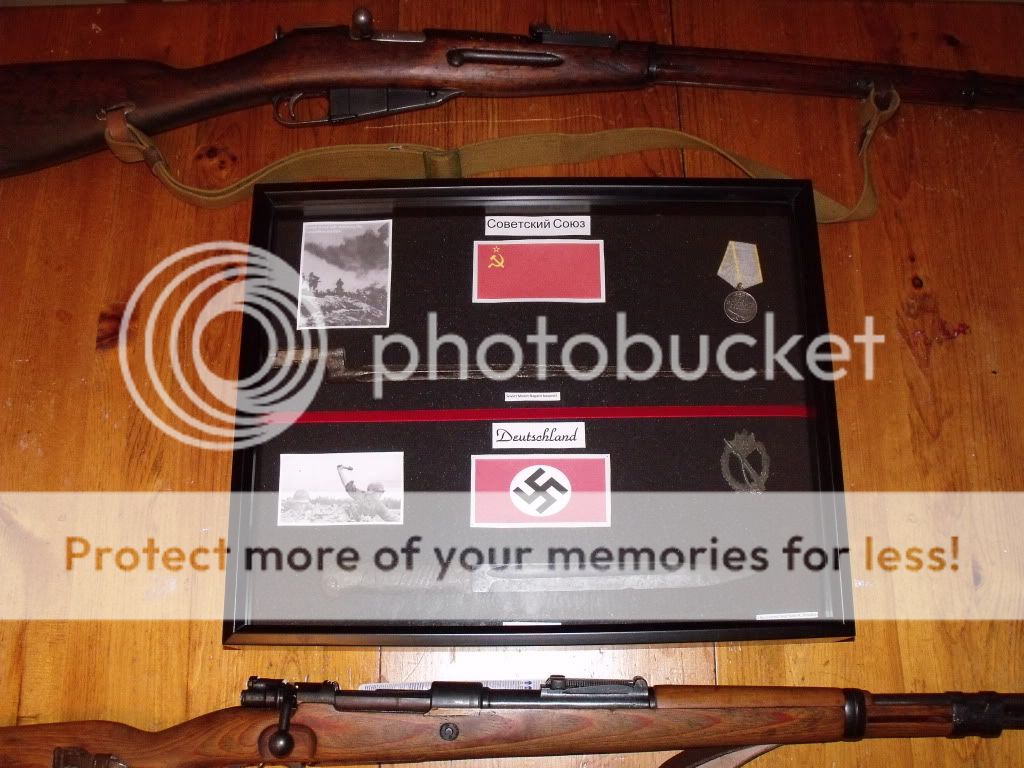
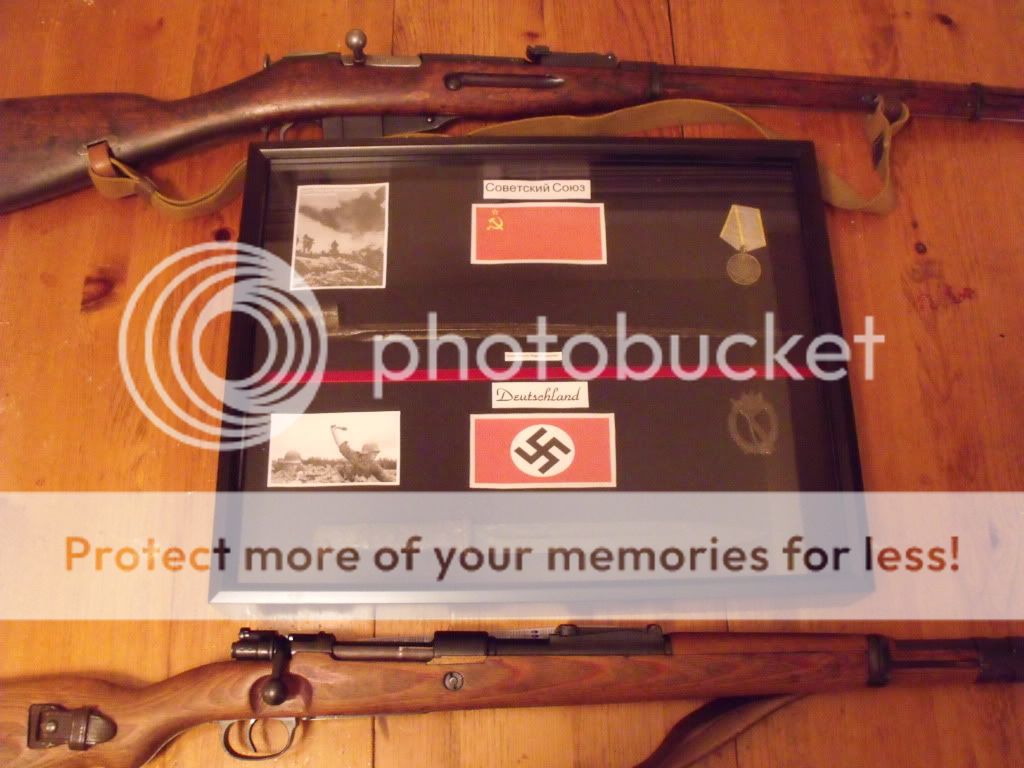
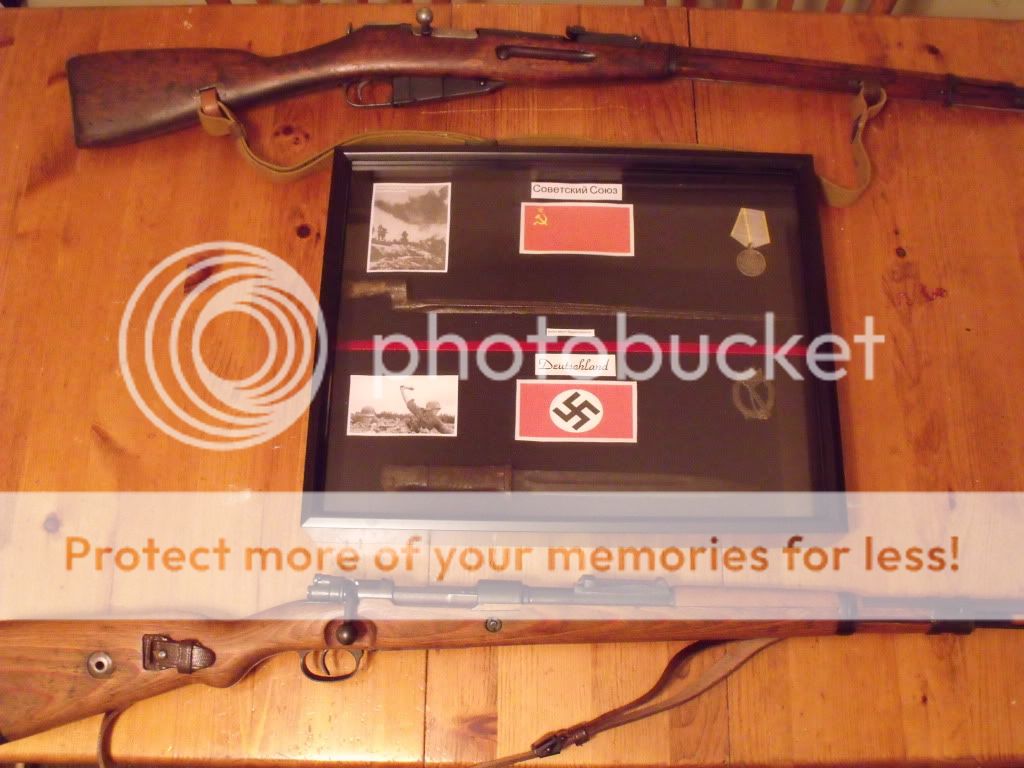
The shadowbox is displayed in the centre of two rifles. One being a 1943 Berlin made German K98k, and the other being a non refurb Soviet 1939 Tula made Mosin 91/30.
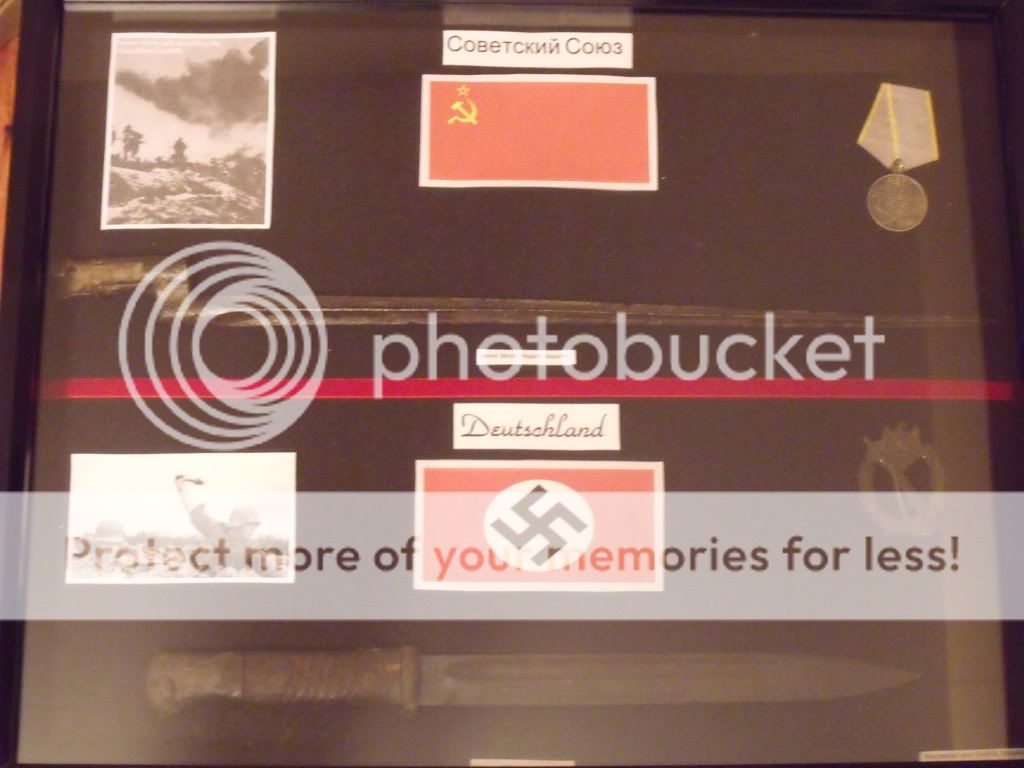
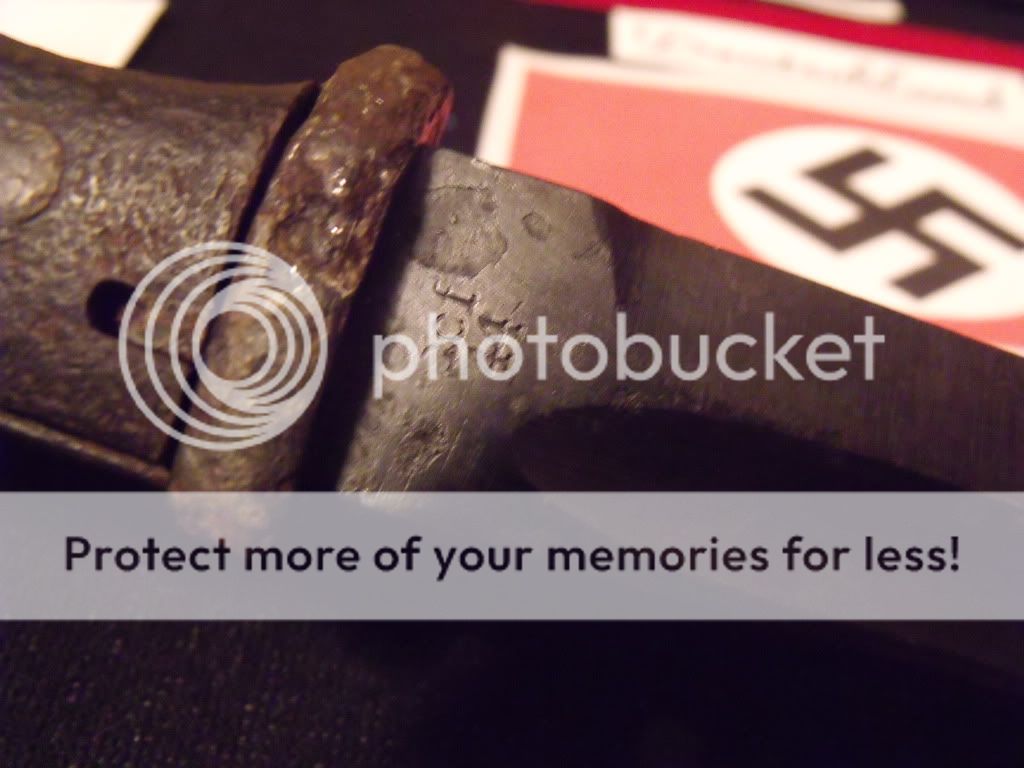
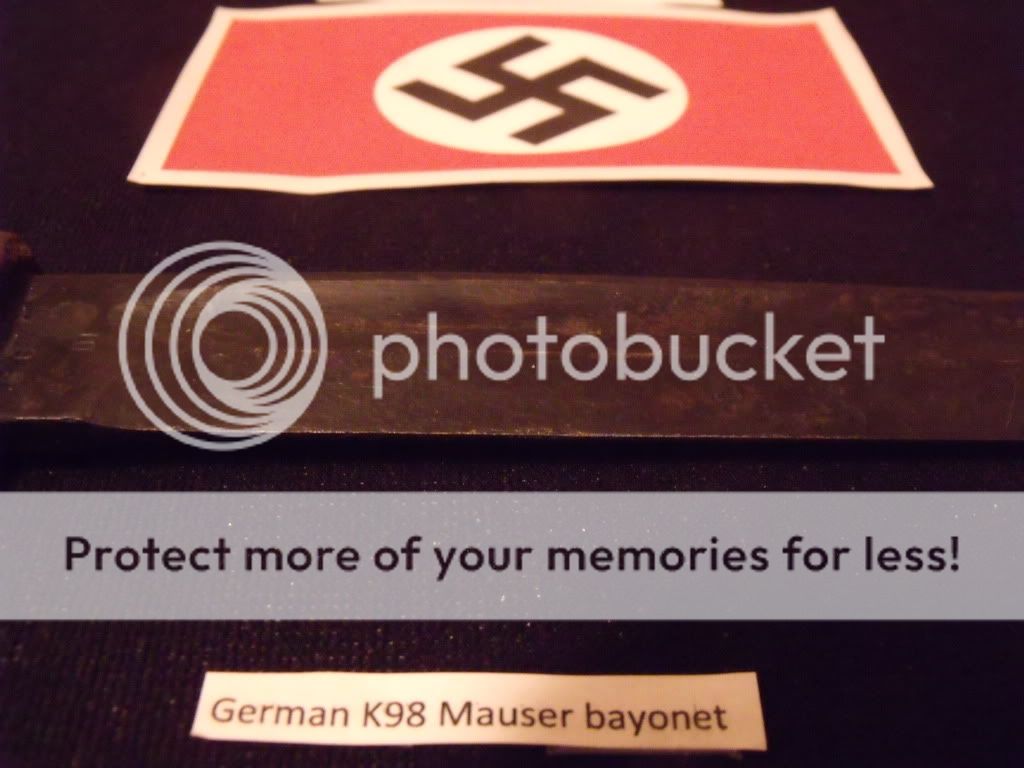
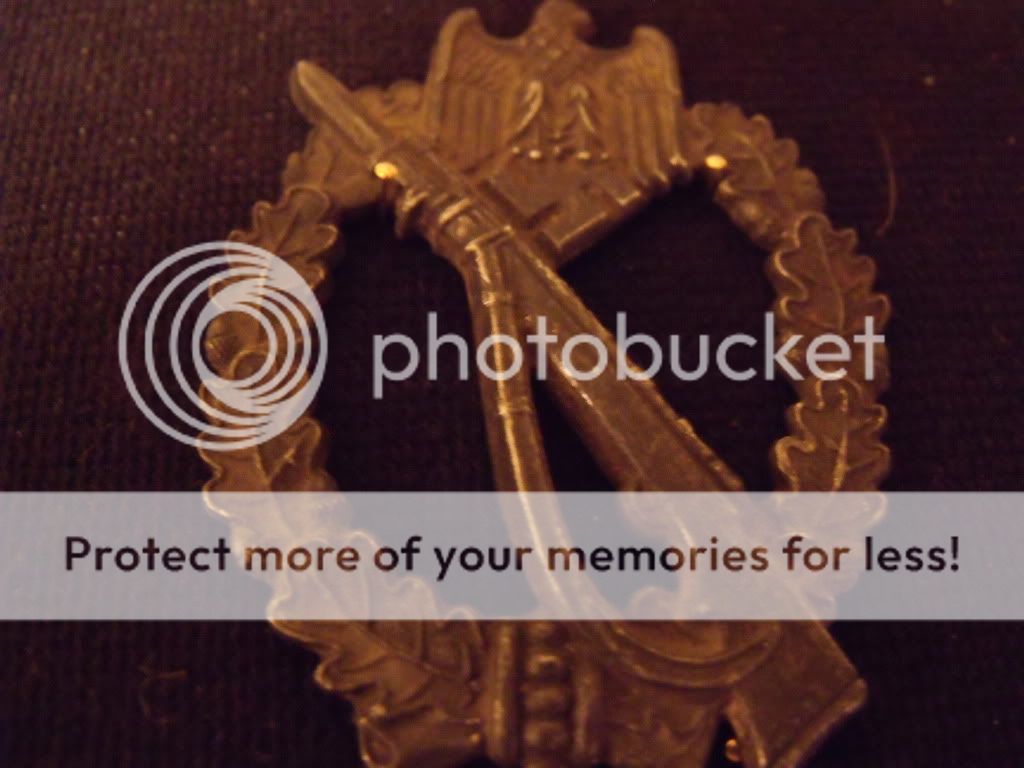
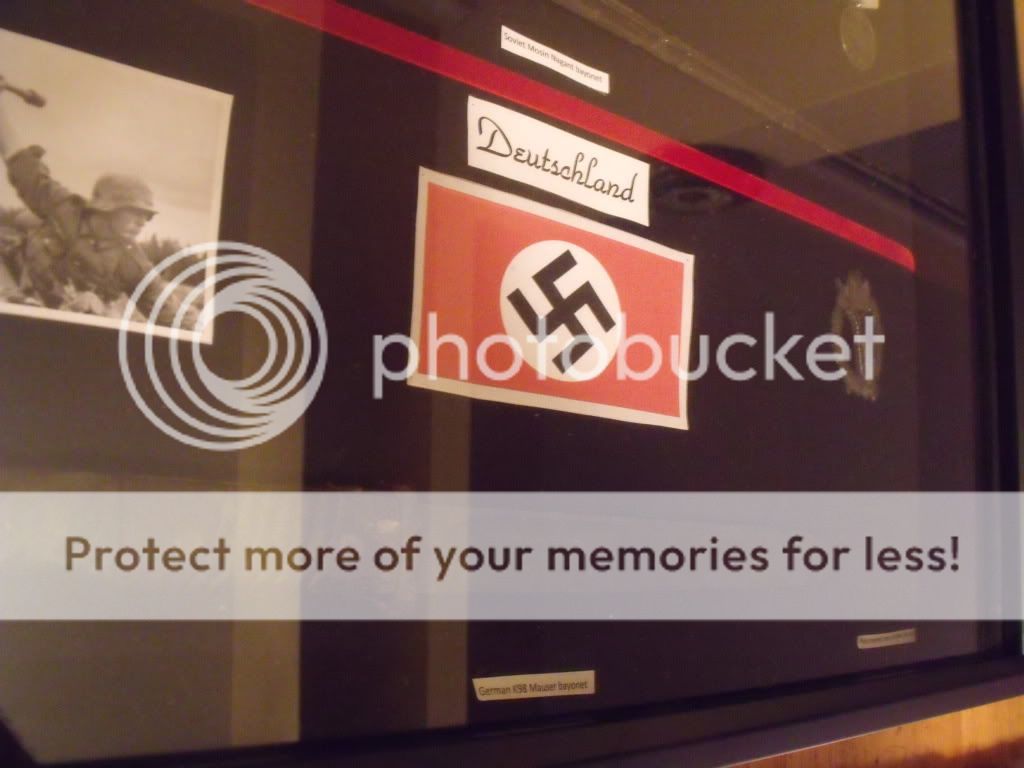
The German side includes one German K98 bayonet, marked cof 44, being Eickhorn 1944. The other side of the blade has the remnants of a ser number. Alongside the bayonet is a German WWII Infantry assault badge. The picture is also one of two Wermacht Soldiers on the Eastern front.
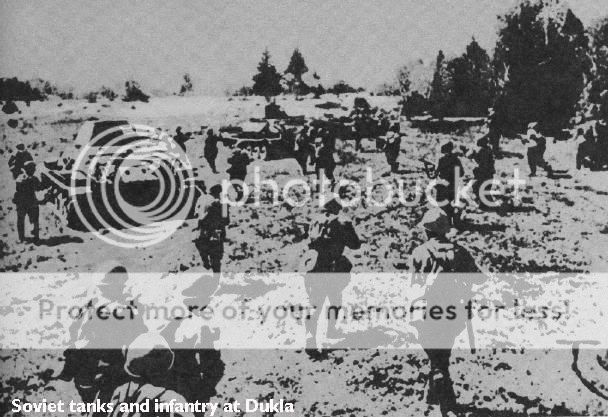
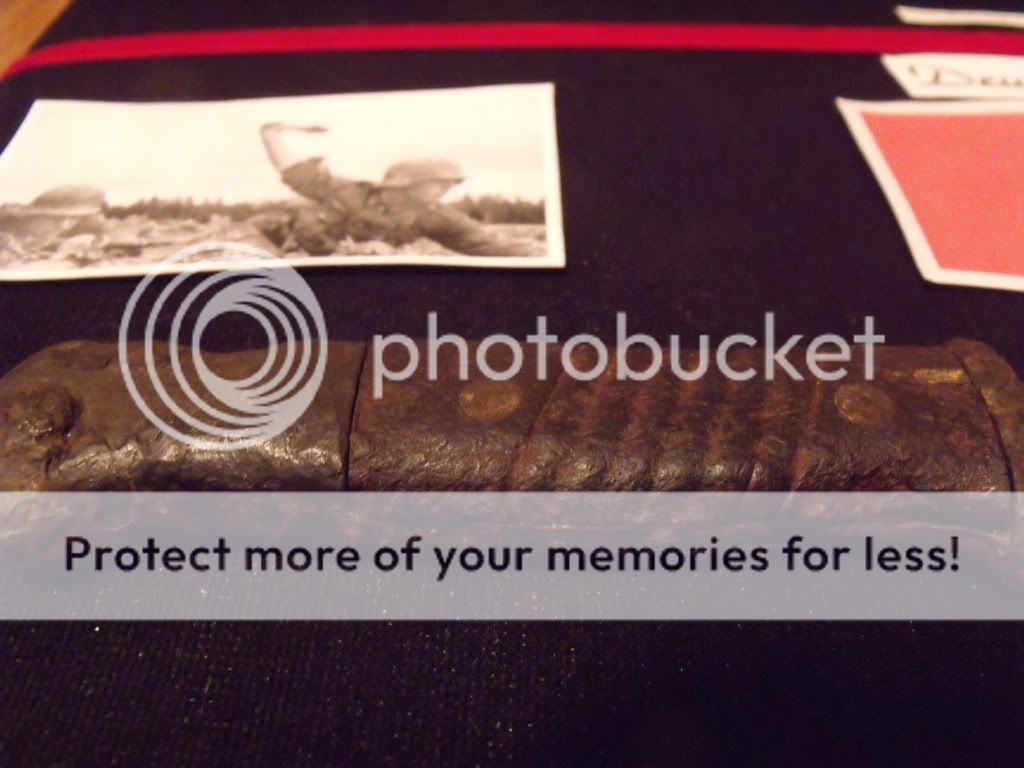
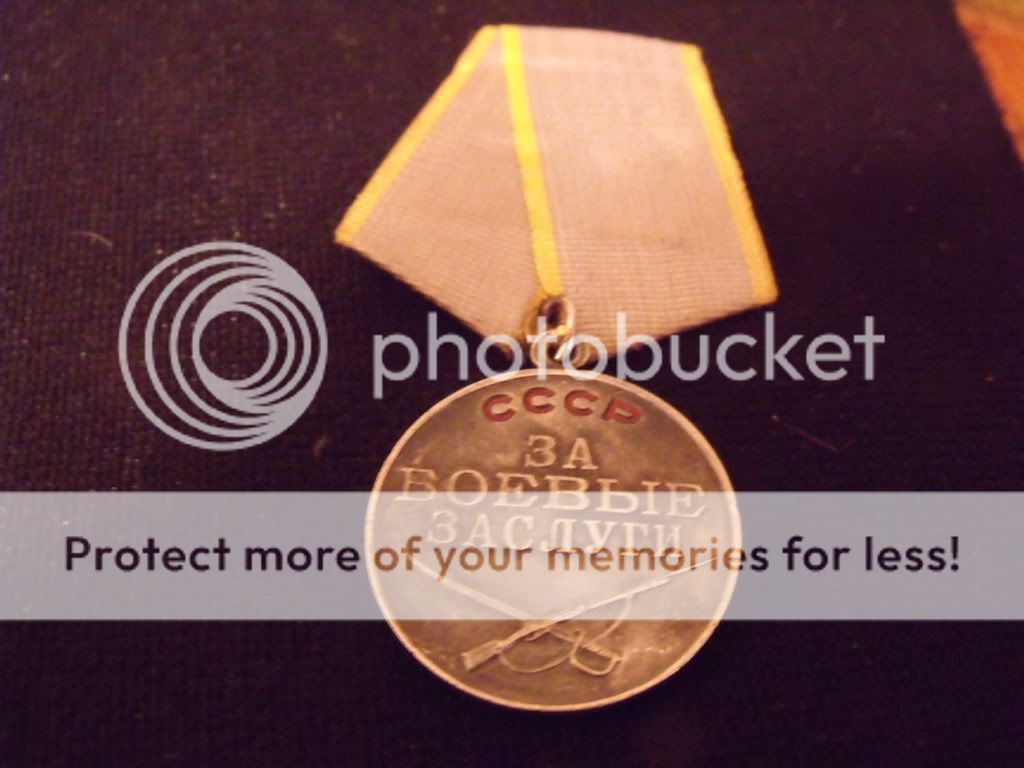
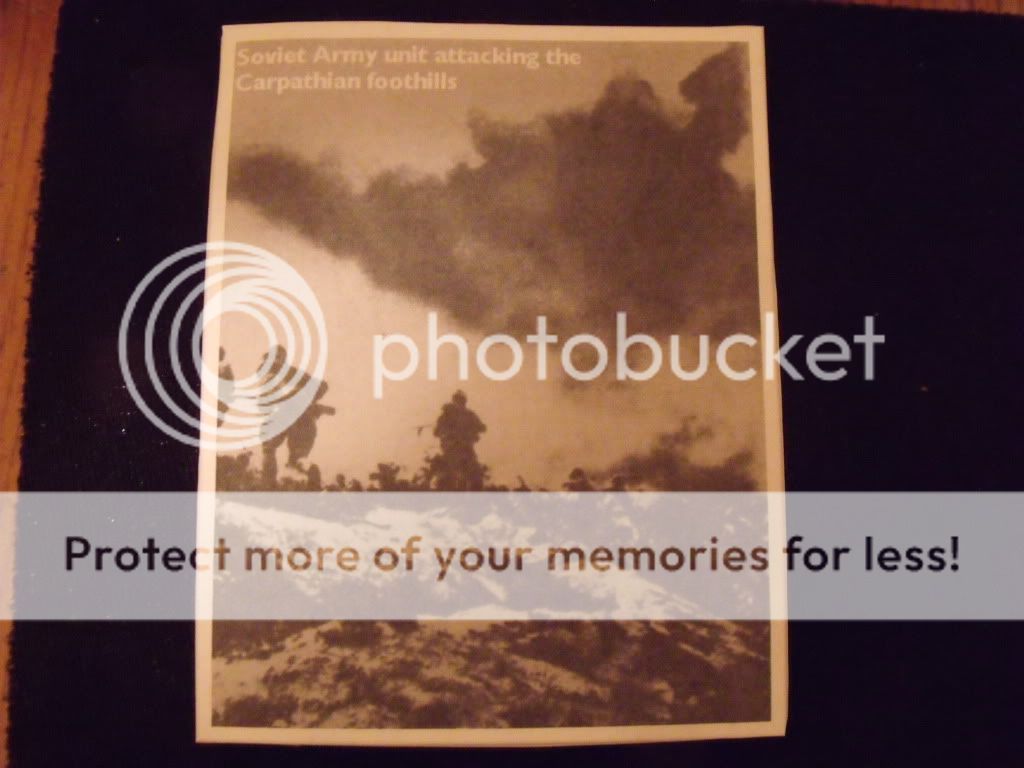
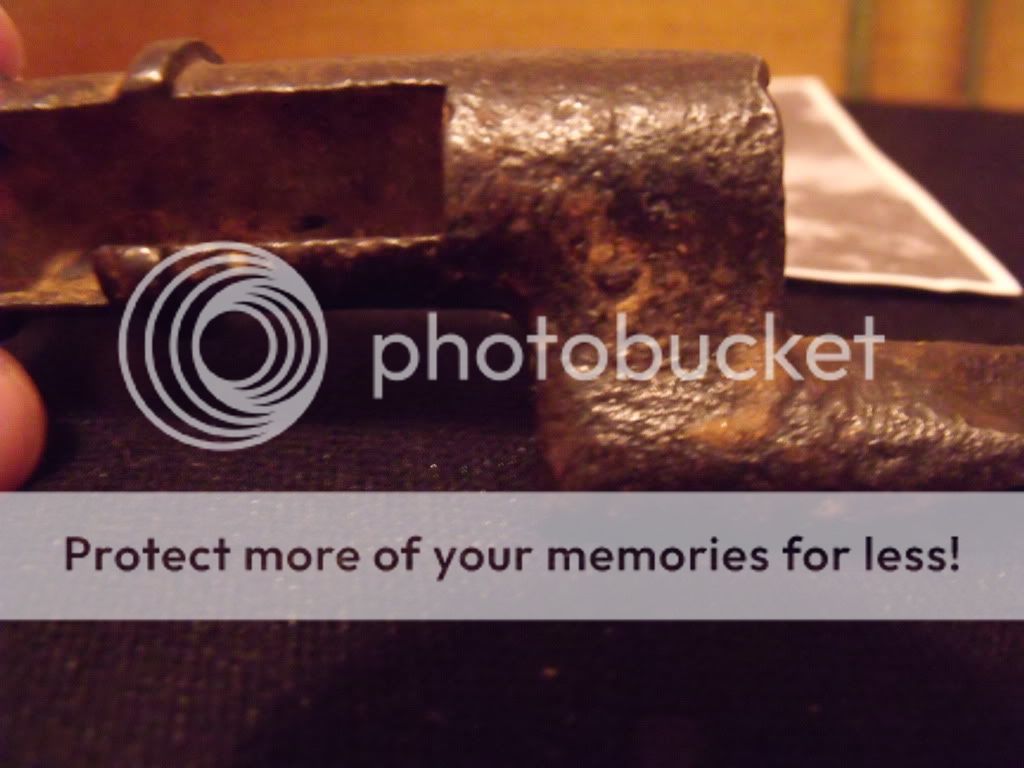
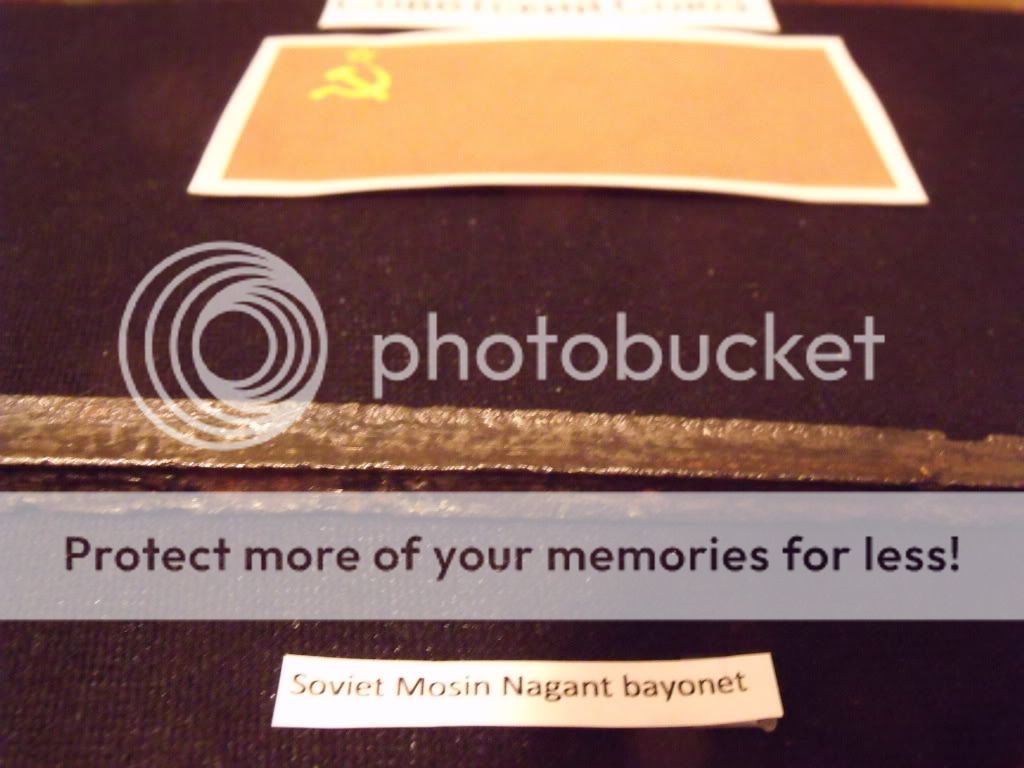
The Soviet side of the display includes a Mosin 1891 bayonet that has been modified at some point to fit the 91/30. There are no markings that I can make out as of yet, however I keep trying. One thing to note about this bayonet is the blade is heavily, heavily pitted and somewhat bent. Alongside the bayonet I have the Soviet medal for combat service, and a picture that fits perfectly in the display. The picture was actually taken AT the specific battle(s) of the Dukla and shows Soviet infantry doing an assault, bayonets fixed and all. Chilling to think that the bayonet in the picture may actually be the bayonet in this display.
In regards to the medals I was trying to pick somehting that would have been issued to the soldier that had taken part in the operation,from both sides. The German badge was awarded for taking part in infantry assaults, and would have been awarded (chances are) to the Heer soldier who at some point, carried that bayonet. The Soviet medal for combat service was awarded to troops who fought in combat and advanced the outcome of said combat. Chances are since the Soviets took the area, that that particular award was issued to the Soldier(s) who were issued this bayonet. In the future I hope to add more appropriate medals/orders to the display however they are not cheap so they will have to wait!
Here are the pictures:

I made this display simply as a way of preserving two pieces of history that are worthy of recognition and display. They are true war relics, and serve as a reminder of the horrors of war, yet also of the bravery of the "everyday" German, Soviet and Slovakian men and women. I feel that preserving true pieces of history such as these is very important.
I apologize for the long winded information and the many, many pictures
Any questions/comments greatly appreciated.
Again, thanks Joe and Steve. You guys are simply great
Recently with the help of two members here I have been working on putting together a display of sorts to display alongside some of my second world war firearms. As a note to quickly get this out of the way - any Nazi, Communist or other symbol are here simply as they relate to history. In no way, shape or form am I pro Nazi, Communist etc... so please lets not open a political discussion. This is a display of historical items. Period.
I would also like to thank Joe n for the bayonets themselves, aswell as detailing where they were found etc... Joe, you are a true gentleman and your help is more then appreciated! Also want to say thanks to Steve1987 for the German Infantry Assault badge and all the help he is providing in historical details... more to come!
History
Anyway, I put this display together using two bayonets recovered near Svidnik, Slovakia, an area of VERY HEAVY fighting between German forces and the Soviets throughout the latter half of 1944. From iabsi.com
"In the Autumn of 1944, the 38th Soviet Army, combined with the Czechoslovak First Army Corps began its offensive into the German occupied nation of Slovakia. On September 8th, the armies began an assault southward from Poland intent on breaking through the Dukla mountain Pass (at the Polish border, near Svidnik, Slovakia) and meeting up with insurgents deep within Slovakia. This particularly long and bloody Carpathian Mountain operation was a component of the First Ukrainian Front (Soviet General Konev). The Germans positioned the 97th, 100th and 101st Jager, 254th Infantry and 82nd Division to defend the land in then-Slovakia. The battlefield was well-defended with artillery and mechanized vehicles. The area of battle stretched nearly 20 kilometers deep.
The original Soviet battle plan did not include entering Slovakia via Dukla Pass. The Soviet troops were originally proceeding east to west across a broad front, from Ukraine into Poland and Ukraine, through Hungary to Slovakia. Troops in Poland were expected to continue their westward assault towards Germany. The Dukla operation was quickly conceived in order to support the SNP partisan uprising in Slovakia. The Soviet and Czechoslovak armies expected to take the pass quickly. However, the help they expected in terms of rebel troops of the East Slovak Army Corps did not arise. The partisan uprising was quickly being suppressed by German troops and the Slovak Army was disbanded. Consequentially the battle lasted for 50 days. The pass was taken on October 6th, but vicious fighting persisted for another month. The German 254th retreated through Presov, Levoca and Poprad. More than 46,000 Soviet, Czechoslovak and German soldiers perished. Over 93,000 Soviet and Czechoslovak troops were wounded. A large military cemetery in Svidnik contains the graves of over 9,000 Soviet soldiers. As the Germans retreated, they burned what remained of Svidnik.
The major troops involved in the Dukla operations included: Soviet Soviet 38th Army (KS Moskalenko),Czechoslovakia First Army (Ludvik Svoboda) and the German First Panzer Army, ###XIII and ###XVIII Corps, Army Group East 24th Panzer Division & 246th Infantry Division (General Gotthard Heinrici).
Attacking Slovakia from the east (through Ukraine and Hungary) were the First Guard Army (General Colonel Andrei A Grechko), Third Mountain Division Corps of the First Guard Army (General Major A J Vedenin.)"
Display
The shadowbox is displayed in the centre of two rifles. One being a 1943 Berlin made German K98k, and the other being a non refurb Soviet 1939 Tula made Mosin 91/30.
The German side includes one German K98 bayonet, marked cof 44, being Eickhorn 1944. The other side of the blade has the remnants of a ser number. Alongside the bayonet is a German WWII Infantry assault badge. The picture is also one of two Wermacht Soldiers on the Eastern front.
The Soviet side of the display includes a Mosin 1891 bayonet that has been modified at some point to fit the 91/30. There are no markings that I can make out as of yet, however I keep trying. One thing to note about this bayonet is the blade is heavily, heavily pitted and somewhat bent. Alongside the bayonet I have the Soviet medal for combat service, and a picture that fits perfectly in the display. The picture was actually taken AT the specific battle(s) of the Dukla and shows Soviet infantry doing an assault, bayonets fixed and all. Chilling to think that the bayonet in the picture may actually be the bayonet in this display.
In regards to the medals I was trying to pick somehting that would have been issued to the soldier that had taken part in the operation,from both sides. The German badge was awarded for taking part in infantry assaults, and would have been awarded (chances are) to the Heer soldier who at some point, carried that bayonet. The Soviet medal for combat service was awarded to troops who fought in combat and advanced the outcome of said combat. Chances are since the Soviets took the area, that that particular award was issued to the Soldier(s) who were issued this bayonet. In the future I hope to add more appropriate medals/orders to the display however they are not cheap
so they will have to wait!Here are the pictures:
I made this display simply as a way of preserving two pieces of history that are worthy of recognition and display. They are true war relics, and serve as a reminder of the horrors of war, yet also of the bravery of the "everyday" German, Soviet and Slovakian men and women. I feel that preserving true pieces of history such as these is very important.
I apologize for the long winded information and the many, many pictures
Any questions/comments greatly appreciated.
Again, thanks Joe and Steve. You guys are simply great
Last edited: