














































You are using an out of date browser. It may not display this or other websites correctly.
You should upgrade or use an alternative browser.
You should upgrade or use an alternative browser.
Final two events for SPRA in 2010
- Thread starter Kodiak99317
- Start date

Kodiak99317
CGN frequent flyer
- Location
- Saskatchewan, Canada
got 'em Abbey and come on out you newbie's, like Bill (Scout) says, we were all new at one time. Sounds like a great match weekend, got some 15 guys coming from MB+Nunavut and 1 from Ont and maybe a newbie from AB. Called Doug today nd yes we will have all 6 frames working this weekend. I'm heading ouyt there on Friday to make sure the butts are up and ready (grass cut, fences up etc). Weather is calling for a little rain on Saturday so bring rain gear and lunch!!
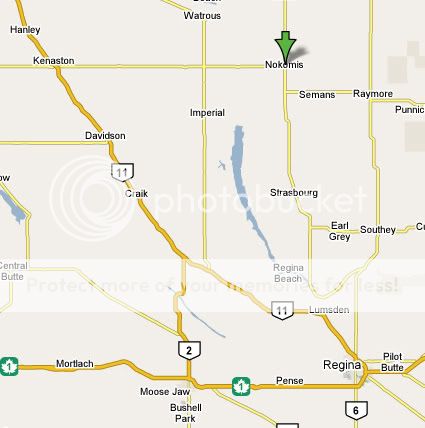
That is Hwy 2 runing north/south up to Imperial/Watrous... and then it Hwy 15 to Nokomis, a fast left and a right turn right after you cross the tracks and you are on the grid heading east of Nokomis...
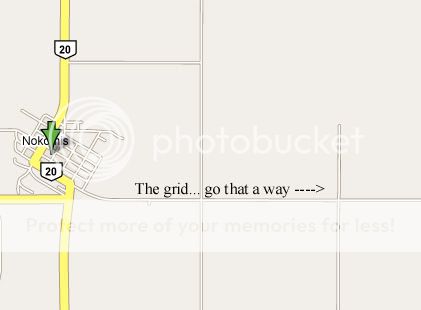
That yellow road coming from the west is Hwy 15, from Kenaston/Outlook etc
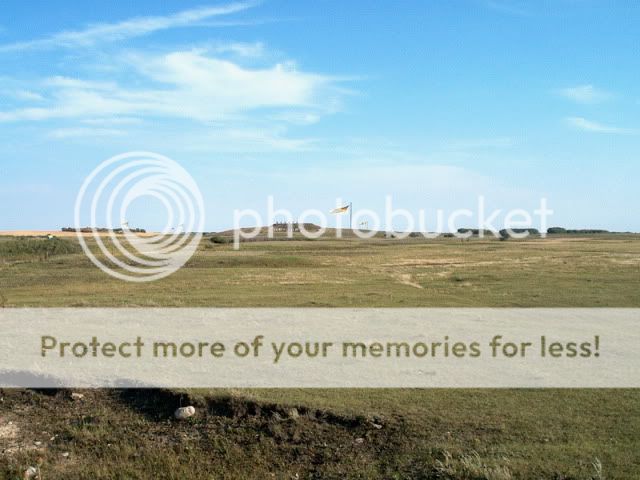
When you see the berm to the north, you are there! There is also 3 really large grain bins in the field south of the gate in to the range. The range is on the North side of the fence... Also, when you see the wind sock along side of the road, you have about 4 to 6 more miles to go still, that is a flying farmer Fooled me the first time too... back in 2004
That is Hwy 2 runing north/south up to Imperial/Watrous... and then it Hwy 15 to Nokomis, a fast left and a right turn right after you cross the tracks and you are on the grid heading east of Nokomis...
That yellow road coming from the west is Hwy 15, from Kenaston/Outlook etc
When you see the berm to the north, you are there! There is also 3 really large grain bins in the field south of the gate in to the range. The range is on the North side of the fence... Also, when you see the wind sock along side of the road, you have about 4 to 6 more miles to go still, that is a flying farmer
Fooled me the first time too... back in 2004
Last edited:
Kodiak99317
CGN frequent flyer
- Location
- Saskatchewan, Canada
PPRA Results...
We had 35 guys on the line, 15 TR (peep boys) and 20 guys with scopes (FClass, 10 in FTR and 10 in FOpen), was a great shoot, no rain Sat or Sun, poured Sun night and Monday until 9 am but then not a drop 'till we(Tracy & Brian W) stopped at 3 or 4 pm(I got pit duty BTW, they made it out to 1660 yds, with the truck pushing the fence line at the road to the south of the range and yes they hit the target, many times each!! We started with a 20" aiming mark and they shot at that until 1000 yds then we switched up to a real LR 1000 yd target and they did 1400 and 1660 yds. The winds Monday were in the mid 20's mph wise or higher!! Nice shooting you two and it was a pleasure to pull for you two!!
Very tricky conditions Sat, less wind but still about 1 to 2 MOA winds changes Sunday and really high winds Monday. We also had 15 guys shoot out to 1200 yds on Sat.
There was a little confusion Saturday evening whether you can use any bullet weight in a 308 and still be in the non F_Open class and thanks to Bill Watts who thinks ahead and produced the latest DCRA FClass rules this matter was cleared up Sunday morning. The SPRA has two Fclass, F-open were anything goes cartridge wise and FClass were you have top use either a 308 or a 223, but you can use any support and any bullet weight, as per DCRA rules. Whatever the DCRA rules are, the SPRA will recognize.
Special notes go to the following range record setters...
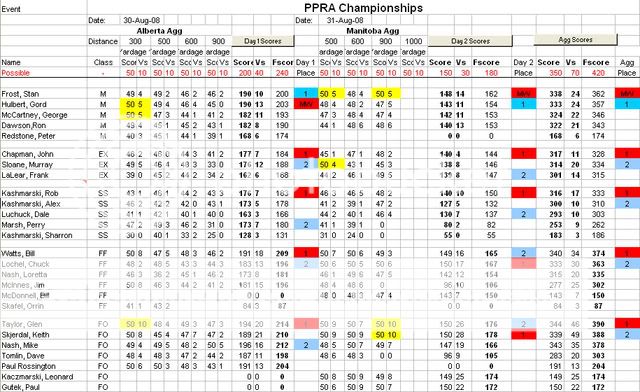
Bruce MacDonald with 50-7 at 600 yds in TR
Henry Rempel with 50-7 at 600 yds in TR
Darcy Spenst with 50-6 600 yds in FClass
Jerry Pomehichuk with 50-7 500 yds in Fclass
Also, we had a new shooter, Claude Chevier, come out, day 1 was not great for him but after he got the hang of it, he placed 4th in the Manitoba Agg on Sunday!! Way to go Claude!! Hope to see ya next year, a few more matches and you will be a force to be reckoned with!
Finally, we had 3 guys (Eskimo's, well... The “Eskimos” are actually Inuit from Baffin Island—they fly home by Air Canada to Iqaluit, and then on a small craft back south to the Hudson Straight for 4-500 miles??) come down from way up north in MB for this match and 1 gal from Ontario (The only one we have had from east of MB to my knowledge) FLY in for this match!! Thank you for your support and you shooters are always welcome at our range!
One last note: We are planning to hold more Ultra Long's (1000, 1100 and 1200 yds) next year too, at the Driller's on day two instead of the usual ISSF and possible at a few more matches so.... always bring an extra 50 rounds to our SPRA matches, just in case we have enough guys interested in shooting these extra long ranges, or maybe you want a kick at the Nokomis Mile (1660 yds), just to see if you can hit it too!! We collected an extra $5 per shooter interested for this extra event and gave it to the kids in the butts to get them to stay later (like around 7 or 8 o'clock) and give us this extra target service.
Thank you all for coming out and those on the mailing list that did not make it, we hope to see ya' next year.
Keith Skjerdal
Sorry if you have trouble reading this JPG, wish GunNutz would allow PDF uploads too soon!
We had 35 guys on the line, 15 TR (peep boys) and 20 guys with scopes (FClass, 10 in FTR and 10 in FOpen), was a great shoot, no rain Sat or Sun, poured Sun night and Monday until 9 am but then not a drop 'till we(Tracy & Brian W) stopped at 3 or 4 pm(I got pit duty
BTW, they made it out to 1660 yds, with the truck pushing the fence line at the road to the south of the range and yes they hit the target, many times each!! We started with a 20" aiming mark and they shot at that until 1000 yds then we switched up to a real LR 1000 yd target and they did 1400 and 1660 yds. The winds Monday were in the mid 20's mph wise or higher!! Nice shooting you two and it was a pleasure to pull for you two!!Very tricky conditions Sat, less wind but still about 1 to 2 MOA winds changes Sunday and really high winds Monday. We also had 15 guys shoot out to 1200 yds on Sat.
There was a little confusion Saturday evening whether you can use any bullet weight in a 308 and still be in the non F_Open class and thanks to Bill Watts who thinks ahead and produced the latest DCRA FClass rules this matter was cleared up Sunday morning. The SPRA has two Fclass, F-open were anything goes cartridge wise and FClass were you have top use either a 308 or a 223, but you can use any support and any bullet weight, as per DCRA rules. Whatever the DCRA rules are, the SPRA will recognize.
Special notes go to the following range record setters...
Bruce MacDonald with 50-7 at 600 yds in TR
Henry Rempel with 50-7 at 600 yds in TR
Darcy Spenst with 50-6 600 yds in FClass
Jerry Pomehichuk with 50-7 500 yds in Fclass
Also, we had a new shooter, Claude Chevier, come out, day 1 was not great for him but after he got the hang of it, he placed 4th in the Manitoba Agg on Sunday!! Way to go Claude!! Hope to see ya next year, a few more matches and you will be a force to be reckoned with!
Finally, we had 3 guys (Eskimo's, well... The “Eskimos” are actually Inuit from Baffin Island—they fly home by Air Canada to Iqaluit, and then on a small craft back south to the Hudson Straight for 4-500 miles??) come down from way up north in MB for this match and 1 gal from Ontario (The only one we have had from east of MB to my knowledge) FLY in for this match!! Thank you for your support and you shooters are always welcome at our range!
One last note: We are planning to hold more Ultra Long's (1000, 1100 and 1200 yds) next year too, at the Driller's on day two instead of the usual ISSF and possible at a few more matches so.... always bring an extra 50 rounds to our SPRA matches, just in case we have enough guys interested in shooting these extra long ranges, or maybe you want a kick at the Nokomis Mile (1660 yds), just to see if you can hit it too!! We collected an extra $5 per shooter interested for this extra event and gave it to the kids in the butts to get them to stay later (like around 7 or 8 o'clock) and give us this extra target service.
Thank you all for coming out and those on the mailing list that did not make it, we hope to see ya' next year.
Keith Skjerdal
Sorry if you have trouble reading this JPG
, wish GunNutz would allow PDF uploads too soon!
Last edited:

Sorry if you have trouble reading this JPG
Just make a larger .jpg
Good shootin all......Les is really on his game this year.
Congrats.
I'd like to thank all the shooters for making a newbie feel more than welcomed - your a great bunch of guys/gals
A special thanks to Keith for showing me the ropes and letting me use his shooting mat for the weekend.
The match/shoot was a hoot. It was everything I was hoping it would be and more.
Really look forward to shooting with you guys/gals again - I'll make sure to bring along a can of "whoop ass" as well.
A special thanks to Keith for showing me the ropes and letting me use his shooting mat for the weekend.
The match/shoot was a hoot. It was everything I was hoping it would be and more.
Really look forward to shooting with you guys/gals again - I'll make sure to bring along a can of "whoop ass" as well.
Last edited:

Kodiak99317
CGN frequent flyer
- Location
- Saskatchewan, Canada
Well the final shot at Nokomis for 2010 will soon be going down range! Saturday we will have a practice/training session out there, hopefully in the sun with lighter winds for a change. Sunday is calling for some MORE H2O to fall, once again. May even get into some Circle Training if we have enough guys out!
Man, I hope the winter does not bring Saskatchewan snow like it did rain this year. On average, we had 42+ inch of it, and what, based on 10" of snow to 1" of rain, that would be 35 FEET of snow!! (42*10/12=35 Feet!!)
Man, I hope the winter does not bring Saskatchewan snow like it did rain this year. On average, we had 42+ inch of it, and what, based on 10" of snow to 1" of rain, that would be 35 FEET of snow!! (42*10/12=35 Feet!!)
Last edited:
Kodiak99317
CGN frequent flyer
- Location
- Saskatchewan, Canada
From another forum that explained it...
QUOTE
Circle Training for Target Rifle and F class Shooters
What is it and Why Should I do it?
This is a question on many Canadian target rifle and F class shooters minds this spring.Circle training is a live fire training system which the three Canadian World Long Range Rifle Team Captains have adopted to enhance the capabilities of their respective teams in 2011. This may be fine for the WLRC teams but what about me you say? I am not planning on trying out for any of these teams and normally don’t shoot in any of the important team matches even in my own Province. Well the answer is a definite yes!
Circle training is a hands on range shooting day where you will team up with two to three other shooters and work as a team to practice each of the basic shooting skills that you will need to be a success not only as a team shooter but as an individual shooter as well. You will take your turn shooting, wind coaching, and assistant coaching each other using the plotomatic. This will enable each participant to focus on only one of the three basic components of shooting an event. From a team shooting stand point it will enable you to become efficient in team shooting procedure. From an individual shooting perspective it will allow you to identify and then improve the parts of your shooting in which you are weakest.
Our past practice in Canada has been to let each aspiring shooter develop their shooting skills on their own. For some this has proven to be a successful procedure, but unfortunately it has also created an average level of ability for many. This is especially true for team shooting skills. Currently we develop our shooting skills for individual pairs firing and then try to apply this skill development to string fire team shooting events. This is the backward approach and circle training is a system which allows you to change that. So let’s see how it works by identifying what you will get out of each participant component.
As the shooter, just like in a team shooting match, you will have to focus on good position, good sight alignment, and trigger release. With the shooting being string fire it will stress all your shooting skills to their limit. In our pairs shooting competitions each shooter gets a rest between each shot. You can have fairly weak positional skills and still fire a very good score. In string fire shooting where you should not drop the butt from your shoulder, a break down in your group will certainly happen. In pairs firing you may be able to squint off a shot but with string firing if the sighting picture for your level of eye sight is not the best, the aiming mark quality will degrade as you progress. This is especially true for older shooters. Your partners in the circle will almost certainly see the problems you are having and can offer advice for improvement. If not then you can seek help elsewhere now that you have identified any problems you might be having.
Wind coaching the other two members of your circle will be an inspiration as well as a very useful skill development component of each session. With the removal of shooting the shot you will solely be responsible for reading the conditions and applying the correct sight setting to the rifle. You will have to learn to communicate with your shooter and assistant coach to get the shot fired and use all the useful information the plot has to offer. Target coaching can be an intimidating business for some of us but it is a skill set that we must master to become good individual shots. Making the wind calls and setting the sights in a practice environment will take some of the intimidating factors away allowing you to be more aggressive in your calls. A few sessions sitting in the chair and you should lose the fear of it. Not only that but you will have the benefit of a plot being run for you so that you get to observe the conditions continuously and learn from both the successful
and unsuccessful shot impacts.
The Assistant Coach is the third person in our Circle. Sometime over looked and seen as a minor role in the team match he/she actually has a very important job in getting a good score. In the computer world the Assistant Coach would be referred to as the “Systems Analyst”. They are running a continuous analysis of the group the shooter is delivering, the shot impacts with the sight setting being chosen along with helping the wind coach keep track of changing wind conditions. An accurate fast plot will add points to a team shoot. Having the same skills for your own individual shooting will give you more time to watch conditions and make the correct decisions. Training in this position without the distractions of calling the wind or firing the shot will allow you to enhance your skills in this facet of shooting.
If the circle training day is being run without paid target pullers then the circles should be comprised of four persons with one being sent to the butts. This is not merely to pull targets but the puller should run a shot impact chart for each string fired. These can then be compared to the firing line plot to check for plotting accuracy and efficiency. The target puller can also be tasked with running time chart for shot delivery as well. This can be quite a revealing part of your training.
A key part of the training will be the combined knowledge that each participant brings to the circle. Each of us has many shooting and life skills from which we can all learn a lot. After each session a thorough debriefing will help each participant identify the weaknesses and strengths in their performance for that day. Adjustments can then be made to your shooting and you can work on improving areas in which you are obviously weak. I believe that you will find the experience well worth your while. Please plan on attending the Circle Training Days offered in your Province.
Dave Adams
National Training Director
END QUOTE
QUOTE
Circle Training for Target Rifle and F class Shooters
What is it and Why Should I do it?
This is a question on many Canadian target rifle and F class shooters minds this spring.Circle training is a live fire training system which the three Canadian World Long Range Rifle Team Captains have adopted to enhance the capabilities of their respective teams in 2011. This may be fine for the WLRC teams but what about me you say? I am not planning on trying out for any of these teams and normally don’t shoot in any of the important team matches even in my own Province. Well the answer is a definite yes!
Circle training is a hands on range shooting day where you will team up with two to three other shooters and work as a team to practice each of the basic shooting skills that you will need to be a success not only as a team shooter but as an individual shooter as well. You will take your turn shooting, wind coaching, and assistant coaching each other using the plotomatic. This will enable each participant to focus on only one of the three basic components of shooting an event. From a team shooting stand point it will enable you to become efficient in team shooting procedure. From an individual shooting perspective it will allow you to identify and then improve the parts of your shooting in which you are weakest.
Our past practice in Canada has been to let each aspiring shooter develop their shooting skills on their own. For some this has proven to be a successful procedure, but unfortunately it has also created an average level of ability for many. This is especially true for team shooting skills. Currently we develop our shooting skills for individual pairs firing and then try to apply this skill development to string fire team shooting events. This is the backward approach and circle training is a system which allows you to change that. So let’s see how it works by identifying what you will get out of each participant component.
As the shooter, just like in a team shooting match, you will have to focus on good position, good sight alignment, and trigger release. With the shooting being string fire it will stress all your shooting skills to their limit. In our pairs shooting competitions each shooter gets a rest between each shot. You can have fairly weak positional skills and still fire a very good score. In string fire shooting where you should not drop the butt from your shoulder, a break down in your group will certainly happen. In pairs firing you may be able to squint off a shot but with string firing if the sighting picture for your level of eye sight is not the best, the aiming mark quality will degrade as you progress. This is especially true for older shooters. Your partners in the circle will almost certainly see the problems you are having and can offer advice for improvement. If not then you can seek help elsewhere now that you have identified any problems you might be having.
Wind coaching the other two members of your circle will be an inspiration as well as a very useful skill development component of each session. With the removal of shooting the shot you will solely be responsible for reading the conditions and applying the correct sight setting to the rifle. You will have to learn to communicate with your shooter and assistant coach to get the shot fired and use all the useful information the plot has to offer. Target coaching can be an intimidating business for some of us but it is a skill set that we must master to become good individual shots. Making the wind calls and setting the sights in a practice environment will take some of the intimidating factors away allowing you to be more aggressive in your calls. A few sessions sitting in the chair and you should lose the fear of it. Not only that but you will have the benefit of a plot being run for you so that you get to observe the conditions continuously and learn from both the successful
and unsuccessful shot impacts.
The Assistant Coach is the third person in our Circle. Sometime over looked and seen as a minor role in the team match he/she actually has a very important job in getting a good score. In the computer world the Assistant Coach would be referred to as the “Systems Analyst”. They are running a continuous analysis of the group the shooter is delivering, the shot impacts with the sight setting being chosen along with helping the wind coach keep track of changing wind conditions. An accurate fast plot will add points to a team shoot. Having the same skills for your own individual shooting will give you more time to watch conditions and make the correct decisions. Training in this position without the distractions of calling the wind or firing the shot will allow you to enhance your skills in this facet of shooting.
If the circle training day is being run without paid target pullers then the circles should be comprised of four persons with one being sent to the butts. This is not merely to pull targets but the puller should run a shot impact chart for each string fired. These can then be compared to the firing line plot to check for plotting accuracy and efficiency. The target puller can also be tasked with running time chart for shot delivery as well. This can be quite a revealing part of your training.
A key part of the training will be the combined knowledge that each participant brings to the circle. Each of us has many shooting and life skills from which we can all learn a lot. After each session a thorough debriefing will help each participant identify the weaknesses and strengths in their performance for that day. Adjustments can then be made to your shooting and you can work on improving areas in which you are obviously weak. I believe that you will find the experience well worth your while. Please plan on attending the Circle Training Days offered in your Province.
Dave Adams
National Training Director
END QUOTE
Kodiak99317
CGN frequent flyer
- Location
- Saskatchewan, Canada
I'm not sure, there are 8 that I know of incl. U 2
Kodiak99317
CGN frequent flyer
- Location
- Saskatchewan, Canada
Thanks TE, BW is bringing AXEL out again and I get to try the Nokomis Mile with it, s/b a hoot as always























