















































I have got this pistol shooting well. The design has many good features, one negative issue and one problem that might be unique to my particular pistol.
The good features are quality manufacturing. It is smooth, tight, comfortable in the hand, accurate and with the right ammo, 100% reliable.
The pistol is slightly smaller than a M&P and somewhat smoother and lighter. If I was going to carry one or the other, it would be the FMK. For general purpose shooting and competing, the M&P has some advantages, not the least of which is APEX trigger upgrades.
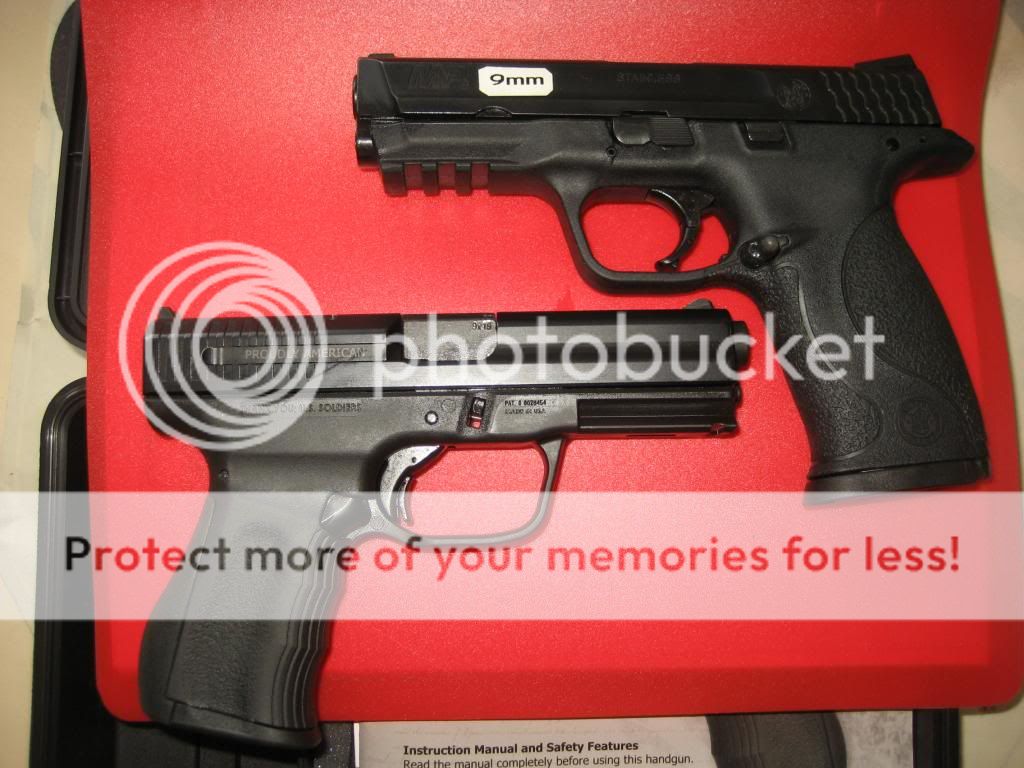
The Canadian version of the pistol does not carry a lot of American printing on it (Bill of Rights) but does include an extra bit of barrel to make it a non-prohib. It comes with two 10 round mags. They offer a 14 round mag south of the border. The mags drop free easily. The mag base has a neat device. A tab to depress the top round in the other mag, to make it easier to get the last few rounds in. The last two or three take some effort.
The magazine positions the cartridge quite high, so the bullet tip just barely touches the feed ramp before popping into the chamber. I have found it feeds all style of bullets (including semi-wadcutters) easily. The pistol was designed for concealed carry, so feed reliability would be important. I think they got it right.
It takes down like a Glock. The internals remind me a bit of a M&P. To remove the striker assembly, slide the end cap down, much like a 1911. To release the end cap, you have to push a pin through a little hole. I found a decapping rod from a 223 sizer die was the perfect size pin to do the job.
The trigger is unique. The first generation triggers were true Double Action only. The Gen 2 pistol is very much like a Glock or M&P, except that if you pull the trigger slowly you can feel it drop into some kind of notch. This staging allows it to be fired quite accurately in slow fire. In rapid fire you don’t feel it. I was very pleasantly surprised to find that once I got used to the trigger I could should good groups. These groups were shot slow-fire, two hands, unsupported at 20 yards.
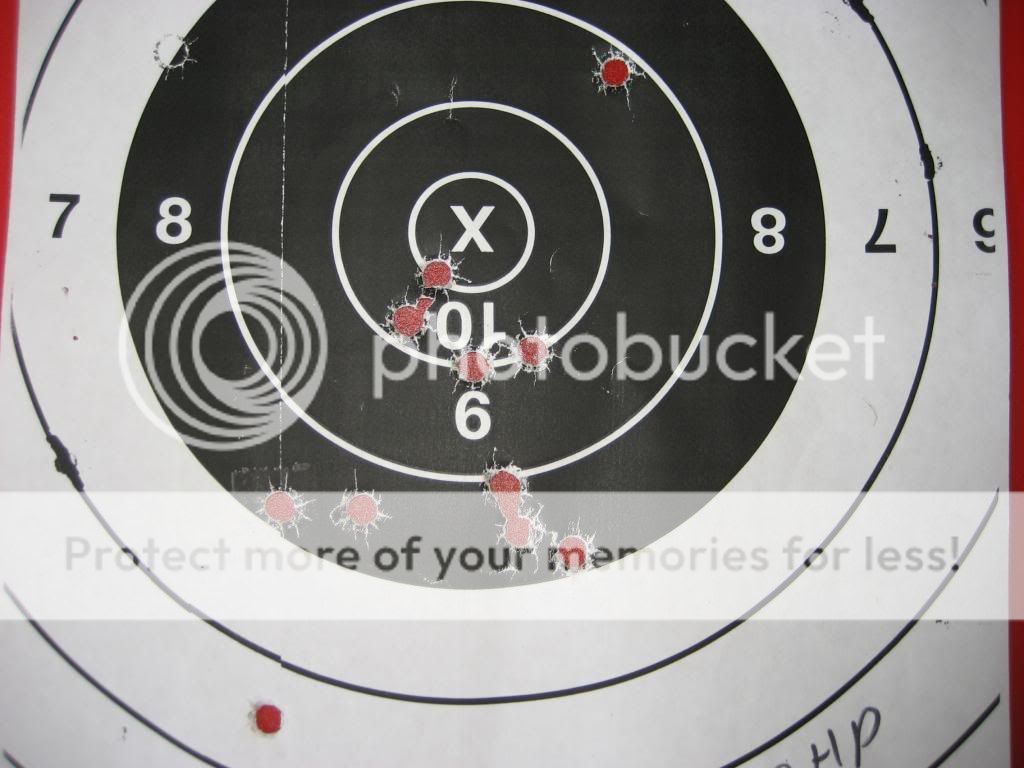
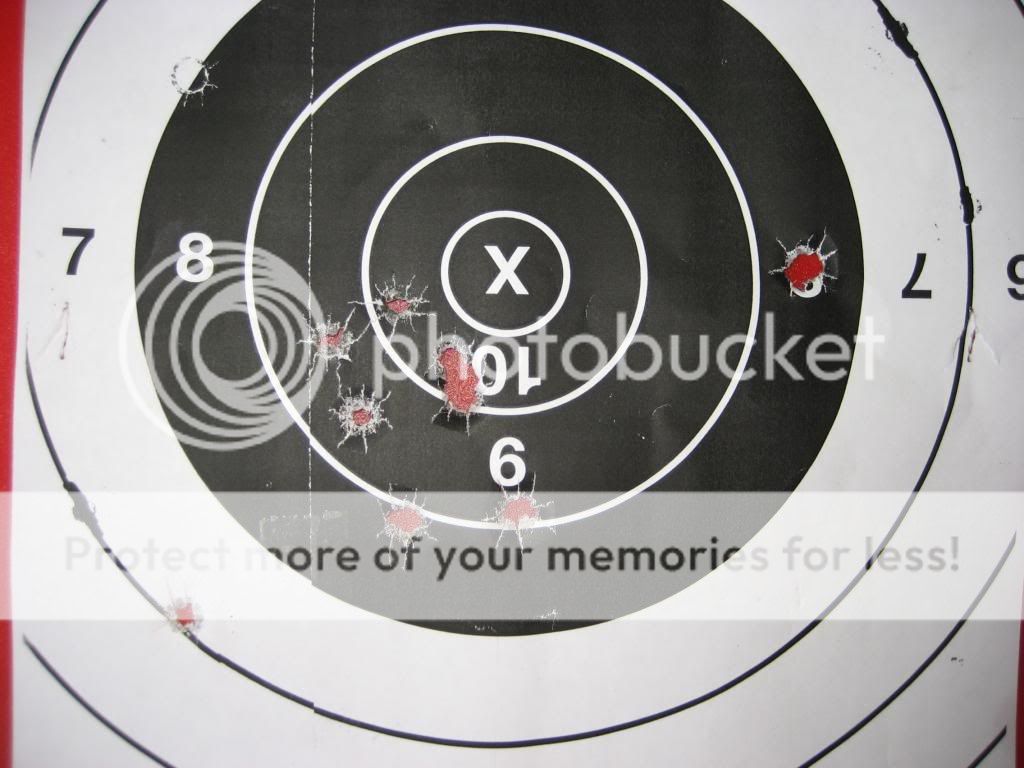
The front and rear sights are plastic. My old eyes need a wider notch so I can see more white on either side of the front blade. With plastic sights, this is real easy to accomplish. The pistol comes with a selection of rear sights with two steps of left and right adjustment. The sight slides off quite easily, so I was able to select the two steps right rear sight to give me a centered group. I needed the lowest front sight to move the group up to where I wanted it. The sights are ok for target shooting but too fine for fast shooting. I have widened my rear notch.
Since I had no use for the tall front sight, I re-shaped it to a ramp; painted the ramp with white enamel and then with red fluorescent paint. The result is a very fast to acquire front sight.
A pistol has to fire each time the trigger is pulled. We cannot tell if the primer strike was plenty hard or just barely enough to fire it. In my pistol I know ignition is marginal. It gets 60% misfires with one brand of primer (TULA) and some misfires in all other brands of primer except Federal. With CCI and Winchester I get at least one misfire in each ten shot mag.
I have shot several hundred Federal with no misfires, so I have a solution for my gun, but can't help wonder how marginal the ignition is. The pistol has been stripped and rinsed with brake cleaner and then lubed with G96. It is not gummed up or dirty. Firing pin protrusion looks to be excellent. More than other pistols I have.
The dent on the primer looks good, but I have seen stronger hits. But, the primer strike is off center enough for the firing pin to be missing the anvil inside the primer.

I am assuming this is the cause of misfires. A stronger striker spring might help, but the strike location is controlled by the hole in the breach face and the positioning of the barrel/chamber. I am guessing the latter causes the strike to be off-center. I will try to get a stronger striker spring for it.
A few months ago I loaded some 9mm ammo with rifle primers and tested it in about 20 pistols. All but two of them fired it perfectly, so I know they have excellent ignition reliability with ammo loaded with pistol primers. The two that failed shoot the Tula primers just fine, so I know this FMK is weak.
I note that the FMK is available in pink, but the slide is somewhat heavy to #### and the serrations are not nearly as “grippy” as the M&P. A lady might not be able to open the slide manually. With cold, wet or sweaty hands the FMK slide would be difficult to ####.
Note: Just discovered the Uncle Mike's holster for the M&P fits perfectly.
The good features are quality manufacturing. It is smooth, tight, comfortable in the hand, accurate and with the right ammo, 100% reliable.
The pistol is slightly smaller than a M&P and somewhat smoother and lighter. If I was going to carry one or the other, it would be the FMK. For general purpose shooting and competing, the M&P has some advantages, not the least of which is APEX trigger upgrades.
The Canadian version of the pistol does not carry a lot of American printing on it (Bill of Rights) but does include an extra bit of barrel to make it a non-prohib. It comes with two 10 round mags. They offer a 14 round mag south of the border. The mags drop free easily. The mag base has a neat device. A tab to depress the top round in the other mag, to make it easier to get the last few rounds in. The last two or three take some effort.
The magazine positions the cartridge quite high, so the bullet tip just barely touches the feed ramp before popping into the chamber. I have found it feeds all style of bullets (including semi-wadcutters) easily. The pistol was designed for concealed carry, so feed reliability would be important. I think they got it right.
It takes down like a Glock. The internals remind me a bit of a M&P. To remove the striker assembly, slide the end cap down, much like a 1911. To release the end cap, you have to push a pin through a little hole. I found a decapping rod from a 223 sizer die was the perfect size pin to do the job.
The trigger is unique. The first generation triggers were true Double Action only. The Gen 2 pistol is very much like a Glock or M&P, except that if you pull the trigger slowly you can feel it drop into some kind of notch. This staging allows it to be fired quite accurately in slow fire. In rapid fire you don’t feel it. I was very pleasantly surprised to find that once I got used to the trigger I could should good groups. These groups were shot slow-fire, two hands, unsupported at 20 yards.
The front and rear sights are plastic. My old eyes need a wider notch so I can see more white on either side of the front blade. With plastic sights, this is real easy to accomplish. The pistol comes with a selection of rear sights with two steps of left and right adjustment. The sight slides off quite easily, so I was able to select the two steps right rear sight to give me a centered group. I needed the lowest front sight to move the group up to where I wanted it. The sights are ok for target shooting but too fine for fast shooting. I have widened my rear notch.
Since I had no use for the tall front sight, I re-shaped it to a ramp; painted the ramp with white enamel and then with red fluorescent paint. The result is a very fast to acquire front sight.
A pistol has to fire each time the trigger is pulled. We cannot tell if the primer strike was plenty hard or just barely enough to fire it. In my pistol I know ignition is marginal. It gets 60% misfires with one brand of primer (TULA) and some misfires in all other brands of primer except Federal. With CCI and Winchester I get at least one misfire in each ten shot mag.
I have shot several hundred Federal with no misfires, so I have a solution for my gun, but can't help wonder how marginal the ignition is. The pistol has been stripped and rinsed with brake cleaner and then lubed with G96. It is not gummed up or dirty. Firing pin protrusion looks to be excellent. More than other pistols I have.
The dent on the primer looks good, but I have seen stronger hits. But, the primer strike is off center enough for the firing pin to be missing the anvil inside the primer.
I am assuming this is the cause of misfires. A stronger striker spring might help, but the strike location is controlled by the hole in the breach face and the positioning of the barrel/chamber. I am guessing the latter causes the strike to be off-center. I will try to get a stronger striker spring for it.
A few months ago I loaded some 9mm ammo with rifle primers and tested it in about 20 pistols. All but two of them fired it perfectly, so I know they have excellent ignition reliability with ammo loaded with pistol primers. The two that failed shoot the Tula primers just fine, so I know this FMK is weak.
I note that the FMK is available in pink, but the slide is somewhat heavy to #### and the serrations are not nearly as “grippy” as the M&P. A lady might not be able to open the slide manually. With cold, wet or sweaty hands the FMK slide would be difficult to ####.
Note: Just discovered the Uncle Mike's holster for the M&P fits perfectly.
Last edited:























