What exactly was done in the FTR process for No.4 Mk.1? Did they just replace worn out parts with whatever was kicking around? Reason I ask is that I just got a 43 Shirley FTR’d in 48. The fore stock, bolt, and receiver all match, but the rifle has a savage marked butt, rear sight, and Longbranch front band.













































You are using an out of date browser. It may not display this or other websites correctly.
You should upgrade or use an alternative browser.
You should upgrade or use an alternative browser.
FTR Process
- Thread starter MattE93
- Start date

Thanks that’s kinda what I figured. Does it make sense to have an FTR’d rifle with matching serials on wood, rec, and bolt? Like would they try to keep as many parts together as possible and just replace worn out parts, or was it similar to RC K98 where boxes of parts were just assembled into a Frankenrifle?
Thanks that’s kinda what I figured. Does it make sense to have an FTR’d rifle with matching serials on wood, rec, and bolt? Like would they try to keep as many parts together as possible and just replace worn out parts, or was it similar to RC K98 where boxes of parts were just assembled into a Frankenrifle?
It all depends on their time constraints

Blastattack
CGN Ultra frequent flyer
- Location
- Winnipeg MB
Thanks that’s kinda what I figured. Does it make sense to have an FTR’d rifle with matching serials on wood, rec, and bolt? Like would they try to keep as many parts together as possible and just replace worn out parts, or was it similar to RC K98 where boxes of parts were just assembled into a Frankenrifle?
More than likely complete rifles were binned or racked, and the armorer would inspect and repair as necessary. No sense stripping every rifle, storing/organizing the parts and reassembling every rifle if only a few parts on each gun need replacing.
Thank you for all the information guys. Does anyone know how they decided serial numbers after FTR, if they could read the original serial number would they restamp it? Mine has serial number Y7**2 which is an early Shirley serial number and therefore makes sense for this rifle. This serial number is on the bolt handle, forestock, and receiver, and also in the electropencil writing from the FTR process. However I have also seen FTR rifles with serial numbers that were not used during the war.
Hi matt. Normally a Factory Thorough Repair meant just that. As almost all were converted to the Mk 2 trigger system the bodies were altered with a trigger block on the back addition. Then Suncorite painted and electro penclled with (normally Fazakerly) serial number
and conversion date. Same process with bolt and other parts. New wood was applied generally but converted forestocks have been seen.Basically making a new rifle utilizing only some old parts if possible. FTR not on an individual rifle basis. Same with SMLE. Nothing wrong with any manufacture parts on an FTR rifle. Normally any Indian or Pakistani parts not used (heat treatment poor and often out of spek). Normally new Mk I sights applied as well. JOHN
and conversion date. Same process with bolt and other parts. New wood was applied generally but converted forestocks have been seen.Basically making a new rifle utilizing only some old parts if possible. FTR not on an individual rifle basis. Same with SMLE. Nothing wrong with any manufacture parts on an FTR rifle. Normally any Indian or Pakistani parts not used (heat treatment poor and often out of spek). Normally new Mk I sights applied as well. JOHN
The weird thing about this one is that it is a 48 FTR and the trigger is still hung on the the trigger guard. I think the wood is original to the rec, and bolt becuase the serial number used is a Shirley one not a Fazakerley one. It seems like a weird example of an FTR where only small parts are not BSA marked

maple_leaf_eh
CGN Ultra frequent flyer
The weird thing about this one is that it is a 48 FTR and the trigger is still hung on the the trigger guard. I think the wood is original to the rec, and bolt because the serial number used is a Shirley one not a Fazakerley one. It seems like a weird example of an FTR where only small parts are not BSA marked
The new markings will be faint and shaky electro pencil engraving. If the sidewall is marked Mk I/2 or Mk I/3, the conversion was done. If yours has the hung trigger then it was not a complete FTR. I know a fellow who only understood trigger guard triggers and knocked the hung trigger guard block off. He didn't like it when I told him the hung trigger was the better way to get a good trigger pull.
From the outside, are there two wooden pads on the rear edges of the fore end, where the reinforcing strap was removed? The screw goes side to side all the way through. If you take the fore end off your rifle, is the web cut away away the rear of the wood?
I will take a look at then forestock tomorrow and report back. The reinforcing strap is still there though, if we are talking about the recoil lug. The side wall says No.4 Mk.1 F(FTR) 48 Y7xx2 in electro pencil. The same Y 7xx2 is stamped into forestock, bolt and rec. I am thinking the stock, rec, and bolt are all original? The trigger is also hung on trigger guard so I think on this one they may have just changed out small parts.
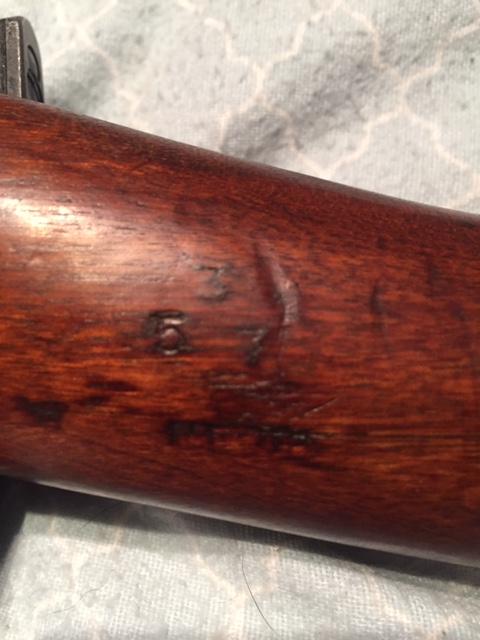
Also weirdly the butt has a savage S stamped on it along with a 111 maybe a rack number?
Also weirdly the butt has a savage S stamped on it along with a 111 maybe a rack number?
maple_leaf_eh
CGN Ultra frequent flyer
The reinforcing strap isn't much use except to hold the rear of the fore end.
The number on the butt could be a rack number. I've seen serial numbers on the stocks of other guns from other countries. The Danish put them on their Garand butts, and I have (had?) an ex Belgian No.4 with the serial number on the front end of the fore end.
The number on the butt could be a rack number. I've seen serial numbers on the stocks of other guns from other countries. The Danish put them on their Garand butts, and I have (had?) an ex Belgian No.4 with the serial number on the front end of the fore end.
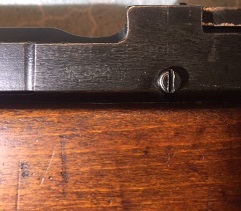
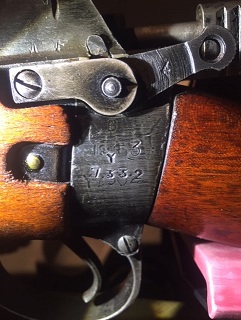
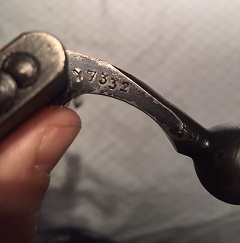
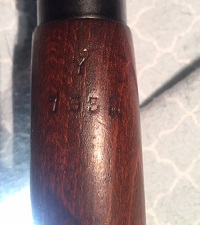
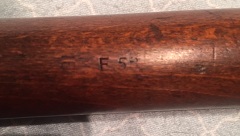
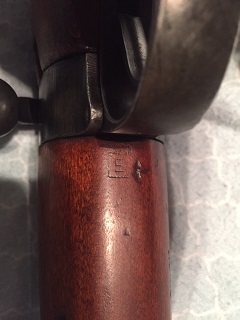
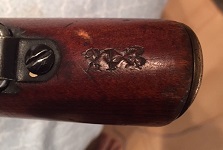
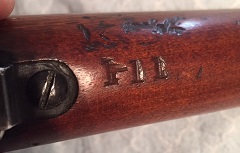
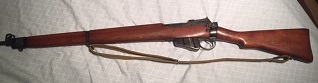
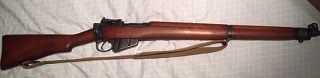

The weird thing about this one is that it is a 48 FTR and the trigger is still hung on the the trigger guard. ...
So it went through FTR before they introduced the Mk.2's trigger system.
After doing some more research I stumbled across some comments from Peter Laidler. It looks like mine having gone through FTR in 1948 was part of the original FTR process carried out at Fazakerley from 1948-1951. This wasn’t the same program that upgraded Mk.1 to Mk.1/2 and Mk.1* to Mk.1/3. Rather it was a process of refurbishment of old rifles to get them ready for the Cold War. Every part on all rifles was stripped and inspected. Those parts that could not give another 80% life were trashed and a new part fitted. Additionally, it was noted that Fazakerley never re-serialed rifles unless the old serial number couldn’t be read. In this case they were given a new serial number from the war office that was something like ACxx 12345.
From this it appears my rifle was part of the 1948 refurb, explaining why some small parts are not Shirley marked. However the barrel is B stamped with a 1943 firing proof (same year as the rifle) and the serial number on the fore stock, bolt, and receiver match, and are original early production Shirley numbers. Thus I think most of the rifle is original but small parts and apparently the butt were replaced in 1948.
From this it appears my rifle was part of the 1948 refurb, explaining why some small parts are not Shirley marked. However the barrel is B stamped with a 1943 firing proof (same year as the rifle) and the serial number on the fore stock, bolt, and receiver match, and are original early production Shirley numbers. Thus I think most of the rifle is original but small parts and apparently the butt were replaced in 1948.






















