I always seat the bullet and crimp in two separate operations to prevent problems.
The 9mm headspaces on the case mouth and only needs a taper crimp to remove the case mouth flare.
Check the bullet diameter and expander diameter and make sure they are only a few thousandths difference.
Check the bullet fit in the seater plug, the bullet should be straight and centered. If the bullet wobbles in the seater plug it can push the bullet into the case at a angle and crush the case. Many seating dies have two seater plugs for round nose and flat tip bullets.
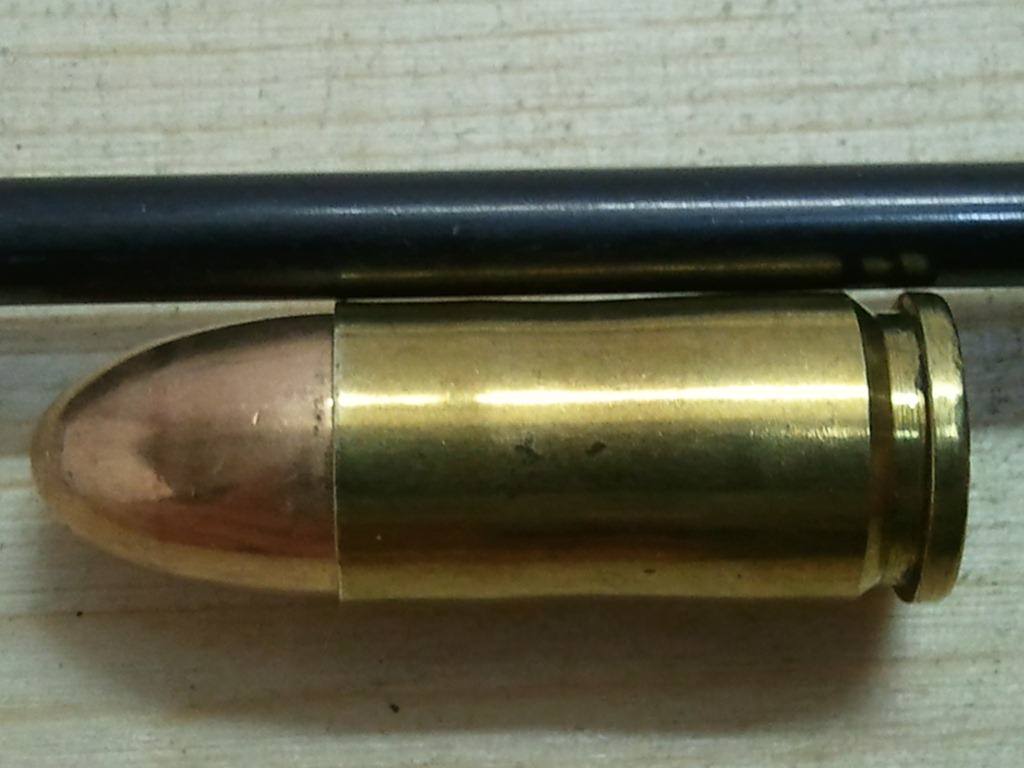
Below a seated bullet before the taper crimp and the case is slightly wasp waisted for proper bullet grip. Please notice the straight edge is resting on the raised case mouth flair.
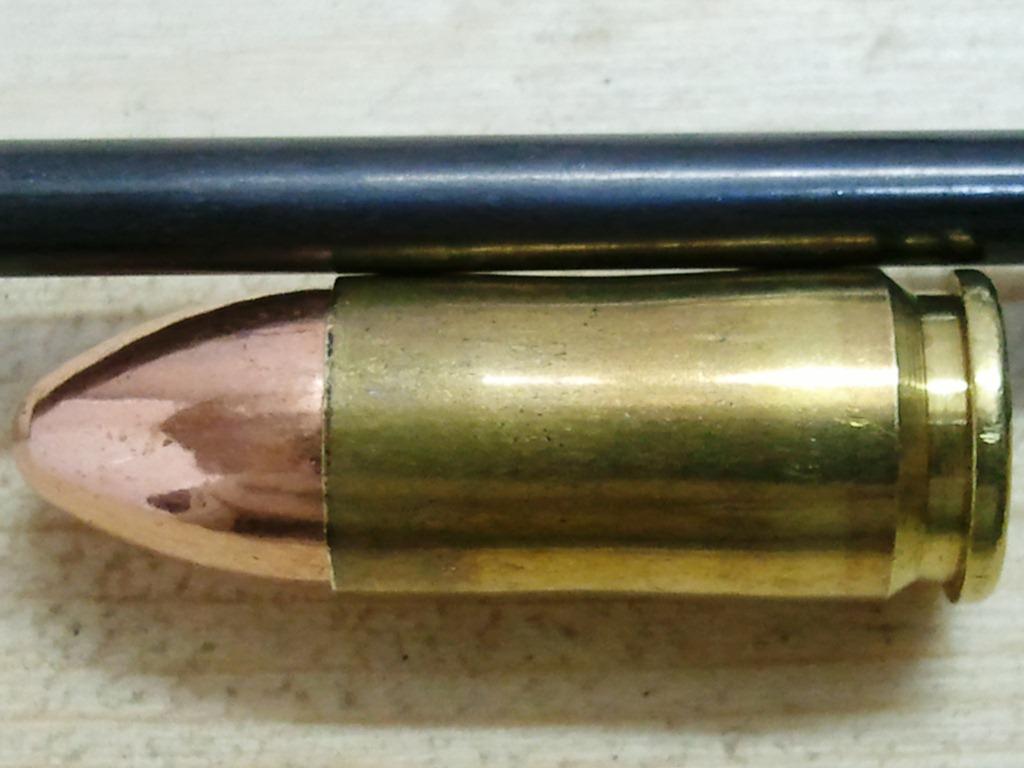
Below after a "slight" taper crimp to only remove the case mouth flair and streamline the case mouth for feeding. A taper crimp has nothing to do with gripping the bullet and the grip on the bullet is controlled by the die and expander diameters. And if the case is wasp waisted you have plenty of bullet grip.
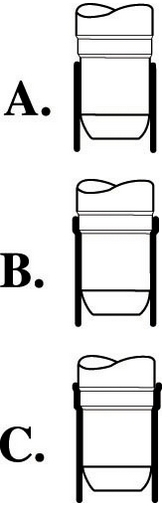
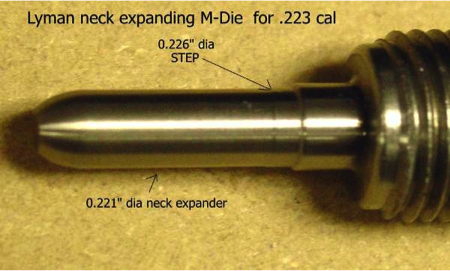
Below I prefer the Lyman type M expanders, they do not over expand the case mouth and the bullet is seated straight and does not tilt during seating. Normally the case only needs to be bumped on to section B that is .002 to .003 larger than bullet diameter. This allows the bullet to be seated "straight" by hand without any tilting during seating.
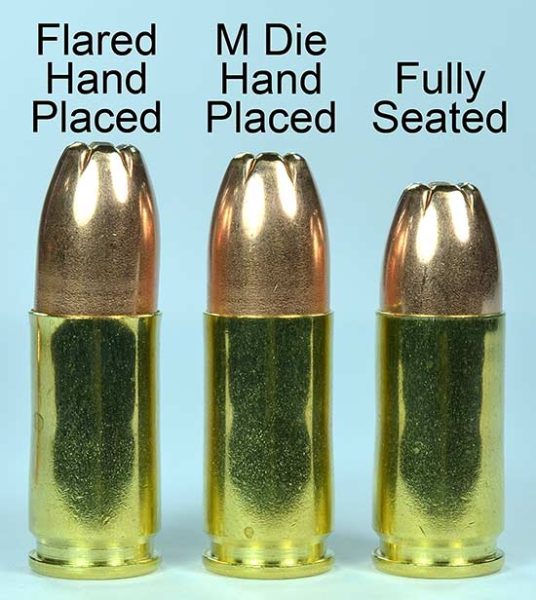
Below on the far left the standard bell shaped case mouth flair that allows the bullet to tilt, the center case using the M type expander has the bullet straight and centered in the case.
Below a example of the Lyman type M expander for the .223, many reloaders use this expander to ensure straight inline seating and reduce bullet runout. After bumping the case mouth onto the .226 section of the expander the brass springs back to slightly over bullet diameter and helps ensure straight inline seating.