












































Guys,
in this post I want to share some of my tips for the Hornady LnL Powder doser. Some of it will work for other brands but most is specific to the quick change feature of this doser....
1. Prevent Rust
The drum will rust even in the most non corrosive environments and is IMO really unnecessary. The RCBS doser has a blued drum for this reason.... On mine I removed all rust with rust away and then applied FrogLube to the drum and the exposed metal pieces of the main body. Powder does NOT stick to FrogLube and so far no issues ... If this doesnt work I will have it Nickel plated but that costs as much as the entire doser, so hopefully we wont have to get to this point...
2. Powder Drain.
This isnt really a tip but advise on getting it as its cheap and very useful to drain powder. If you are cheap like me you can 3D print it for literally free.
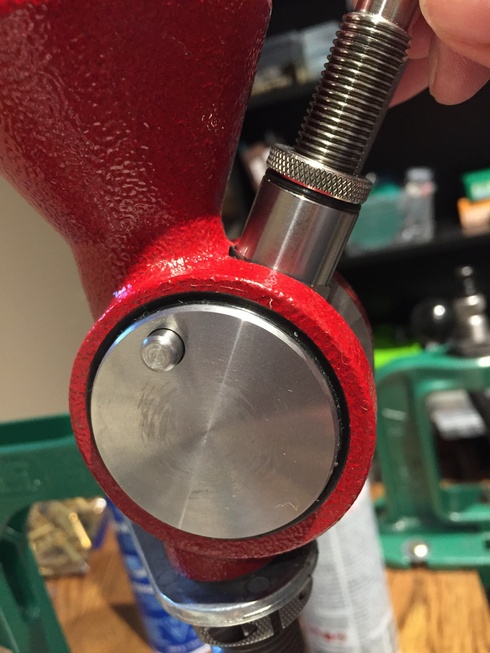
Note: ONLY pull out the metering insert if the insert is up (see pic below)! That way no powder comes out and otherwise all the powder will come out all over the place.
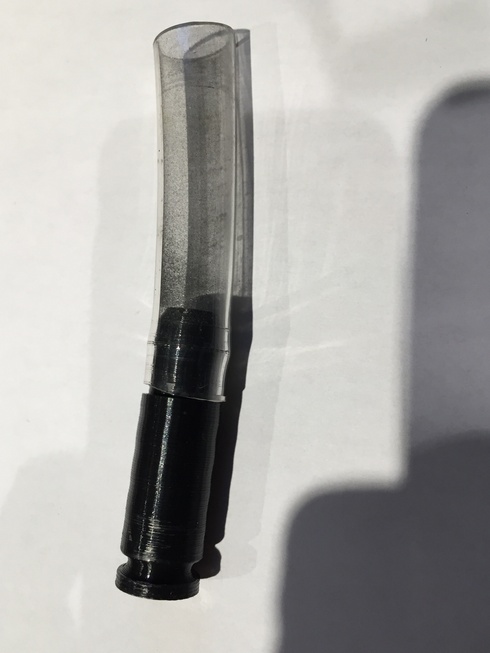
Here is the 3D printed drain plug with PVC tubing
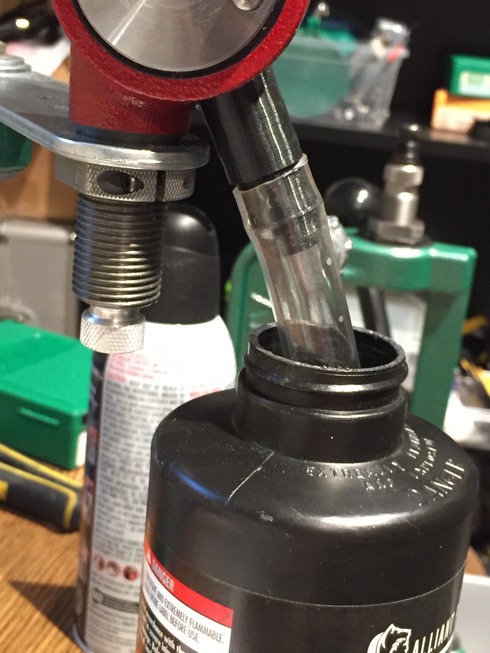
Powder happily draining into its bottle
3. Quick Adjust
Now take in mind that there are "real" solutions for this problem which are: micrometer metering inserts. However I never really liked those since I am unable to adjust them....
Also the whole idea of the Hornady quick change drum is that you can buy more metering inserts and have one for each load... But who wants to buy dozens of those for real dollars and have them sitting around? Not me! haha
So there is the cheap man's adjustment method one and two:
The first method is simpler but more messing around.
1. Step 1: Weight your charge into a dish
2. Step 2: Screw the piston all the way out
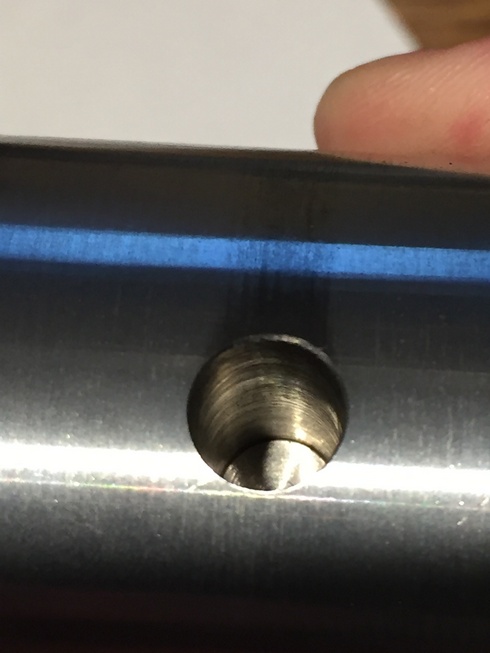
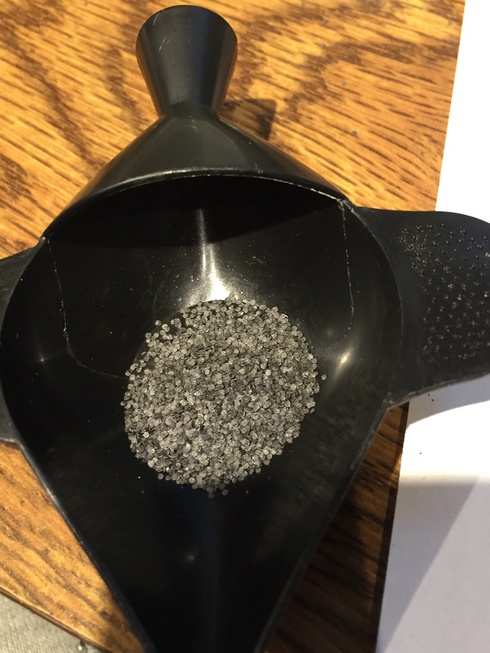
3. Step 3: Pour the powder into the hole. IMPORTANT: It must not overflow! There needs to be still space like in the pic
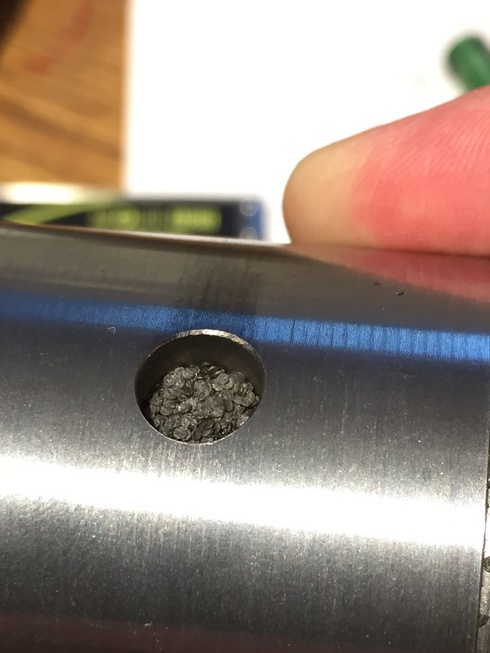
4. Step 4: Turn up the adjuster until your powder is pushed up exactly until the top edge of the drum
Note: you want the powder a bit higher as shown. It was hard to take a pic without shaking some off..
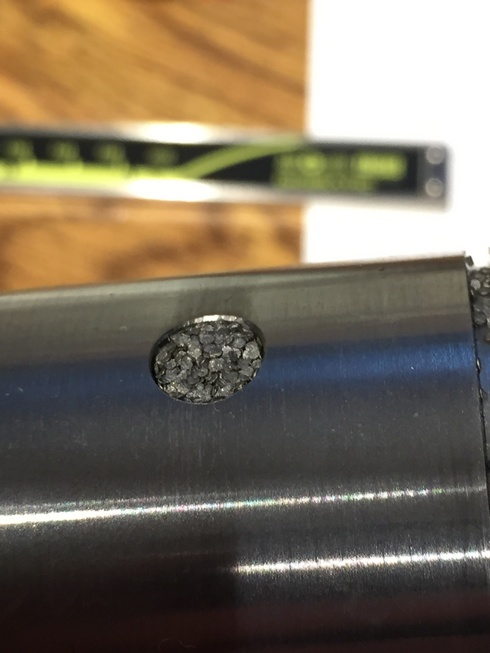
5. Step 5: Your drum is now adjusted for the exact charge you had weighed out. Tighten the lock nut and double check the dosed load. You might have to do a few small adjustments but you wont have to do wild adjustment orgies (like I usually do).
DOUBLE CHECK THE CHARGE WEIGHT BY WEIGHING IT AND FOLLOW LOADING DATA AND INSTRUCTIONS!!!!
This method works but its a bit cumbersome since you have to take the drum out. Its easy to do when you switch large to small drum.
There is however a better method:
The second method.
This is based on the idea that there is a direct linear relationship between the volume the metering adjustment and drum form and the powder weight is (within reason) directly proportional to that volume and therefore to the amount the metering adjustment screw is turned in and out. That is why they make those micrometer metering adjustment pieces (that I am not able to use).
So I collected some measurements from metering insert all the way in (0 powder volume) and then I turned it out in 2-3 mm increments so that the volume increased every time.
I took 2 times 10 weight measurements, weighed with a Mettler analytical balance and plotted the curve. What I got was a nearly linear curve of metering adjustment setting over powder weight.
The image below shows where I measure that distance. This is critical to do the same to use the data.
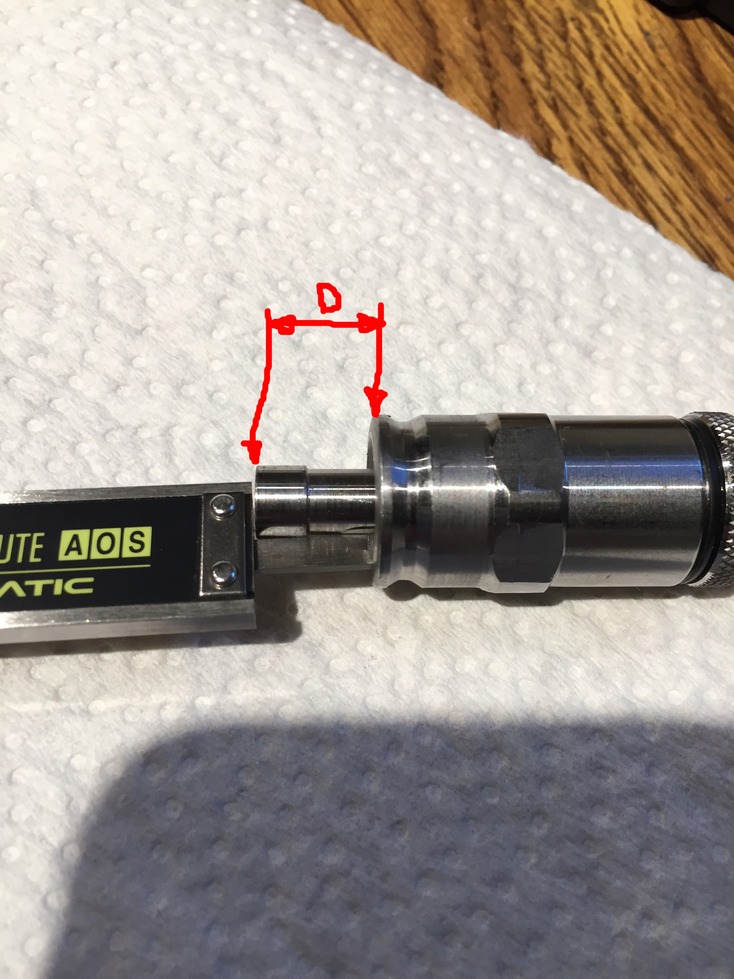
Note that this data ONLY works for the Small Pistol Insert and Alliant Bullseye Powder (that I used for this experiment)
MEGA UBER DISCLAIMER: DO NOT BLINDLY USE ANY OF THIS DATA!!!! IT IS ONLY TO GET THE INITIAL CHARGE WEIGHT!!!! DOUBLE CHECK THE CHARGE YOU ARE GETTING BY WEIGHING!!!!!!!!!!!!!!!!!!!! DO NOT LOAD AMMO UNLESS YOU ARE TRAINED AND SURE WHAT YOU ARE DOING. FOLLOW LOAD DEVELOPMENT GUIDES OF THE POWDER MANUFACTURER
So this gets us the following graph:
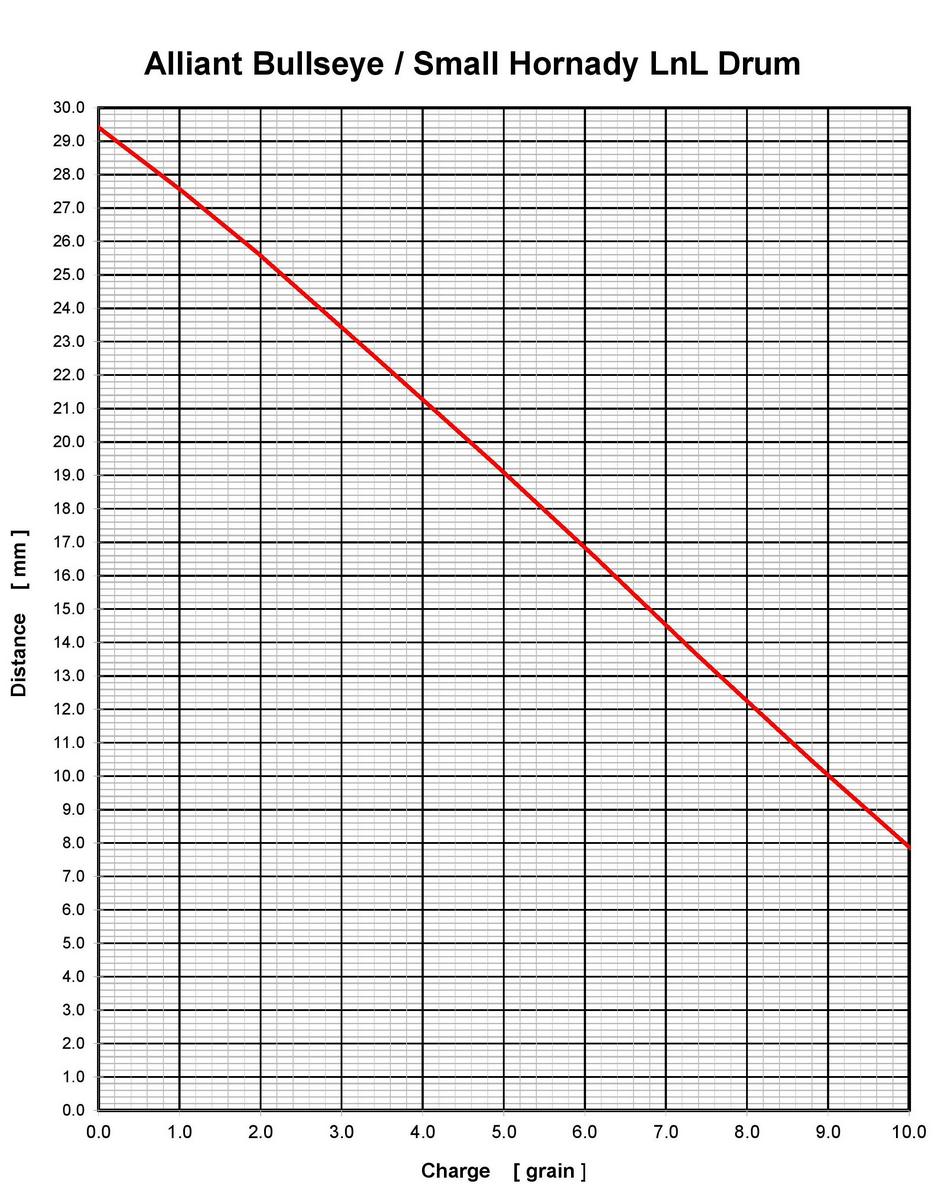
The way to read this graph is:
Pick the charge weight in grain on the x axis (bottom), go straight up until you hit the red line. Go left to the vertical y axis and read the metering insert distance.
For the example we want a 5.4 grain charge and it results in a metering insert distance of 18.2 mm.
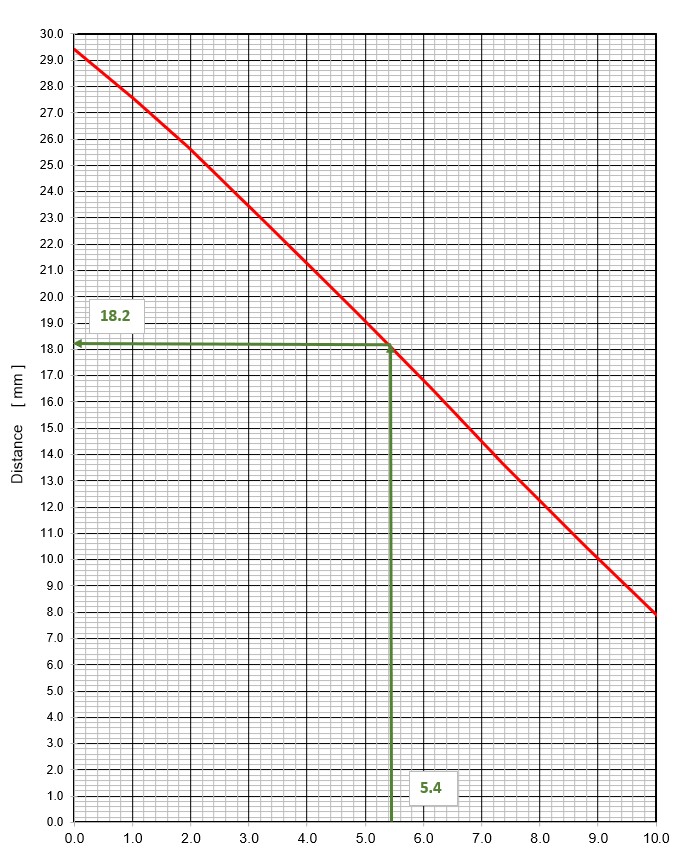
We then take the metering insert and adjust the tip distance to 18.2 mm (see pic above where to measure). Then simply re install the insert and DOUBLE CHECK YOUR LOAD!!! REMEMBER THIS IS ONLY TO GET YOU TO THE STARTING POINT QUICKLY!! YOU STILL HAVE TO WEIGH THE CHARGE YOU ARE GETTING
There might be small differences between lots of powder and your equipment but it should be so close that you have the right charge within one or two tweaks and control weights.
Of course we can also have this in convenient table form:
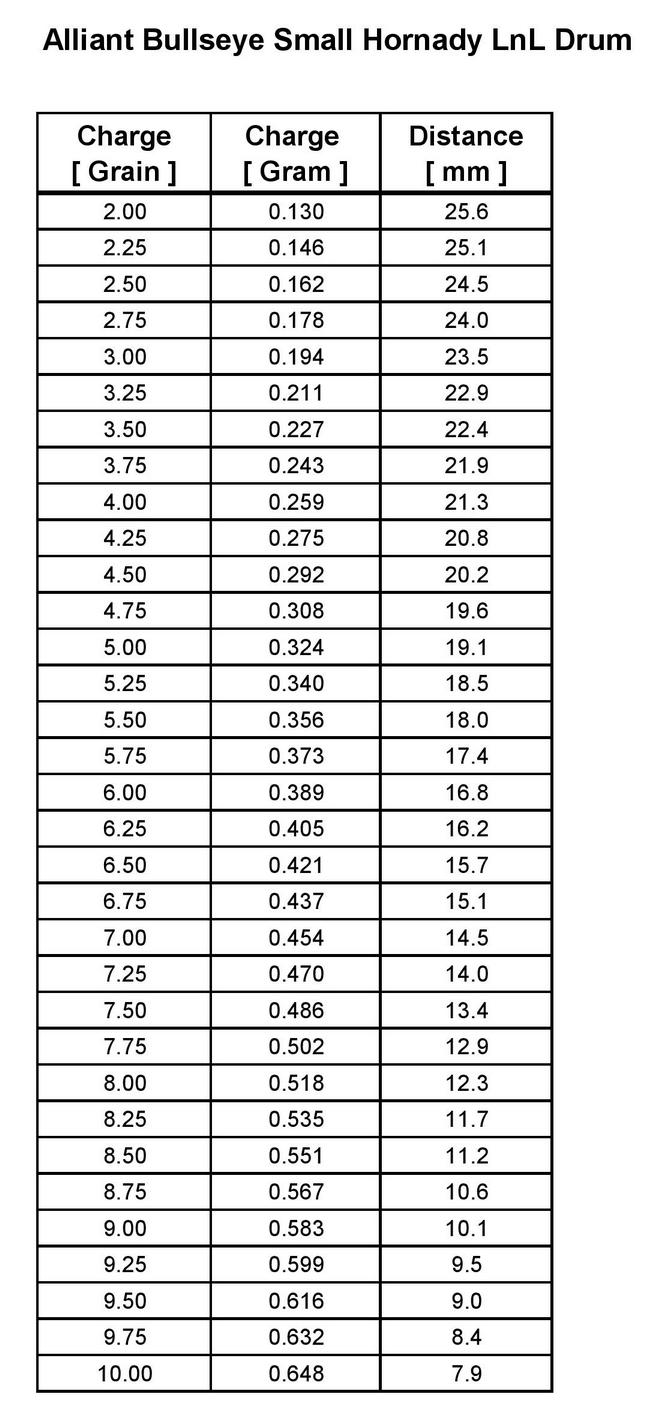
NOTE: The table and graph is specific to Bullseye powder that I use for at least 5 different loads. I have employed this method for a while and found it saves me a lot of time.
If using this method you have to develop such curve for each powder once.
Once you have your favorite charge weights you can simply measure the tip distance, write it down and then just dial it in by measuring the tip distance, rather than with trial and error. Again, this is only for if you are cheap like me ...
Hope this helps! I have for years used trial and error and wrenched this adjustment screw for way more time as I care to admit ... Making stepped loads has for me lost all its pain
in this post I want to share some of my tips for the Hornady LnL Powder doser. Some of it will work for other brands but most is specific to the quick change feature of this doser....
1. Prevent Rust
The drum will rust even in the most non corrosive environments and is IMO really unnecessary. The RCBS doser has a blued drum for this reason.... On mine I removed all rust with rust away and then applied FrogLube to the drum and the exposed metal pieces of the main body. Powder does NOT stick to FrogLube and so far no issues ... If this doesnt work I will have it Nickel plated but that costs as much as the entire doser, so hopefully we wont have to get to this point...
2. Powder Drain.
This isnt really a tip but advise on getting it as its cheap and very useful to drain powder. If you are cheap like me you can 3D print it for literally free.
Note: ONLY pull out the metering insert if the insert is up (see pic below)! That way no powder comes out and otherwise all the powder will come out all over the place.
Here is the 3D printed drain plug with PVC tubing
Powder happily draining into its bottle
3. Quick Adjust
Now take in mind that there are "real" solutions for this problem which are: micrometer metering inserts. However I never really liked those since I am unable to adjust them....
Also the whole idea of the Hornady quick change drum is that you can buy more metering inserts and have one for each load... But who wants to buy dozens of those for real dollars and have them sitting around? Not me! haha
So there is the cheap man's adjustment method one and two:
The first method is simpler but more messing around.
1. Step 1: Weight your charge into a dish
2. Step 2: Screw the piston all the way out
3. Step 3: Pour the powder into the hole. IMPORTANT: It must not overflow! There needs to be still space like in the pic
4. Step 4: Turn up the adjuster until your powder is pushed up exactly until the top edge of the drum
Note: you want the powder a bit higher as shown. It was hard to take a pic without shaking some off..
5. Step 5: Your drum is now adjusted for the exact charge you had weighed out. Tighten the lock nut and double check the dosed load. You might have to do a few small adjustments but you wont have to do wild adjustment orgies (like I usually do).
DOUBLE CHECK THE CHARGE WEIGHT BY WEIGHING IT AND FOLLOW LOADING DATA AND INSTRUCTIONS!!!!
This method works but its a bit cumbersome since you have to take the drum out. Its easy to do when you switch large to small drum.
There is however a better method:
The second method.
This is based on the idea that there is a direct linear relationship between the volume the metering adjustment and drum form and the powder weight is (within reason) directly proportional to that volume and therefore to the amount the metering adjustment screw is turned in and out. That is why they make those micrometer metering adjustment pieces (that I am not able to use).
So I collected some measurements from metering insert all the way in (0 powder volume) and then I turned it out in 2-3 mm increments so that the volume increased every time.
I took 2 times 10 weight measurements, weighed with a Mettler analytical balance and plotted the curve. What I got was a nearly linear curve of metering adjustment setting over powder weight.
The image below shows where I measure that distance. This is critical to do the same to use the data.
Note that this data ONLY works for the Small Pistol Insert and Alliant Bullseye Powder (that I used for this experiment)
MEGA UBER DISCLAIMER: DO NOT BLINDLY USE ANY OF THIS DATA!!!! IT IS ONLY TO GET THE INITIAL CHARGE WEIGHT!!!! DOUBLE CHECK THE CHARGE YOU ARE GETTING BY WEIGHING!!!!!!!!!!!!!!!!!!!! DO NOT LOAD AMMO UNLESS YOU ARE TRAINED AND SURE WHAT YOU ARE DOING. FOLLOW LOAD DEVELOPMENT GUIDES OF THE POWDER MANUFACTURER
So this gets us the following graph:
The way to read this graph is:
Pick the charge weight in grain on the x axis (bottom), go straight up until you hit the red line. Go left to the vertical y axis and read the metering insert distance.
For the example we want a 5.4 grain charge and it results in a metering insert distance of 18.2 mm.
We then take the metering insert and adjust the tip distance to 18.2 mm (see pic above where to measure). Then simply re install the insert and DOUBLE CHECK YOUR LOAD!!! REMEMBER THIS IS ONLY TO GET YOU TO THE STARTING POINT QUICKLY!! YOU STILL HAVE TO WEIGH THE CHARGE YOU ARE GETTING
There might be small differences between lots of powder and your equipment but it should be so close that you have the right charge within one or two tweaks and control weights.
Of course we can also have this in convenient table form:
NOTE: The table and graph is specific to Bullseye powder that I use for at least 5 different loads. I have employed this method for a while and found it saves me a lot of time.
If using this method you have to develop such curve for each powder once.
Once you have your favorite charge weights you can simply measure the tip distance, write it down and then just dial it in by measuring the tip distance, rather than with trial and error. Again, this is only for if you are cheap like me ...
Hope this helps! I have for years used trial and error and wrenched this adjustment screw for way more time as I care to admit ... Making stepped loads has for me lost all its pain





















