A question or two that will impact the final decision is going to be: is the new shooter/hunter primarily hunting open flatland country, a mix of open and bush, and/or hunting in mountain habitats? And what is their primary targeted species?
This will mostly have an impact on scope and spotting scope choices...although some will argue that it will impact binocular choice as well.
In order of priority:
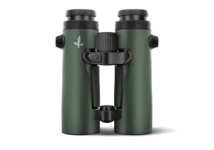
1) Binos - these will get the most use for the shooter/hunter day in, day out. Buy the best glass you can afford in your budget.
Most people will opt for a good 10x40 power binocular. This will give the best balance/service for the user for all terrain/habitat types.
A good 8 power binocular ma be preferrable for the user that will spend the majority of their time in thick brush.
Some may wish a higher magnification...but more power than 10 is for specialty purposes, such as long distance scanning to pick up smaller game species in the mountains or open plains, and then switching to spotting scopes for better view of the target animal for identification (###, and legal size/age requirements, and then trophy quality). The down side to higher magnification is the image being shaky when held by hand (requiring a tripod to stabilize the bino and reduce the shaky image), hard to see the long distance target clearly, and eye fatigue causing headaches from long sessions of glassing.
I will mention range finding binoculars here, even though this may be a seperate piece of equipment to be discussed later in further detail.
Many new shooters/hunters may want to buy a range finding binocular, as they may be inexperienced in judging distances, and having this capacity in one piece of equipment has many benefits here:
- one piece of glass equipment vs two for convenience, efficiency and security
- one piece of equipment to carry and use instead of two
- one piece of that you can glass the animal and then range the animal, without needing to put one down and then use the other - saves time, limits movement the game may spot and spook, and can be done quicker so that shot opportunities can be taken advantage of and not missed
- one piece of equipment you may not forget to bring, or lose as compared to pieces of equipment
2) Riflescopes - this will allow the new shooter to better see the target or animal, and place their shot on target more accurately. Again buy the best glass you can afford in your budget.
Most new shooters/hunters are going to be best served by a good riflescope in the 3-9x40, 3.5-10x40 range. This will give the best balance/service for the user for all terrain/habitat types and level of light available during legal shooting hours. 3 Power is sufficient for close distance shots where the user needs a wide field of view and sufficient light gathering ability and exit pupil size to allow the most usable light through the scope to enter their eye's retina opening, allowing them to clearly see their target and place their shot on target more accurately. 10 power sufficient for longer distance shots where the user needs more magnification for accurate shot placement (aim small, miss small principle). Higher than 10 power again leads to shakier images when field shooting positions are less than perfectly stable (offhand being the worst).
If they are going to specialize in target and/or varmint shooting, then their would be justification for moving up to a higher magnification scope such as a 4-12x50 or 4.5-14x50 scope for the smaller targets, and longer distances they may typically encounter, and they may be typically shooting from a shooting bench or table, and/or shooting sticks/tripods where they will be much more stable than typical field shooting positions when hunting.
Edit comment: A new shooter/hunter is also better served with a second focal plane scope (SFP). The First Focal Plane (FFP) scopes are meant for long distance shooting, and for the reticle to be of a useful size in the scope must be at max power, which reduces field of view for short range shots on game in the dark timber, thick brush habitats. Keep it simple to let the new shooter/hunter focus on the basics, and being set up to win. They can upgrade later when they have more experience.
3) Rangefinders - for the new shooter/hunter, the rangefinder is a valuable tool to enable them to accurately determine the range to their target so they can determine the proper holdover on targets further than the distance which their scope has bee zeroed to (for the typical hunter, 200 yards), or in the event that they have a Bullet Drop Compensated (BDC) type reticle, which holdover point in the reticle to place on target for the appropriate range, or in the event that they have a calibrated turret on thier rifle for their cartridge, velocity, elevation and temperature, they can dial the turret to the appropriate range or holdover setting, to place the crosshair on target for that range. Most new shooters and hunters have a difficult time estimating range. even experienced shooters/hunters can still have difficulty here, as it is a skill that takes time to acquire, and must be practiced regularly to keep sharp. Changes in terrain/habitat types can also mess with one's ability to estimate range, and even more so if you do not regularly shoot/hunt in that particular type of terrain/habitat. Estimating range down pipelines/hydrolines or seismic trails in thick forest can also be tricky, as can shooting across gullies, ravines or valleys.
4) Spotting scopes - this is the optional piece of equipment for the new shooter/hunter. And needing one will be based more on the amount of time where the user (and/or spotter) will be shooting targets at longer distances, or hunting smaller animals at longer distances. Again, if needed or wanted, buy the best glass one can afford.
For target shooting, it really is going to depend on the actual use. If just target shooting at 100 yards for sighting in rifles, a lower power spotting scope will be sufficient compared to the target shooter that may be shooting smaller calibers at longer distances, or at smaller targets. If the user is hunting mountain game, which can be typical at longer distances, and needs to count age rings on a sheep to determine age or length to be legal, more magnification will be very useful.
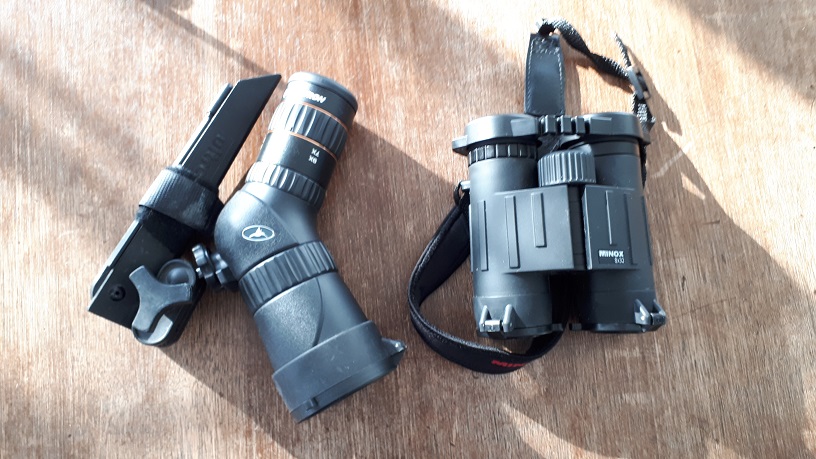
As an example, I use a fixed 30x60 spotting scope for target shooting my 22LR, and zeroing rifles at the 100 and 200 yard ranges. (I have even used it for my mountain hunting as it is more compact and lighter for packing). For longer distance target shooting and mountain hunting, many opt for 15-45 or 20-60-x65 spotting scope which provides sufficient magnification for both scanning and close inspection of targets, while still being light enough and compact enough for general purposes of mountain hunting. Tripods are necessary for both, and size and weight considerations may also come into your final decision for selection and purchase.
Those that need more will opt for higher magnification and larger objectives. This is fine for target shooters or hunting where you are not packing the spotting scope and heavier tripods needed for these scopes long distances or in more difficult terrain such as mountain hunting. Most who do use these in the mountains, invariably downsize after one mountain trip!
As an example, for the actual purchase, the new shooter/hunter could look at the Leupold RF binocular, a VX-3 3.5-10x40 scope, and a SX-4 15-45x65 spotting scope.
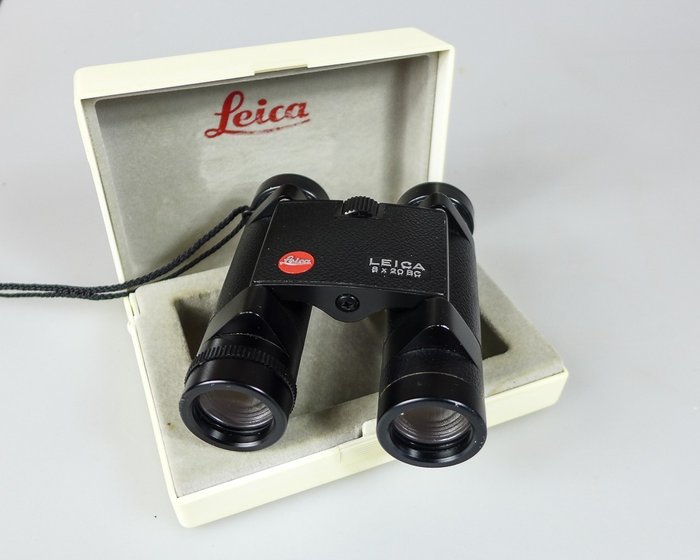
As suggested above, to buy once, buy right, more money may be required in the budget..and may require waiting until later to obtain the spotting scope when the funds can be available for it, they could get a higher end RF binocular such as the Leica (less expensive than Swarovski and Zeiss, yet top notch glass), a VX-3 3.5-10x40 scope or even VX-5HD 2-10x42 scope, and then the Swarovski 20-60x65 spotting scope.
Buying good, used optics will save some dollars for their overall budget. Buy once buy right. It will save you money in the end!
Hope this helps!