Interesting Case Separation

tiriaq

Super Moderator
Moderating Team
Rating - 100%
252   0   0
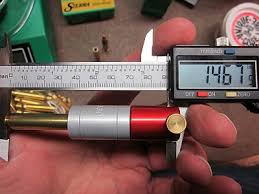
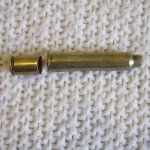
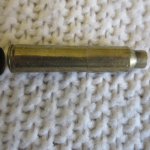
I was using a large batch of .223 brass which had been reloaded (FL sized) a number of times. Fired during practice in an AR. Guess they got tired of being formed and sized, got a few separations. Retired the batch.
When a case separated, the base portion would be extracted and ejected normally, the front portion would stay in the chamber. The round being fed would stick in the separated front section, creating a stoppage. Extract and eject, ready to go.
003.jpg
004.jpg
 

Attachments

  • 003.jpg
    003.jpg
    101.9 KB · Views: 733
  • 004.jpg
    004.jpg
    86 KB · Views: 731
Lol that looks pretty funny. At first I thought it was something with a really long case, like a 7stw or something lol

At least it ejected easy. I still dread the day I get one of these in my Enfield...
 
Usually when a case separates in a Lee Enfield, the break is closer to the head. Just run the next round into the chamber, and extract. The broken case will probably come out. If it doesn't, a brass brush pushed in and pulled out will usually clear it. A broken case extractor works too. Usually the broken case is not stuck tight in the chamber, and can be readily removed.


The absolute worst thing to do is to start digging with something that could damage the chamber.

It does look like an extra long case. Takes a second look to realize what has happened.
 
How many trimmings?

Probably twice. Once starting with the once fired cases, again after a few reloads. I have one of the units that indexes off the shoulder of the full length sized case and uses an end mill to do the trimming. Run it in my small lathe. Very fast.
 
It has only happened with this batch of well used brass. It has never happened with new brass or factory ammunition, or other batches of reloaded brass.
 
When I was qualifying for MG way back when, in Dundurn, on the 50 HMG I had a failure resulting in a live round being jammed up the backside of a live tracer, during my night fire. The live round didn't set off the primer on the tracer. The two rounds became one long one, with an unusual crimp, at the meeting point.

You photo reminded me of that.

Was beyond what we were trained to deal with as machine gunners - weapons techs had to be called out, and about 3 hours later, my MG was back up and running.

The next brief period of time where I finished off all of my rounds, is a full-auto memory that will last me a lifetime.
 
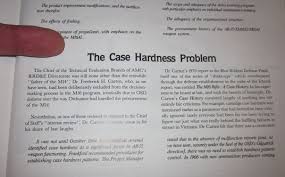
During the 1968 Congressional hearings on the M16 jamming problems many things were learned. And one of them was the 5.56 case was not made hard enough to be fired in over gassed M16 rifles.

suc7fK5.jpg


nqhNKyV.jpg


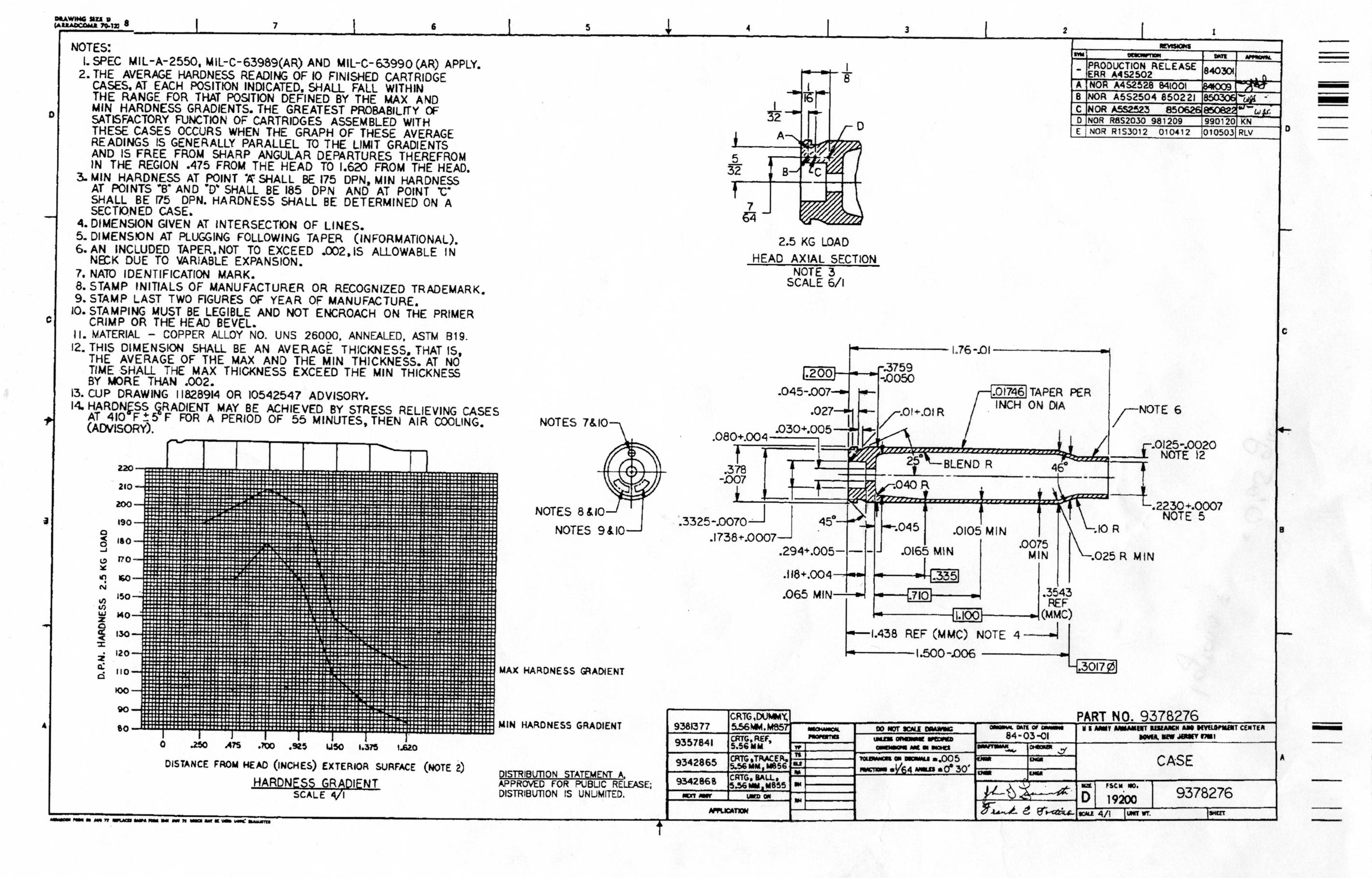
The fix was to make the 5.56 case out of harder brass than commercial .223 cases.

JcVlKzc.jpg


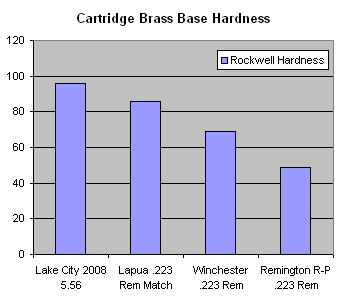
How Hard is Your Brass? 5.56 and .223 Rem Base Hardness Tests
http://bulletin.accurateshooter.com/2014/05/how-hard-is-your-brass-5-56-and-223-rem-base-hardness-tests/

brasstest03.png


LC 2008 = 96
Lapua 223 Match = 86
Winchester 223 = 69
Remington “R-P” = 49

Question, your photos look odd and the cases appear to be longer than normal. Is the shoulder location longer on your fired cases than a new case?

On a over gassed AR15 the bolt can start moving to the rear when the case is still gripping the chamber walls. Meaning the fired case may be longer than the chamber when ejected.

Your stretching is high up on the case and looks like the softer annealed section was still gripping the chamber walls when the bolt started pulling on the rim.

What powder were you using, high port pressure for that type case may be the problem.
 
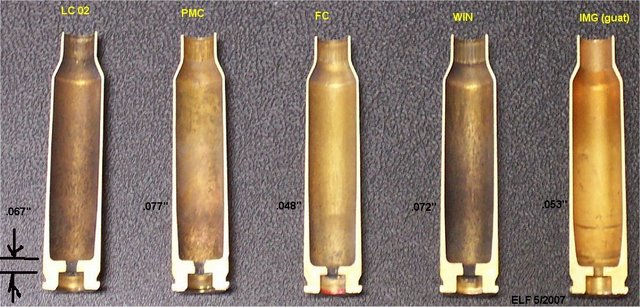
Sorry, but reflects a significant basic reloading error- an incipient case head separation. In multiple firings and commonly improperly adjusted dies for full length resizing, the brass stretches and flexes; creating a thinning and soft ring that will eventually break loose. Often, prior to a separation the brass will show signs that it is getting ready to fracture. Have a search on the net, or read the content in a published loading manual- there are some good tutorials about how to recognize the problem developing before a full case separation in the field ruins your day.

I use a Hornady cartridge case headspace gauge to measure "fired" cases and then bump the case shoulder back .003 for my AR15 rifles. Normally a drop in case gauge is only used to check a resized case and the fired case length can't be checked because of the case diameter.

H0SXHH8.jpg


But high gas port pressure will cause the bolt to "pull" on the case when it is still gripping the chamber walls.

On a M1 Garand high port pressure will bend the op rod, on the M14 and M16 type rifles the case will stretch. Meaning the fired can can end up longer than the chamber headspace.

Also if using a small base die besides reducing the case diameter more it also pushes the shoulder back .002 to .003 more than a standard die. Meaning a small base die will reduce the case to minimum SAAMI dimensions.
 
During the 1968 Congressional hearings on the M16 jamming problems many things were learned. And one of them was the 5.56 case was not made hard enough to be fired in over gassed M16 rifles.

suc7fK5.jpg


nqhNKyV.jpg


The fix was to make the 5.56 case out of harder brass than commercial .223 cases.

JcVlKzc.jpg


How Hard is Your Brass? 5.56 and .223 Rem Base Hardness Tests
http://bulletin.accurateshooter.com/2014/05/how-hard-is-your-brass-5-56-and-223-rem-base-hardness-tests/

brasstest03.png


LC 2008 = 96
Lapua 223 Match = 86
Winchester 223 = 69
Remington “R-P” = 49

Question, your photos look odd and the cases appear to be longer than normal. Is the shoulder location longer on your fired cases than a new case?

On a over gassed AR15 the bolt can start moving to the rear when the case is still gripping the chamber walls. Meaning the fired case may be longer than the chamber when ejected.

Your stretching is high up on the case and looks like the softer annealed section was still gripping the chamber walls when the bolt started pulling on the rim.

What powder were you using, high port pressure for that type case may be the problem.

I Lold pretty good when I checked out that link. They're testing case wall thickness as much as they're testing hardness doing it that way. To to a proper indentation hardness test, there can't be any give in the material to be tested. Trying to hardness test an empty, hollow, thin walled metal cylinder is ridiculous.
 
Sorry, but reflects a significant basic reloading error- an incipient case head separation. In multiple firings and commonly improperly adjusted dies for full length resizing, the brass stretches and flexes; creating a thinning and soft ring that will eventually break loose. Often, prior to a separation the brass will show signs that it is getting ready to fracture. Have a search on the net, or read the content in a published loading manual- there are some good tutorials about how to recognize the problem developing before a full case separation in the field ruins your day.

TS is a retired gunsmith... he's pretty well versed on the subject.
He was just sharing his experience, which is appreciated by some of us at least.
Even when I section cases I usually section a 1/2 inch "L" portion out of the head to check condition of a batch of well used brass, I would never have considered checking for seperation mid case like that one split.
 
I Lold pretty good when I checked out that link. They're testing case wall thickness as much as they're testing hardness doing it that way. To to a proper indentation hardness test, there can't be any give in the material to be tested. Trying to hardness test an empty, hollow, thin walled metal cylinder is ridiculous.

How do you think they test the cases for the correct hardness after manufacture.

My buddy CatShooter did the testing after a argument over which brand of brass was the hardest. And CatShooter manufactures and test ammunition for the government and why he has a Rockwell hardness tester.

And there is no give or flex when the case is tested just above the extractor groove below.

ohI86Bf.jpg
 
Back
Top Bottom