












































You are using an out of date browser. It may not display this or other websites correctly.
You should upgrade or use an alternative browser.
You should upgrade or use an alternative browser.
Internet advice.
- Thread starter 'Boo
- Start date

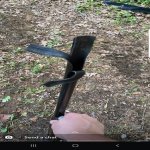
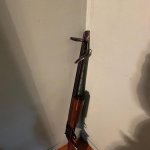
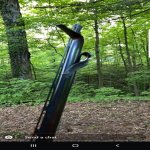





Wrong as wrong can be. Lead was banned for migratory birds years ago.
BB gun BBs I've seen aren't lead.
BB gun BBs I've seen aren't lead.
You're correct, they are steel. Also "steel" shot for waterfowl is soft iron not steel.

You're correct, they are steel. Also "steel" shot for waterfowl is soft iron not steel.
BBs are soft steel too
I load them in 12G with no ill effects
The only issue is I can't find any more "steel" wads
Shot needs to be compressible, even "steel" shot, so that the shot column thins out to fit through the choke without causing over-pressure. But those airgun BBs don't compress so well, resulting in the shot column is oversize and hangs up in the choke. So it is a barrel obstruction of sorts, and the results are the same - bulged or split at the choke area. Seen a few of those older fixed choke shotguns that ended up looking just like the pictures in the early days of steel shot.
Remington used to advise that their 870 and 1100 fixed choke shot guns were Ok with steel shot up to size 2 or 3, but not to use shot larger than that. And that was for actual waterfowl-shotgun steel shot, not these airgun BBs which are harder.
Remington used to advise that their 870 and 1100 fixed choke shot guns were Ok with steel shot up to size 2 or 3, but not to use shot larger than that. And that was for actual waterfowl-shotgun steel shot, not these airgun BBs which are harder.
I'm no expert and wouldn't have predicted this outcome but I also wouldn't be making substitutions to my reloading recipe like this either. Even if the internet told me to! I would think that the .177 BBS would have been more expensive than the correct shot as well...
Shot needs to be compressible, even "steel" shot, so that the shot column thins out to fit through the choke without causing over-pressure. But those airgun BBs don't compress so well, resulting in the shot column is oversize and hangs up in the choke. So it is a barrel obstruction of sorts, and the results are the same - bulged or split at the choke area. Seen a few of those older fixed choke shotguns that ended up looking just like the pictures in the early days of steel shot.
Remington used to advise that their 870 and 1100 fixed choke shot guns were Ok with steel shot up to size 2 or 3, but not to use shot larger than that. And that was for actual waterfowl-shotgun steel shot, not these airgun BBs which are harder.
(Finally) I have found the Internet post where someone really bored actually measured the BB hardness: 92 HRB (Rockwell B Scale)
This is very mild steel.
https://www.thehighroad.org/index.php?threads/copperhead-bbs-in-a-12-gauge.294725/#post-3637006
also, one of the steel shot manufacturers is ... Daisy
79 HRT15 is about 97HRB (HB3000) or 91HRB (HB500)
Daisy Manufacturing uses low carbon steel 1008 wire to make its shot. Steel wire of a selected diameter is protruded through a hole in a header machine plate. A blade cuts the wire to the desired size. Opposing dies catch the falling piece and press it into a ball. The collected balls are ground using cast iron grinding wheels to a specified diameter. The shot is then annealed to a maximum hardness of79 on the Rockwell 15T scale. The final step is the application an oil coating to prevent rust. There is no polishing. Daisy manufactures steel shot in whole number sizes from #8 to F (TIT) size (14,15). 1008 steel wire is 99% iron.
79 HRT15 is about 97HRB (HB3000) or 91HRB (HB500)
(Finally) I have found the Internet post where someone really bored actually measured the BB hardness: 92 HRB (Rockwell B Scale)
This is very mild steel.
https://www.thehighroad.org/index.php?threads/copperhead-bbs-in-a-12-gauge.294725/#post-3637006
Yeah, you must be bored. LOL
It's mild steel. Pretty hard shot though. Off the top of my head it seems overly trusting to assume the material used to make airgun BBs would be the same in every batch, from every manufacturer. Of course that doesn't matter in a BB gun.
Hardness might not even be the only contributing factor - larger shot sizes are less fluid or compressible. Remington didn't recommend using steel shot above #2 in fixed choke shotguns for that reason.
Regardless of the cause - the results do speak for them selves in this case.


BB gun BBs I've seen aren't lead.
You are correct. My bad, I had a moment and was thinking pellets.






















