











































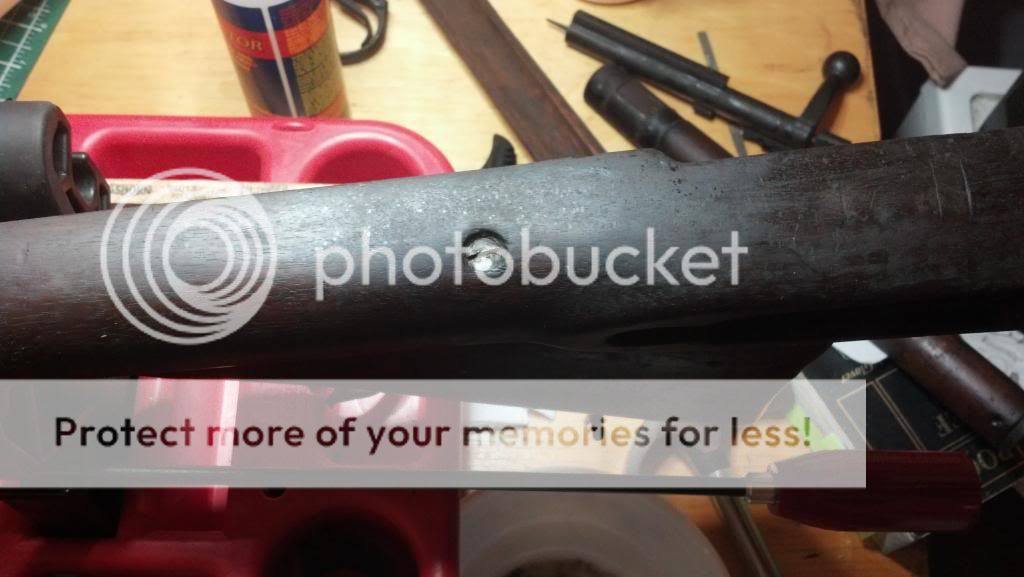
I thought I would do a little write up showing my process of repairing the "ishy screw" on a walnut forend and refinishing the stock set. It's similar in ways to the process that Peter Laidler described for patching the "Ishy screw" over on the milsurps.com forum with some modifications. It should also be noted that this doesn't cover the process to fix a cracked forend seeing as mine was not cracked, it merely shows how to patch the "reinforcement" that the Indian armourers installed. I also use an orange shellac and BLO combination as a finish which I do realise is not necessarily the true finish that the rifle would have had in service but was the finish it had when I acquired it which I believe was the finish that was applied during its time in India. That being said I hope this helps anyone looking to refinish a stock set or patch an ishy screw.
What I used for materials and tooling and where I got it is as follows
Heirloom furniture stripper- (Canadian tire)
tired and true traditional finishes Danish oil (Boiled linseed oil)- (Lee Valley Tools)
walnut blank-(Lee Valley Tools)
2002 GF cabinetmakers glue - (Lee Valley Tools)
1LB orange shellac flakes- (Lee Valley Tools)
1 bottle of Everclear 190 proof grain alcohol (Liquor Store)
VERITAS detail flush-cut saw (Lee Valley Tools)
razor saw (hobby saw) (Most Hobby Stores)
scalpel/ exacto knife
7/16" snug plug cutter
3/8" deep plug cutter
7/16" HSS forstner bit
3/8" HSS forstner bit
Brushes (I used foam and got decent results)
0000 steel wool
soft cloths/ rags
disposable gloves
cotton swabs
To start set up your work area with a couple layers of old news paper or drop cloth of some sort to protect your work surface from damage. Now disassembled the rifle and remove all the wood and set the barreled action and metal parts aside. Once that is done take your stock set to your work area and using the Heirloom furniture stripper apply liberal coats to the wood surface taking care to avoid getting stripper on the metal parts of the hand guard and forend because it will most likely remove the suncorite paint they used as a protectant. After letting it sit for a minute or two you should see the shellac beginning to peel and dry sports where the shellac has rubbed off and just the boiled linseed oil remains. Apply another generous coat of the stripper and begin to rub the finish off with the steel wool being sure to keep your strokes with the grain to avoid making scratches across the grain and damaging the final finish. Repeat this until none of the original finish remains.
Now that the finish has been stripped we can now do a little preparation for refinishing. Start by taking the upper and lower hand guard as well as the buttstock and smoothing them out with 0000 steel wool, this will remove any rough patches and any remaining shellac that may have been left behind from stripping. Once the wood is satisfactorily smooth apply a light coat of the Danish oil allowing it to penetrate for five minutes, after letting the oil penetrate wipe off any excess and let it dry for a day. With the hand guards and buttstock set aside drying we can now move onto mixing our shellac. I'm not going to cover the various mixtures or "cuts" of shellac but for this project I used a 1LB cut which is a fairly thin mix and suitable for this purpose. The proportions of shellac to alcohol for the amount I needed and for the cut was 16 fl oz of alcohol to 2oz of shellac flakes. With the shellac and alcohol measured out I combined the two in a glass quart mason jar, once combined it takes about a day for the shellac flakes to fully dissolve into the alcohol. It may also be helpful to note that the finer the shellac flakes the faster the dissolution process will be in addition giving the jar a couple vigorous shakes now and then will also aid the process.
With the shellac mixed and the handguards drying we can move onto patching that ishy screw. I would recommend that the following processes be completed on a drill press to ensure the best results are achieved. First start by taking your piece of walnut and your plug cutters and cut four plugs. Two 7/16" plugs cut to the full depth of the plug cutter and two 3/8" plugs again cut to the full depth of the plug cutter as shown below. It should be noted that before cutting you can try and match the grain of the plugs to the grain of the forend but that's just personal preference.
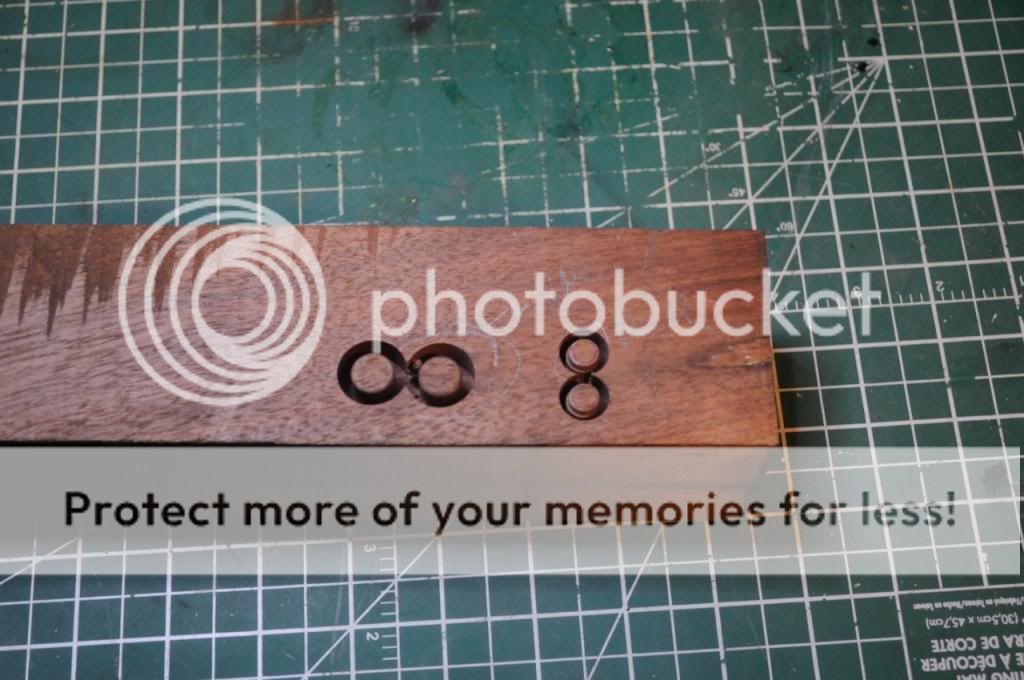
To remove the plugs simply use a screwdriver or something similar to pop the plugs out. Best results will be achieved by inserting the screwdriver as close to the full depth as possible then gently prying until they pop
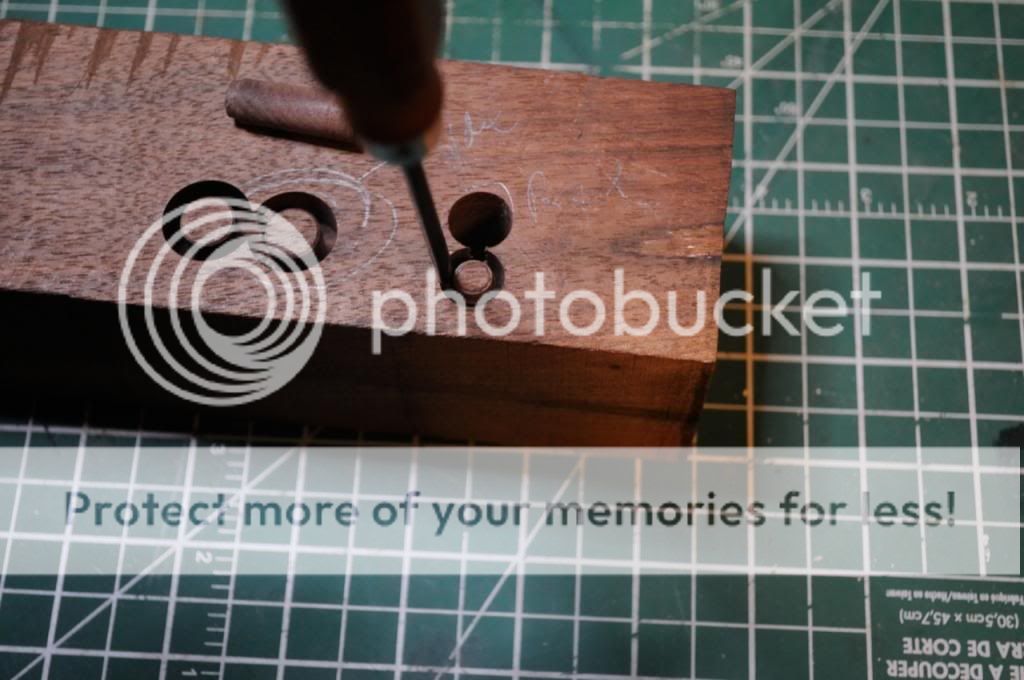
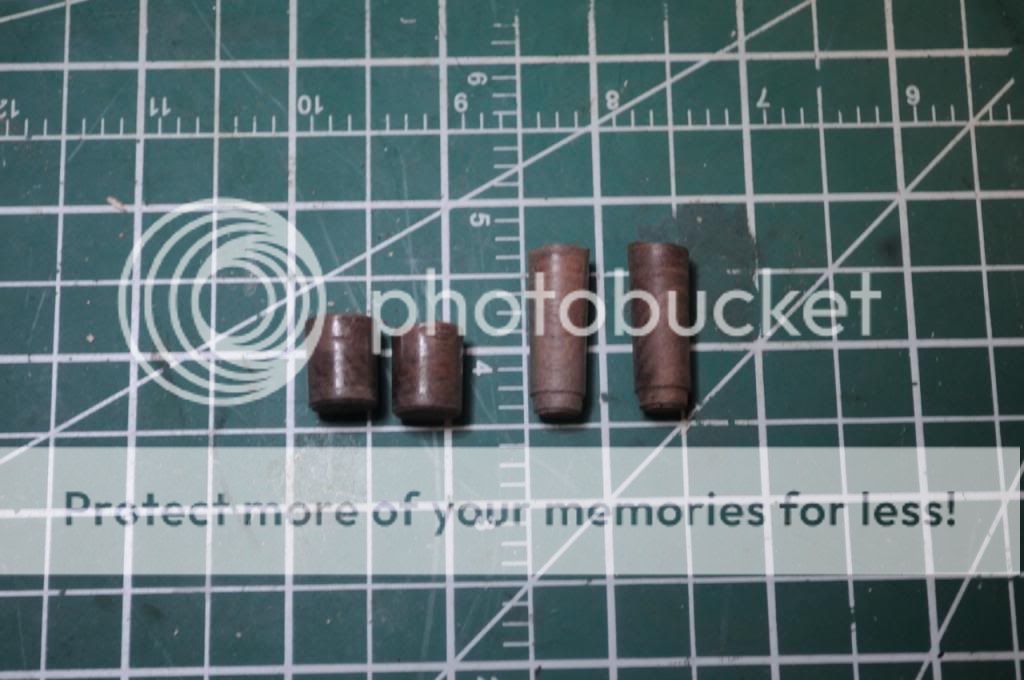
With the plugs removed set them aside in a safe place so you don't lose them. Once that is done you can do the setup on the forend. With your forend take it and place it in your drill press vice and clamp it in with just enough pressure to hold it securely but not enough to damage the wood. when I did this I used some scrap leather stripping that I had lying around to pad the vice on both jaw faces and the bottom to eliminate the chance for the vice to mar the wood.
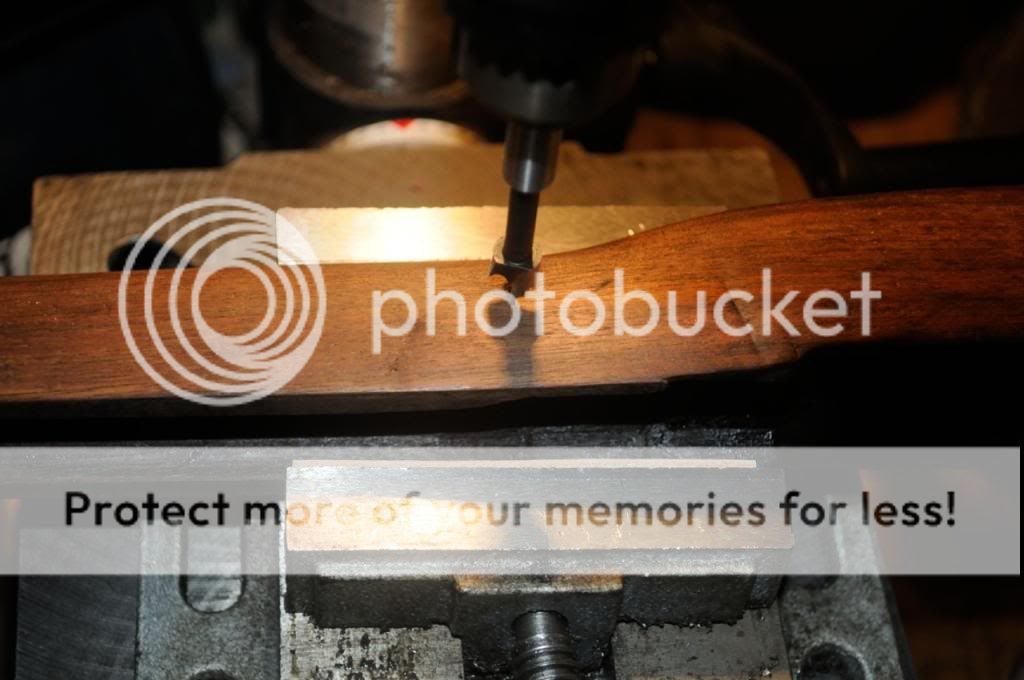
Once the forend is secured in the vice install the 3/8" forstner bit into the drill press. Following the old adage "measure twice cut once" I moved the forend out of the way and did a dry run of the depth setting the drill depth stop to the edge of the inner routed out section of the forend or .600" or about 5/8" deep. You may also want to set your drill press spindle speed to around 300rpm or its lowest possible setting refer to the manual if you are unsure of how to do it. Now that the drill press has been setup move the forend back into position and center the brad point of the forstner bit as close to the center of the hole as possible. With that done we can begin drilling, turn the drill press on and slowly lower the bit to the wood maintaining the center and begin drilling remembering to pull the drill bit out often to clear chips and prevent burning. Now repeat this with the other side, once the other side has been drilled change over to the 7/16" forstner bit. The purpose of the 7/16" forstner bit is to clean up the side of the forend where the screw head was located. I found this was necessary because the I.D. of the hole where the screw head was located was 7/16" as opposed to the 3/8" screw head. The process for drilling is the same as previous the only thing is the depth changes. The depth of the 7/16" hole is roughly 1/4" deep .
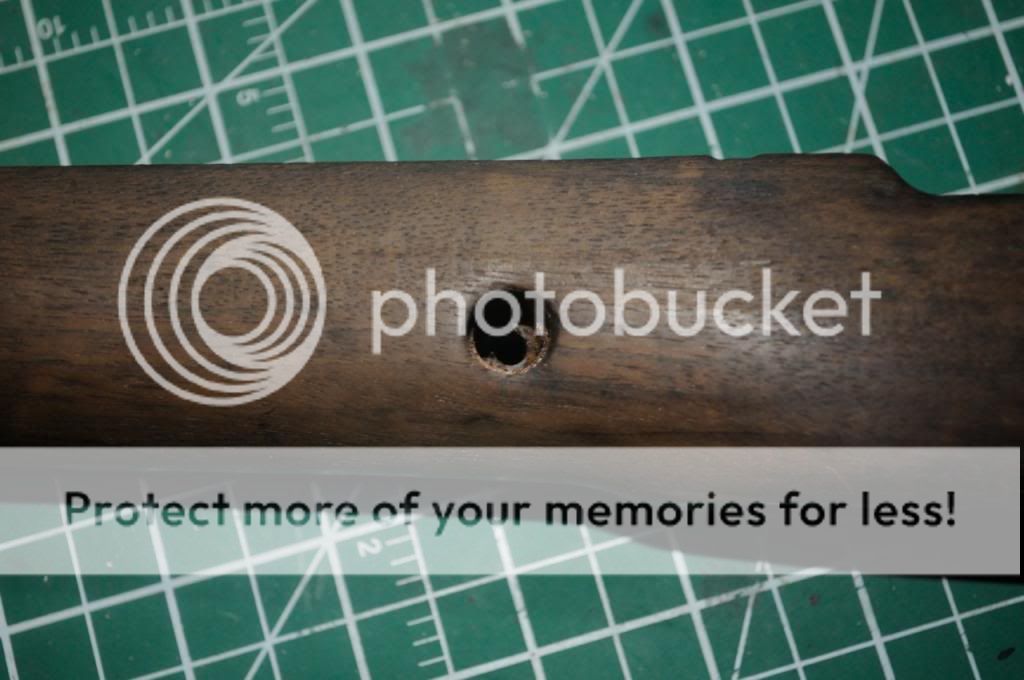
With the holes now drilled you can begin dry fitting the plugs. Because the plugs are tapered right now you should only be taking material from the bottom (the small end). Remove only enough material to get a snug fit in the hole, this can be achieved by using the razor saw also don't worry about any excess that protrudes past the outside of the forend I'll cover removal of that later.
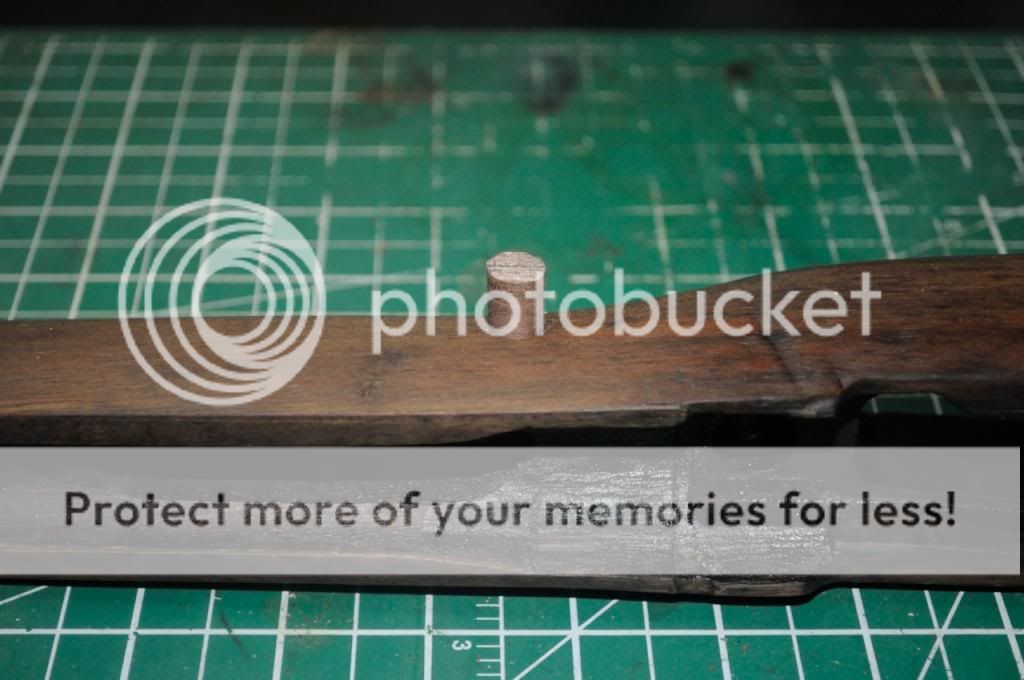
The side with the countersunk 7/16" hole requires a bit of special attention . First you will need to dry fit a 3/8" plug and trim it on both ends to achieve a snug fit that falls just below the 7/16" hole, this is again done with the razor saw and for any fine trimming use the scalpel or exacto knife to shave any excess that can't be done with the saw . Once that Is done dry fit of the 7/16" plugs again trimming from the bottom to achieve a snug fit.
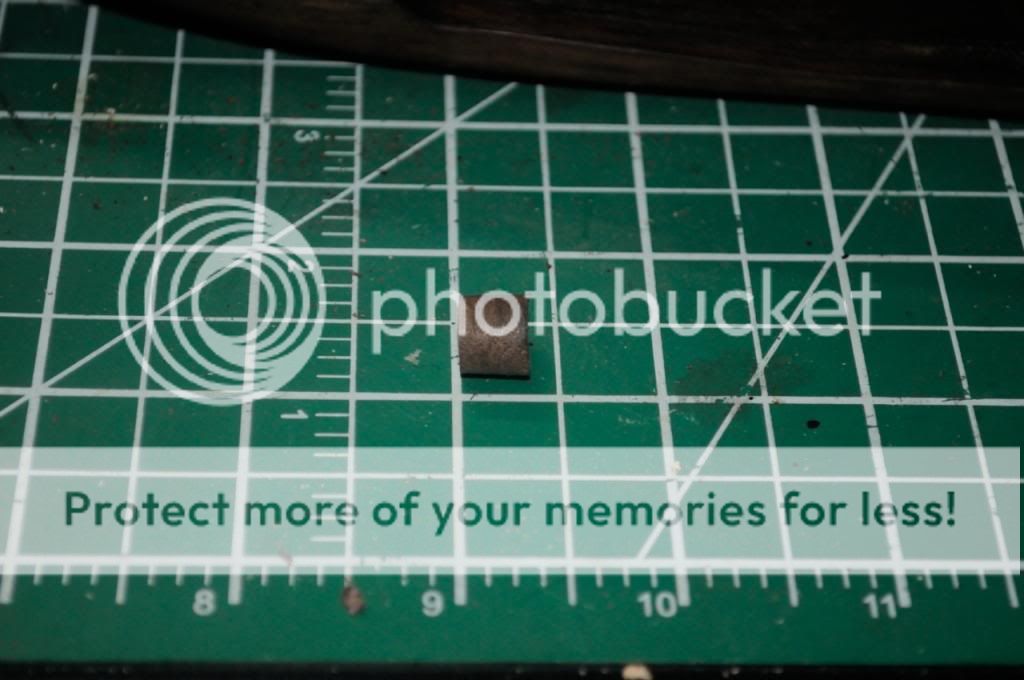

Now that we have all our plugs fit we can glue them in. Remove all the plug if they haven't been already and with a toothpick put a small amount of cabinet makers glue on the inner surface of the hole and a bit on the plug. Now before we go hammering the plugs home there is one small detail is VERY IMPORTANT for both the look of the finished product and the integrity of the repair. MAKE ABSOLUTLY SURE that the direction of the grain of the plug runs with the grain of the forend once that has been made sure of hammer the 3/8" plugs home and firmly seated. For the small 3/8" plug that goes into the bottom of the countersunk 7/16" hole I used a large brass punch to firmly seat it as pictured above. Now glue the inside of the 7/16" hole and hammer in the 7/16" plug. If there is any glue that has squished out of the plug hole it can be cleaned up with a damp cotton swab.
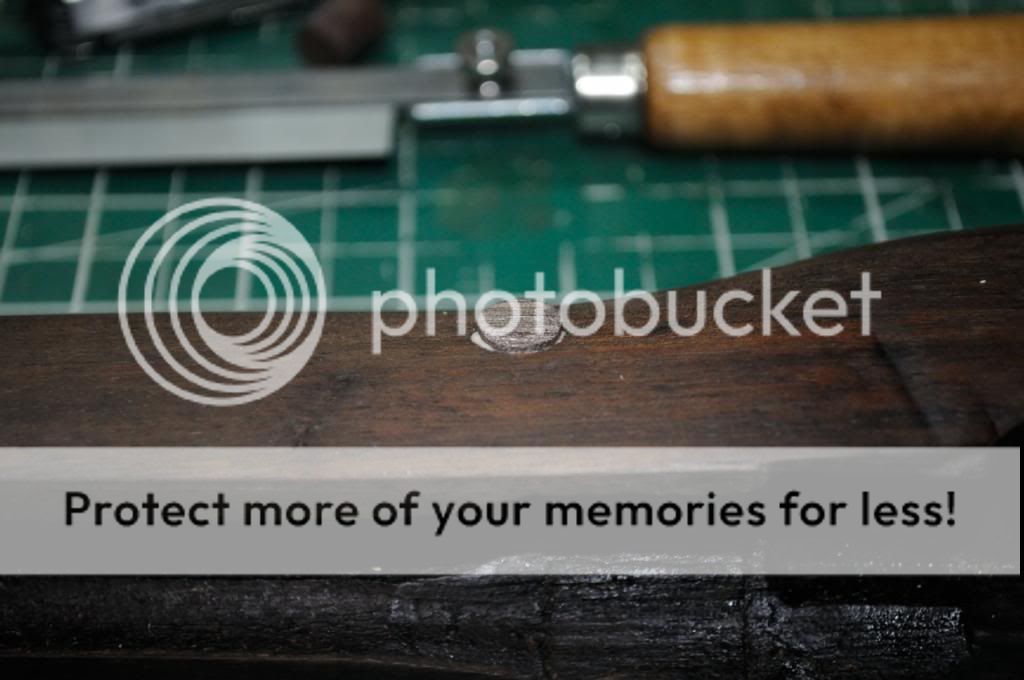
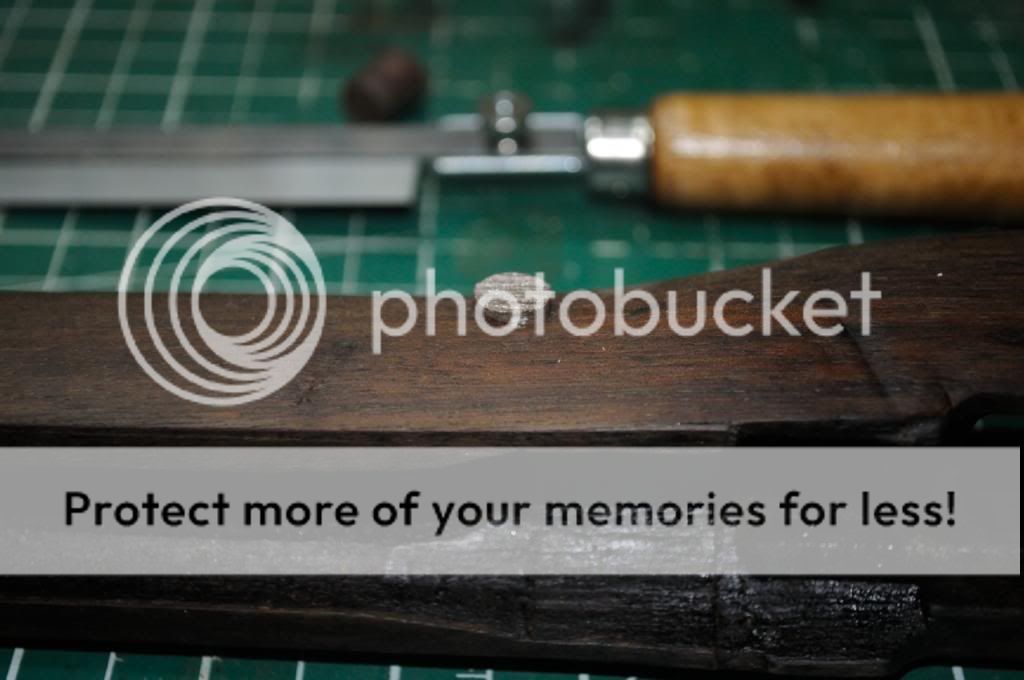


After letting the glue setup for an hour or two you can now trim any excess that remains. Using the flush cut saw carefully trim off the excess of the plug making sure to keep the saw flat against the wood of the forend to avoid gouging the wood. Now chances are it's not 100% flush with the forend wood, to remedy this all I did was use a scalpel to carefully shave it flush then sand it smooth using fine(220 or finer) sandpaper.

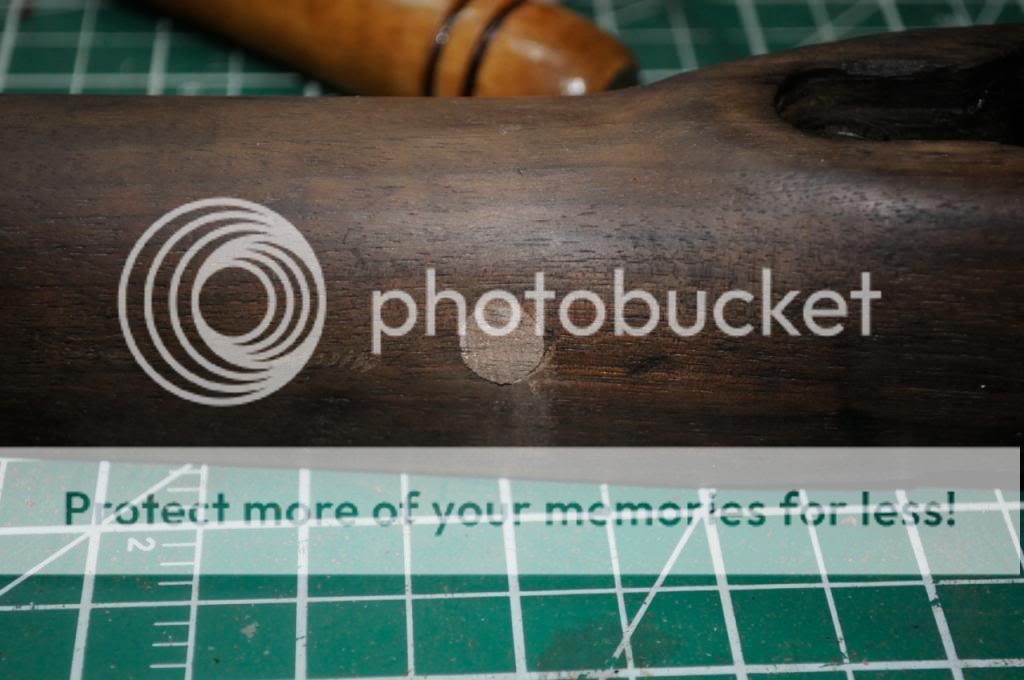

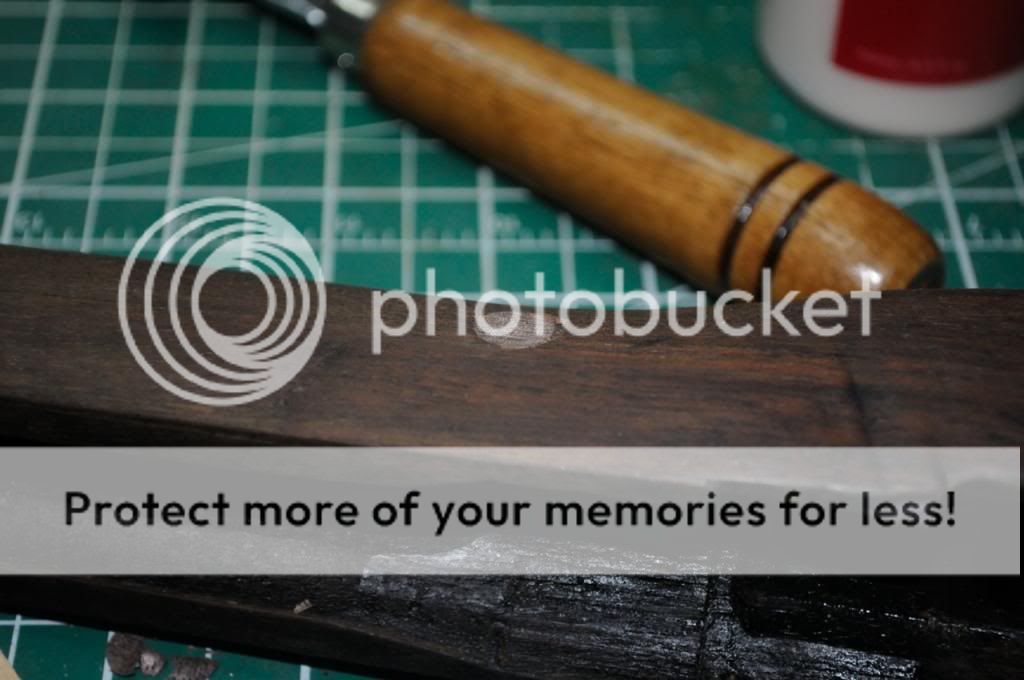
If any gouges remain around the hole after sanding you can mix up some custom wood filler. Simply take some sandpaper and one of the remaining plug cut offs or the piece of wood you used for the plugs and sand it with the fine sandpaper creating some fine saw dust. Now take a small drop of cabinetmakers glue and combine it with the saw dust. The consistency you are looking for is comparable to that of peanut butter. Now take your wood filler and using wither an old scalpel/exacto blade or even a toothpick push it into the gouges/ holes. Then it's just a matter of letting it cure and sanding it smooth.


After that you can apply a coat of BLO and your either done or you can proceed further and shellac the stock set. If you are deciding to shellac the stock by this point the shellac should have been mixed and dissolving for a day or two and the buttstock and upper handguards should be finished drying and depending on how fast you worked the forend may also be dry and ready for shellac. Applying the shellac I used those cheap foam brushes you get a Canadian tire and they seem to do the job just fine, just apply thin coats using long light strokes trying not to over work the shellac because it doesn't take long for it to dry. If you happen to get runs such as I did don't worry just use some Everclear on a soft cloth and wipe off the finish and re apply. That's one of the joys of shellac, it's very forgiving with mistakes. You may also happen to get varying coats that are visible, for this I thinned the shellac out with more Everclear to basically make a wash and this blended the unevenness that you would see, as shown below.


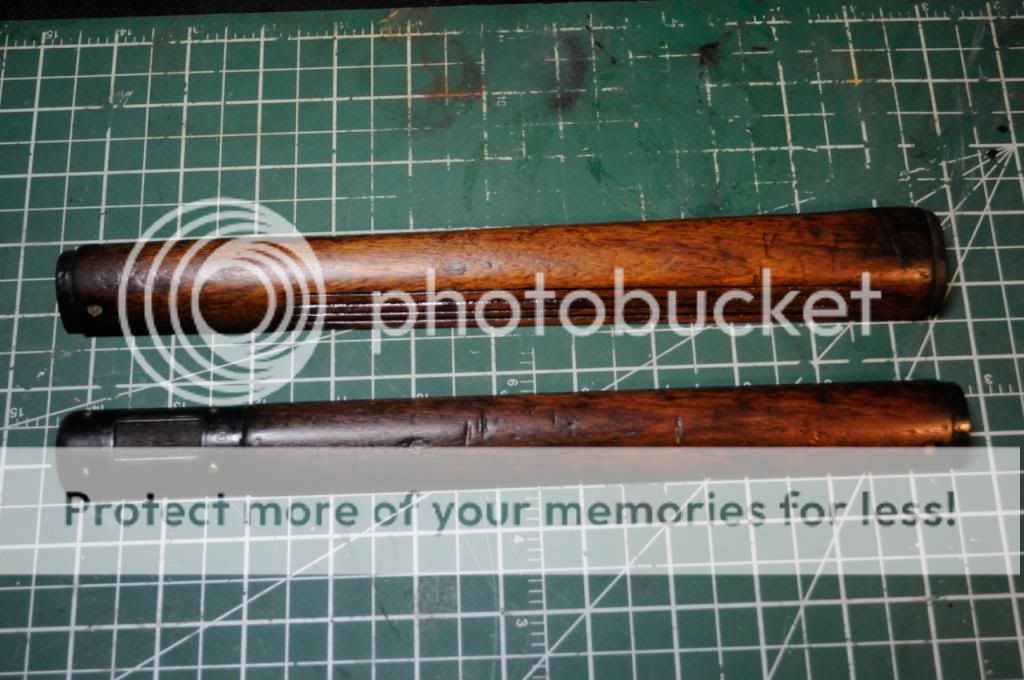
Also you can go over the stock with the 0000 steel wool to smooth the finish and take it from a gloss to a satin finish. With that we now have a refinished stock set that should be looking pretty good. Below are my results and a before and after of the repair.

What I used for materials and tooling and where I got it is as follows
Heirloom furniture stripper- (Canadian tire)
tired and true traditional finishes Danish oil (Boiled linseed oil)- (Lee Valley Tools)
walnut blank-(Lee Valley Tools)
2002 GF cabinetmakers glue - (Lee Valley Tools)
1LB orange shellac flakes- (Lee Valley Tools)
1 bottle of Everclear 190 proof grain alcohol (Liquor Store)
VERITAS detail flush-cut saw (Lee Valley Tools)
razor saw (hobby saw) (Most Hobby Stores)
scalpel/ exacto knife
7/16" snug plug cutter
3/8" deep plug cutter
7/16" HSS forstner bit
3/8" HSS forstner bit
Brushes (I used foam and got decent results)
0000 steel wool
soft cloths/ rags
disposable gloves
cotton swabs
To start set up your work area with a couple layers of old news paper or drop cloth of some sort to protect your work surface from damage. Now disassembled the rifle and remove all the wood and set the barreled action and metal parts aside. Once that is done take your stock set to your work area and using the Heirloom furniture stripper apply liberal coats to the wood surface taking care to avoid getting stripper on the metal parts of the hand guard and forend because it will most likely remove the suncorite paint they used as a protectant. After letting it sit for a minute or two you should see the shellac beginning to peel and dry sports where the shellac has rubbed off and just the boiled linseed oil remains. Apply another generous coat of the stripper and begin to rub the finish off with the steel wool being sure to keep your strokes with the grain to avoid making scratches across the grain and damaging the final finish. Repeat this until none of the original finish remains.
Now that the finish has been stripped we can now do a little preparation for refinishing. Start by taking the upper and lower hand guard as well as the buttstock and smoothing them out with 0000 steel wool, this will remove any rough patches and any remaining shellac that may have been left behind from stripping. Once the wood is satisfactorily smooth apply a light coat of the Danish oil allowing it to penetrate for five minutes, after letting the oil penetrate wipe off any excess and let it dry for a day. With the hand guards and buttstock set aside drying we can now move onto mixing our shellac. I'm not going to cover the various mixtures or "cuts" of shellac but for this project I used a 1LB cut which is a fairly thin mix and suitable for this purpose. The proportions of shellac to alcohol for the amount I needed and for the cut was 16 fl oz of alcohol to 2oz of shellac flakes. With the shellac and alcohol measured out I combined the two in a glass quart mason jar, once combined it takes about a day for the shellac flakes to fully dissolve into the alcohol. It may also be helpful to note that the finer the shellac flakes the faster the dissolution process will be in addition giving the jar a couple vigorous shakes now and then will also aid the process.
With the shellac mixed and the handguards drying we can move onto patching that ishy screw. I would recommend that the following processes be completed on a drill press to ensure the best results are achieved. First start by taking your piece of walnut and your plug cutters and cut four plugs. Two 7/16" plugs cut to the full depth of the plug cutter and two 3/8" plugs again cut to the full depth of the plug cutter as shown below. It should be noted that before cutting you can try and match the grain of the plugs to the grain of the forend but that's just personal preference.

To remove the plugs simply use a screwdriver or something similar to pop the plugs out. Best results will be achieved by inserting the screwdriver as close to the full depth as possible then gently prying until they pop


With the plugs removed set them aside in a safe place so you don't lose them. Once that is done you can do the setup on the forend. With your forend take it and place it in your drill press vice and clamp it in with just enough pressure to hold it securely but not enough to damage the wood. when I did this I used some scrap leather stripping that I had lying around to pad the vice on both jaw faces and the bottom to eliminate the chance for the vice to mar the wood.

Once the forend is secured in the vice install the 3/8" forstner bit into the drill press. Following the old adage "measure twice cut once" I moved the forend out of the way and did a dry run of the depth setting the drill depth stop to the edge of the inner routed out section of the forend or .600" or about 5/8" deep. You may also want to set your drill press spindle speed to around 300rpm or its lowest possible setting refer to the manual if you are unsure of how to do it. Now that the drill press has been setup move the forend back into position and center the brad point of the forstner bit as close to the center of the hole as possible. With that done we can begin drilling, turn the drill press on and slowly lower the bit to the wood maintaining the center and begin drilling remembering to pull the drill bit out often to clear chips and prevent burning. Now repeat this with the other side, once the other side has been drilled change over to the 7/16" forstner bit. The purpose of the 7/16" forstner bit is to clean up the side of the forend where the screw head was located. I found this was necessary because the I.D. of the hole where the screw head was located was 7/16" as opposed to the 3/8" screw head. The process for drilling is the same as previous the only thing is the depth changes. The depth of the 7/16" hole is roughly 1/4" deep .

With the holes now drilled you can begin dry fitting the plugs. Because the plugs are tapered right now you should only be taking material from the bottom (the small end). Remove only enough material to get a snug fit in the hole, this can be achieved by using the razor saw also don't worry about any excess that protrudes past the outside of the forend I'll cover removal of that later.

The side with the countersunk 7/16" hole requires a bit of special attention . First you will need to dry fit a 3/8" plug and trim it on both ends to achieve a snug fit that falls just below the 7/16" hole, this is again done with the razor saw and for any fine trimming use the scalpel or exacto knife to shave any excess that can't be done with the saw . Once that Is done dry fit of the 7/16" plugs again trimming from the bottom to achieve a snug fit.


Now that we have all our plugs fit we can glue them in. Remove all the plug if they haven't been already and with a toothpick put a small amount of cabinet makers glue on the inner surface of the hole and a bit on the plug. Now before we go hammering the plugs home there is one small detail is VERY IMPORTANT for both the look of the finished product and the integrity of the repair. MAKE ABSOLUTLY SURE that the direction of the grain of the plug runs with the grain of the forend once that has been made sure of hammer the 3/8" plugs home and firmly seated. For the small 3/8" plug that goes into the bottom of the countersunk 7/16" hole I used a large brass punch to firmly seat it as pictured above. Now glue the inside of the 7/16" hole and hammer in the 7/16" plug. If there is any glue that has squished out of the plug hole it can be cleaned up with a damp cotton swab.


After letting the glue setup for an hour or two you can now trim any excess that remains. Using the flush cut saw carefully trim off the excess of the plug making sure to keep the saw flat against the wood of the forend to avoid gouging the wood. Now chances are it's not 100% flush with the forend wood, to remedy this all I did was use a scalpel to carefully shave it flush then sand it smooth using fine(220 or finer) sandpaper.


If any gouges remain around the hole after sanding you can mix up some custom wood filler. Simply take some sandpaper and one of the remaining plug cut offs or the piece of wood you used for the plugs and sand it with the fine sandpaper creating some fine saw dust. Now take a small drop of cabinetmakers glue and combine it with the saw dust. The consistency you are looking for is comparable to that of peanut butter. Now take your wood filler and using wither an old scalpel/exacto blade or even a toothpick push it into the gouges/ holes. Then it's just a matter of letting it cure and sanding it smooth.


After that you can apply a coat of BLO and your either done or you can proceed further and shellac the stock set. If you are deciding to shellac the stock by this point the shellac should have been mixed and dissolving for a day or two and the buttstock and upper handguards should be finished drying and depending on how fast you worked the forend may also be dry and ready for shellac. Applying the shellac I used those cheap foam brushes you get a Canadian tire and they seem to do the job just fine, just apply thin coats using long light strokes trying not to over work the shellac because it doesn't take long for it to dry. If you happen to get runs such as I did don't worry just use some Everclear on a soft cloth and wipe off the finish and re apply. That's one of the joys of shellac, it's very forgiving with mistakes. You may also happen to get varying coats that are visible, for this I thinned the shellac out with more Everclear to basically make a wash and this blended the unevenness that you would see, as shown below.


Also you can go over the stock with the 0000 steel wool to smooth the finish and take it from a gloss to a satin finish. With that we now have a refinished stock set that should be looking pretty good. Below are my results and a before and after of the repair.