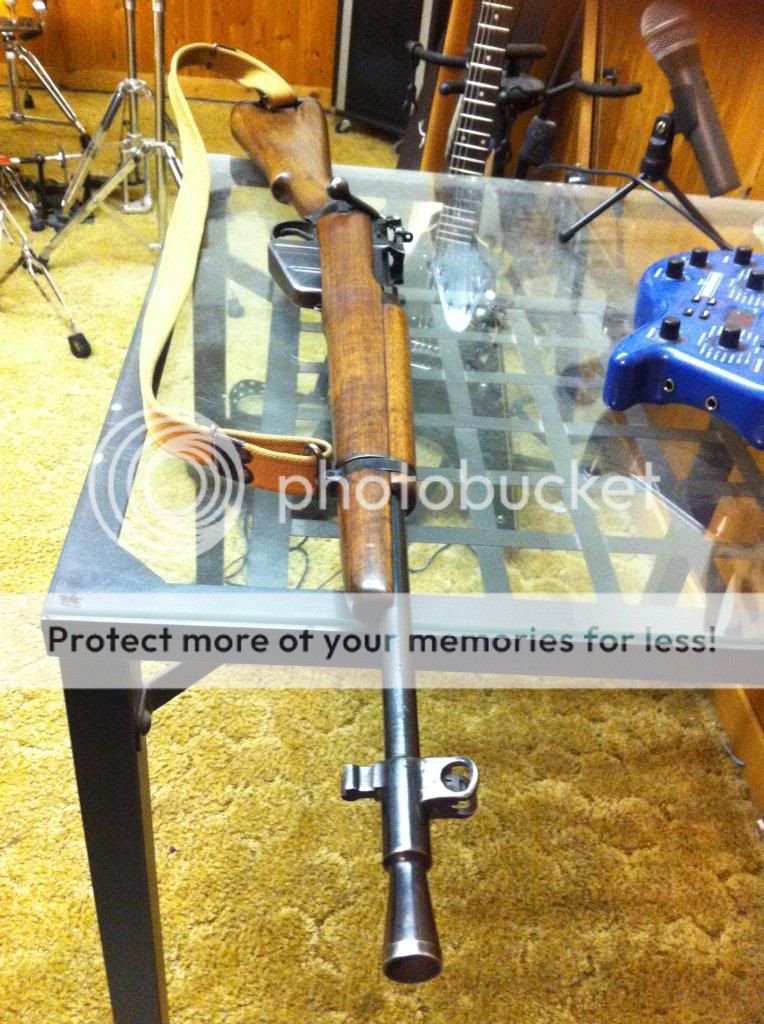
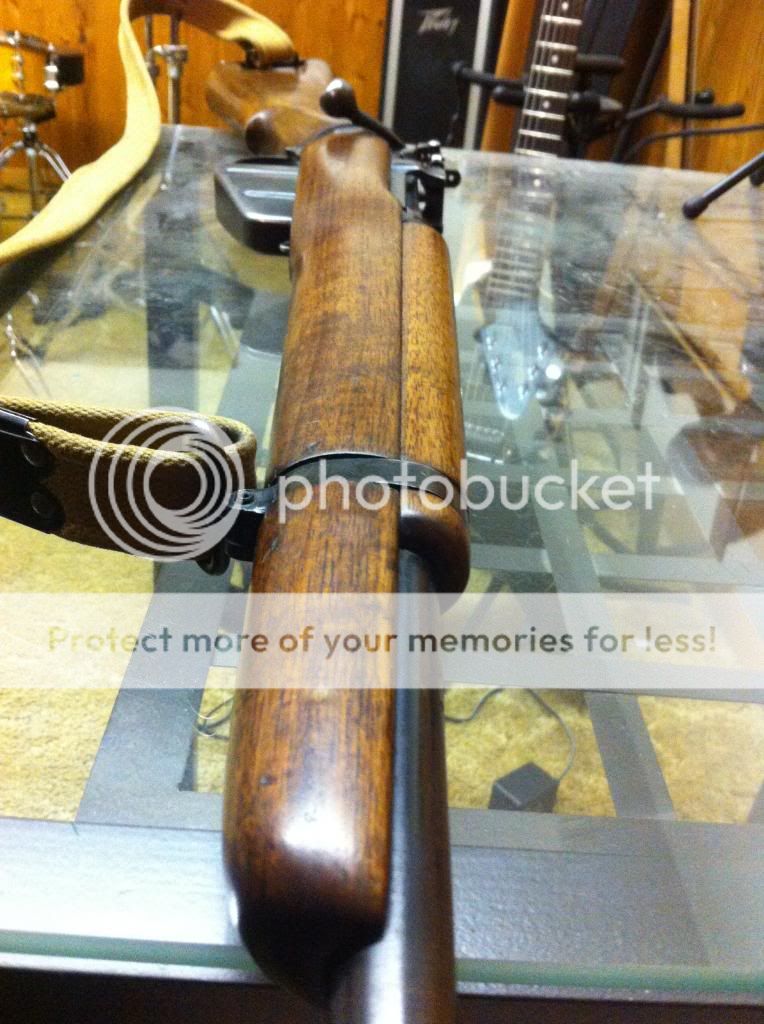
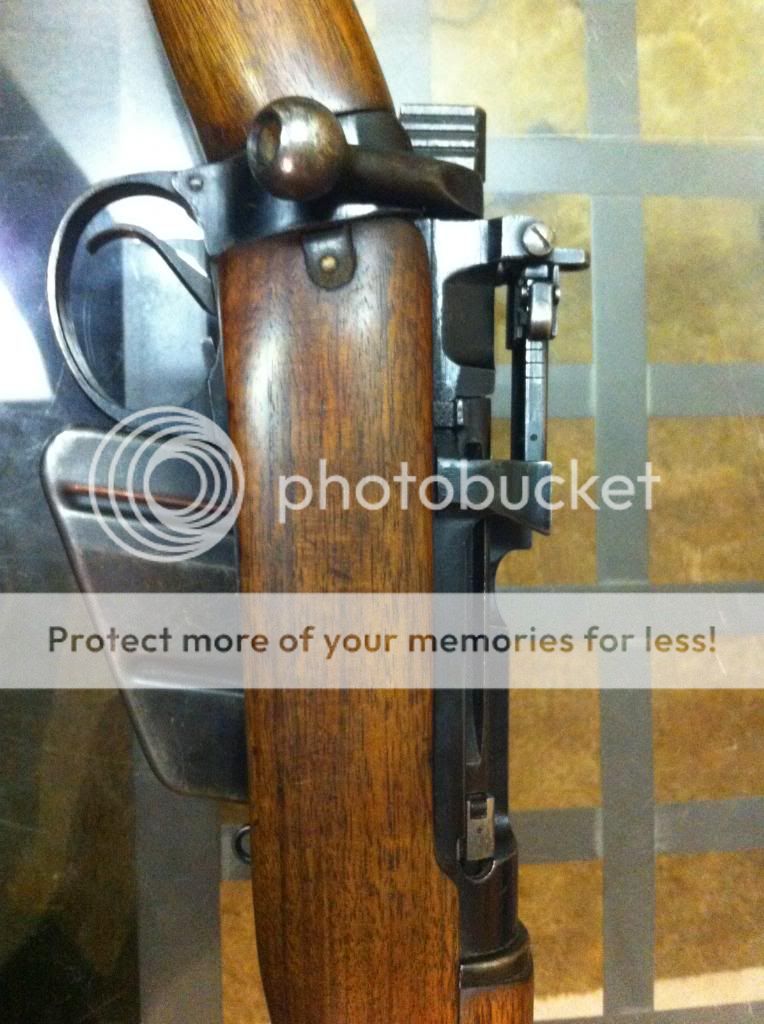
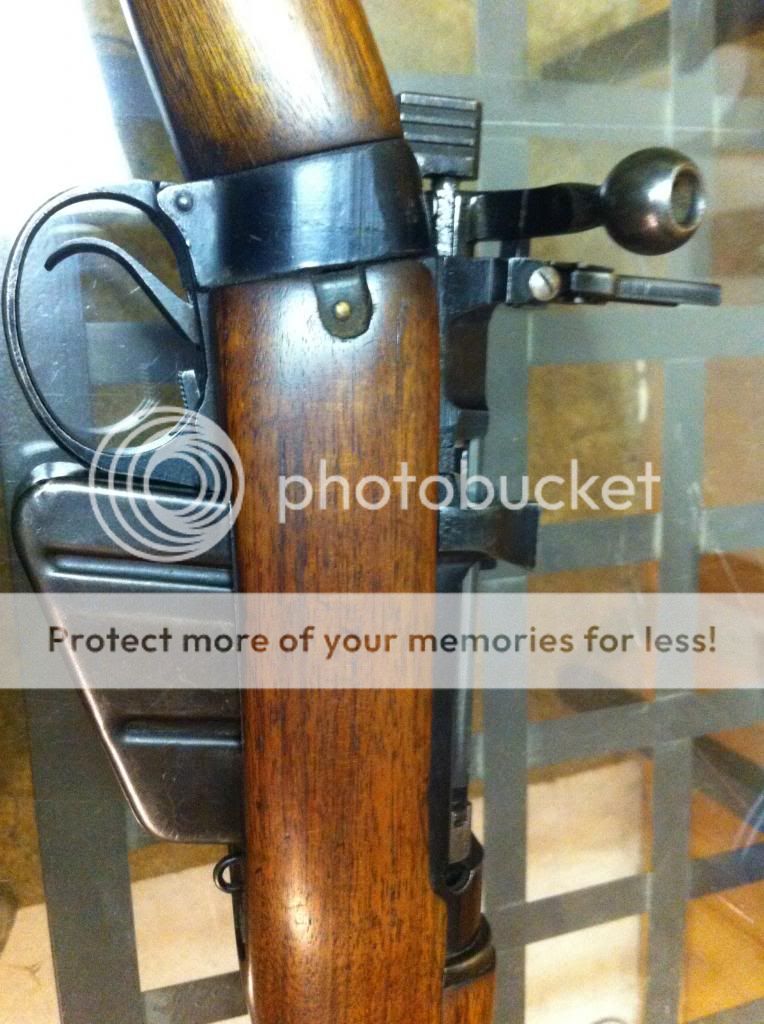
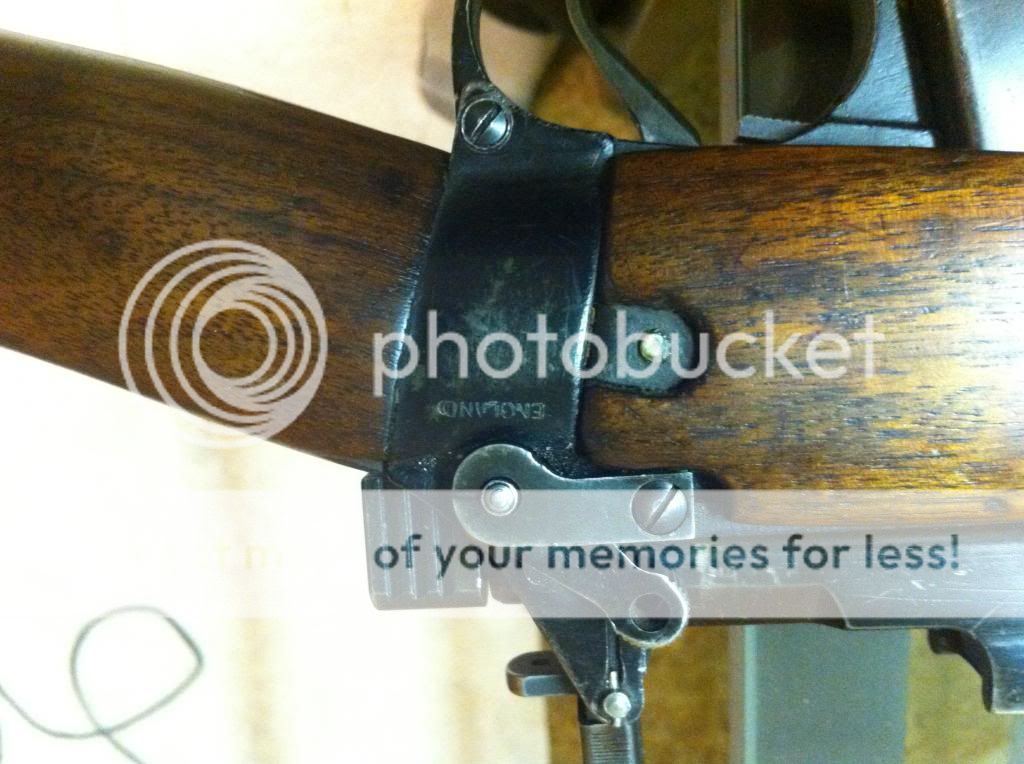
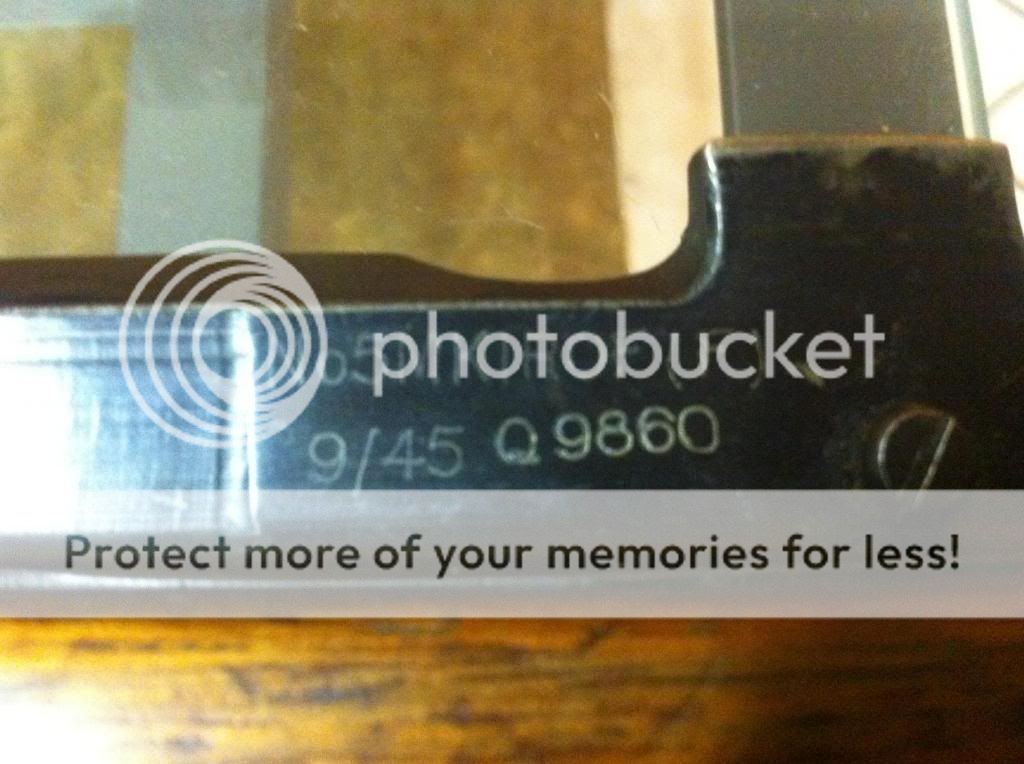
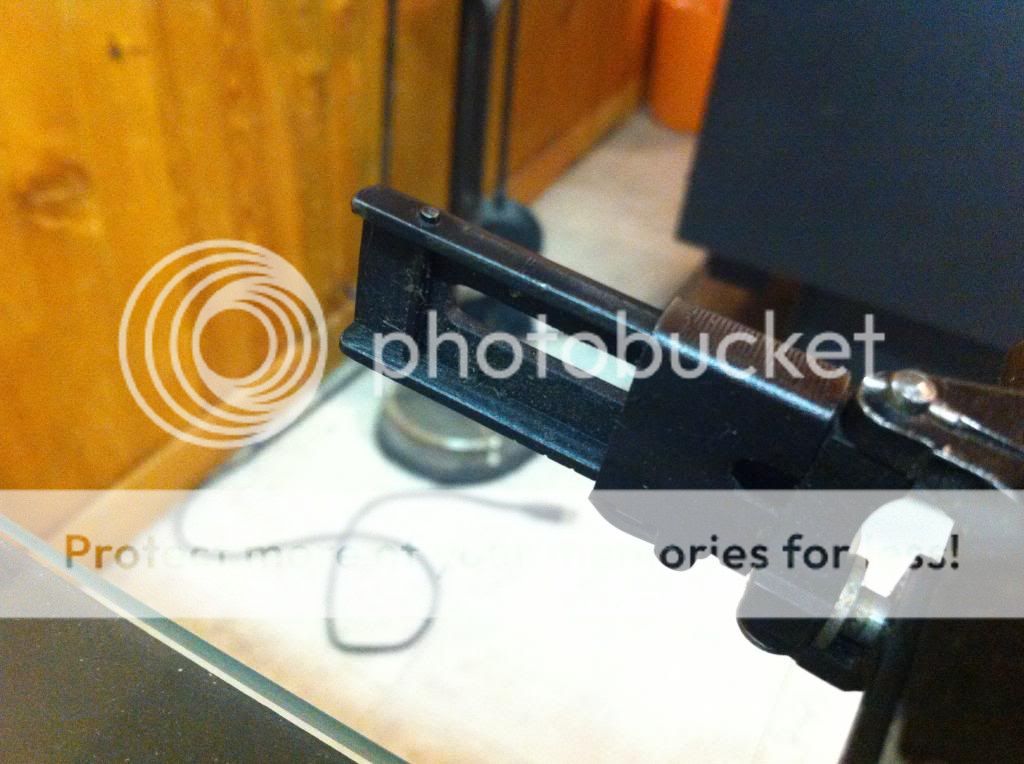
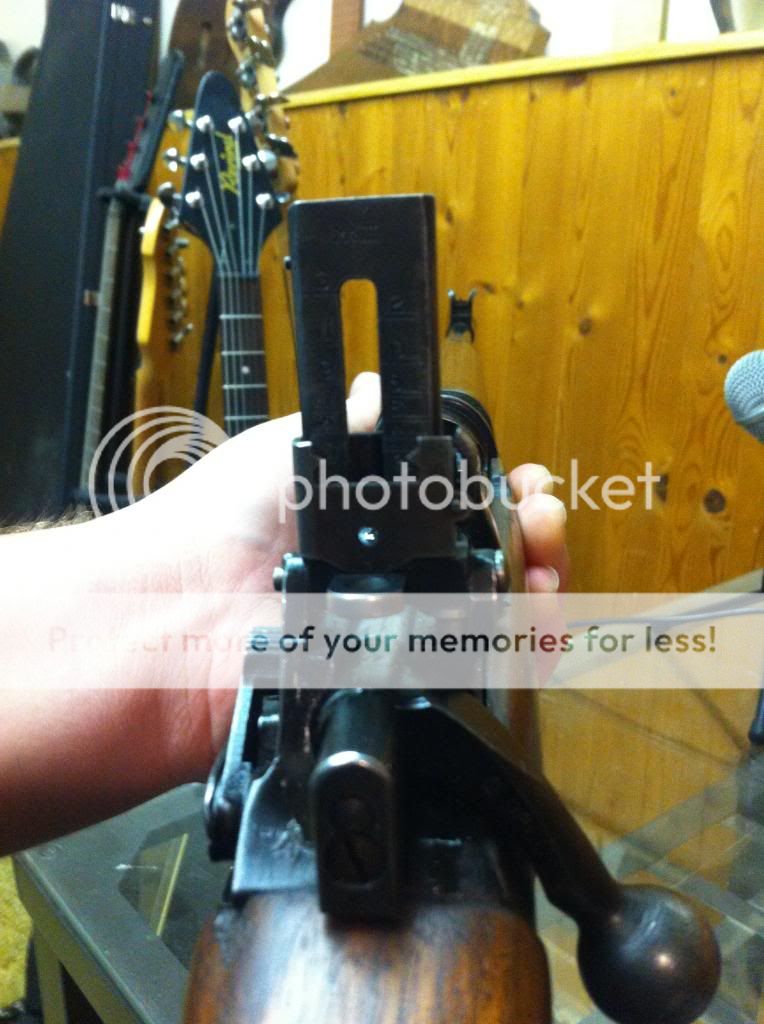
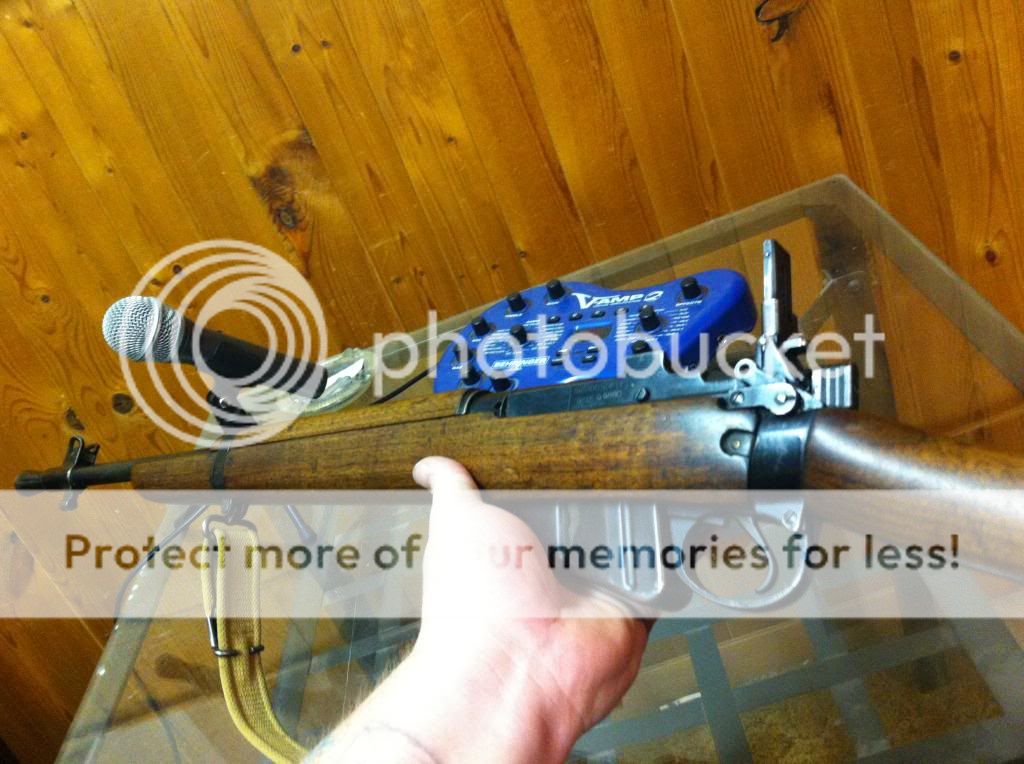
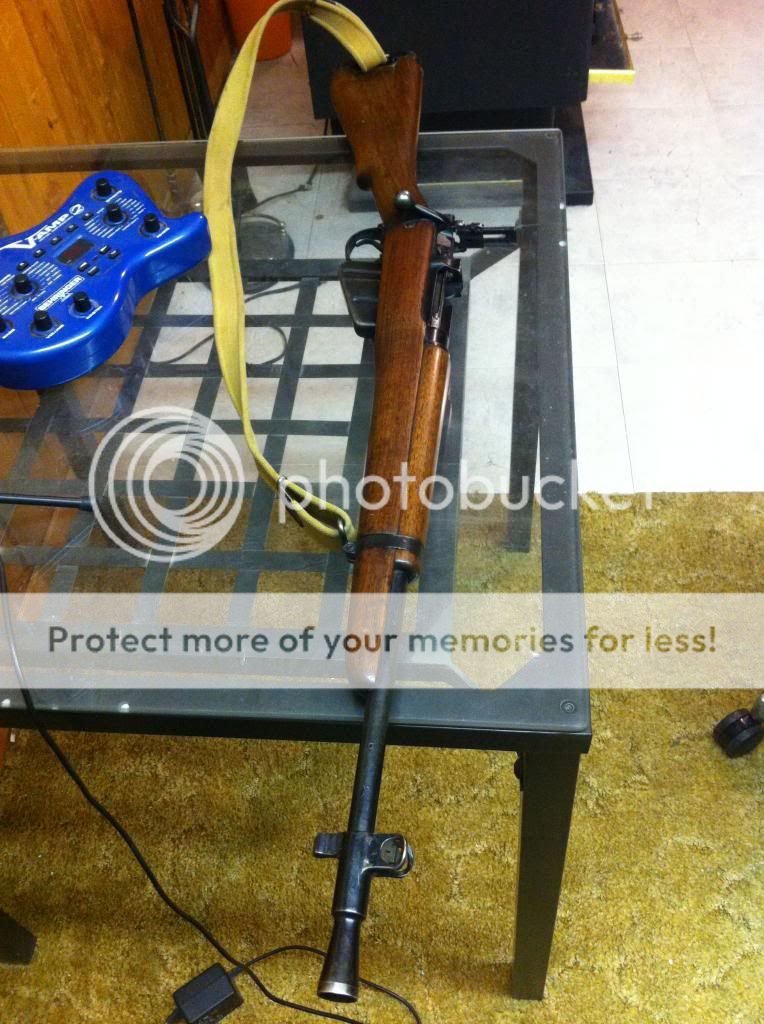
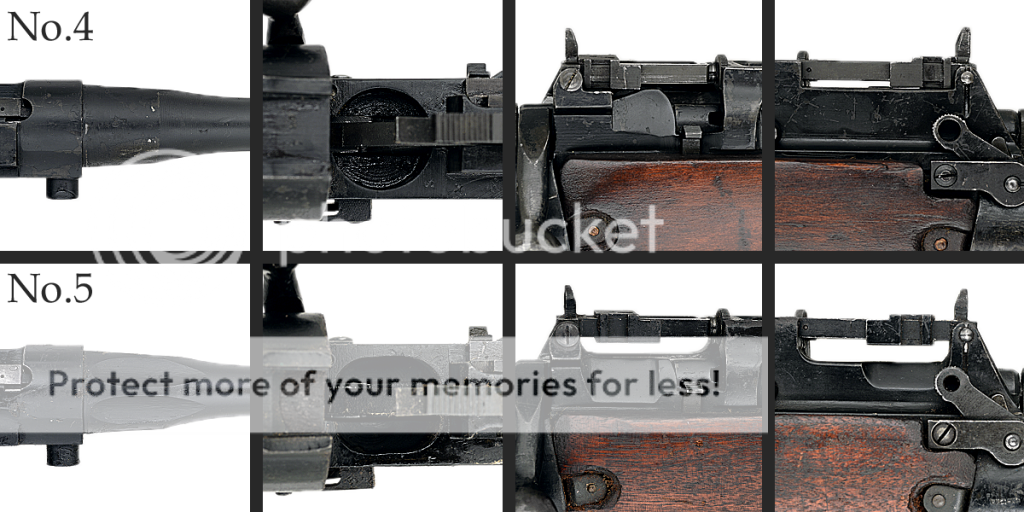
Anyone can change a rear sight, and it could have been done by an armourer while the rifle was in service, as a temporary fix that never got remedied. Milling the lightening cuts into the receiver and the knox form of a No.4 to fake a No.5 is a big undertaking, and then the serial number would be a different format, so to make a convincing fake that would have to be milled off and the receiver refinished and re-stamped. There wasn't that much money to be made from faking it. Yours has the tell-tale lightening cut on the left side of the receiver between the rear sight mount and the charger bridge. A No.4 would be vertical all the way on that side. You have a real No.5 receiver. The hollowed out bolt handle knob is correct, though some of those made it onto No.4 rifles. If you take off the upper handguard you will probably find lightening cuts in the knox form which would be consistent with a No.5 barrel. There are reproduction flash hider/foresight/bayonet lug units but yours looks genuine and original.
The article cited is not an entirely reliable authority. He's right about Jungle Carbine never having been an official designation, but the shortened, lightened variant of the No.4 was also not developed for jungle use. It was developed for airbourne troops in the European theatre, though few were issued there before hostilities ended. Most of the jungle and other tropical service that led to the nickname took place post WWII in the Far East and Africa. And the close copies of the No.5 made from the No.4 that he says are hard to tell apart are not hard to tell apart if you know what to look for. (And if someone is going to write articles advising people on what's collectible, he should know what to look for, it isn't hard to find out.)