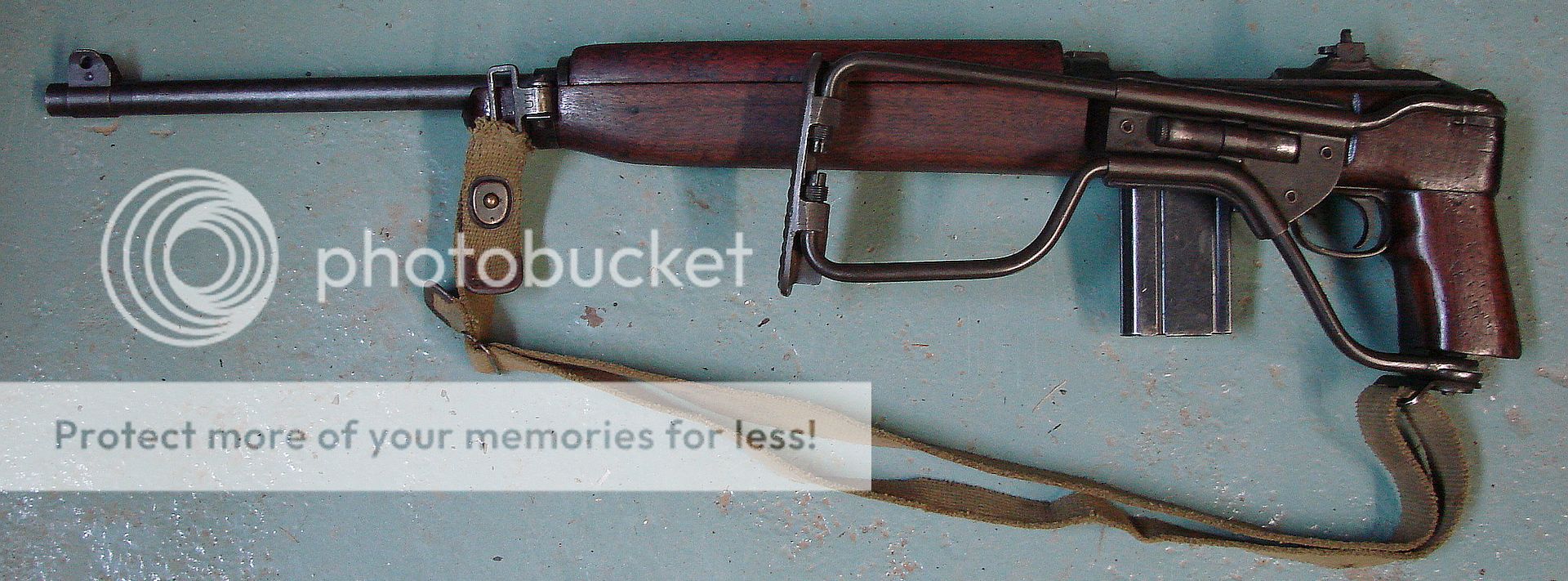
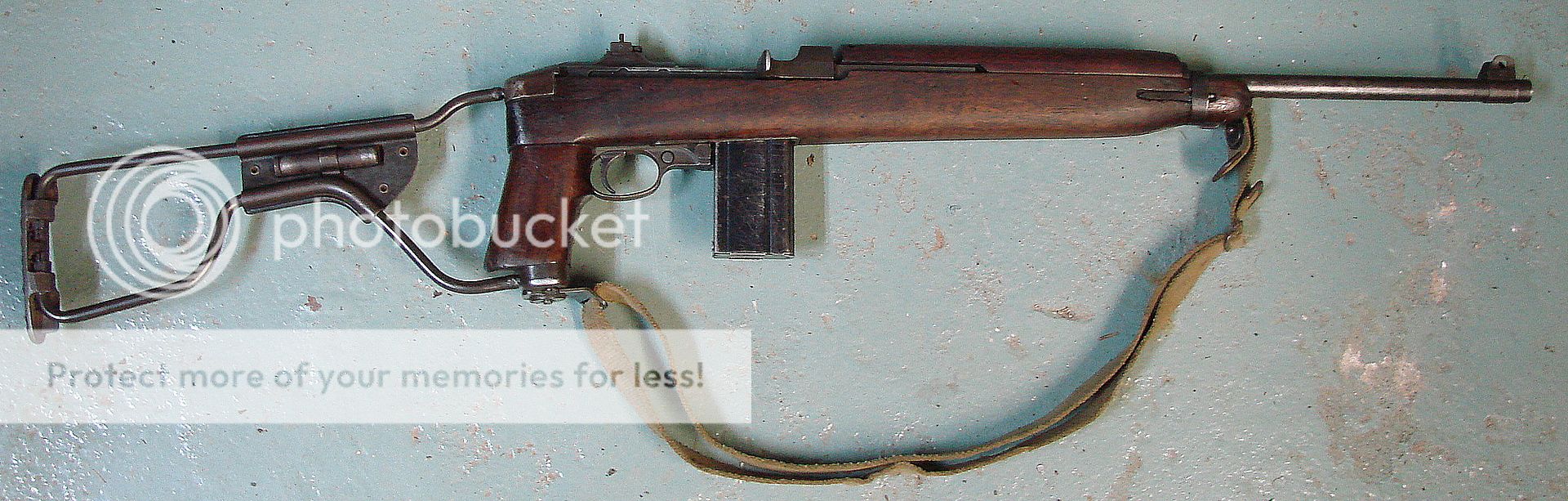
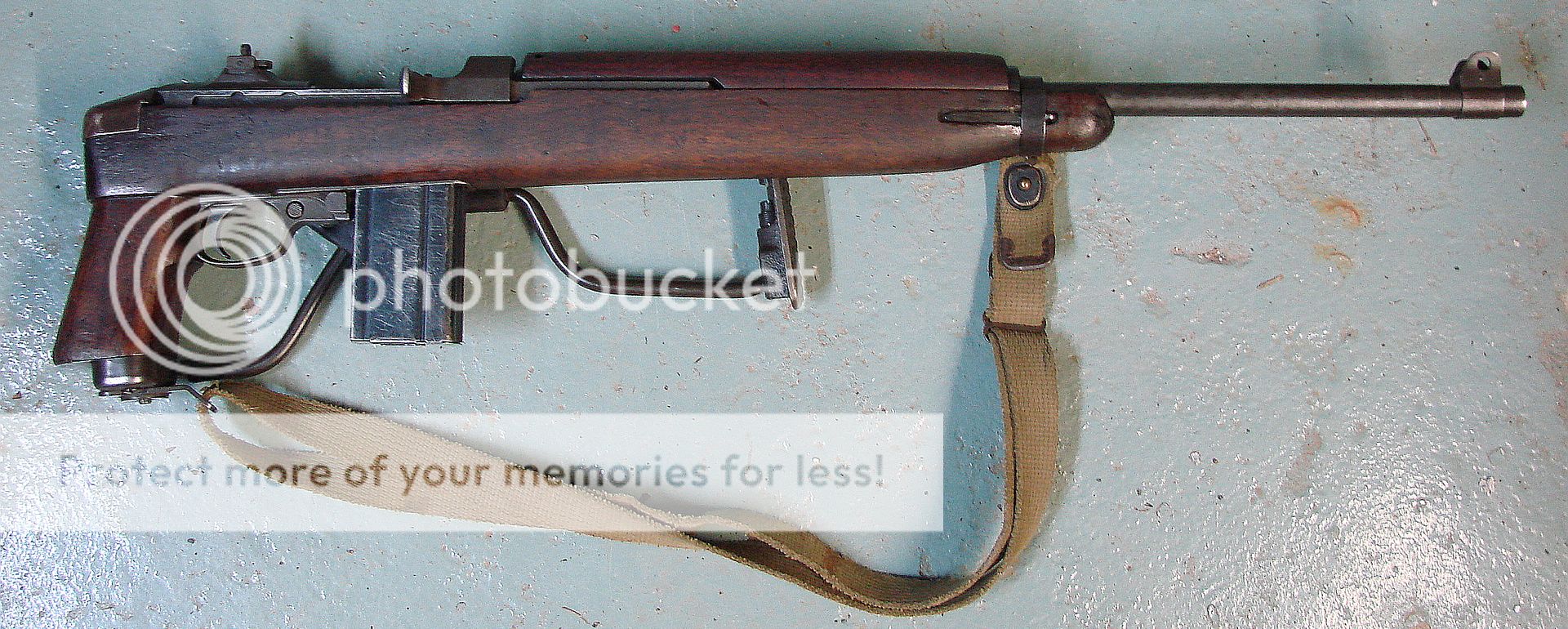
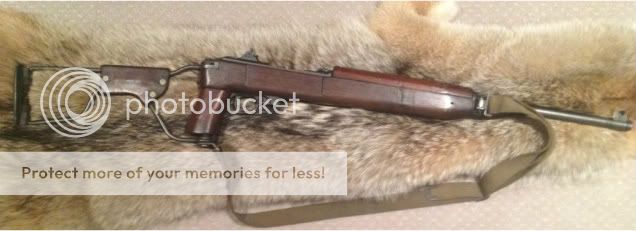
For they that are interested in these U.S. WWII M1A1 carbines that don't own the books.
The M1A1 was officially standardized in May 1942, and the first deliveries began in October. The sole manufacturer of the M1A1 was the Inland Manufacturing Division of General Motors in Dayton, Ohio, which was also the largest manufacturer of standard M1 carbines. Inland produced about 43 percent of the total
There were two separate production runs of M1A1 carbines. The so-called 'First Contract' carbines were shipped between October 1942 and October 1943, with approximately 71,000 M1A1s delivered during the period. Serial numbers ranged approximately from 42,000 to 850,000. These M1A1s had the same features as the standard M1s of the era, including non-adjustable, flip-up rear sights; 'high-wood' stocks (the area in front of the operating slide); narrow barrel bands (without bayonet lugs); and flat-top bolts.
The second production run was between about May and December 1944 and created less than 70,000 M1A1s. Serial numbers ranged approximately from 5,150,000 to 6,700,000. Although the basic design of the M1A1 stock did not change, the majority of the 'Second Contract' stock had 'low-wood' and a slightly different shape to the grip. Also, during the course of production, many of the later production carbine (M1 and M1A1) were fitted with improved components, such as adjustable rear sights, round bolts and wider barrel bands. There is some disagreement whether or not any of these carbines originally left the factory with T4 barrel bands (with the bayonet lug). If so, only extremely late production M1A1 Carbines would have this feature, and the vast majority had either the narrow Type 1 or the wider Type 2 barrel bands (both types without bayonet lug.)
It must be stressed that the previously mentioned serial number ranges were only approximations, and there were no special serial number ranges assigned to the M1A1 production runs. M1A1 serial numbers were intermixed with standard M1 Carbines made by Inland carbine is in the general serial number ranges already mentioned and has features consistent with the vintage of the stock, it is not possible to ascertain if an Inland action was originally mated with a M1A1 stock at the factory. Unfortunately, there is no known roster of M1A1 carbine serial numbers.
The M1A1 Carbine was generally issued with a padded canvas jump scabbard that attached to the pistol belt. The lower portion of the case could be strapped to the paratrooper's leg during descent. Upon landing, the carbine trooper's leg during descent. Upon landing, the carbine could be quickly removed from the case, the stock opened and the gun ready for immediate use. Reportedly, the leg strap on the canvas case was rarely secured as it could cause injury (including broken legs) upon landing. Some paratroopers simply tucked the folded carbine behind their emergency parachute, or carried it in some other manner and dispensed with the jump scabbard altogether.
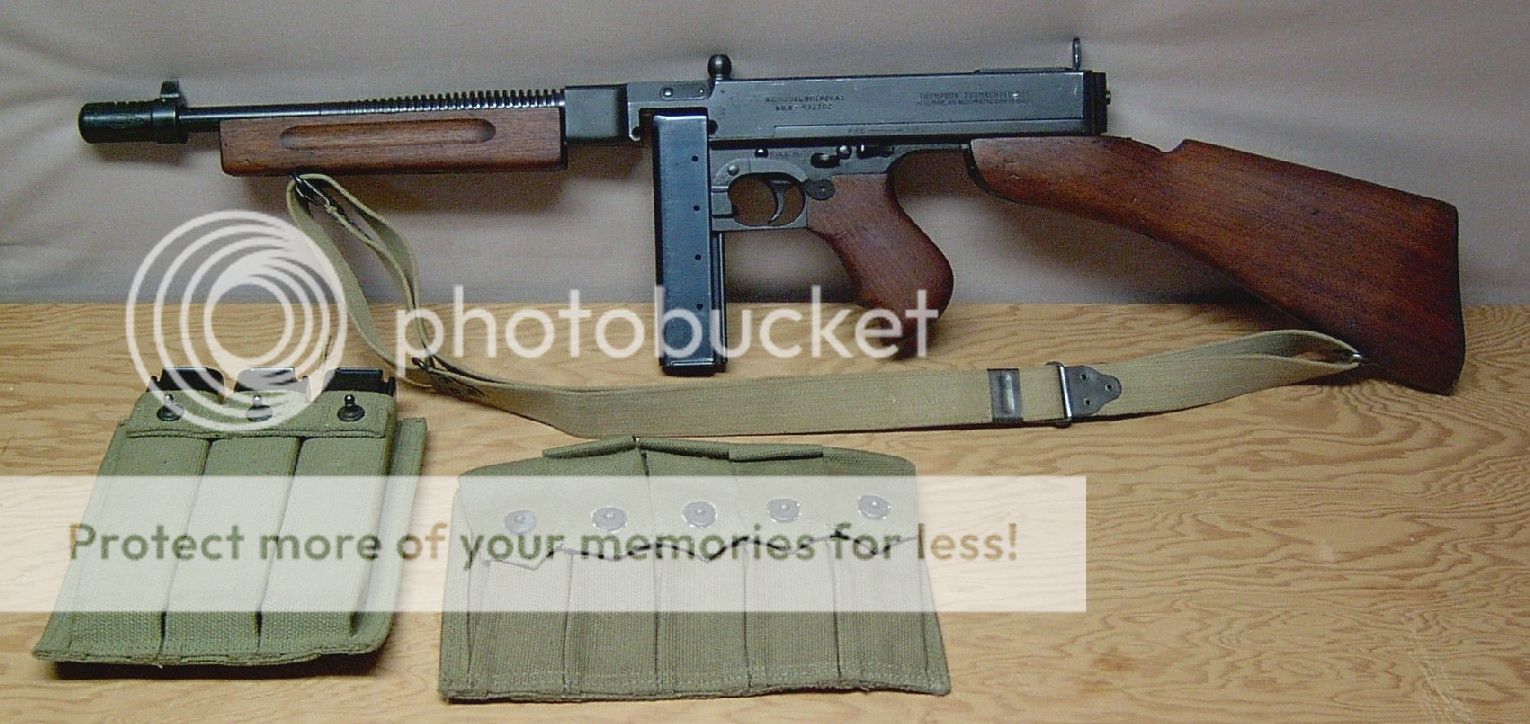
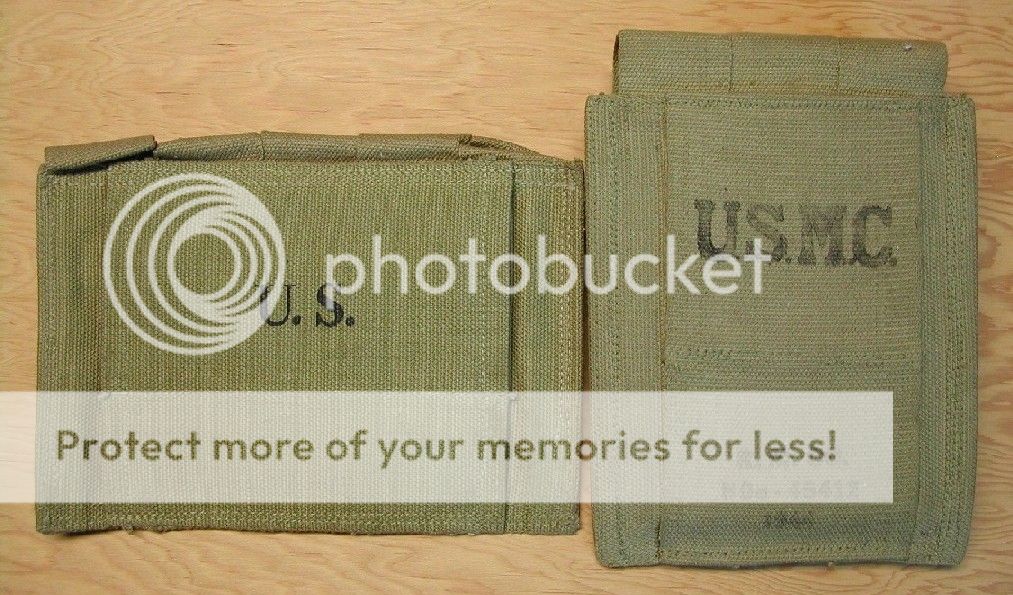
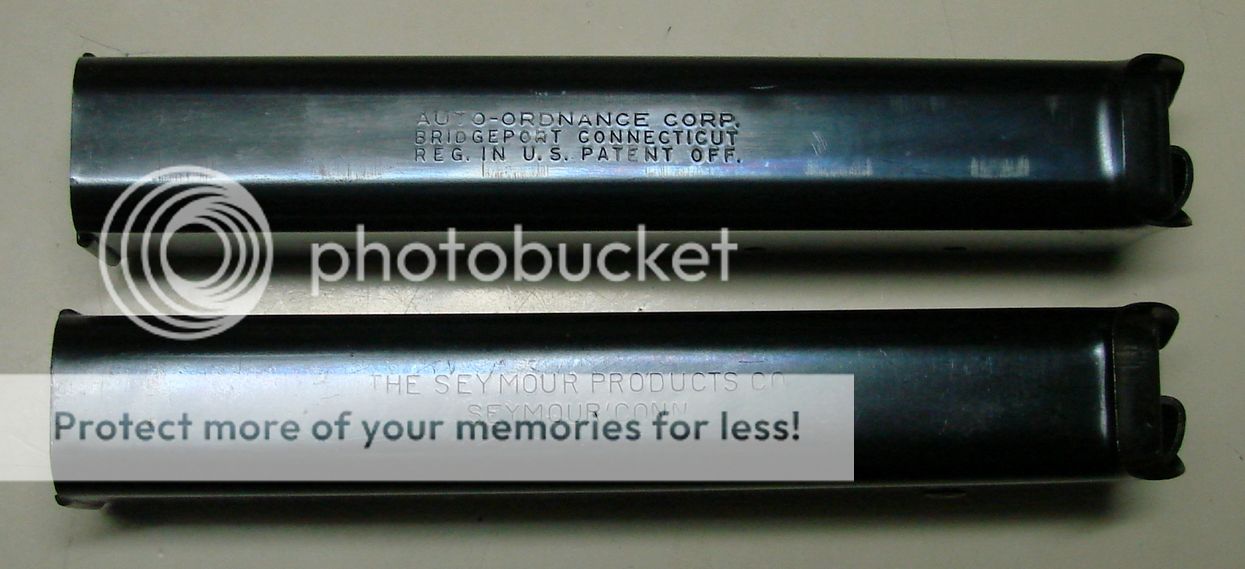
The 15-round carbine magazines could be carried in either the standard two-cell, factory-made belt pouch or in rigger-made pouches fabricated by airborne unit riggers. These specially made pouches could hold either four, 15-round carbine magazine or three, eight-round Garand clips. Such pouches enabled more magazines to be carried on a paratrooper's belt than was possible with the standard pouches. Similar rigger-made pouches were also constructed for the 20-round Thompson submachine gun magazines. M1A1 Carbines used the same type of sling as standard M1 carbine.
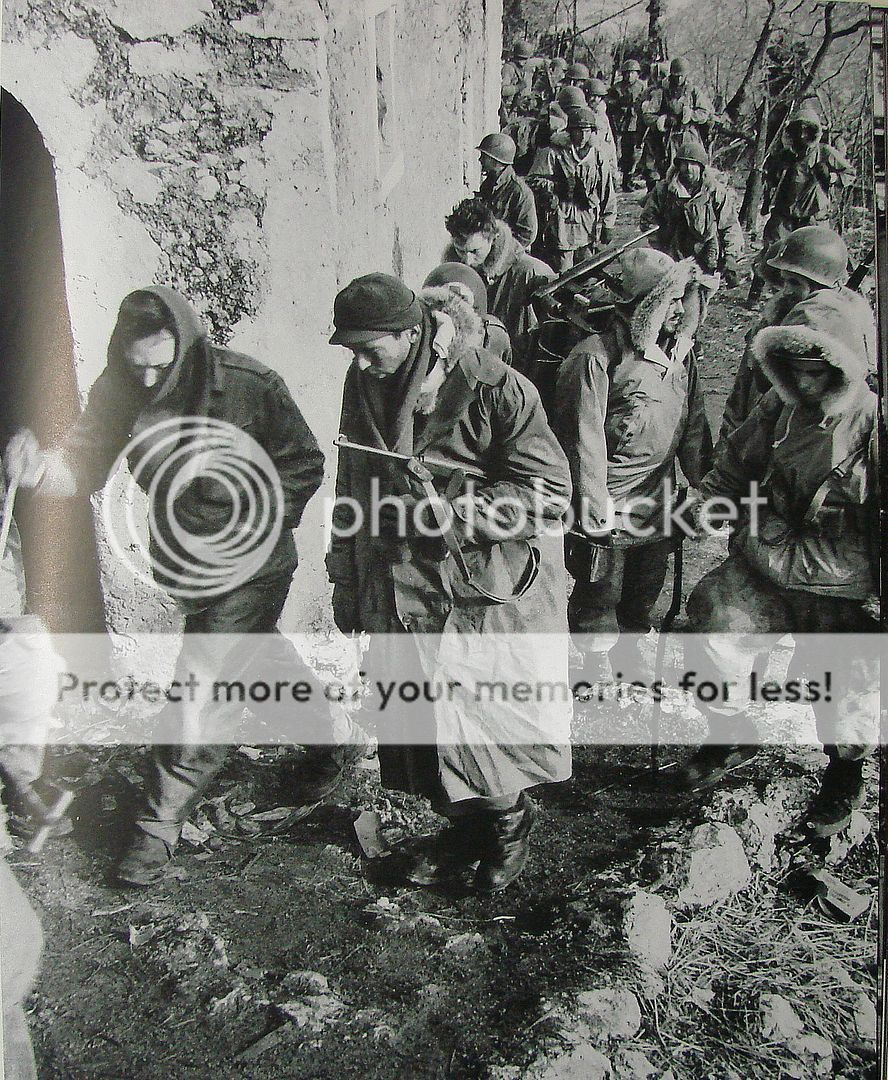
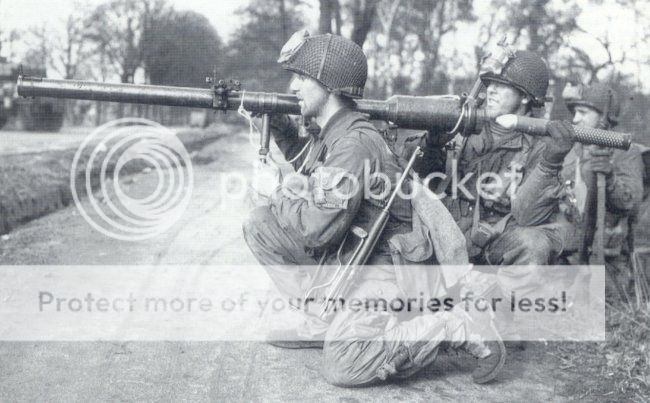
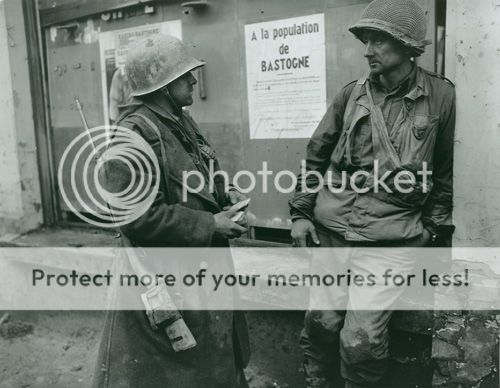
As production allowed, the M1A1 Carbines were issued to all U.S. Army paratroop units, and they saw used in every American airborne operation of World War II, including Sicily, Normandy (D-Day), Market Garden and Operation Varsity (Rhine Jump). Limited numbers of M1A1 Carbines were also issued to the U.S. Marine Corps' First Parachute Div. The folding metal stock of the M1A1 Carbine was not well suited for launching rifle grenades due to the heavy recoil generated, which could bend or break the folding metal assembly. Regulations stated that the M1A1 was not to be used for grenade launching duties - except in emergency situations. If required, the recommended procedure when launching rifle grenades were to fold the stock and place the pistol grip of the carbine firmly on the ground.
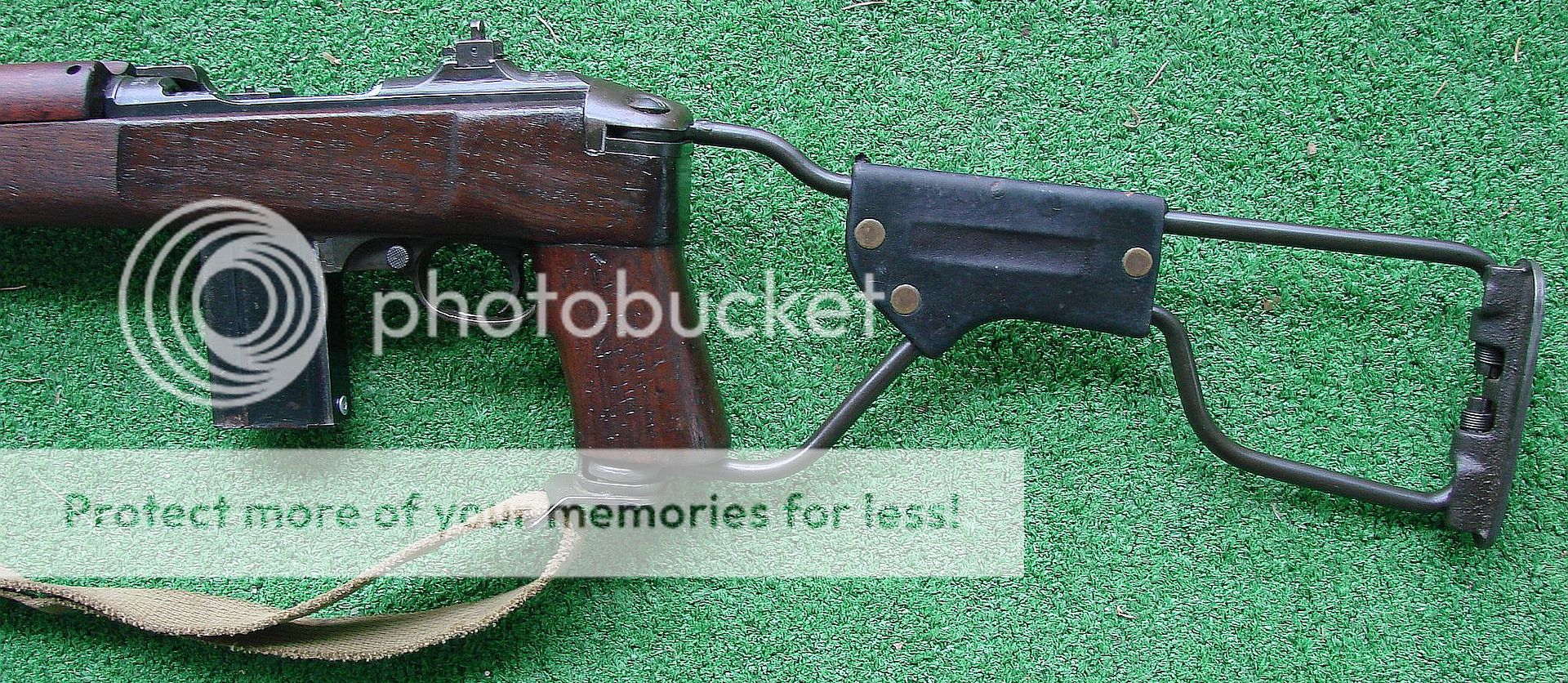
There are several features to examine when attempting to identify a genuine M1A1 carbine stock. The most important are as follows:
1. The inside of the stock (the barrel channel) will be marked 'OI." This denotes that the stock was manufactured by the Overton Company for Inland (Overton-Inland).
2. The underside of the pistol grip on the First Contract M1A1 Carbines was also marked 'OI' along with a small Ordnance Department crossed cannon escutcheon. Later production pistol grips were typically marked 'RI/3". These were made under subcontract by the J.C. Richardson Company (Richard-Inland). On most of the latter grips, a larger Ordnance escutcheon was stamped on the right side rather than on the bottom of the grip as found on the earlier examples. The configuration of many of the later grips was also somewhat different than the earlier examples.
3. The inside of the metal buttplate had a drawing number cast (not stamped). The number 'B257614,' was followed by an asterisk-shaped marking enclosed in a circle (sometimes described as a wagon wheel) followed by one-or two-digit number. This marking is often rather indistinct and can be hard to read. Reproduction M1A1 buttplates are usually unmarked although some fakes may be noted with a stamped (not cast) number.
4. The early stocks typically had a circled 'P' proofmark stamped on the rear of the stock. The marking was not generally found on the later stocks. It should be noted that many of the post-war rebuilt stocks had a proof mark applied as part of the overhaul procedure, but this was often a block letter 'P' (not enclosed in a circle).
5. The leather cheek pad was neatly attached to the stock and secured by rivets. Some rivets marked '7/4' have been observed, and these are believed to have been automotive brake shoe rivets made by Inland. Early rivets for the M1A1 cheek pad were typically made of brass, while most the later rivets were made of Parkerized steel and usually painted brown to match the leather. The leather of the original cheek pads and was fairly thin, and some original stocks have deteriorated or damaged pads. Some owners choose to replace the missing or damage pads with newly made leather pads. Original leather pads will show evidence of factory-quality workmanship, whereas many of the replaced pads are somewhat ill-fitting or fabricated using leather that is not too thick and/or too light in color.
----------------------
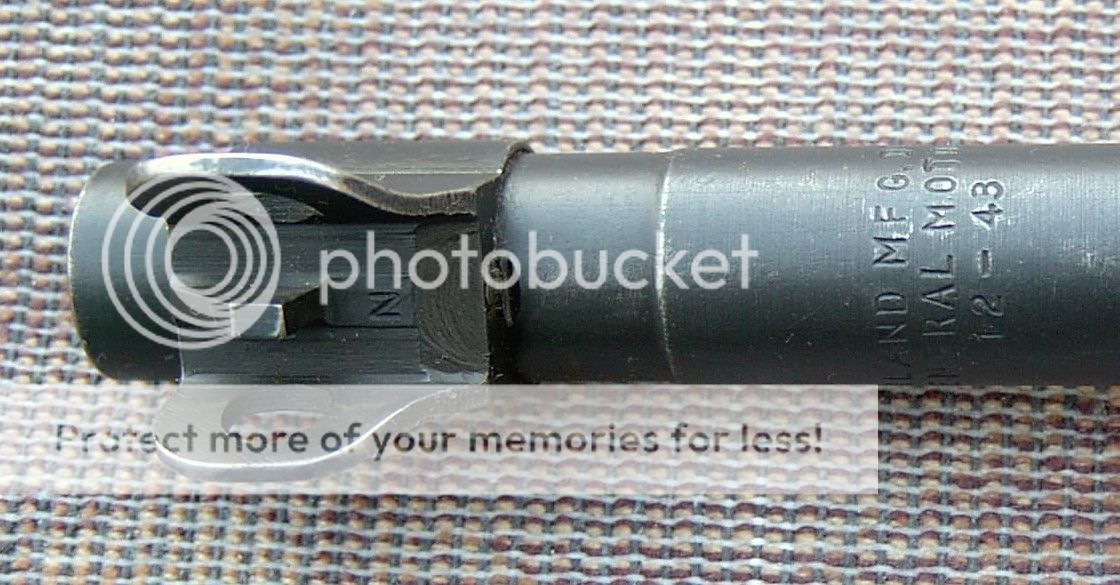
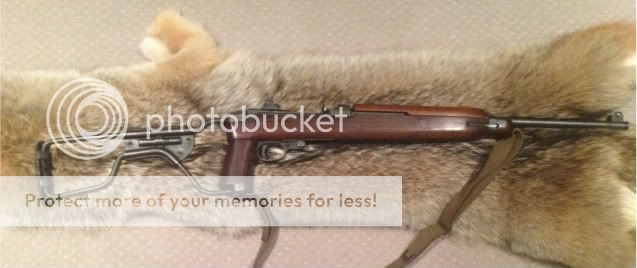
The M1A1 carbine shown below was part of the First Contract with a 12-42 barrel date and serial number of 123829.
It shows the markings and characteristics mentioned above.



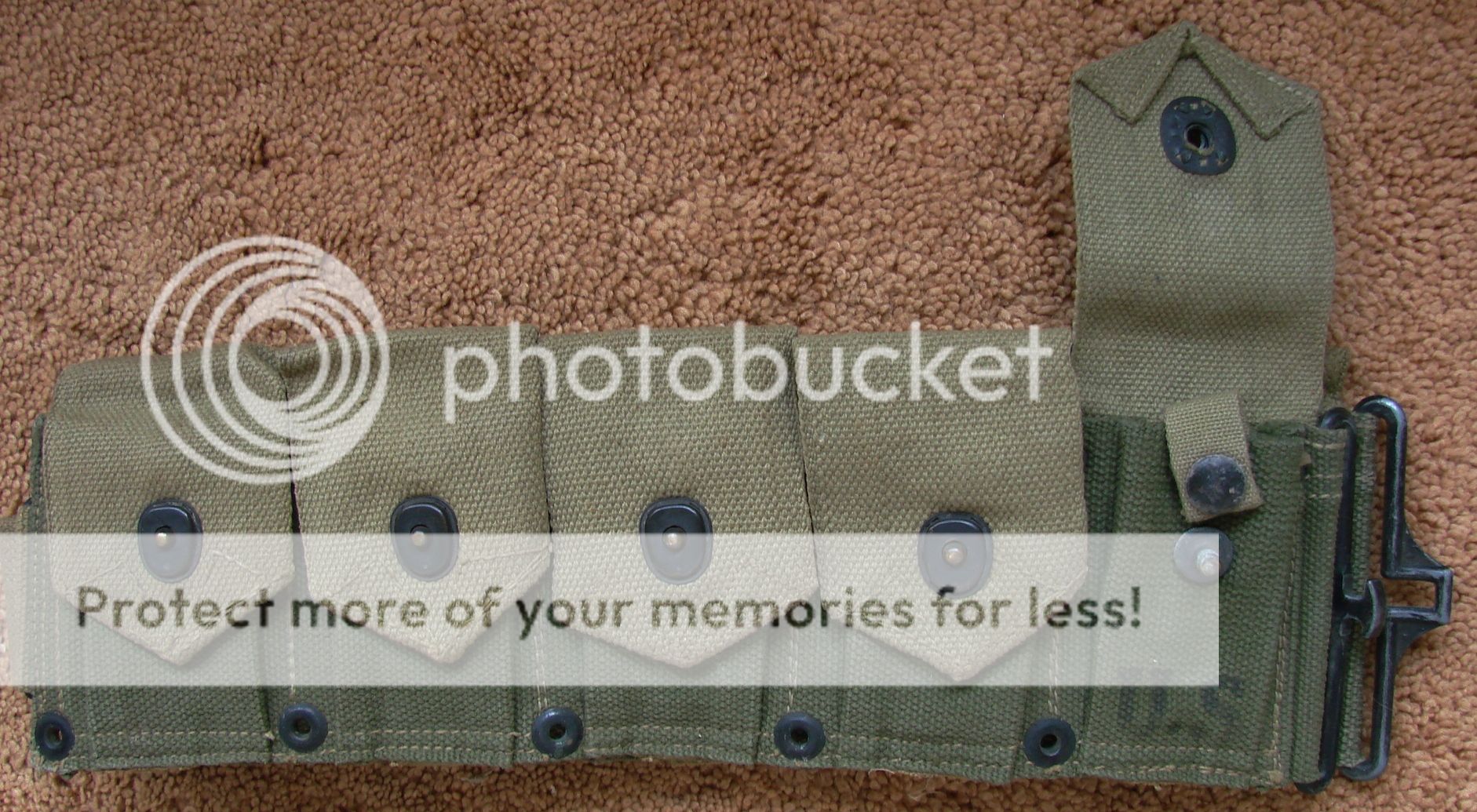
Typical WWII M1 carbine magazine pouch.
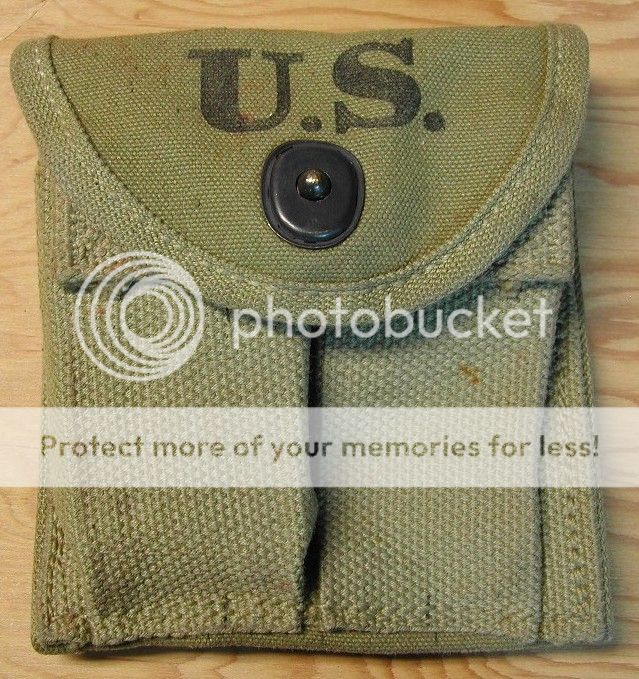
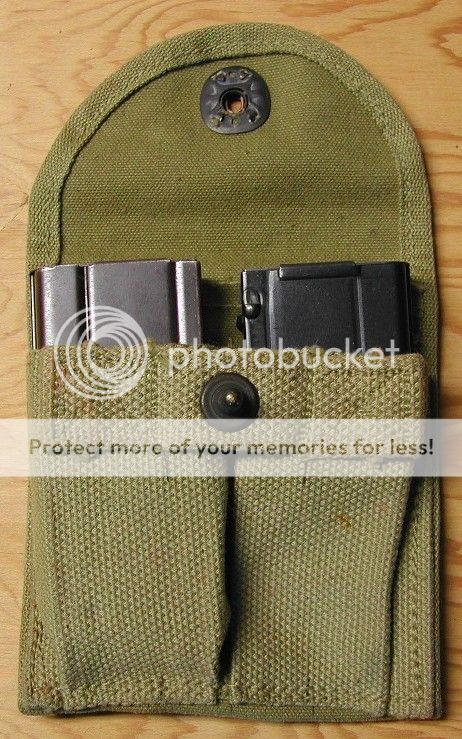

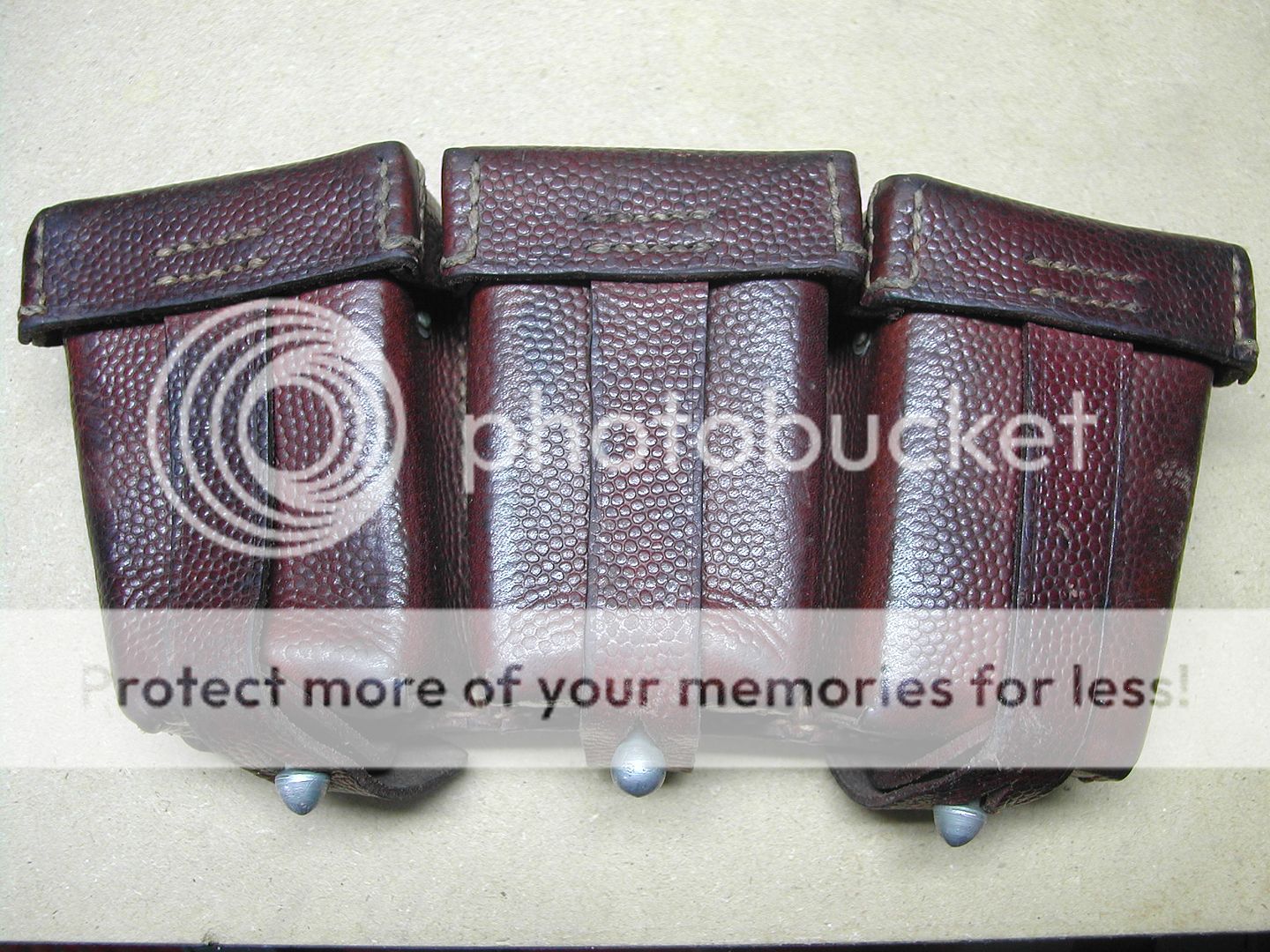
A later pouch.


I don't know if they used the bandolier with stripper clips.
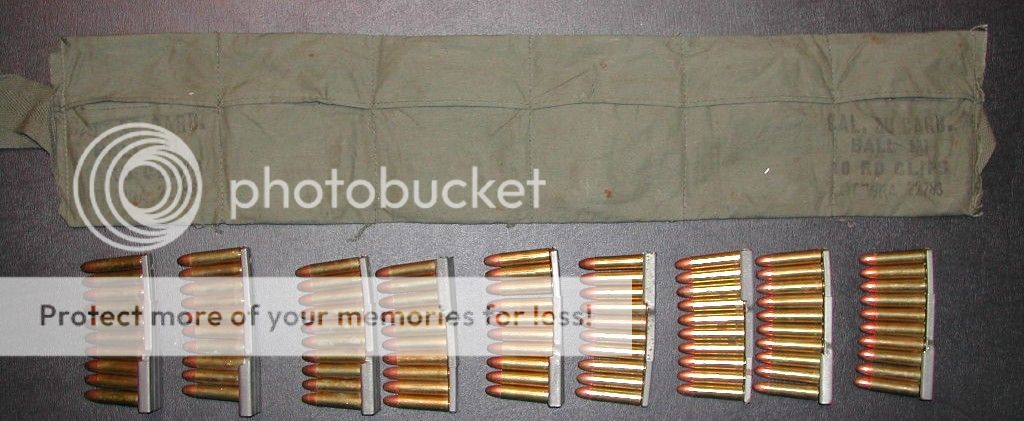

Note the canvas jump scabbard.

I have a carry case for an M1 carbine, I don't know if it is legit.
Marked 'Rice O'Neil, Shoe Co. 1944'.

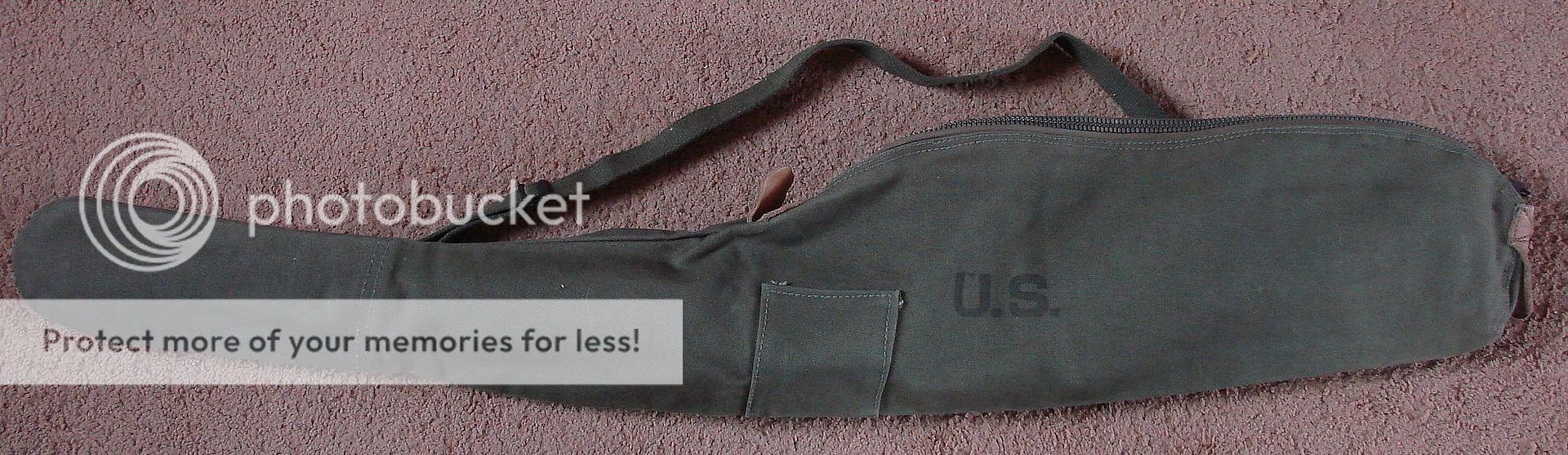
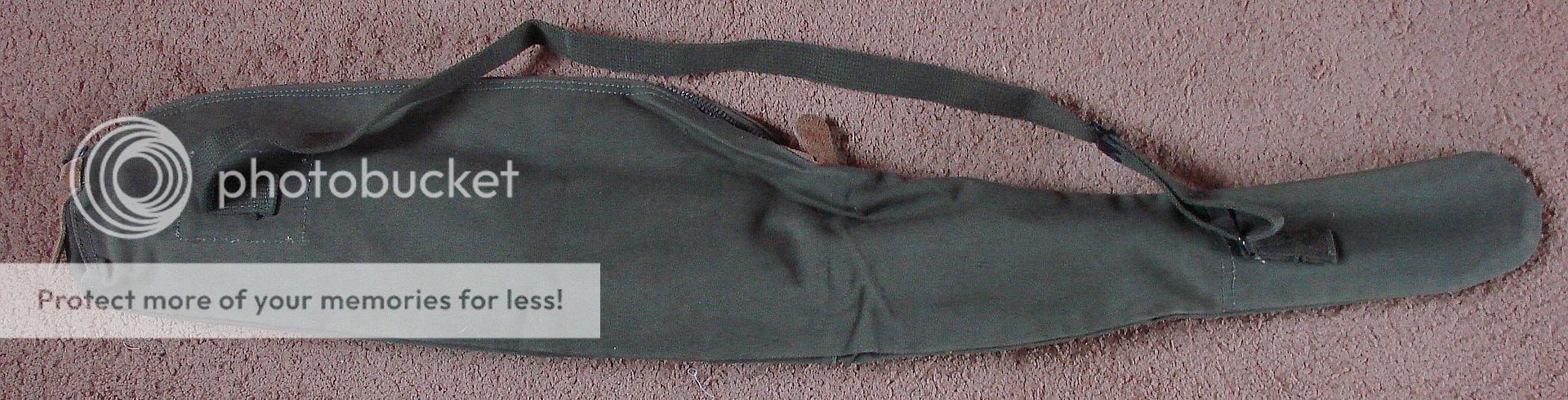

Thanks to JimF4M1s on the Jouster Forum I have since learned this.
M1 Carbine carrying case manufacturers.
These are the names and years in my collection. There are more then one of some names with the same year. But different color canvas, size of type, zipper color, or leather tab colors.
And I'm sure there were more then I have.
Year Manufacturer
1943 CHATTA. AWN. & W.S. CO.
1943 HAV. STCH. CO.
1943 FORREST A. HEATH CO. INC.
1943 J.A. SHOE
1943 RICE O’NEILL SHOE CO.
1943 TWEEDIES
1944 AMERICAN TENT & AWNING CO. KNOXVILLE TENNESSEE
1944 ATLAS AWNING
1944 R.B. HANSON Mfg Co
1944 M.-D. MFG. CO.
1944 RICE O’NEILL SHOE CO.
1944 SHANE MFG. CO.
1944 SMITH MFG. CO.
1945 GOSS CANVAS PRODUCTS
1945 M.-D. MFG. CO.
1945 SHANE MFG. CO.
----------------
Perhaps my case is legit.
David
---------------------------------
The link where the info above came from with a lot more details.
http://ww2.rediscov.com/spring/VFPC...g/DETAILS.IDC,SPECIFIC=15866,DATABASE=objects,
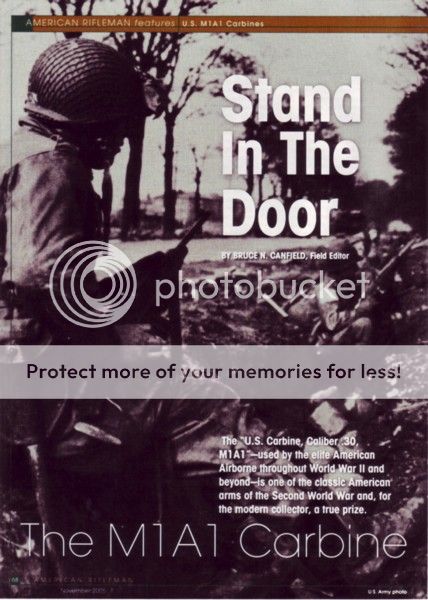
The M1A1 was officially standardized in May 1942, and the first deliveries began in October. The sole manufacturer of the M1A1 was the Inland Manufacturing Division of General Motors in Dayton, Ohio, which was also the largest manufacturer of standard M1 carbines. Inland produced about 43 percent of the total
There were two separate production runs of M1A1 carbines. The so-called 'First Contract' carbines were shipped between October 1942 and October 1943, with approximately 71,000 M1A1s delivered during the period. Serial numbers ranged approximately from 42,000 to 850,000. These M1A1s had the same features as the standard M1s of the era, including non-adjustable, flip-up rear sights; 'high-wood' stocks (the area in front of the operating slide); narrow barrel bands (without bayonet lugs); and flat-top bolts.
The second production run was between about May and December 1944 and created less than 70,000 M1A1s. Serial numbers ranged approximately from 5,150,000 to 6,700,000. Although the basic design of the M1A1 stock did not change, the majority of the 'Second Contract' stock had 'low-wood' and a slightly different shape to the grip. Also, during the course of production, many of the later production carbine (M1 and M1A1) were fitted with improved components, such as adjustable rear sights, round bolts and wider barrel bands. There is some disagreement whether or not any of these carbines originally left the factory with T4 barrel bands (with the bayonet lug). If so, only extremely late production M1A1 Carbines would have this feature, and the vast majority had either the narrow Type 1 or the wider Type 2 barrel bands (both types without bayonet lug.)
It must be stressed that the previously mentioned serial number ranges were only approximations, and there were no special serial number ranges assigned to the M1A1 production runs. M1A1 serial numbers were intermixed with standard M1 Carbines made by Inland carbine is in the general serial number ranges already mentioned and has features consistent with the vintage of the stock, it is not possible to ascertain if an Inland action was originally mated with a M1A1 stock at the factory. Unfortunately, there is no known roster of M1A1 carbine serial numbers.
The M1A1 Carbine was generally issued with a padded canvas jump scabbard that attached to the pistol belt. The lower portion of the case could be strapped to the paratrooper's leg during descent. Upon landing, the carbine trooper's leg during descent. Upon landing, the carbine could be quickly removed from the case, the stock opened and the gun ready for immediate use. Reportedly, the leg strap on the canvas case was rarely secured as it could cause injury (including broken legs) upon landing. Some paratroopers simply tucked the folded carbine behind their emergency parachute, or carried it in some other manner and dispensed with the jump scabbard altogether.
The 15-round carbine magazines could be carried in either the standard two-cell, factory-made belt pouch or in rigger-made pouches fabricated by airborne unit riggers. These specially made pouches could hold either four, 15-round carbine magazine or three, eight-round Garand clips. Such pouches enabled more magazines to be carried on a paratrooper's belt than was possible with the standard pouches. Similar rigger-made pouches were also constructed for the 20-round Thompson submachine gun magazines. M1A1 Carbines used the same type of sling as standard M1 carbine.
As production allowed, the M1A1 Carbines were issued to all U.S. Army paratroop units, and they saw used in every American airborne operation of World War II, including Sicily, Normandy (D-Day), Market Garden and Operation Varsity (Rhine Jump). Limited numbers of M1A1 Carbines were also issued to the U.S. Marine Corps' First Parachute Div. The folding metal stock of the M1A1 Carbine was not well suited for launching rifle grenades due to the heavy recoil generated, which could bend or break the folding metal assembly. Regulations stated that the M1A1 was not to be used for grenade launching duties - except in emergency situations. If required, the recommended procedure when launching rifle grenades were to fold the stock and place the pistol grip of the carbine firmly on the ground.
There are several features to examine when attempting to identify a genuine M1A1 carbine stock. The most important are as follows:
1. The inside of the stock (the barrel channel) will be marked 'OI." This denotes that the stock was manufactured by the Overton Company for Inland (Overton-Inland).
2. The underside of the pistol grip on the First Contract M1A1 Carbines was also marked 'OI' along with a small Ordnance Department crossed cannon escutcheon. Later production pistol grips were typically marked 'RI/3". These were made under subcontract by the J.C. Richardson Company (Richard-Inland). On most of the latter grips, a larger Ordnance escutcheon was stamped on the right side rather than on the bottom of the grip as found on the earlier examples. The configuration of many of the later grips was also somewhat different than the earlier examples.
3. The inside of the metal buttplate had a drawing number cast (not stamped). The number 'B257614,' was followed by an asterisk-shaped marking enclosed in a circle (sometimes described as a wagon wheel) followed by one-or two-digit number. This marking is often rather indistinct and can be hard to read. Reproduction M1A1 buttplates are usually unmarked although some fakes may be noted with a stamped (not cast) number.
4. The early stocks typically had a circled 'P' proofmark stamped on the rear of the stock. The marking was not generally found on the later stocks. It should be noted that many of the post-war rebuilt stocks had a proof mark applied as part of the overhaul procedure, but this was often a block letter 'P' (not enclosed in a circle).
5. The leather cheek pad was neatly attached to the stock and secured by rivets. Some rivets marked '7/4' have been observed, and these are believed to have been automotive brake shoe rivets made by Inland. Early rivets for the M1A1 cheek pad were typically made of brass, while most the later rivets were made of Parkerized steel and usually painted brown to match the leather. The leather of the original cheek pads and was fairly thin, and some original stocks have deteriorated or damaged pads. Some owners choose to replace the missing or damage pads with newly made leather pads. Original leather pads will show evidence of factory-quality workmanship, whereas many of the replaced pads are somewhat ill-fitting or fabricated using leather that is not too thick and/or too light in color.
----------------------
The M1A1 carbine shown below was part of the First Contract with a 12-42 barrel date and serial number of 123829.
It shows the markings and characteristics mentioned above.
Typical WWII M1 carbine magazine pouch.
A later pouch.
I don't know if they used the bandolier with stripper clips.
Note the canvas jump scabbard.
I have a carry case for an M1 carbine, I don't know if it is legit.
Marked 'Rice O'Neil, Shoe Co. 1944'.
Thanks to JimF4M1s on the Jouster Forum I have since learned this.
M1 Carbine carrying case manufacturers.
These are the names and years in my collection. There are more then one of some names with the same year. But different color canvas, size of type, zipper color, or leather tab colors.
And I'm sure there were more then I have.
Year Manufacturer
1943 CHATTA. AWN. & W.S. CO.
1943 HAV. STCH. CO.
1943 FORREST A. HEATH CO. INC.
1943 J.A. SHOE
1943 RICE O’NEILL SHOE CO.
1943 TWEEDIES
1944 AMERICAN TENT & AWNING CO. KNOXVILLE TENNESSEE
1944 ATLAS AWNING
1944 R.B. HANSON Mfg Co
1944 M.-D. MFG. CO.
1944 RICE O’NEILL SHOE CO.
1944 SHANE MFG. CO.
1944 SMITH MFG. CO.
1945 GOSS CANVAS PRODUCTS
1945 M.-D. MFG. CO.
1945 SHANE MFG. CO.
----------------
Perhaps my case is legit.
David
---------------------------------
The link where the info above came from with a lot more details.
http://ww2.rediscov.com/spring/VFPC...g/DETAILS.IDC,SPECIFIC=15866,DATABASE=objects,
Last edited: