Martini restoration

John Rambo

CGN Regular
Rating - 100%
4   0   0
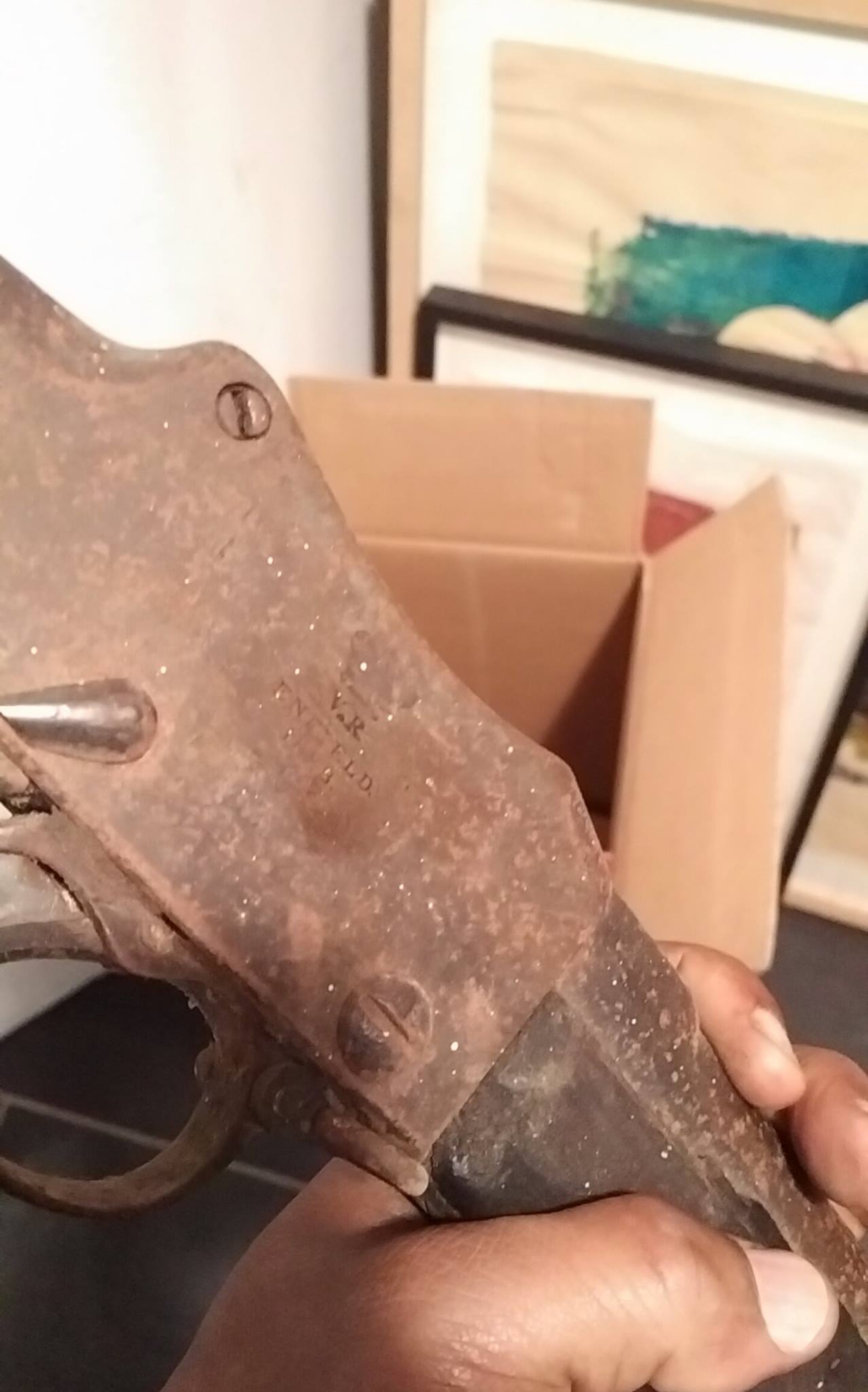
My father, who is not a gun person happens to have an old martini rifle. Its in pretty bad condition. He doesn't know if its been deactivated and I can't take a look at it anytime soon since I live pretty far.
Can anyone recommend a good place where He could have it restored around Toronto?


LDYkjHx.jpg


Thanks
 
Need more pictures but it looks pretty rusty. Being a black powder rifle, the bore could be in bad shape as well. I would just clean it up with oil soaked 0000 steel wool (the metal parts) and clean the wood with boiled linseed oil and see how it works out. Ammo is almost impossible to find for a Martini Henry and while reloading is an option, finding the brass and dies will be a bit of a challenge as well. I would clean it up and hang it on the wall as a piece of history. BTW, this rifle is classified as an antique.
 
I think paying someone for restoration can be tricky and costly since it involves A LOT of elbow grease.

Judging by just this picture it will be a wall hanger no matter what.Then again we have all seen very nasty looking Gehendras being shot after restorations.

Don't try to take it apart by yourself before seeking good info on how to proceed.
 
It is a Mk IV and, by the look of the barrel, it is still a 577/450. That screw in the lower front of the receiver is not correct, although it will likely do the job, and the shaft with the cocking indicator attached has been improperly installed. Although oil or penetrant soaked steel wool would likely do wonders for the metal, there are other methods that can better save and even somewhat restore any remaining finish. If there is little or no pitting, the metal just MIGHT clean up surprisingly well. I wholeheartedly agree with donor with regard to the cost of restoration.
 
It’s not hard to do yourself, you’ll be paying a LOT for what a lot of the time ends up being a “bubba’d” restoration by a gunsmith who may not fit the term. Disassembling, degreasing and boiling the rifle in distilled water then carding it with steel wool (repeating the previous steps as necessary in that order) then letting the metal sit in kerosene for a few days is all the metal needs. The wood can be cleaned up as you like, if there are markings on the butt, take care to preserve them. You can scrub the bore with a combo of penetrating oil and J.B Bore Paste and your favourite carbon remover. It’s not terribly difficult to put these things into another 150yrs of service on the cheap if you’re willing to put a bit of time and passion into it.
 
That looks like one of the batch brought into Canada back in the sixties. I don't remember where they got them but I remember they were just thrown into big square, wooden boxes, which contained appx 100 rifles each. Sometimes there were a few more and sometimes a few less. They came out of the Middle East or India.

They can be a good source for parts and from those I pulled apart, after cleaning were functional for the most part. Alan Lever paid $1 each for them and it cost him twice that much to ship them to his facility.

Lever sold them either as singles for $7.50 each or took the rifles that were no longer functional and weld the receivers/barrels to a couple of rings. Then they pulled one of the breech blocks and internally threaded the muzzle. Then they ran an electrical cord up the bore and screwed in a light fixture. Of course, they were dumped into a degreasing solution first then rinsed before this procedure. Some of the units were spray painted black or brown.

These sold for $17.50 each. I remember there were fifty such units made up and advertised as the accessory every serious collector just had to have. That along with some stools/tables that were made from brand new, replacement Springfield 03 scant stocks which had the fore ends cut back and a used for legs. I seem to remember a $5 tag on those.

If that rifle didn't come out of Lever Arms, it likely came from International out of Montreal.

 
The M-Hs imported in the early 60s came from Nepal in the first purchase and were sold by International, Montreal. There were a few Gahendras in this lot which had everyone wondering what they were.. Sarco bought more in the 70s and IMA bought the current collection of dry rot and iron oxide more recently.
 
The M-Hs imported in the early 60s came from Nepal in the first purchase and were sold by International, Montreal. There were a few Gahendras in this lot which had everyone wondering what they were.. Sarco bought more in the 70s and IMA bought the current collection of dry rot and iron oxide more recently.

Not all of them. Back in the day there were several importers that were bringing surplus firearms from all over the world.

Lever would often deal directly with governments selling off their old ordnance and he had Canadian End User Certificates to qualify. He also had the import/export licenses required.

I sometimes think the only reason Alan had the store in Canada was to get the End User Certificates as Canada qualified as a non threat end user. The firearms would come in. Customs agents would open every crate, we would put the tops back on and export them to companies in the US. Often, the firearms just came in on pallets, without any covers and just strapped in place with 1in wide metal banding. They came from all over the world, other than China. Very few from France.
 
Thanks for all the input. He got a restoration quote between 2-3k. Obviously this is worth it. I'll try to take the rust off and make a wall hanger out of it
 
That looks like one of the batch brought into Canada back in the sixties. I don't remember where they got them but I remember they were just thrown into big square, wooden boxes, which contained appx 100 rifles each. Sometimes there were a few more and sometimes a few less. They came out of the Middle East or India.

They can be a good source for parts and from those I pulled apart, after cleaning were functional for the most part. Alan Lever paid $1 each for them and it cost him twice that much to ship them to his facility.

Lever sold them either as singles for $7.50 each or took the rifles that were no longer functional and weld the receivers/barrels to a couple of rings. Then they pulled one of the breech blocks and internally threaded the muzzle. Then they ran an electrical cord up the bore and screwed in a light fixture. Of course, they were dumped into a degreasing solution first then rinsed before this procedure. Some of the units were spray painted black or brown.

These sold for $17.50 each. I remember there were fifty such units made up and advertised as the accessory every serious collector just had to have. That along with some stools/tables that were made from brand new, replacement Springfield 03 scant stocks which had the fore ends cut back and a used for legs. I seem to remember a $5 tag on those.

If that rifle didn't come out of Lever Arms, it likely came from International out of Montreal.

My older brother got one, presumably from Lever Arms. He fired it in the back yard one time, then decided he was going to "sporterize" it, including barrel chop, stock shortening, etc. Figured he would make a hunting gun out of it. As if anyone would want .577 cal deer rifle in a caliber that was even then hard to find...

 
Back
Top Bottom