










































You are using an out of date browser. It may not display this or other websites correctly.
You should upgrade or use an alternative browser.
You should upgrade or use an alternative browser.
Mas 1873/1874 45acp
- Thread starter smokinbarrel
- Start date
freemanriveradventures
Member
- Location
- Fort Assiniboine AB
Ream to 455 webley and you have no worries about pressures. For 45acp, it would be recommended you load to BP pressures as factory 45acp far exceeds maximum operating pressures of the original 11mm. 455 Webley has similiar pressures to 11mm.

vagrantviking
CGN Ultra frequent flyer
- Location
- Southern Alberta
Personally I prefer these sorts of things in the original chambering. The fear that they might have been damaged by wrong ammo at some point in their history is one concern.
I also like the idea of experiencing them with loads and ammo similar to what they would have felt like when new. The challenge of creating the correct ammo is fun and usually not all that difficult.
We're just temporary custodians of these artifacts and it's not easy for a future owner to convert them back to original. Or they might not be as well versed in the limitations and need to reload to lowered pressures creating situation where the gun is damaged or someone injured.
Post #2 is a good idea to consider if you are sure you do want to modify one of these. I have an 1874 that was reamed for 455 Webley at some point in time as well as a 1873 still in 11mm.
I also like the idea of experiencing them with loads and ammo similar to what they would have felt like when new. The challenge of creating the correct ammo is fun and usually not all that difficult.
We're just temporary custodians of these artifacts and it's not easy for a future owner to convert them back to original. Or they might not be as well versed in the limitations and need to reload to lowered pressures creating situation where the gun is damaged or someone injured.
Post #2 is a good idea to consider if you are sure you do want to modify one of these. I have an 1874 that was reamed for 455 Webley at some point in time as well as a 1873 still in 11mm.
If you're a machinist, why not buy an unmodified one?
If you have the skills to fabricate a reamer for the chambers, you should have more than enough skill to fabricate the brass casings by thinning down 44 special casings (or from brass stock if you're feeling gratuitous) and machine/modify an existing aluminum 0.452" bullet mold to cast heeled bullets (buy a 45 acp mold with lube grooves and mill off the bottom driving band)
The reamed 1873's are mostly for people who don't have the skills to reload (455 modification) or only do casual reloading with pre-manufactured components (45 acp modification).
You stated you already cast, so that's a wash. And a machinist should have no problems taking 20 thou off the rim of a 44 special. (If you want to be very efficient, you could even machine a compaction die, and use that to compress the rims of 44 special flat, instead of machining each case)
Those solutions would all cost less than fabricating a precision hardened chamber reamer. Plus you retain the value of having an unmodified revolver.
If you have the skills to fabricate a reamer for the chambers, you should have more than enough skill to fabricate the brass casings by thinning down 44 special casings (or from brass stock if you're feeling gratuitous) and machine/modify an existing aluminum 0.452" bullet mold to cast heeled bullets (buy a 45 acp mold with lube grooves and mill off the bottom driving band)
The reamed 1873's are mostly for people who don't have the skills to reload (455 modification) or only do casual reloading with pre-manufactured components (45 acp modification).
You stated you already cast, so that's a wash. And a machinist should have no problems taking 20 thou off the rim of a 44 special. (If you want to be very efficient, you could even machine a compaction die, and use that to compress the rims of 44 special flat, instead of machining each case)
Those solutions would all cost less than fabricating a precision hardened chamber reamer. Plus you retain the value of having an unmodified revolver.
*machine/modify an existing aluminum 0.452" bullet mold to cast heeled bullets (buy a 45 acp mold with lube grooves and mill off the bottom driving band)*
Modifying an existing mold to a "heeled" configuration would require adding metal to that portion, not removing it.
Modifying an existing mold to a "heeled" configuration would require adding metal to that portion, not removing it.
Last edited:
vagrantviking
CGN Ultra frequent flyer
- Location
- Southern Alberta
If you have the skills to fabricate a reamer for the chambers, you should have more than enough skill to fabricate the brass casings by thinning down 44 special casings (or from brass stock if you're feeling gratuitous).
44-40 brass is a bit better fit in the case head diameter. The 44 Russian or Special case bulges quit a bit to fit when it's fire formed.
*machine/modify an existing aluminum 0.452" bullet mold to cast heeled bullets (buy a 45 acp mold with lube grooves and mill off the bottom driving band)*
Modifying an existing mold to a "heeled" configuration would require adding metal to that portion, not removing it.
Think a little more creatively, friend
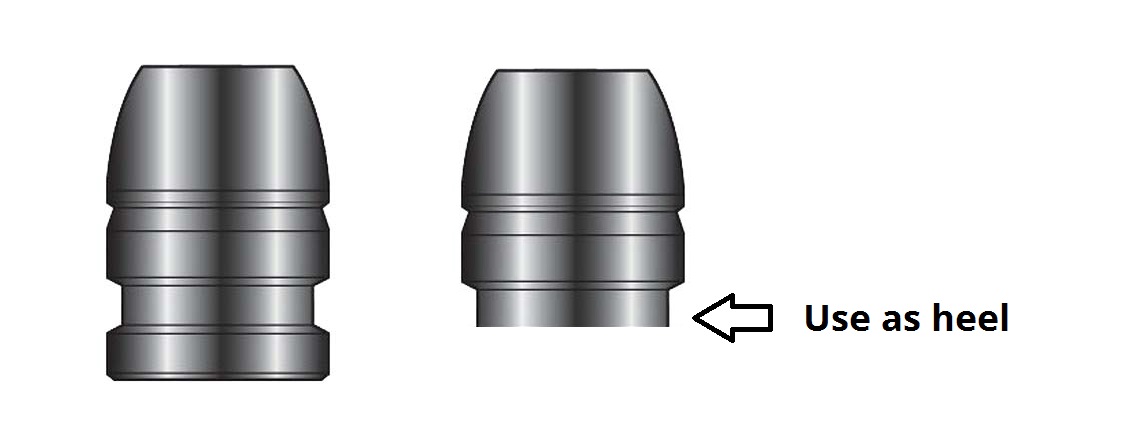
And if you need a video tutorial: https://www.youtube.com/watch?v=u0pPBUFBrys
But if you're really lazy: https://oldwestbulletmoulds.com/shop/ols/products/11mm-french-165gr-heel-bullet-double-cavity-mould
Really, if you're a skilled enough machinist to make a precision chamber reamer as you claim, this should be child's play in comparison
Last edited: