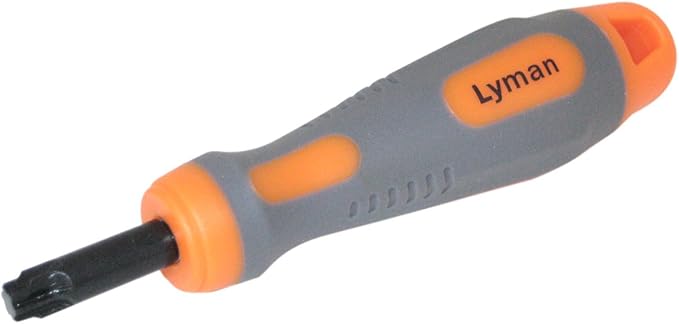
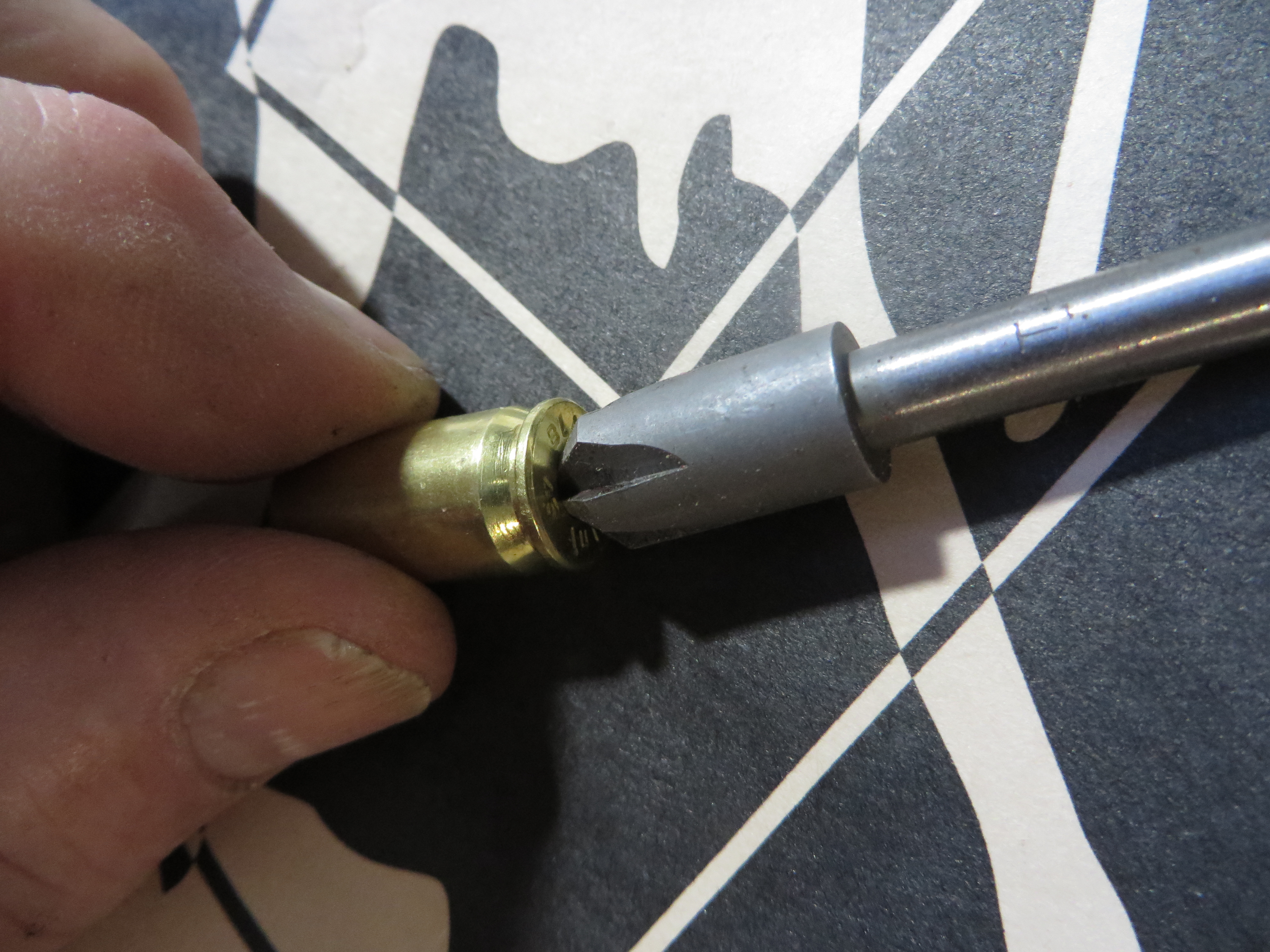
Military brass will not accept primer

Quite possibly fired through a machine gun (C6) which is why they were difficult to resize.

I shot it myself. Used to buy it at gun shows in green sealed packs of stripper clips. Canadian Milsurp? I fired it through my m14s, and it was much more difficult to resize than Federal or Winchester.
 
Last edited:
Lyman Reloading Primer Pocket Reamer (Large)

51HThPNDCAL._AC_SX679_.jpg

I use this bit on a drill..does a lots of case in no time. It’s screwed in the handle.
Better than swaging.
 
Last edited:

I shot it myself. Used to buy it at gun shows in green sealed packs of stripper clips. Canadian Milsurp? I fired it through my m14s, and it was much more difficult to resize than Federal or Winchester.

That's because the IVI brass is a bit stronger, due to extra thickness of the side walls and maybe a bit more tin in the metalurgy.

Once you've sized it for a specific rifle, it will work through dozens of reloads, if you anneal after four to six shots.

When you re anneal depends on how hot you load.

Remember, reduce your loads by at least 5% because the case capacity is appx that much less than commercial cases.
 
That's because the IVI brass is a bit stronger, due to extra thickness of the side walls and maybe a bit more tin in the metallurgy

Tin? In cartridge brass? Strength is imparted to brass through different methods like heat treating or additional thickness but I have never heard of Tin being used...
 
Strength is imparted to brass through different methods like heat treating or additional thickness but I have never heard of Tin being used...

Strengthening brass can come from alloying or from cold work. Heat treating can only reduce strength. Additional thickness may strengthen the part, but the material itself doesn't change strength with thickness.

Doesn't the use of tin make it Bronze?

Yes. In fact, the use of any alloy addition other than zinc makes it bronze. Hence aluminum bronze and beryllium bronze.

And by the way, I don't trust that article you linked one bit. XRF was designed for junk yards, as a convenient way for them to sort materials by group. It is accurate enough to tell mild steel from alloy steel, or tool steel from stainless steel, or copper from brass. Yes, it has come a long way but it still is not accurate enough to identify small differences in materials, especially when used by a bunch of yahoos running lab equipment after hours without even understanding the importance of samples cleanliness. The results suggesting Lapua uses wildly different alloys in different lines of ammo of the same caliber are enough to convince me those results might as well come from a random number generator.
 
I have the Dillon bench-mounted tool. Never used it. I just chuck a countersink tool in my electric drill and motor through a bucket of brass. It cuts the corner of the pocket off. No crimp.

0UIYR1u.jpg


Note: The current sale at Princess Auto has a package of 5 counter sinks for $10.00 Stock up.
 
Last edited:

Strengthening brass can come from alloying or from cold work. Heat treating can only reduce strength. Additional thickness may strengthen the part, but the material itself doesn't change strength with thickness.

These guys know more about cartridge brass than you.

"Starline strives to hold the closest production tolerances possible on every caliber we produce to ensure the highest quality brass available. All brass is produced within SAAMI specifications and includes special heat treat processes and designs to enhance strength and longevity."

If you want to make a cartridge casing stronger (add strength) you can make it thicker...
 
Last edited:

These guys know more about cartridge brass than you.

"Starline strives to hold the closest production tolerances possible on every caliber we produce to ensure the highest quality brass available. All brass is produced within SAAMI specifications and includes special heat treat processes and designs to enhance strength and longevity."

Maybe they do, maybe they don't. Regardless, the Starline statement doesn't contradict mine. All manufacturers heat treat their cases for formability and longevity. They do not do it to add strength.

If you want to make a cartridge casing stronger (add strength) you can make it thicker...

Agreed, and I said as much.
 
Brass is usually an alloy of Copper and Zinc.

Zinc and Tin are very similar, other than one is more ductile than the other and more expensive.

Tin came to mind, and it wouldn't surprise me at all if tin is used in making of brass cartridge cases. However, Shooting Times says that cartridge brass is 70% copper and 30% zinc.
 
Last edited:

From the book Structure and Properties of Engineering Alloys (2nd Ed., William F. Smith, McGraw-Hill 1993):

The addition of 1% Sn to cartridge brass (70%Cu - 30%Zn) improves its corrosion resistance in sea water. Since this alloy was adopted by the British Admiralty in the 1920s, it became known as "admiralty brass".

The point being that while yes, you can add tin to brass, even small additions take the alloy into a different category, and make it suitable for very different purposes.
 
Back
Top Bottom