Minimum effective fireforming load for 303

Slowbalt

CGN frequent flyer
Rating - 100%
42   0   2
What would be a good fireforming load for 303?

I've got quite quite a few LEE .314 90gr semi-wadcutters and several powders (Unique, Bullseye. Trailboss, 231, Titegroup).

How much of a ''bang'' do you need to correctly fireform? Will a puff load do or do you need to get something more powerful?
 
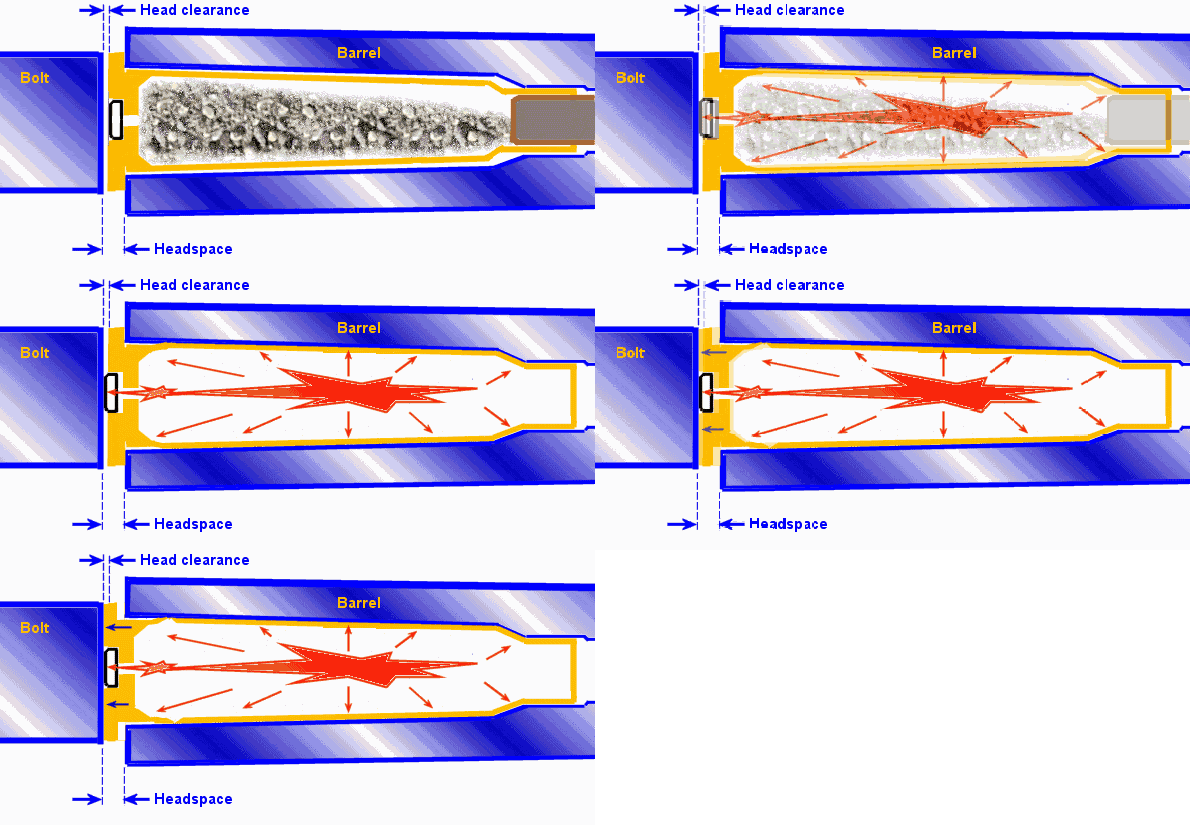
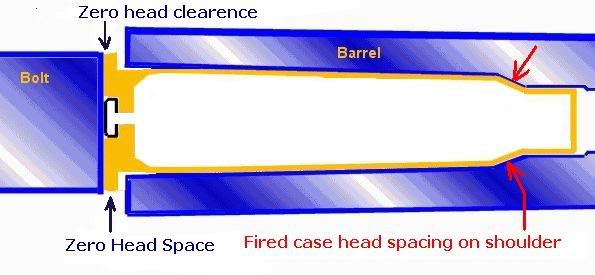
A British Enfield at max military headspace of .074 and with a rim thickness of .058 will have .016 head clearance or air space between the rear of the case and the bolt face.

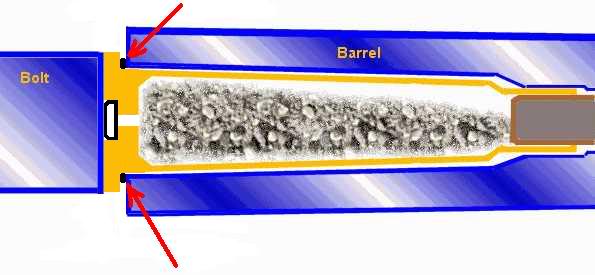
So when fire forming cases it is important to hold the case against the bolt face by using a rubber o-ring. This prevents the case from stretching and thinning and leading to a case head seperation.

FCHGvIZ.jpg


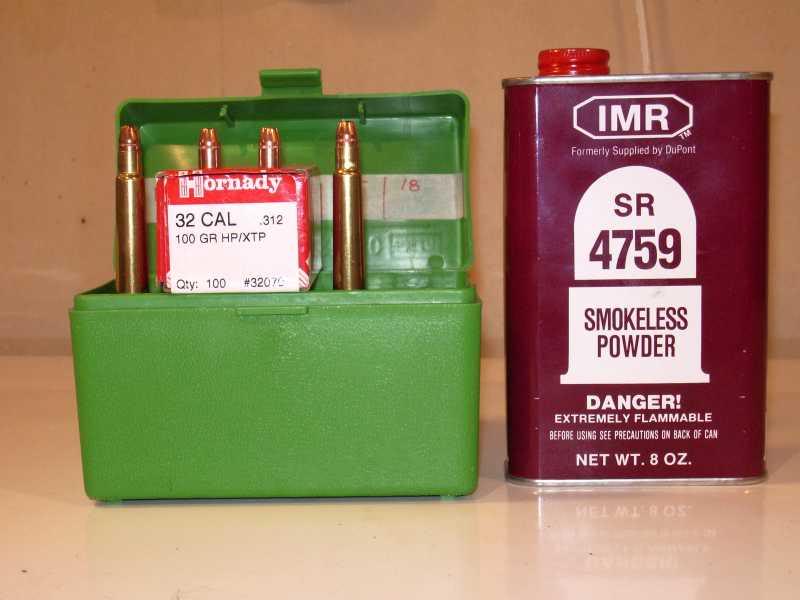
I use SR 4759 and Trail Boss to fire form my cases using a rubber o-ring. I have read hear that some reloaders use small rubber bands for ponytails or the one for corrective braces on teeth.

HHDfGl9.jpg


If you do not use a rubber o-ring or rubber band to hold the case against the bolt face light loads will just let the primer back out the amount of head clearance you have.

sHgqVJR.gif


Below the rubber o-ring or rubber band holds the case against the bolt face and the case will not stretch and thin when fired. After firing with this method the case shoulder will hold the case against the bolt face.

leGysA2.jpg


AQEQ9Vw.jpg


NOTE, my 30-30 at a max pressure of 43,000 psi always has the primers protruding. This is because the chamber pressure is not great enough to push the case back into the bolt face.

This means light powder puff loads without a rubber o-ring will not form the case to the chamber. And even then the cases will need to be fire formed several times to form the case shoulder to the chamber.

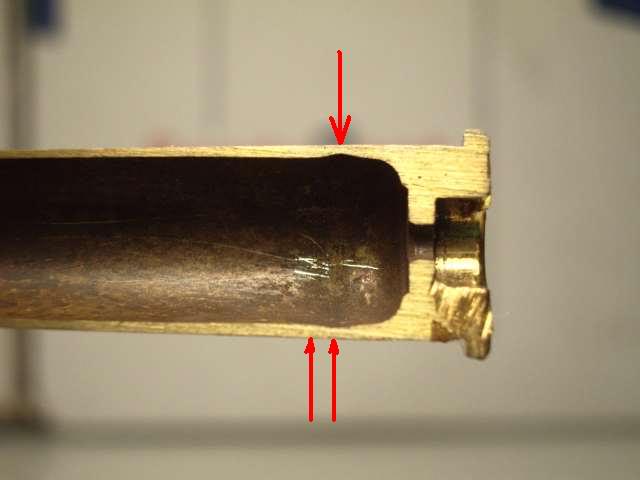
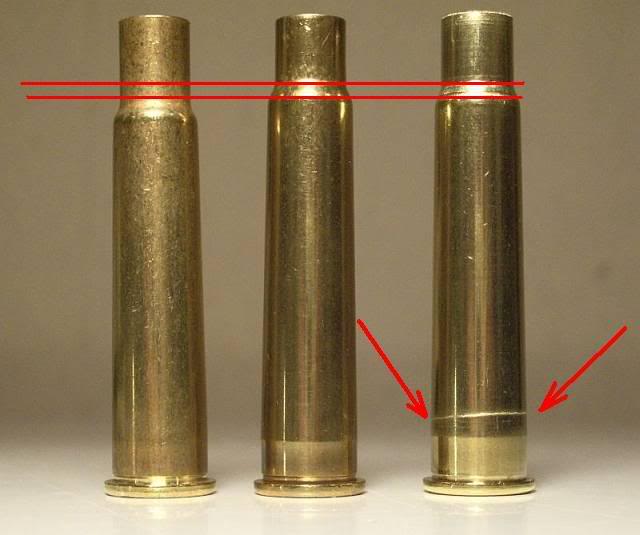
Below is a factory loaded Winchester case fired once and it stretched .009 in a Enfield with its headspace set just below .067. And the second time it was reloaded the case separated because of excessive head clearance. And using a rubber o-ring the first firing would have prevented this stretching and thinning.

YoV80b4.jpg


NHlR9jO.jpg
 
Last edited:
If you leave the lube on the case when fireforming with that light bullet, it might help the case slide back onto the bolt face, so you don't get case thinning.

The rubber ring is the best way to do it.
 
That's great, thanks gentlemen.

All my brass is once or twice fired already (bought off the EE) so I don't know if the o-ring trick would really work, but it's worth a shot (pun intended). Any recommendations as for O-ring size? I've got a few hundred pieces, so I'd buy a few.

Any idea what 15gr of trailboss would give as for velocities? Those are plain base, non-gas checked and rather soft lead.
 
15gr Tight group was suggested for a cast bullet that light.

Not sure about trailboss. But id assume the tight group would be around 1800fps. Pressure will be low those bullets would be fine if lubed
 
What's the point of fire forming in a 303? I understand the purpose when you're using one kind of brass to make something else, but this one has me a bit puzzled. Is the goal just to get something that fits your chamber nicely so you can just neck size from here on out?
 
15gr Tight group was suggested for a cast bullet that light.

Not sure about trailboss. But id assume the tight group would be around 1800fps. Pressure will be low those bullets would be fine if lubed


Right. Read 15gr of TB instead of TG.
 
What's the point of fire forming in a 303? I understand the purpose when you're using one kind of brass to make something else, but this one has me a bit puzzled. Is the goal just to get something that fits your chamber nicely so you can just neck size from here on out?

Exactly
 
Last edited:
I use a lot of 303 brass in 303Brit and 308Brit rifles.

It is all once fired when I get it - in 303 Lee Enfield (largish) chambers.

My chambers are cut with a SAAMI minimum reamer, so the brass needs to be sized.

I test a handful of cases and find some that will not chamber.

I turn the die 4 revs off the shell holder and size a case, and test it to see if it will chamber. I want the sized case to chamber with some resistance.

I then load the bullets a bit long, so they engage the rifling.

If there is resistance from the case shoulder and a bullet in the rifling, the bolt face is hard against the case head. This means I have not sized the case any more than I have to.

When the primer fires, it pushs to separate the bolt face from the case head, pushing the case forward a bit, until the powder charge pressure pushes the case back- stretching the case.

Stretching is minimized by neck sizing, so that the case headspaces on the shoulder, not the rim.

Stretching on the first shot can be minimized by sizing the minimum, so the case shoulder is not pushed back.
 
What's the point of fire forming in a 303? I understand the purpose when you're using one kind of brass to make something else, but this one has me a bit puzzled. Is the goal just to get something that fits your chamber nicely so you can just neck size from here on out?

When resizing for a bolt action the thumb rule is to bump the case shoulder back .001 to .002. This extends case life by giving you minimum head clearance and how far the case can stretch and thin when fired.

Minimum headspace for the .303 British is .064 and most American made cases have a rim thickness of .058. This gives you .006 head clearance if your rifle has the minimum headspace of .064. And at the max headspace of .074 that would be a Field gauge you would have .016 head clearance.

The trick to long case life when reloading is to not let the case stretch and thin when fired, and this means minimum head clearance or air space between the rear of the case and the bolt face.

So with the military .303 British chamber you want the cartridge to headspace on its shoulder and not the rim to prevent case stretching.

AQEQ9Vw.jpg


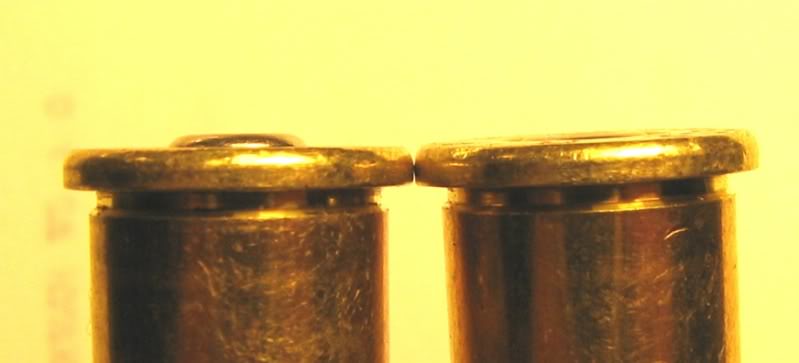
Below on the left shows a primer that has backed out when fired with a low pressure cast bullet load. This old worn No.1 Enfield was well past max headspace "BUT" could be fired with low pressure reloads. And the point I'm making here is the chamber pressure is so low the case does not stretch to meet the bolt face and only the primer backs out.

MfVUt3f.jpg


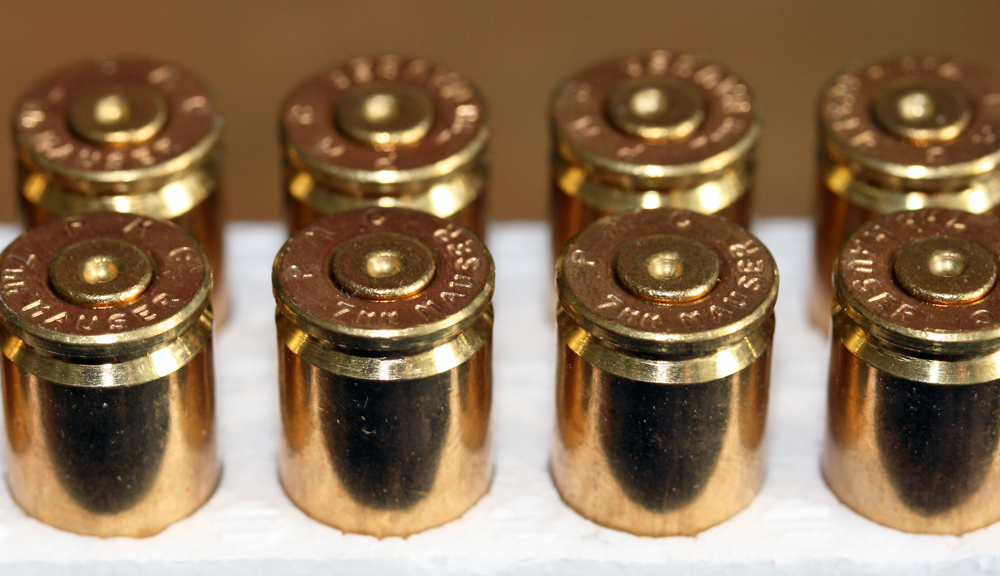
Below are factory loaded 7mm Mauser once fired cases that have all the primers protruding. And they were fired in a worn Mauser with excess headspace and a worn bore. And again my point is the chamber pressure was too low to push the case back against the bolt face. And the result is only the primers contacted the bolt face and no case stretching.

YLNgBO6.png


And my point above is the case needs to be held against the bolt face to allow the shoulder to expand fully and contact the shoulder of the chamber. And light powder puff loads will not make the case form to chamber dimensions.

There are two other methods for fire forming cases and holding the case against the bolt face.

1. You can seat the bullets long and jam them into the rifling, "BUT" good luck with this method on a worn Enfield rifle with cordite throat erosion.

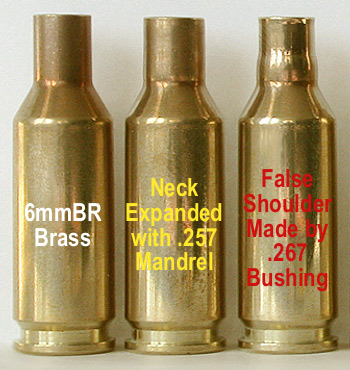
2. You create a false shoulder on the neck of the case that will hold the case against the bolt face. Below the enlarged case neck is larger in diameter than the neck of the chamber and holds the case against the bolt face.

How to Fire-Form Brass without Bullets
http://bulletin.accurateshooter.com/tag/false-shoulder/

wyatt3x350.jpg


Bottom line, if you reload and want your cases to last a long time do not let the case stretch on the first firing. And only bump the shoulders back .001 or .002 when needed when neck sizing the .303 British. In another forum a reloader with moderate loads got 32 reloading with his .303 British cases before the case necks split. And he did this by fire forming his cases and neck sizing and only and only bumping the shoulder back when needed.

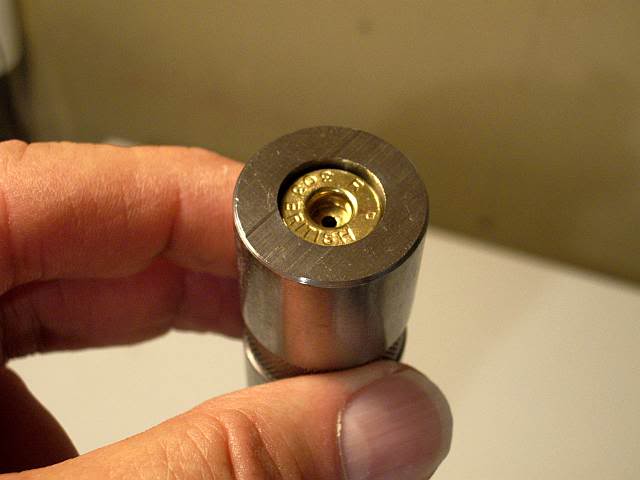
Below a brand new unfired Remington .303 British case in a Wilson case gauge. This shows how short the case shoulder is on a new case.

RBeuevm.jpg


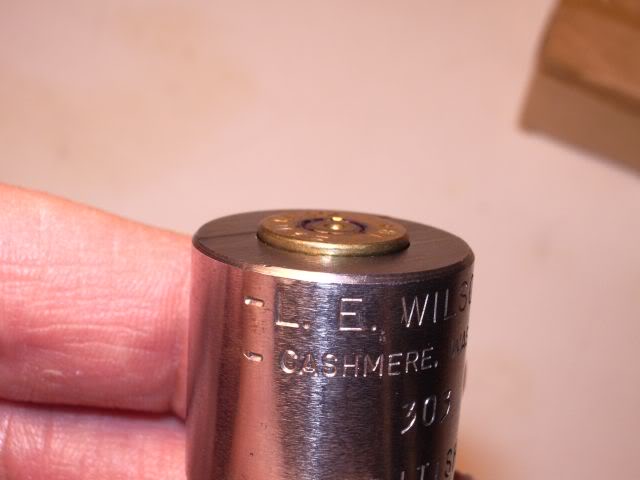
Below a fired case in the Wilson case gauge showing how much longer the military chamber is from SAAMI standards. Meaning if you full length resize your cases and push the shoulders back the maximum amount the die allows you will have case head separations with as few as 2 or 3 reloadings.

HrqwFOG.jpg


So it depends on your rifles headspace setting and your rim thickness on how far the case will stretch and thin "IF" you do not do something to keep it from happening. And its very simple to slip a rubber o-ring or ponytail rubber band around the case to hold it against the bolt face.

leGysA2.jpg


sHgqVJR.gif


NOTE, in 1914 the chambers of the Enfield rifles had to be reamed larger in diameter and longer to the chamber shoulder. And this was due to a ammunition scandal on poorly made ammunition and who was awarded contracts to to make it.

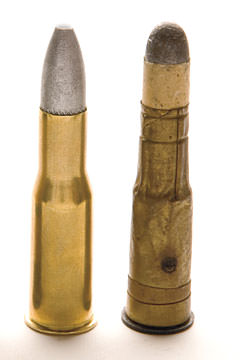
Below .577/450 Martini–Henry ammunition, the case on the left is modern made and the case on the right was made during the 1879 Zulu wars. And this is why many Enfield rifles have long fat chambers and why forming cases is important for long case life.


sDrsB0Q.jpg
 
Last edited:
Back
Top Bottom