N04 mk1 problems

Rating - 100%
2   0   0
Location
Winnipeg, MB
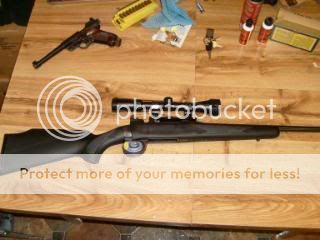
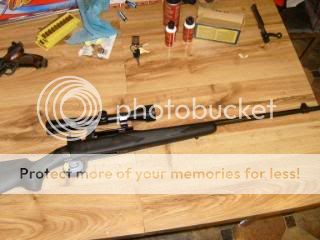
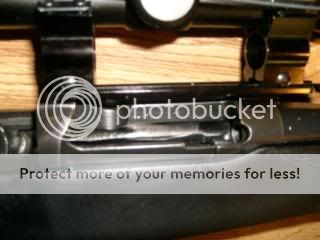
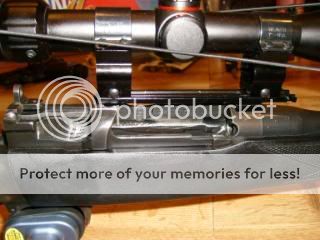
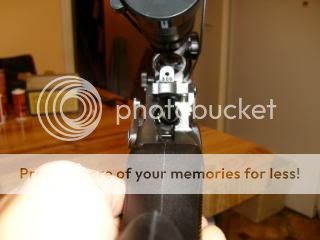
I have a 1942 Longbranch No. 4 Mk.1 that I inhereted from my dad. When I recieved it the non-original woodstock had dried and cracked, so I had an ATI monte Carlo stock put on, I also had the reciever drilled and tapped for a scope base by a local gunsmith.

The rifle shot fine for the first 50 rounds or so while i was using some old ammunition my dad had around, it was made by Acme Surplus Sales out of willowdale ontario and came in a small brown box that held 15 rounds.

The rifle shot perfectly. I cleaned the rifle and made the mistake of oiling my bolt.

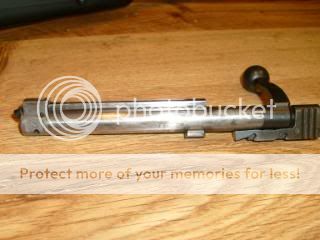
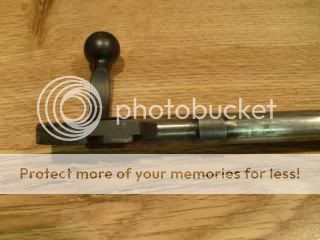
I started my next trip with another box of older ammunition made by Dominion out of Montreal. after a few rounds I noticed that after firing a shot, I could not release the bolt. I would have to smack it really hard upwards and then it would cycle just fine and it would load the next round with ease. But it continues to be extremely difficult to release the bolt initially.

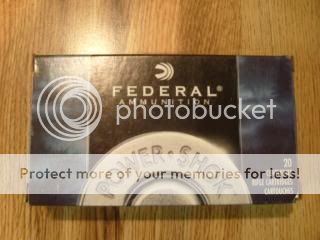
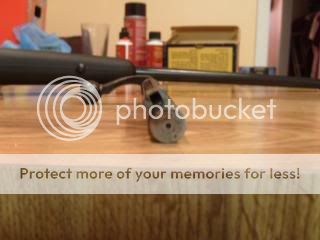
Assuming that it was the fault of me oiling the bolt I cleaned it by pouring boiling water over the bolt to remove the oil as was suggested by a range officer who had served in the military and used the enfield as his service weapon. I also switched to brand new ammunition by federal(soft points) and still have the same problem. I've now thoroughly cleaned the bolt and chamber with bore cleaner and I continue to have the problem and the bolt not releaseing after firing a shot.

Help please.
 
Chnnces are the old military ammo was corrosive. You probably caused the chamber to become pitted (rusted). The case sticks to the chamber because the surface is rusty. You should see scuff marks on the cases, and should be able to feel the roughness in the chamber with your finger. If so get the chamber polished, and be more careful with Dads corrosive ammo...


 
It was corrosive ammo, but I cleaned the rifle after firing it both times I used the corrosive stuff. Maybe I didn't do a good job, whats the best thing to do after firing corrosive ammo because I have ordered an SKS which should be here soon and have a PILE of corrosive ammo ready to be shot. I figured my cleaning job was good enough but maybe it wasn't.
 
It was corrosive ammo, but I cleaned the rifle after firing it both times I used the corrosive stuff. Maybe I didn't do a good job, whats the best thing to do after firing corrosive ammo because I have ordered an SKS which should be here soon and have a PILE of corrosive ammo ready to be shot. I figured my cleaning job was good enough but maybe it wasn't.

Pour boiling hot water through the barrel, pull a patch through, then another patch with oil. There are special funnels for the Enfields which are perfect for this. Here is a photo of one listed on John C Denner's sight:
funnel2.jpg


The hot water will dilute and wash out the corrosive salts. Now prepare for the inevitable debate about whether hot water, cold water, windex, or hoppes is the best for this, however, water is free, plentiful, and has done the job for 100 years and is still military approved.
 
Last edited:
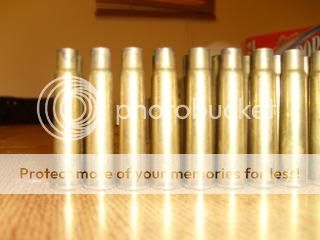
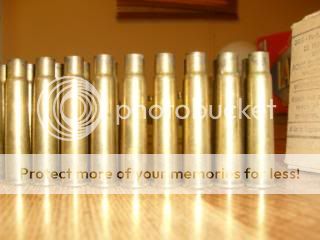
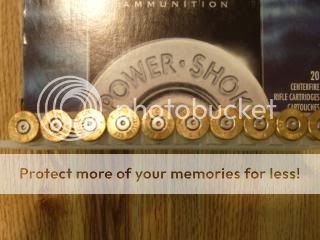
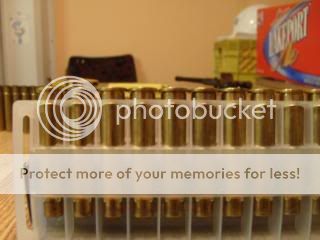
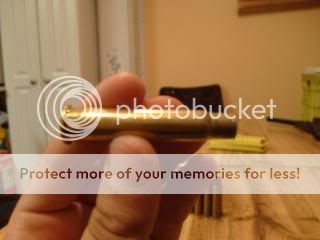
As cosmic suggested, inspect the fired cases. If the chamber is rough, you will be able to tell by looking at the brass.
Oiling the bolt has no relation to hard extraction.
 
Pour boiling hot water through the barrel, pull a patch through, then another patch with oil. There are special funnels for the Enfields which are perfect for this. Here is a photo of one listed on John C Denner's sight:
funnel2.jpg


The hot water will dilute and wash out the corrosive salts. Now prepare for the inevitable debate about whether hot water, cold water, windex, or hoppes is the best for this, however, water is free, plentiful, and has done the job for 100 years and is still military approved.


I have the funnel, boil the barrel with several kettles of boiling water, plus use the other items as well. It's only time and a dark bore is forever.
 
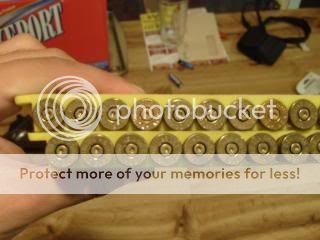
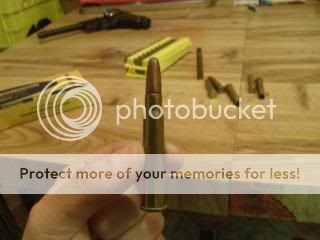
Pictures of the spent case will help to see if the chamer is pitted, how ever if you fired 50 rds prior and they worked well then is may not be. But saying that the original 50 rds, being old and an unknown type of ammo, may be low pressure and not forming as tight in the chamber as the new ammo?

Do you have amy picts of the spent cases? The sides and case heads?

Peter
 
I had a similar problem last week. Turned out I had accidently switched bolts. Any chance you did that?

Are you sure the ammo is 303 Brit? 303 Savage is not the same...

A little grease on the bolt locking lug is good practice for any rifle. On you rifle, these are the two vertical surfaces at the side of the bolt, at the back.

I cleaned up a rusty chamber once by putting some steel wool on a bore brash and spinning it with a piece of cleaning rod stuck into my electric drill.

A chamber stick with some emery paper works too.
 
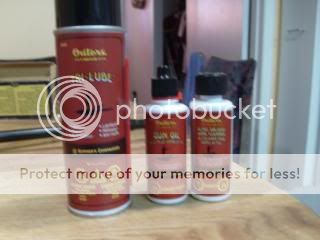
These are the solvents and oil/lube I use to clean. I clean the rifle as soon as I get home from the range every time I go out.
S7300497.jpg


And this is myself, being new here I thought I'd post a pic:
S7300498.jpg
 
when a rifle goes from working to not working STOP don't risk everyone elses health at the range by "experimenting" with something you do not understand.
you CANNOT FIX A RIFLE BY FIRING IT

Take it to a gunsmith.
 
It hasn't been to the range since it stopped working, of course I didn't throw in the towel after the first time i had difficulty releasing the bolt. That is why im here trying to figure out if this is a common issue or not, why pay a gunsmith if it ends up being a simlpe common fix. If not, then I can take it in.
 
Any oil that is in the chamber causes increased bolt thrust, with an oil or grease in the chamber the thrust on the bolt head is19 tons per square inch, with a dry chamber the bolt thrust is 10 to 11 tons per square inch. If your chamber is oil and grease free (clean chamber with lighter fluid or alcohol) and the bolt is still hard to lift then you may have increased your headspace with the increased bolt thrust.

An oiled proof pressure test round was fired to seat the lugs and bolt head when the Enfield was proof tested when new and you may have reseated everything again and increased the headspace. The headspace was set as close to .064 as possible before proof testing and after firing the proof rounds the Enfield was checked with a .067 headspace gauge and if the bolt closed on this gauge the Enfield failed proof testing.

Now you must understand this, the Enfield rifle was designed to shoot military ammunition that have thicker brass at the base or web area of the case, and commercial cases are not made heavy duty like military cases are. I would bet that if you fired military ammunition your bolt would be easy to open because it is thicker.

Check your headspace:
Military headspace is:
.064 min
.074 max
Commercial headspace is:
GO .064 (min)
NO-GO .067 (max)
Field .070 (absolute safe max)

I think what is happening is the base of your case is expanding excessively making your bolt hard to open, see photos below.

Normal case

No1.gif


excess headspace (the base of the case is unsupported and needs to be shoved into the chamber further)

No3.gif


Below are the Canadian No.4 Enfield manuals (Canadian Rangers)
A gift from an American who got them from a kind Canadian at the old forum :)

If you still have problems email me at ehorton@comcast.net and I will try and help.

1991 Canadian No.4 manual- (has competition bedding instructions along with standard military bedding)
http://ehorton.home.comcast.net/~ehorton/No4Mk1Arm.pdf


2002 Canadian No.4 manuals
Data Summary
http://ehorton.home.comcast.net/~eho... Summary.pdf

Operating Instructions
http://ehorton.home.comcast.net/~eho...uctions .pdf

Equipment Description
http://ehorton.home.comcast.net/~eho...escription.pdf

Maintenance Instructions
http://ehorton.home.comcast.net/~eho...uctions .pdf

Parts Identification
http://ehorton.home.comcast.net/~eho... List .pdf
 
Back
Top Bottom