Neck sizing for .223 XCR

Jrji

Regular
Rating - 100%
10   0   0
Location
Calgary
Question for you reloaders out there:
I'm going to reload .223 55gr nosler varminators for my XCR and thinking of neck sizing rather than a full body resize. I typically neck resize for my bolt action rifles only and not for semi auto rifles. I guess the question I have is will neck sizing feed, chamber, fire and extract the spent casing properly in a semi auto? Or should I stick to full body sizing? Comments appreciated....

 
Is it a Rem 700 XCR or a RA XCR, if the latter it will work for a few rounds then you will find out why everyone says to full length size, nothing like trying to knock a live round out that's stuck in your barrel. Speaking from personal experience.
 
Jrji

I buy bulk once fired Lake City brass and size it first with a small base die to bring the cases back to minimum dimensions. After the first firing I use a standard Forster full length .223 die and normally a standard full length die will reduce the case diameter enough for reliable extraction.

The sized case needs to be small enough in diameter to "spring back" from the chamber walls when fired. And a neck sized case is not small enough in diameter to totally spring back from the chamber walls.

Bottom line, in a Zombie attack with your neck sized ammo you will be dead meat.:eek: And the majority of AR15 type chambers are .002 larger in diameter to ensure reliable extraction.

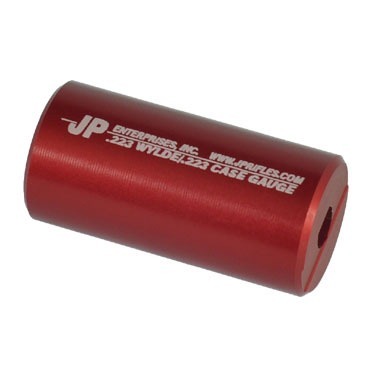
Below all my resized .223/5.56 cases for my AR15 rifles must fit in the JP Enterprise gauge below. This gauge checks case diameter for semi-auto rifles and other gauges are much larger in diameter.

PPHWn7L.jpg


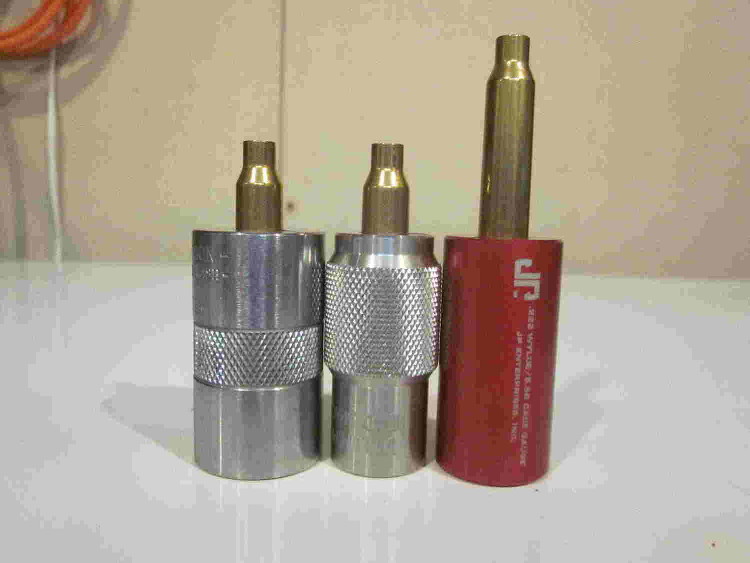
Below a Wilson, Dillon and JP Enterprise case gauges, and as you can see the reversed .223/5.56 cases drop further into the Wilson and Dillon gauges. Meaning the Wilson and Dillon gauges diameter is closer to max case diameter and better used with bolt action rifles. I'm loading for three different AR15 rifles and all the loaded rounds are given the "plop" test in the JP Enterprise gauge.

KSB3ZvP.jpg


Bottom line, your neck sized cases are hard to extract even when not fired. And when fired you are stressing the case rim and extractor with neck sized cases.

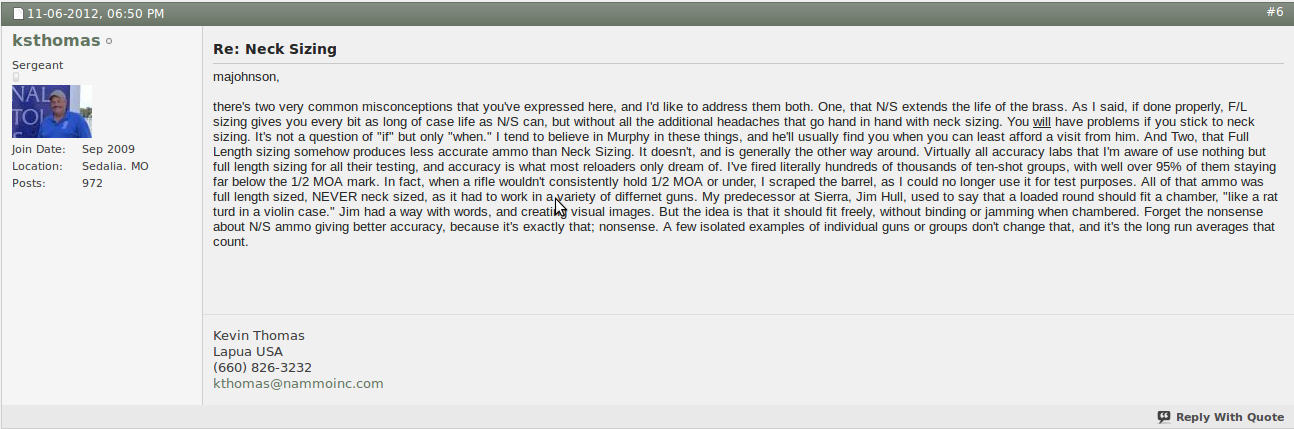
Below the opinion of Kevin Thomas who worked in the Sierra ballistic test lab and now shoots for "Team Lapua USA".

Y3IiYL5.jpg


Signed
bigedp51, full time member of the rat turd in the violin case club. ;)
 
Question for you reloaders out there:
I'm going to reload .223 55gr nosler varminators for my XCR and thinking of neck sizing rather than a full body resize. I typically neck resize for my bolt action rifles only and not for semi auto rifles. I guess the question I have is will neck sizing feed, chamber, fire and extract the spent casing properly in a semi auto? Or should I stick to full body sizing? Comments appreciated....

The question is what is the difference in dimensions of the chamber vs the die vs the fired brass?

Ideally, you want the headspace to be 3 to 4 thou shorter then the chamber.... case body to be 1 to 2 thou smaller then the chamber with an light touch in the bottom 1/3 of the case body when it is fully chambered.

Noticed, I am not mentioning any dies nor dimensions... this you measure of YOUR chamber. Then you find the dies that will create these dimensions....

Semis have some of the widest and wildest dimensions so recommending something based on another rifle can lead to a train wreck... measure what your rifle produces, size accordingly and chamber check several processed cases for 100% function.

Oversizing can lead to failure as much as undersizing.

Being able to control the cyclic force/speed will go a long ways to reduce case damage but many rifles do not offer this as an option.

The above is for match/range shooting only.

Jerry
 
Try it, see how the brass goes in and out of the chamber first then make a small batch to test, you don't want to have to pull 95 projectiles when you find out it doesn't function correctly with them. I never neck size for a semi, I've seen more than a couple guys do it thinking it will be more accurate then be frustrated and confused when their rifle won't cycle.
Is there a reason you want to neck instead of full length? Accuracy improvement or easier on brass?
What do you think you will gain? It won't transform an XCR from a 3 moa rifle to a 0.5 moa rifle.

Don't risk reliability if you are doing it to make it easier on your brass, 223 brass is so cheap and even FL sizing you can get many reloads before your brass is junk.
I don't anneal and I always FL size (even for my bolt actions), if I shot competitively I might look for those fractions of an moa to add up to something measurable but even FL sizing and running Hornady projectiles from Fed or Rem brass I have found sub moa loads for a couple of my rifles, your XCR needs a new barrel if you want to improve accuracy drastically.
 
Last edited:
In Glen Zediker's book "Handloading for Competition" He tells you for a semi-auto the resized case should be .003 to .005 smaller than its fired diameter for reliable extraction. And also states the resized case should never be less than .003 smaller than chamber diameter or extraction problems will occur.

Handloading_For_Competition_Making_the_Target_Bigger__62819.1406066010.1280.1280.jpg


In a semi-auto the case needs to spring back from the chamber walls after firing. And a neck sized case has not been reduced in diameter enough to spring back from the chamber walls.

On top of this a over gassed AR15 forcefully yanks the case from the chamber and the extractor can rip the rim off if the case if it does not spring back from the chamber walls.

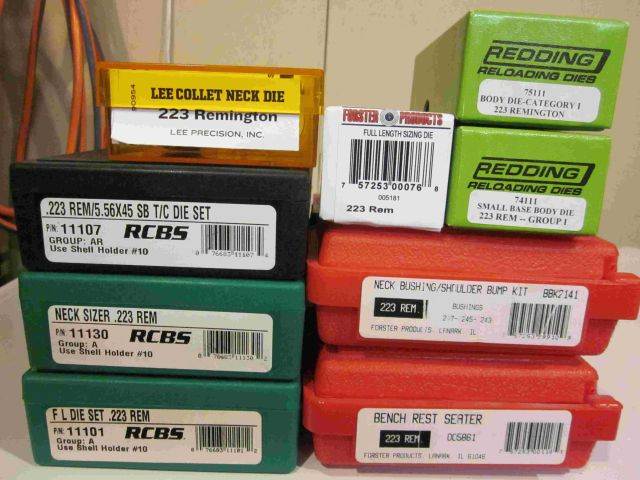
And like Mystic Precision stated above chambers and dies vary in size. Example I have a standard Lee .223 die that reduces the cases diameter more than my RCBS .223/5.56 small base die. And this same Lee die will push the case shoulder back further than any .223 die I own when the press cams over.

The black box RCBS .223/5.56 small base die and Forster full length die are the two dies I use for my AR15 rifles. ;)

pltdloo.jpg


C8rGyKI.jpg


Laugh2
 
Back
Top Bottom