Need Help with Enfield Id

dannyd123

Regular
Rating - 100%
45   0   0
Location
Toronto
Happy Holidays CGN,

Here is my No1 Mk3*

To my untrained eye it doesnt seem to have any marks indicating manufacturer

Please tell me what you can about my rifle. I tried looking online and on this forum but I've come up short. lol. Smellie, need your crazy knowledge!

IMAG1107.jpg


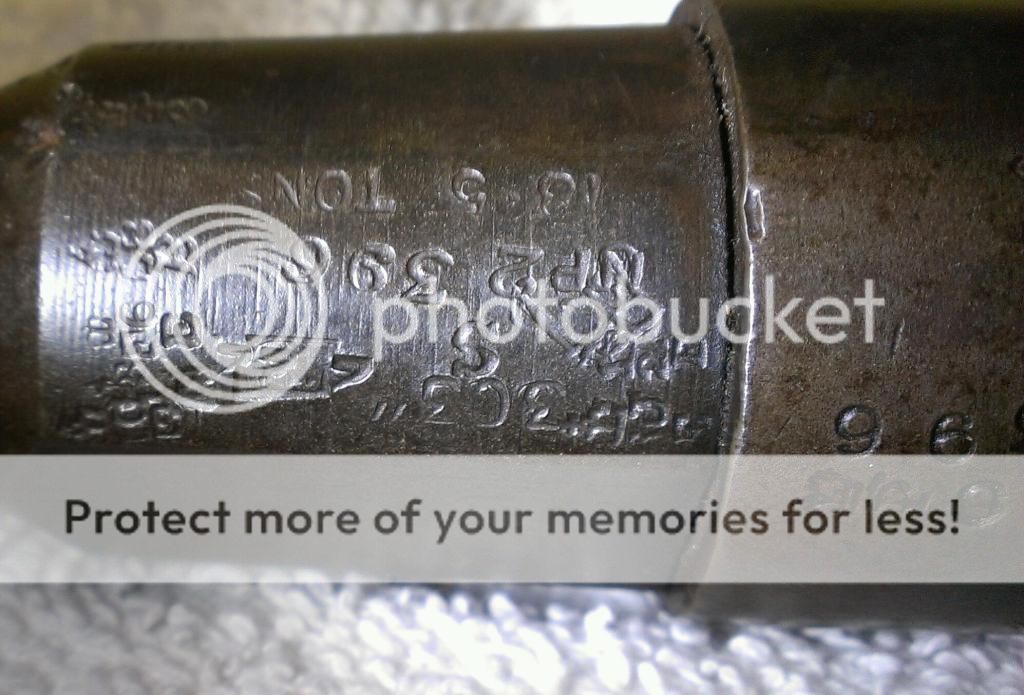
Right side barrel
IMAG1101-1.jpg


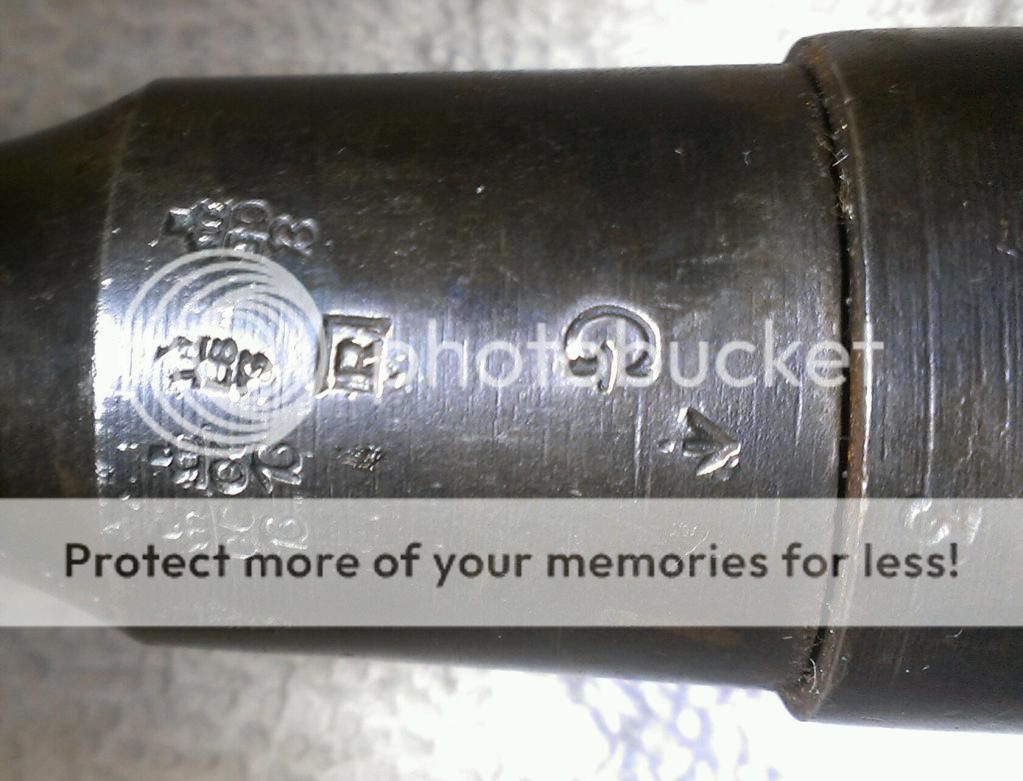
Underneath barrel
IMAG1100-1.jpg


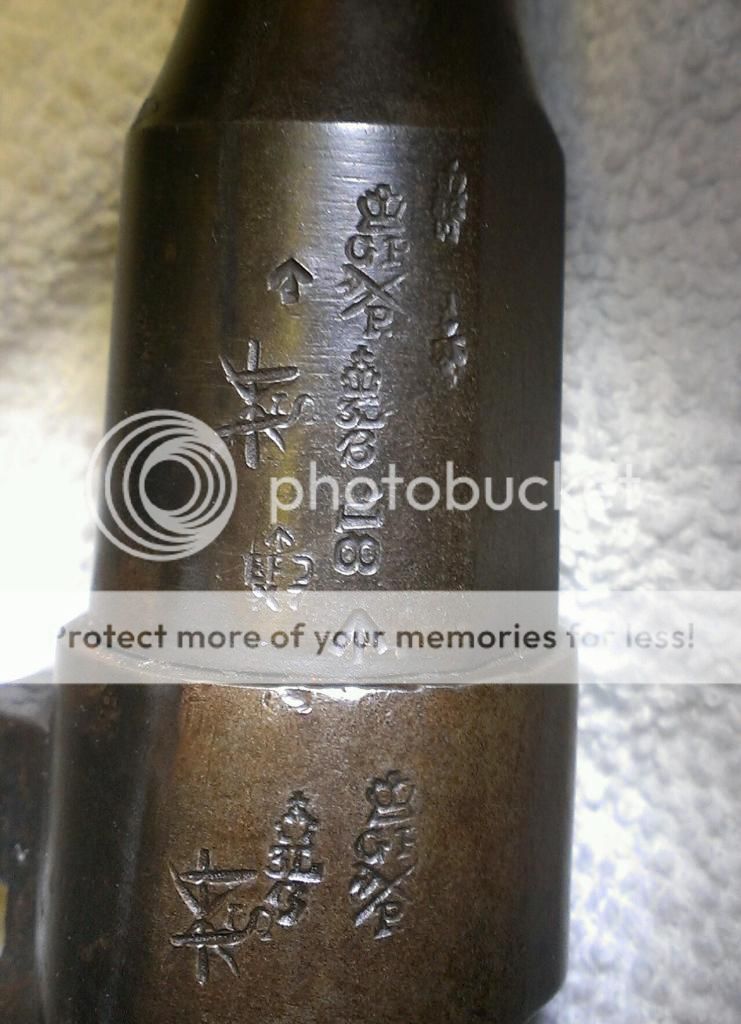
Left side reciever
IMAG1105-1.jpg


Thanks in advance!
 
Peddled Scheme

This is what is known as a `peddled scheme`rifle. Components made by many individual contractors and then factory assembled as a rifle. A war time expedient. So no single manufacturer per se.

Many markings, they tell a story. Prominent on the barrel reinforce are London proof house markings, showing that it was at one time surplussed and sold through the trade onto civvy street..

The key markings that give info to answer your question are the martial proofs with factory inspection stamps. They show a mark with script capital B on barrel and receiver, which would designate Birmingham. My guess is it was likely assembled at the BSA plant..
 
Last edited:
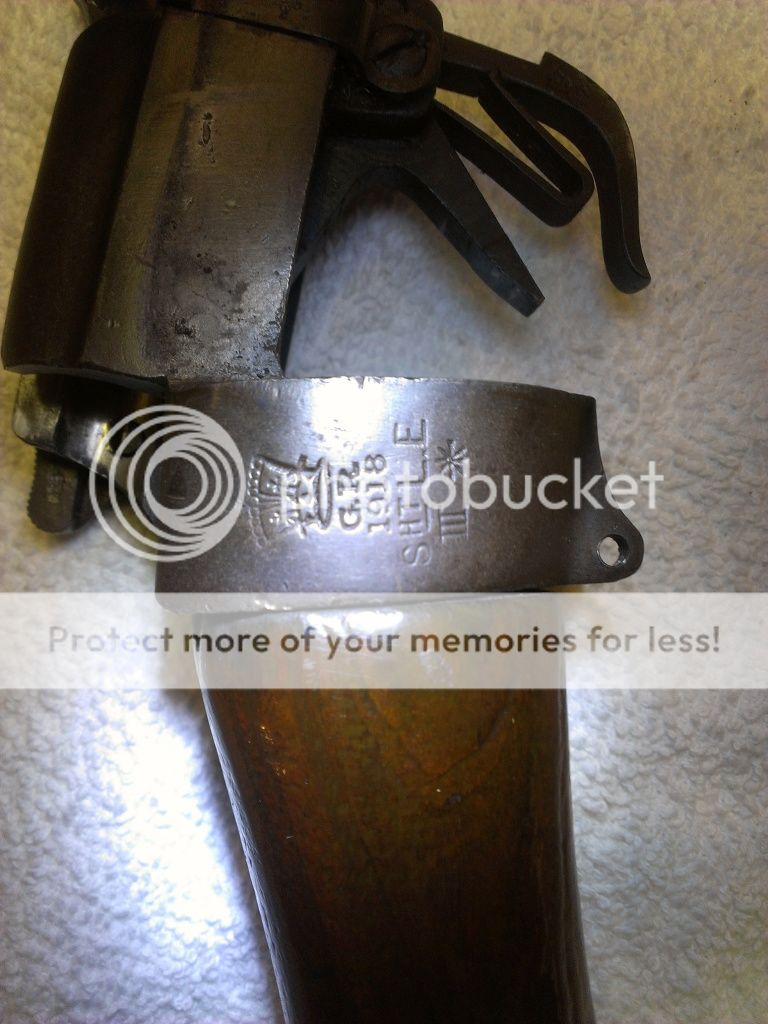
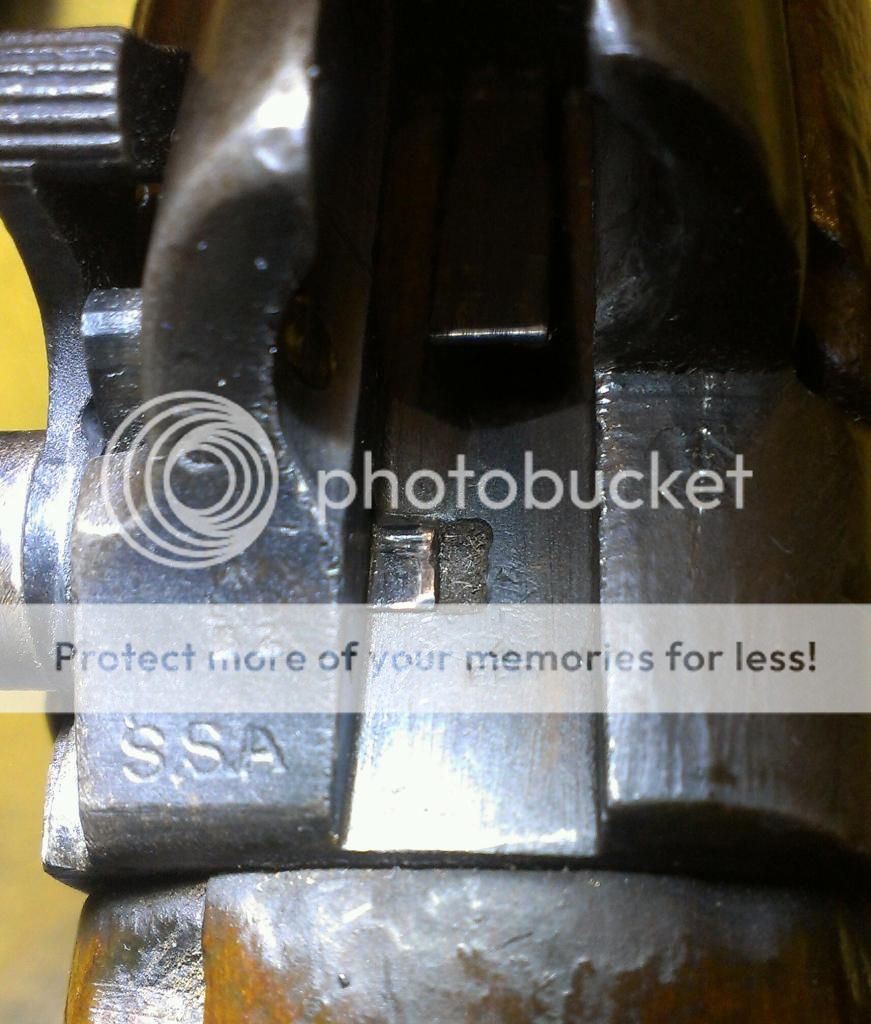
It is a Short Magazine Lee-Enfield rifle, Mark III*, built in 1918 by Standard Small Arms of Birmingham.

Standard was taken over by the Government and rifles quickly became marked to the National Rifle Factory Number 1: NRF in the same place as the SSA marking on this rifle.

Dead giveaway for both manufacturers was that silly-looking crown.

The take-over of the factory was very late 1917/early 1918 and the factory was not producing all that many rifles, so it is entirely possible that a rifle might be STARTED by SSA, finished by NRF and leave the factory as an NRF rifle which had SSA markings.

SSA had been a private company which started up early in the Great War, when it became obvious that the only factories (Enfield, BSA and LSA) could not cope with the huge demands. They got a building put up without a lot of trouble, but they could not magick the needed machine-tools in the quantities, and at the speeds, they needed them. The first part which got into any sort of production was the forging-shop, making Bodies (receivers) and Bolts. These started into production late in 1915 but there were no other parts to go with them, so they were marked, delivered to Enfield and completed there. This continued through 1916, with more parts being made at SSA as tooling was acquired and then into 1917 the same tale continued. Finally, the government got tired of waiting and nationalised the entire plant, along with the woodworking shop which became National Rifle Factory Number 2.

During the First World War, Enfield produced roughly 60 percent of English SMLE production.

BSA, Birmingham Small Arms, produced about 30% of English SMLE production.

LSA was London Small Arms, a consortium of the Trade members in London. They had a small assembly plant, the actual parts being made all through the Trade. LSA made 5% of English SMLE production.

That adds up to 95%. The FINAL 5% of rifles produced in England were split between SSA and NRF, with SSA-marked rifles having (very rarely) 1915 dates, followed by 1916 and 1917. There were no actual RIFLES produced by SSA in 1918, but there were a few still in the works that were finished under NRF management. The few UNMARKED Bodies in the plant at the takeover were marked as NRF as soon as a die was made up. Nearly ALL NRF rifles are 1918 production.

Thanks to the fact that work speeded up (if quality of fit and finish went down) after the NRF takeover, the numbers actually made were fairly close. They are BOTH rare.

The plant was closed down and sold off immediately after the war.

THIS rifle still has its original 1918 barrel, but it has been to Birmingham Repair, likely toward the end of the War or just afterwards; the SCRIPT B inspectors' markings are proof of this. It was Proofed in Birmingham when it was made and then Proofed again when it was Sold Out Of Service; this is the series of commercial markngs: .303", 2.222", 18.5 TONS/IN (square). These marking were applied in the late 1950s or 1960s prior to export, as was mandatory under British law at that time.

You have a Very Unusual Toy.

Look after it; they ain't makin' no more o' they.

Hope this helps.
 
Looking over the beast again, the barrel appears to be made at Enfield and installed at Birmingham Repair, which was the old RSAF Sparkbrook plant which had been sold to BSA in 1906 and grabbed back by the Government in 1914.

This poor old thing has perfectly-valid markings on it from Enfield, BSA and BSA Repair (Sparkbrook) and SSA, all at the same time!

There is a discussion in Major E.G.B. Reynolds' book THE LEE-ENFIELD RIFLE regarding the awful mess which surrounded the SSA/NRF affair. They tried to buy machine-tools in England, but all which were being made were spoken for. The case was the same in the USA, which was gearing up for massive war orders for just about everything. Winchester put up a new wing of their plant to make the P-14 for England; it had to be equipped. Remington did likewise because they had orders for British, French and Russian rifles. Remington went out and bought a LOCOMOTIVE FACTORY and converted it to making rifles........ and that took an immense number of machine-tools, for the plant eventually was turning out FOUR THOUSAND rifles a day PLUS so many spare parts that they ran WW TWO on them and still had enough to sell for junk after the war....... and supply the extractors for the early Ruger 77 sporting rifles! The only parts made for the P-14/M1917 rifles after the end of 1918 were a few barrels and some EJECTORS (the only weak part in the design) late in War Two. Everything was spoken for: SSA were the guy trying to buy a drink of water in the middle of the desert. Machine tools WERE being made in Germany, but Germany wasn't selling a lot of gunmaking tools to England at that time. The only other possible source would be the Swiss...... and there was no way to ship the things, even if they had been available, which they were not.

In the end, a POOL of parts was assembled to which ALL plants could make "deposits" as available and could draw "withdrawals" as required. This resulted in everybody's parts (in theory, anyway) showing up on everybody's rifles but, in actual practice, it meant everybody's spare parts showing up on SSA's rifles. Fortunately, everybody was working to Production Gauges which were all made from the Master Gauges at Enfield, so everything FIT, which was nearly a miracle for the technology of the time.

Reynolds' book today is classed as obsolete and not deep enough or exhaustive enough..... but it was the ONLY book written on the design and development of these rifles by a MILITARY man BEFORE all the paperwork was burned in the 1960s. Yes, Reynolds wrote the book using a mass of documents which no longer exist: he is the SOLE source for some information. The book is still held in Copyright by the original Publisher, but no copies have been printed for the last 50 years. There MAY be fresh copies printed, should the market warrant (let us pray!) but, in the meantime, friend BADGER over at Milsurps dot com has an arrangement with the Publisher by which students may DOWNLOAD a pdf of this seminal book through that website ONLY. The ONLY way to get a legal download is through milsurps dot com...... and it is FREE. One thing for sure: you can't beat the price! Reynolds' book is important enough that my copy is not allowed out of my sight, period.

The times were desperate and this rifle shows it in its plethora of markings.

The so-called "Peddled Scheme" for rifles during the Great War became the pattern for the Dispersed Production rifles made during the Second War following the heavy bombing of BSA. Once they had it in operation, they were able to build MANY designs of weapons ALL OVER the British Isles, with some "factories" turning out as little as a couple of pins.... and having them show up on 2 different weapons...... and having them FIT components built in another garage or basement "factory" 200 miles away. The Dispersed Production scheme reduced the number of vulnerable production targets nearly to zero..... and the "Peddled Scheme" under which your rifle was built was the matrix of the plan. Your rifle is MUCH more important, historically, than many would think possible, for it is proof that Britain WOULD win the SECOND War, once the lessons were understood.

I have an NRF here which is all-numbers-matching, absolutely unaltered and it shoots like a dream. I will have to pull it down some time and photograph all the markings on it...... but I rather doubt it will have as many as this baby!

Hope this helps.

 
Last edited:
Thank you so much Smellie for all that info! You never cease to amaze me. A tremendous help as always.

Thank you to everyone else for your help as well.

I will have to take care of this baby. Saved her from the hands of Bubba. She was going to be drilled, tapped and shortened. :(

As for the barrel. Its not "loose" per se, but there is a bit of a headspace issue. The primer is coming out of the pocket a smigeon on remington 303's from the previous owner. Nothing an o-ring or privi cant fix.
 
Well, I learn something everyday.

Great answers Smellie. But often an answer creates more questions.
I should read my books and not just look at the pictures, but I'll share my thoughts.

When did Australia gear up for making the SMLE? Any idea as to from where Lithgow got their machine tools?
Where does Pratt and Whitney in US come into the story?
Did India's Ishapore get the old NRF machinery?
Pakistan is still making No.4 on Brit recycled tooling too, are they not?
 
The PROBLEM with machine tools is that, if they are built solidly, they outlast their own development. And the 19th Century built SOLIDLY. There was none of this business of casting iron and then machining it a day later; castings were stored outside and allowed to SEASON for AT LEAST a year, until all the internal stresses which would give warping had been worked out of them.

This was the reason, in part, for the Shell Shortage early in WWI. Shells were CAST, the castings seasoned and THEN they were machined, finished, filled, fuses made and shipped. It took TWO YEARS to make a shell, the same or longer to make a lathe-bed. (Modern Diesel engines commonly are seasoned 3 years before boring; it is part of the reason that they last so long in service.)

The Industrial Revolution and modern machine-tools are a British invention. Nearly every INVENTION and a lot of DEVELOPMENT came out of the British Isles.... and most of it from Scots, though they were only 10% of the population. Other countries wishing to industrialise bought Second-generation machines from Britain, but these were themselves built on First Generation machines which still were working fine because they were so solidly built. The Second Generation machines started the new countries into machine industry but continued to be improved and built the Third Generation machines..... while the original makers still were using First Gen equipment because it had not worn out.

Pratt & Whitney started by building good tooling and measuring tools, but they also were marvellously inventive. Being American, they tried for the best designs and the best QUALITY along with high enough PRODUCTION to permit LOWER PRICES. They got it.

Add to this the ROSS RIFLE saga. Canada was not to be PERMITTED to build its own rifles; the Colonial Office had decided that Canada would get OBSOLETE British rifles, but Canada wanted something better than the cast-offs. When ROSS stood up and offered to build rifles in Canada and to build and equip the factory out of his own pocket, the Militia Board listened. Ross bought a LOT of equipment from Pratt & Whitney and used it to build the best rifle in the world. That was in the 1901 - 1910 period. The results we know all about, but another result was that when the Aussies wanted to build their own rifles (partly because of distance from Europe) the Colonial Office realised that they could no longer dictate to the "Colonials". Enfield made duplicate GAUGES for the SMLE and provided a lot of DESIGNS, PROCEDURES and EXPERTISE to the Australians, but many of the machine tools at Lithgow started off at P&W. Lithgow and Ross both used the ENFIELD CUTTER BOX for rifling barrels, for example, but the work was done on P&W machines.

Lithgow turned out their first finished rifles in 1912: just barely in time for WWI, being that their production began very slowly.

Ishapore had been operating as a REPAIR facility already for half a century when the decision was taken to upgrade the repair shop into a manufactory. They turned out their first complete rifles about the same time: 1912 as far as I know. It's all in REYNOLDS, along with some neat photos.

What became of the NRF machinery I do not know. Likely it was bought by BSA, put into storage and hauled out again for War Two.

Sorry I can't be of more help.
 
Last edited:
Loose barrels?

Not really.

During the "breeching-up" as it was called, a lead CRUSH WASHER would be inserted between the shoulder of the Barrel and the forward Body Flat (flat at the front of the Receiver). This washer would serve to take up any "slack" between the parts, locking them TEMPORARILY into correct positions. If the parts were machined tight ENOUGH, large amounts of this washer would goosh up and out of the recess for it....... and usually would be picked off and dug out in order to make the rifle "look prettier". I am pretty sure that the remnants of this crush washer still are in there, trying to keep everything tight. Likely it has been squished so thin that you almost could read through it.

The crush washer itself, of course, became redundant on Proofing of the finished rifle. Pressures of the Q Round (the actual Proof load) were so high that the Chamber,which had been reamed TO SPEC, actually EXPANDED IN DIAMETER about 2 thousandths of an inch, jamming everything absolutely SOLID. THIS is why removing the Barrel from a Lee-Enfield is so very difficult; I once swapped a barrel on a rifle for a friend and we had over 300 foot-pounds of torque on the barrel before it let go with a bang; after that, it could be twisted off by hand. Once this round had been fired, the crush washer, which had served to hold things in place until then, became completely unnecessary.

The NEXT phase in Proving the rifle came when a Ball (standard) round was DIPPED IN OIL, allowed to drain for a few seconds, tossed into the chamber and the rifle fired. Because the oiled round could not grip to the sides of the Chamber, ALL of the thrust was directed BACKWARDS onto the Bolt-Face. The sudden thrust was so violent that it compressed the locking-lugs into their recesses, MATING the Body to the Bolt. THIS is why it is not the best practice to go swapping bolts in Lee-Enfield rifles; if they have not been MATED, the support on the cartridge will not be completely even. This gives the bolt an excuse to FLEX during firing (the Lee bolt being very springy and flexible) and for the Body (receiver) to TWIST. This reduces ACCURACY at a minimum.

This procedure is at the ROOT of the Ross Rifle Problem List for the reason that the Body (receiver) of the Ross was so very massive that it did not ALLOW the Chamber to expand properly with the Proof Round! The chambering SPECIFICATIONS were identical, the Reamers were made to the same Drawings and reaming was identical, the Proof Rounds were identical, the Proving procedures were identical, yet the massive strength of the Ross action did not allow the Chambers to expand fully. Result: tight chambers in the Rosses!

The modern treatment for bolts which do not align perfectly with Bodies likely would be careful lapping-in using fine-grit diamond dust or valve-grinding compound with Prussian Blue as a guide. The old Enfield treatment was the Oiled Round at Proving. It was a great deal faster.... but do you really want to do this to your 95-year-old rifle? I certainly do not! This is why we always DRY our Chambers at the range before loading the rifle for a shoot.

Hope this helps.

 
Last edited:
Back
Top Bottom