Okay, here's my 4 cents' worth.
1. Sniders are just plain FUN. They DESERVE to be shot... a lot. And you're a nice buy because you don't diss the old girl. Therefore, you deserve the pleasure of shooting her.... a lot.
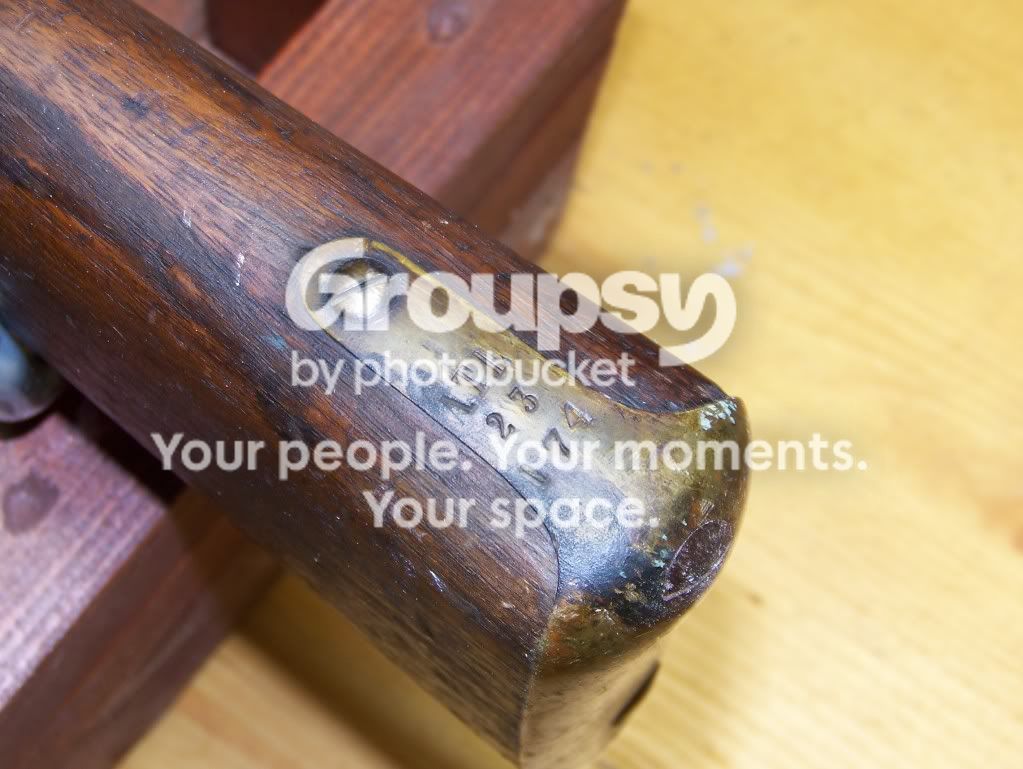
2. Don't worry too much about the buttplate standing proud. Remember, these things were ALL built in a marine climate, which is what we don't got. The stock-blanks were seasoned for 4 to 7 years before they were carved into stocks, then dumped into a boiled-oil bath overnight and finally finished. There was still a lot of water in the wood which hadn't had time to boil itself out. It is now 145 years later and the rifle has been in a DRY climate for about 140 of those years. It has had TIME to dry out thoroughly, so it has, so the wood has shrunk. The brass (gunmental, actually) buttplate never had any water in it, so it didn't shrink. What this really does is tell you a fair bit about the history of the rifle. You CAN put some moisture (in the form of a natural vegetable oil) back into the wood with boiled linssed oil, then you bring the old finish back with a single coat of boiled linssed oil with a bit of Japan dryer in it. You have to be really careful doing this or it will look like a refinish job, which will reduce its dollar value significantly.
3. There was a really big war happening at the time this rifle was built, and both sides were buying every Enfield they could get in; they were one of the finest muzzle-loading rifles made. The factory was working full-out when your rifle was built, so the wood well could have been fairly fresh, which would help it to dry out even more after it was made into a rifle.
4. This is a heck of a nice old rifle.
5. Canadian Militia didn't form into Battalions until the start of the Great War. Before that, all recruiting and so forth was done on a REGIMENTAL basis.... but all Regiments also had LIST numbers. South Wales Borderers, for example, were known as the 24th Regiment of Foot. You are looking for whatever the 23rd REGIMENT might have been (which I certainly don't know) and right now we don't know if this was a British or a Canadian Militia formation. Dominion of Canada usually marked their rifles with a DC in a diamond, on the side of the buttstock, and it was stamped fairly deeply. If your rifle has this, then likely you are looking for a 23rd CANADIAN Regiment; if not, then check out the British 23rd Regiment, see if they were posted here. Canada had some British troops here until just before World War I.
6. My Snider Carbine really likes to be scarped out with a 20-gauge shotgun brush (bronze) which you can get at any gun shop for about 3 bucks. A bit oversize, but it works very well.
7. MAGTECH in Brazil is making 24-gauge brass shotgun shells, available in the USA (and supposedly in Canada) in boxes of 25, generally about a buck each. You need dies, but they can be reformed into Snider brass. Jamison cases (mentioned above) are already the right size and shape so, if you don't have the dies, this is the way to start off.
8. Try 60 grains of BLACK powder with a 500-grain Minie bullet, fill the base cavity of the bullet with Crisco. Works AND it keeps the fouling in the bore from setting up too hard while you're shooting.
9. Most important point of all: have fun!
Now, if you will kindly mail me 4 shiny new 1923 Canadian pennies, I will go away! LOL!