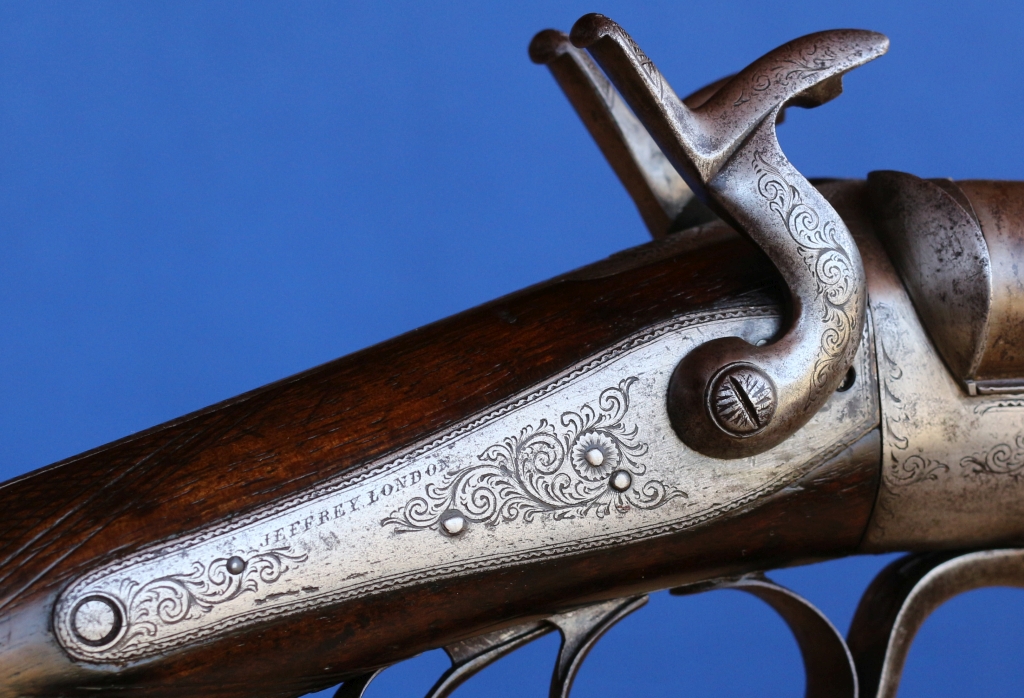











































With the current supply of percussion caps woefully low, we have to find other ways to occupy our time. Ever stop to wonder how the percussion cap came to be?
The change from the flint-lock to the percussion-lock, or, more precisely, the switch from friction-based ignition to chemical-based ignition, was a momentous milestone in the history of firearms. The violently explosive properties of metal fulminates had been known for some time. Samuel Pepys’s diary entry for 11 November 1663 refers to the explosive qualities of ‘Aurum fulminans,’ or fulminating gold. The discovery of this highly explosive substance (gold hydrazide) is attributed to Johann Thölde, writing under the pseudonym ‘Basilius Valentinus,’ published in 1599. In 1786 the French chemist Claude Louis Berthollet was the first to produce potassium chlorate, or Berthollet’s Salt, while researching dyes and bleaches. In 1788 he was also the first to produce fulminating silver, or silver nitride. Then the British chemist Edward Charles Howard published his discoveries concerning mercury fulminate, in the Philosophical Transactions of the Royal Society of London, on 1 January 1800. For this, the Royal Society awarded him their Copley medal. Howard found that when mercury was treated with nitric acid and alcohol, it produced a whitish crystallized powder with properties similar to gunpowder. This powder could also be detonated with a sharp blow or an electric current.
In his paper, Howard described testing the fulminate in a hand-held device used to test the strength of gunpowder. Satisfied his ‘mercurial powder’ had promise, Howard continued his testing. He loaded a gun with 17 grains of the fulminate, and a lead bullet, and fired at a block of wood some twenty feet distant. There wasn’t much of a bang or recoil, and from the dent in the wood the effect was deemed similar to about half a normal charge of gunpowder of about 68 grains. Howard reloaded the gun with 34 grains of fulminate, but was met with a different result: the patent breech was torn open, the gold touch-hole driven out, and the barrel had a three-inch crack.
Howard surmised: “...it was pretty plain that no gun could confine a quantity of the mercurial powder sufficient to project a bullet, with a greater force than an ordinary charge of gunpowder.” In a final relevant test, Howard was permitted by the Right Honourable Lord Howe, Lieutenant General of the Ordnance, to test the ‘mercurial powder’ at the Royal Laboratory of the Royal Arsenal at Woolwich. This testing destroyed several cannon (!), with Howard concluding: “...any piece of ordnance might be destroyed, by employing a quantity of the mercurial powder equal in weight to one half of the service charge of gunpowder.”
While using fulminates as a charge propellant was clearly out of the question, using fulminates to ignite a charge of gunpowder was considered another option. However, the Royal Laboratory observed that the fast-burning fulminate would not light gunpowder. Howard repeated the experiment, writing: “...we spread a mixture of coarse and fine grained gunpowder upon a parcel of mercurial powder; and, after the inflammation of the latter, we collected most, if not all, of the grains of gunpowder.” Howard wondered if the combustion of the fulminate was too rapid or that it did not generate enough heat to ignite the gunpowder. In any case, Howard did not continue the research into fulminates of mercury and firearms – but, thankfully, another curious inventor did.
Based on Howard’s discoveries and convinced he could harness the desirable properties of mercury fulminate, the Reverend Alexander John Forsyth of Belhelvie, Aberdeenshire, Scotland, pursued his research and eventually developed a detonating gun lock in 1805. It had a priming system that dispensed a mixture of mercury fulminate, potassium chlorate, sulphur and charcoal into a pan. The hammer struck the mixture, and the resultant flame connected to the main charge via a touch-hole. The characteristic shape of the fulminate-mixture dispenser earned the lock its name, ‘Forsyth’s Scent-bottle,’ and it was patented in 1807.
Eventually a range of gun locks were developed that made use of fulminates in a variety of forms: as crystals or as balls, pellets, or pastilles, and covered in wax, varnish, lead, or copper to prevent the absorption of moisture and reduce the corrosive effects of potassium chlorate on metal parts. The London maker Joseph Manton’s pill- or pellet-lock was patented in 1816. Manton also patented a tube-lock in 1818, which confined the fulminate to a copper tube that was crushed by a hammer. The tube-lock became popular with waterfowlers, for its strong ignition. Forsyth’s patent expired in 1821, and by then the percussion cap, a soft copper (or iron) ‘top hat’ containing a small amount of fulminate and which was placed on a nipple, had started to appear.
The precise origins of the percussion cap are obscure (perhaps the still-active Forsyth patent may have deterred inventors experimenting with fulminate mixtures), and there are several claimants to this important invention. Joshua Shaw, an English-born American painter-inventor living in Philadelphia, patented the percussion cap in America in 1822. However, the Parisian inventor and gunmaker François Prélat filed a French patent for a percussion cap in 1818, which may have been based on an invention by the London gunmaker Joseph Egg from around 1817. Other claimants to the invention include Joseph Manton, the Parisian Jean-Louis Deboubert, and the renowned sportsman Lieutenant-Colonel Peter Hawker. The invention went though various design and manufacturing improvements over time, and John Deane (author of Deane’s Manual of of the History and Science of Fire-Arms, 1858) credits Deboubert and Blanchard of Paris for having perfected the copper cap. Who was first with the idea may well remain a mystery, but by 1830 the external copper percussion cap had become the dominant ignition system in use.
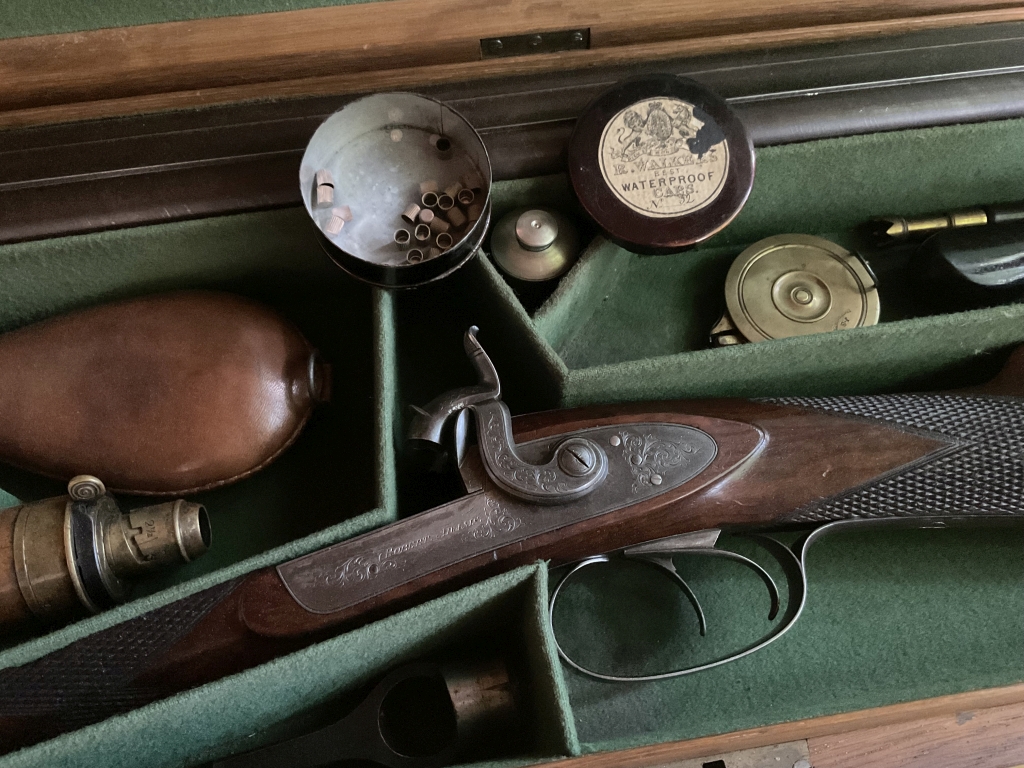
The change from the flint-lock to the percussion-lock, or, more precisely, the switch from friction-based ignition to chemical-based ignition, was a momentous milestone in the history of firearms. The violently explosive properties of metal fulminates had been known for some time. Samuel Pepys’s diary entry for 11 November 1663 refers to the explosive qualities of ‘Aurum fulminans,’ or fulminating gold. The discovery of this highly explosive substance (gold hydrazide) is attributed to Johann Thölde, writing under the pseudonym ‘Basilius Valentinus,’ published in 1599. In 1786 the French chemist Claude Louis Berthollet was the first to produce potassium chlorate, or Berthollet’s Salt, while researching dyes and bleaches. In 1788 he was also the first to produce fulminating silver, or silver nitride. Then the British chemist Edward Charles Howard published his discoveries concerning mercury fulminate, in the Philosophical Transactions of the Royal Society of London, on 1 January 1800. For this, the Royal Society awarded him their Copley medal. Howard found that when mercury was treated with nitric acid and alcohol, it produced a whitish crystallized powder with properties similar to gunpowder. This powder could also be detonated with a sharp blow or an electric current.
In his paper, Howard described testing the fulminate in a hand-held device used to test the strength of gunpowder. Satisfied his ‘mercurial powder’ had promise, Howard continued his testing. He loaded a gun with 17 grains of the fulminate, and a lead bullet, and fired at a block of wood some twenty feet distant. There wasn’t much of a bang or recoil, and from the dent in the wood the effect was deemed similar to about half a normal charge of gunpowder of about 68 grains. Howard reloaded the gun with 34 grains of fulminate, but was met with a different result: the patent breech was torn open, the gold touch-hole driven out, and the barrel had a three-inch crack.
Howard surmised: “...it was pretty plain that no gun could confine a quantity of the mercurial powder sufficient to project a bullet, with a greater force than an ordinary charge of gunpowder.” In a final relevant test, Howard was permitted by the Right Honourable Lord Howe, Lieutenant General of the Ordnance, to test the ‘mercurial powder’ at the Royal Laboratory of the Royal Arsenal at Woolwich. This testing destroyed several cannon (!), with Howard concluding: “...any piece of ordnance might be destroyed, by employing a quantity of the mercurial powder equal in weight to one half of the service charge of gunpowder.”
While using fulminates as a charge propellant was clearly out of the question, using fulminates to ignite a charge of gunpowder was considered another option. However, the Royal Laboratory observed that the fast-burning fulminate would not light gunpowder. Howard repeated the experiment, writing: “...we spread a mixture of coarse and fine grained gunpowder upon a parcel of mercurial powder; and, after the inflammation of the latter, we collected most, if not all, of the grains of gunpowder.” Howard wondered if the combustion of the fulminate was too rapid or that it did not generate enough heat to ignite the gunpowder. In any case, Howard did not continue the research into fulminates of mercury and firearms – but, thankfully, another curious inventor did.
Based on Howard’s discoveries and convinced he could harness the desirable properties of mercury fulminate, the Reverend Alexander John Forsyth of Belhelvie, Aberdeenshire, Scotland, pursued his research and eventually developed a detonating gun lock in 1805. It had a priming system that dispensed a mixture of mercury fulminate, potassium chlorate, sulphur and charcoal into a pan. The hammer struck the mixture, and the resultant flame connected to the main charge via a touch-hole. The characteristic shape of the fulminate-mixture dispenser earned the lock its name, ‘Forsyth’s Scent-bottle,’ and it was patented in 1807.
Eventually a range of gun locks were developed that made use of fulminates in a variety of forms: as crystals or as balls, pellets, or pastilles, and covered in wax, varnish, lead, or copper to prevent the absorption of moisture and reduce the corrosive effects of potassium chlorate on metal parts. The London maker Joseph Manton’s pill- or pellet-lock was patented in 1816. Manton also patented a tube-lock in 1818, which confined the fulminate to a copper tube that was crushed by a hammer. The tube-lock became popular with waterfowlers, for its strong ignition. Forsyth’s patent expired in 1821, and by then the percussion cap, a soft copper (or iron) ‘top hat’ containing a small amount of fulminate and which was placed on a nipple, had started to appear.
The precise origins of the percussion cap are obscure (perhaps the still-active Forsyth patent may have deterred inventors experimenting with fulminate mixtures), and there are several claimants to this important invention. Joshua Shaw, an English-born American painter-inventor living in Philadelphia, patented the percussion cap in America in 1822. However, the Parisian inventor and gunmaker François Prélat filed a French patent for a percussion cap in 1818, which may have been based on an invention by the London gunmaker Joseph Egg from around 1817. Other claimants to the invention include Joseph Manton, the Parisian Jean-Louis Deboubert, and the renowned sportsman Lieutenant-Colonel Peter Hawker. The invention went though various design and manufacturing improvements over time, and John Deane (author of Deane’s Manual of of the History and Science of Fire-Arms, 1858) credits Deboubert and Blanchard of Paris for having perfected the copper cap. Who was first with the idea may well remain a mystery, but by 1830 the external copper percussion cap had become the dominant ignition system in use.