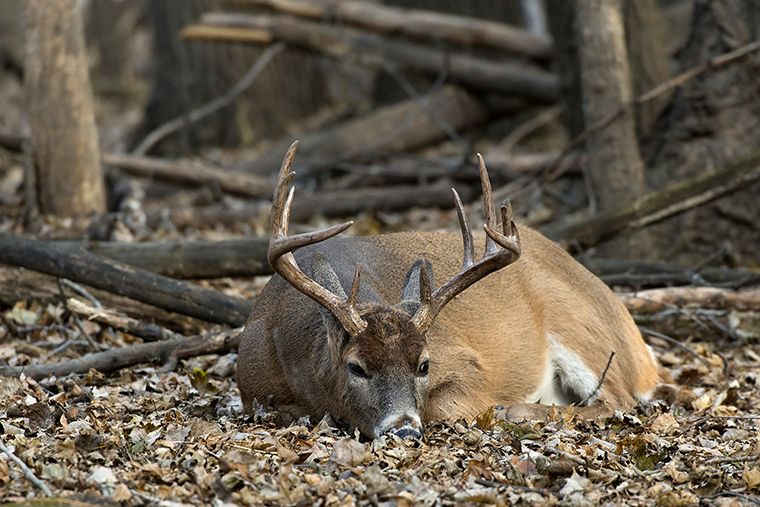
Ontario trying to track infection deadly to deer
http://www.cbc.ca/news/canada/ottawa/mnr-advises-bow-hunters-to-watch-for-sickly-white-tailed-deer-1.4312249
Ontario#hunters and anyone closer to nature this weekend are being asked to be on the lookout for deer exhibiting symptoms of EHD, or epizootic hemorrhagic disease, an infection#wildlife officials are trying#to track.
The Ministry of Natural Resources and Forestry issued an advisory Wednesday after the discovery of two dead male deer on a property in London, Ont. on Sept. 12.
These are the first confirmed cases in Ontario of EHD, an infection often fatal in white-tailed deer, according to ministry spokesperson Jolanta Kowalski.
EHD is not a public health threat, and eating meat from deer that are free from signs of sickness such as ulcers, abscess, or other abnormalities is considered safe.
"Hunters should, as always, practice proper carcass handling and processing techniques when they're dressing hunted deer. So nothing new there," said Kowalski. "Just don't eat something that you're not 100 per cent sure of."
Deer often found near bodies of water
The condition has several telltale signs,#Kowalski said.
"An infected deer would lose their appetite. They wouldn't be fearful of people. They get weak. They salivate excessively. They get a really fast pulse and breathing rate. And they show signs of fever," said Kowalski.
"So what that mean is they'll submerse themselves in bodies of water to try to reduce their body temperature. So that's why they can often be found dead in or near water. They may also have a blue tongue and their head, neck and tongue could be swollen as well."
While the disease is common throughout the United States, the province does not want to see it spread, said Kowalski.
The disease is spread, not from deer to deer, but#through bites from#midges. So whether it spreads will be dependant on the insect population.
Midges die off during the first frosts, taking the virus with them, according to the ministry. Frost advisories have been issued for Thursday evening in west Quebec, but not yet for Ontario.
Report cases of sick deer
If you suspect a deer you've seen or killed could be infected with EHD, the ministry suggests you call the Canadian Wildlife Health Cooperative#—#which is tracking cases#— at 1-866-673-4781#or by call the Natural Resources Information Centre at 1-800-667-1940.
http://www.cbc.ca/news/canada/ottawa/mnr-advises-bow-hunters-to-watch-for-sickly-white-tailed-deer-1.4312249
Ontario#hunters and anyone closer to nature this weekend are being asked to be on the lookout for deer exhibiting symptoms of EHD, or epizootic hemorrhagic disease, an infection#wildlife officials are trying#to track.
The Ministry of Natural Resources and Forestry issued an advisory Wednesday after the discovery of two dead male deer on a property in London, Ont. on Sept. 12.
These are the first confirmed cases in Ontario of EHD, an infection often fatal in white-tailed deer, according to ministry spokesperson Jolanta Kowalski.
EHD is not a public health threat, and eating meat from deer that are free from signs of sickness such as ulcers, abscess, or other abnormalities is considered safe.
"Hunters should, as always, practice proper carcass handling and processing techniques when they're dressing hunted deer. So nothing new there," said Kowalski. "Just don't eat something that you're not 100 per cent sure of."
Deer often found near bodies of water
The condition has several telltale signs,#Kowalski said.
"An infected deer would lose their appetite. They wouldn't be fearful of people. They get weak. They salivate excessively. They get a really fast pulse and breathing rate. And they show signs of fever," said Kowalski.
"So what that mean is they'll submerse themselves in bodies of water to try to reduce their body temperature. So that's why they can often be found dead in or near water. They may also have a blue tongue and their head, neck and tongue could be swollen as well."
While the disease is common throughout the United States, the province does not want to see it spread, said Kowalski.
The disease is spread, not from deer to deer, but#through bites from#midges. So whether it spreads will be dependant on the insect population.
Midges die off during the first frosts, taking the virus with them, according to the ministry. Frost advisories have been issued for Thursday evening in west Quebec, but not yet for Ontario.
Report cases of sick deer
If you suspect a deer you've seen or killed could be infected with EHD, the ministry suggests you call the Canadian Wildlife Health Cooperative#—#which is tracking cases#— at 1-866-673-4781#or by call the Natural Resources Information Centre at 1-800-667-1940.